
Rated 4.8/5

Book FREE Consultation

tick-iconFree Consultation for all Cancer Patients

tick-iconConfidential & Doctor-Led Care

tick-iconClear Costs & Guided Next Steps

form-icon

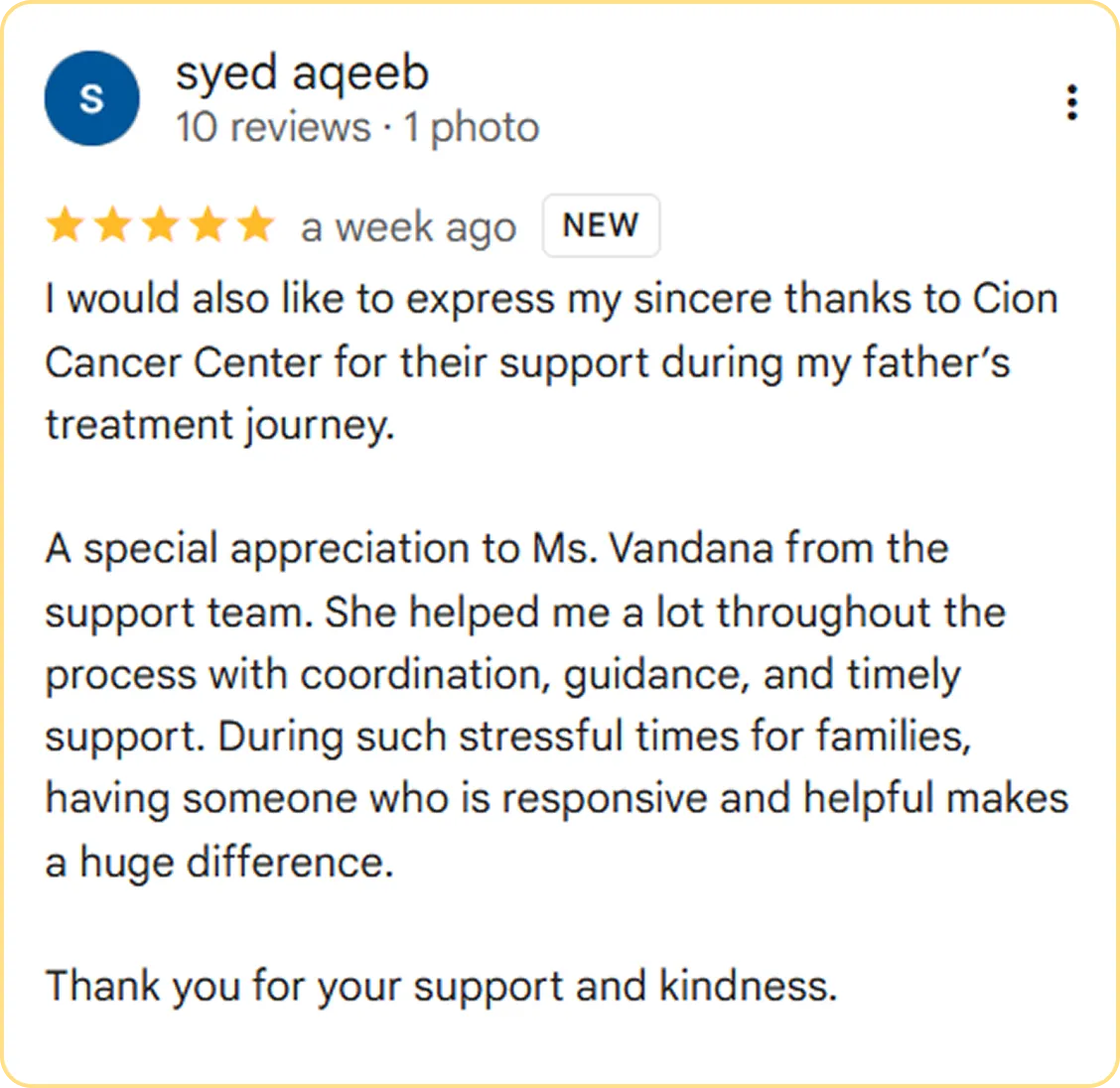
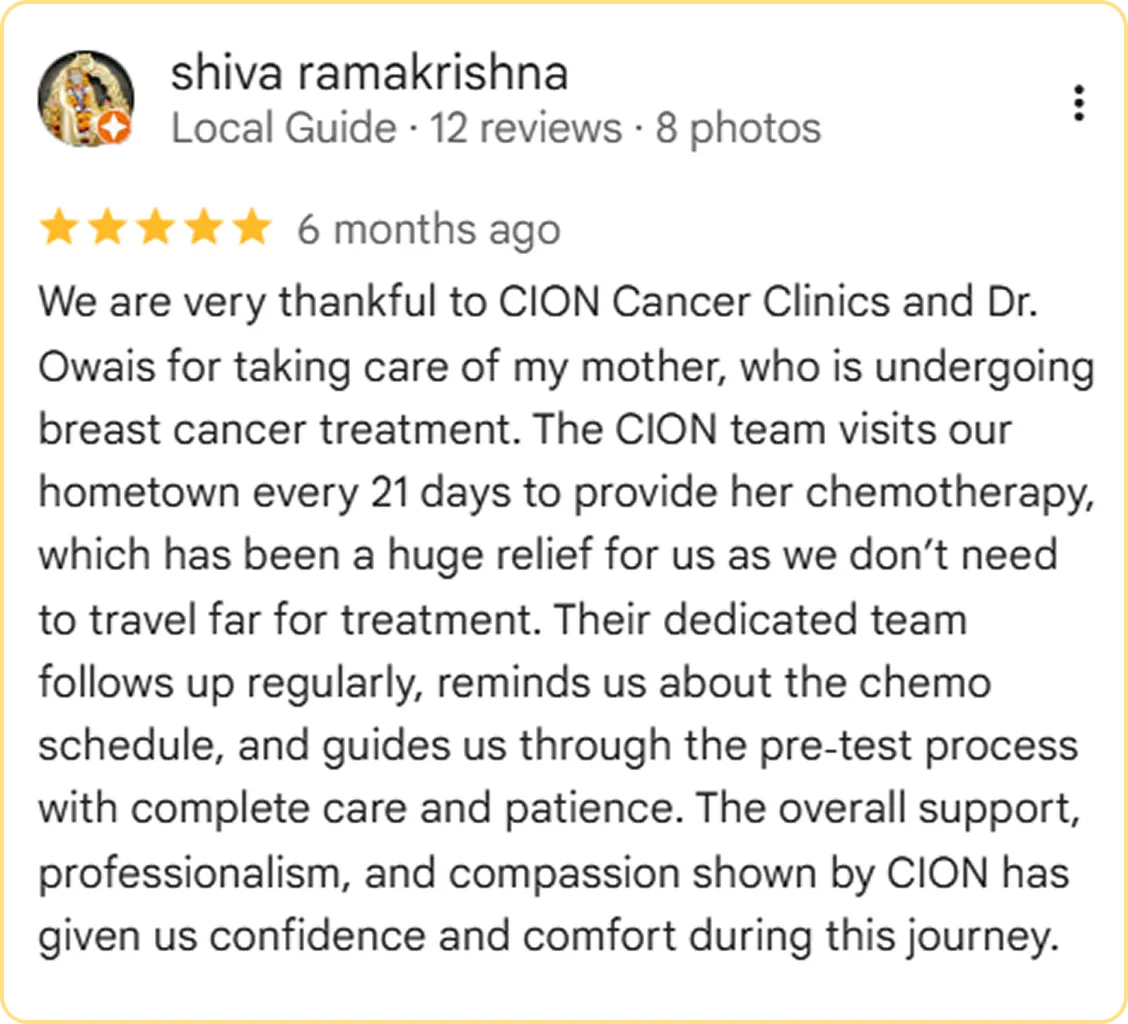
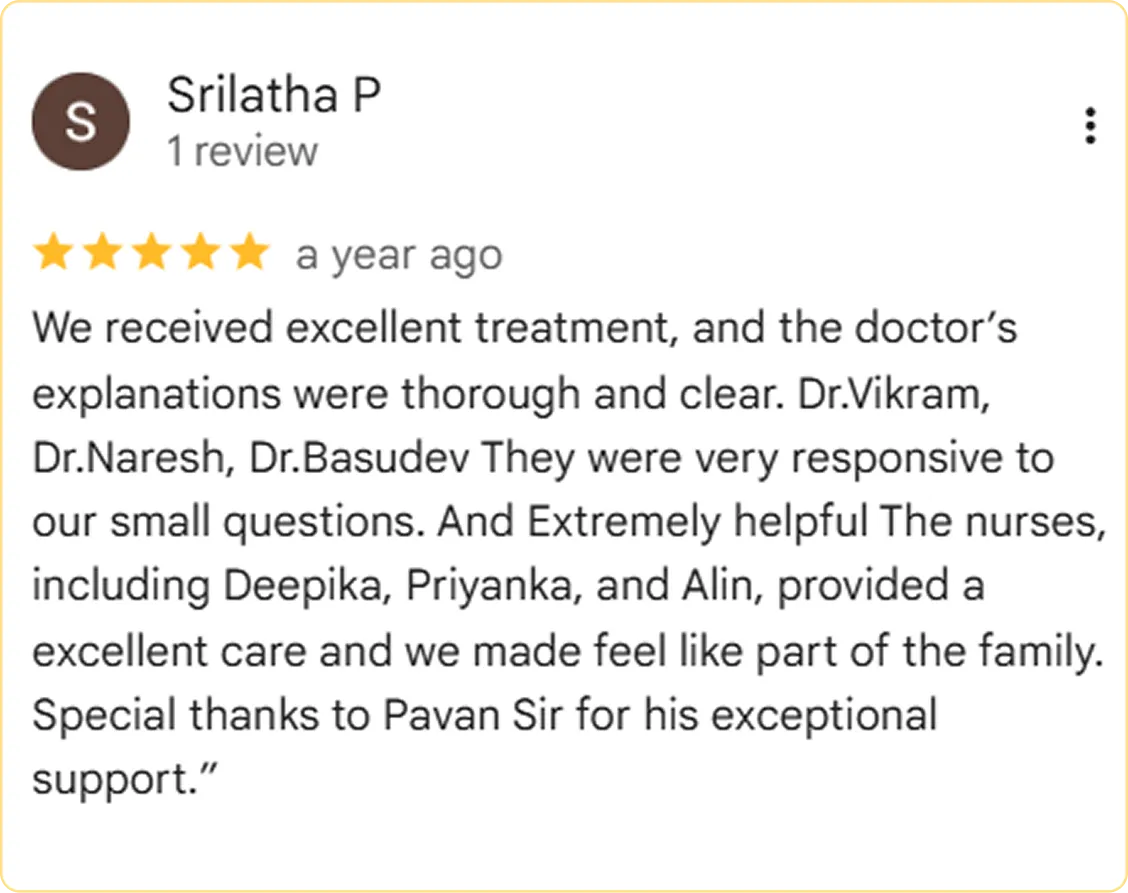
“His approach gave us the confidence to trust this hospital with my father’s care.”

How CION Addresses These Concerns

Will I lose part of my jaw, tongue, or face?

At CION, surgery is planned to remove the cancer while preserving healthy tissue, facial structure, and jaw function wherever medically safe. Each case is carefully mapped using imaging and expert review to avoid unnecessary removal.

Will I be able to speak and eat normally again?

Speech and swallowing outcomes are considered before surgery, not after. CION plans oral cancer surgery alongside reconstruction, speech therapy guidance, and nutrition support to help patients return to daily life as smoothly as possible.

Are they removing more tissue than necessary?

No single doctor decides this alone. Every oral cancer case at CION is discussed in a multidisciplinary tumor board, where experts jointly determine the minimum required surgery with safe margins. In nearly 30% of cases, treatment plans are refined after this discussion.

Is surgery my only option—or just the fastest one?

At CION, surgery is recommended only when it is truly the best option. Alternatives such as starting with radiation or medicines are openly discussed when appropriate—so patients don’t feel rushed into irreversible decisions.

What happens after surgery—am I on my own?

Care continues well beyond the operation. CION provides structured follow-ups, rehabilitation guidance, nutrition counselling, and recovery monitoring, so patients are supported through healing—not left to figure it out alone.

mic

Will I lose part of my jaw, tongue, or face?

At CION, surgery is planned to remove the cancer while preserving healthy tissue, facial structure, and jaw function wherever medically safe. Each case is carefully mapped using imaging and expert review to avoid unnecessary removal.

Will I be able to speak and eat normally again?

Speech and swallowing outcomes are considered before surgery, not after. CION plans oral cancer surgery alongside reconstruction, speech therapy guidance, and nutrition support to help patients return to daily life as smoothly as possible.

Are they removing more tissue than necessary?

No single doctor decides this alone. Every oral cancer case at CION is discussed in a multidisciplinary tumor board, where experts jointly determine the minimum required surgery with safe margins. In nearly 30% of cases, treatment plans are refined after this discussion.

Is surgery my only option—or just the fastest one?

At CION, surgery is recommended only when it is truly the best option. Alternatives such as starting with radiation or medicines are openly discussed when appropriate—so patients don’t feel rushed into irreversible decisions.

At CION Cancer Clinics,

Oral Surgery surgery starts at

2.0L

Highly experienced surgeons, state-of-the-art facilities, and comprehensive care throughout your treatment journey.

Oral Cancer Surgery Cost

We provide detailed cost discussions before surgery, including procedure type, hospital stay, reconstruction options, and insurance coordination.

Surgery Type Price (Starting from)
Glossectomy Surgery
2 lakhs
Mandibulectomy Surgery
2 lakhs
Maxillectomy Surgery
2 lakhs
Laryngectomy Surgery
3 lakhs
Parotidectomy Surgery
2 lakhs
Thyroidectomy Surgery
2 lakhs
Thyroid Cancer Surgery
2 lakhs
Neck dissection Surgery
1 lakh

comma Every journey begins with a single
step. Let us walk this path with
you, providing hope, strength, and
unwavering support.

How We Plan Oral Cancer Surgery Differently

Every Oral Surgery case at CION goes through a multidisciplinary cancer panel, not a single-doctor decision.

Your treatment plan is discussed by:

Step 1: Your Case Is Reviewed by a Cancer Panel

Surgical oncologists Reconstruction Specialists Medical & radiation oncologists Nutrition & rehabilitation Experts

Step 2: We Decide What Treatment Is Right for You

  • We study your scans, biopsy report, and cancer stage.
  • We assess your overall health and risk level.
  • We recommend the most effective treatment — surgery, medicines, radiation, or a combination.

Step 3: Post-Treatment Care and Recovery

  • Pain management and healing support
  • Nutrition guidance to regain strength
  • Rehabilitation support if needed
  • Regular follow-ups to prevent recurrence

Because one opinion is never enough for a life-changing surgery.

Dedicated Surgical Oncology Team for Complex Cancer Cases

Meet Our Expert Doctors

A team of highly qualified specialists committed to providing personalized, compassionate, and evidence-based care.


Dr. Naresh Gundu
Medical Oncologist
Dr. Naresh Gundu
  • MBBS, Chalmeda Ananda Rao Institute, Karimnagar.

    DNB - Internal Medicine froml SGRH, New Delhi.

Dr. C. Raghavendra Reddy
Medical Oncologist
Dr. C. Raghavendra Reddy
  • DM Medical Oncology Madurai Medical College

    DNB General Medicine National Board of Examination, New Delhi

Dr. Bharati Devi Gorantla
Medical Oncologist
Dr. Bharati Devi Gorantla
  • MRCP SCE (UK) Medical Oncology | 2024

    ECMO - European Certified Medical Oncologist - 2023

Dr. Owais Mohammed
Medical Oncologist
Dr. Owais Mohammed
  • MBBS - Osmania Medical College

    MD General Medicine - Kakatiya Medical College

Dr. T. Raghavender Reddy
Medical Oncologist
Dr. T. Raghavender Reddy
  • DM Medical Oncology | Dr B. BOROOAH Cancer Institute

    MD Radiation Oncology | Kasturba Medical College, Manipal

Dr. N. Kiranmayee
Medical Oncologist
Dr. N. Kiranmayee
  • DM Medical Oncology | Government Kilpauk Medical College Tamil Nadu.

    MD Internal Medicine | NIMS, Hyderabad

Dr. Muralidhar Muddusetty
Surgical Oncologist
Dr. Muralidhar Muddusetty
  • MBBS – All India Institute of Medical Sciences (AIIMS), New Delhi

    MS (Surgery) – AIIMS, New Delhi

Dr. Raghavendra Naik
Surgical Oncologist
Dr. Raghavendra Naik
  • MCh (Surgical Oncology) Sri Venkateswara Institute of Medical Sciences, Tirupati

    M.S. (General Surgery) Osmania Medical College, Hyderabad

Dr. Mohammed  Imaduddin
Surgical Oncologist
Dr. Mohammed Imaduddin
  • M.B.B.S. | 2012 | Osmania Medical College

    MS (Masters of Surgery) | 2017 | Osmania Medical College

Dr. Vinay Mamidala
Surgical Oncologist
Dr. Vinay Mamidala
  • MS (Masters of Surgery) | 2017 | NRI Medical College, Guntur

    M.B.B.S. | 2012 | Guntur Medical College

Dr. Paila Gowri Naidu
Surgical Oncologist
Dr. Paila Gowri Naidu
  • M.CH (BHU - Varanasi)

    MS General Surgery (Kurnool)

Dr. Venkata Sushma P
Radiation Oncologist
Dr. Venkata Sushma P
  • MBBS - Sri Venkateswara Institute of Medical Sciences, University of Health Sciences, Tirupati

    MD Radiation Oncology

Dr. Kirti Ranjan Mohanty
Radiation Oncologist
Dr. Kirti Ranjan Mohanty
  • MBBS - SCB Medical College, Cuttack, Odisha

    MD (Radiation Oncology) - AH Regional Cancer Center, Cuttack

Dr. Gangadhar Vajrala
Radiation Oncologist
Dr. Gangadhar Vajrala
  • MBBS – Rangaraya Medical College, AP, India.

    MD Radiation Oncology – Kasturba Medical College, Manipal, KA

Dr. Basudev Pokhrel
Hematologist
Dr. Basudev Pokhrel
  • MBBS, M.D (Immunohematology & Blood Transfusion)

    Post Doctoral Fellowship in Clinical Hematology (CMC Vellore)

Dr. Mohammed Imran
Interventional Radiologist
Dr. Mohammed Imran
  • MD, Radio Diagnosis | 2017 | Deccan College of Medical Sciences, Hyderabad, India.

    M.B.B.S. | 2013 | MNR Medical College, Sangareddy.

Dr. Vajja Sandeep Kumar
Surgical Oncologist
Dr. Vajja Sandeep Kumar
  • MBBS

    MS (Surgical Oncology)

    DrNB (Surgical Oncology)

Dr. Sridhar Kamani
Surgical Oncologist
Dr. Sridhar Kamani
  • MBBS

    MS (General Surgery)

    DrNB (Surgical Oncology)

left-arrow
right-arrow
Dr. Muralidhar Muddusetty

Dr. Muralidhar Muddusetty

Surgical Oncologist

Dr. Raghavendra Naik

Dr. Raghavendra Naik

Surgical Oncologist

Dr. Mohammed  Imaduddin

Dr. Mohammed Imaduddin

Surgical Oncologist

Dr. Vinay Mamidala

Dr. Vinay Mamidala

Surgical Oncologist

Dr. Paila Gowri Naidu

Dr. Paila Gowri Naidu

Surgical Oncologist

Dr. Vajja Sandeep Kumar

Dr. Vajja Sandeep Kumar

Surgical Oncologist

Dr. Sridhar Kamani

Dr. Sridhar Kamani

Surgical Oncologist

Reviews 4.8/5

review-1 review-1 review-1

You don’t have to choose between survival and appearance

1. Advanced reconstructive techniques help restore facial shape and symmetry.
2. If a larger area needs to be removed, reconstruction can often be done in the same surgery.
3. We use precise techniques to keep scars as minimal as possible.
4. We remove the cancer completely while preserving as much healthy tissue, speech, and swallowing function as possible.

Less travel during diagnosis & follow-ups

Oral Surgery care requires multiple visits—for scans, discussions, surgery prep, recovery checks, and rehabilitation. Being closer reduces physical and emotional fatigue.

What Many Patients Don’t Realize

Oral Surgery treatment doesn’t end with surgery.

Follow-ups, nutrition, speech recovery, and monitoring are equally important—and these are far easier when care is accessible closer to home.

Cancer Care Network Across 35+ Centers

Cancer Hospital in Hyderabad

Know Your Best
Treatment Options

Fill the form — our oncology team
will call you shortly.

phone

OR

comma Every journey begins with a single
step. Let us walk this path with
you, providing hope, strength, and
unwavering support.

15,000+ Patients Who Chose CION With Confidence

Patient Testimonials

Trusted by individuals and families who’ve experienced our care firsthand.

Patient Image
Successful Chemotherapy & Radiation Done by Dr. Owais Mohammed & Dr. Kirti Ranjan
Patient Image
Successful Chemotherapy Done by Dr. C Raghavendra Reddy
Patient Image
Surgery, Chemo & Radiation Done by Dr. Imaduddin, Dr. Vinay, Dr. Owais, Dr. Kirti
Patient Image
Successful Radical Thymectomy Done by Dr. Mohammed Imaduddin & Dr. Vinay Mamidala
Patient Image
Successful Surgery Done by Dr. Rajender Byshetty
Patient Image
Successful Chemo & Surgery Done by Dr. Imad, Dr. Vinay, Dr. Owais & Dr. Raghavendra
Patient Image
Successful Chemo & Surgery Done by Dr. Imad, Dr. Vinay, Dr. Owais & Dr. Raghavendra
Patient Image
Successful Chemo & Radiation Done by Dr. Owais Mohammed & Dr. Kirti Ranjan Mohanty
Patient Image
Successful Breast Cancer Surgery Done by Dr. Imaduddin Mohammed & Dr. Vinay Mamidala
Patient Image
Successful Chemotherapy Done by Dr. Bharati Devi Gorantla
Patient Image
Successful Chemo & Surgery Done by Dr. Owais Mohammed & Dr. Imaduddin Mohammed
Patient Image
Successful Chemotherapy Done by Dr. Gundu Naresh
Patient Image
Successful Bone Marrow Transplantation - Neuroblastoma
Patient Image
Successful Surgery & Chemo - Carcinoma of Caecum
Patient Image
Successful Oral chemotherapy & mastectomy surgery
Patient Image
Successful Oral chemotherapy & mastectomy surgery
Patient Image
Successful Chemotherapy
Patient Image
Successful Surgery by Dr. Mohammed Imaduddin
Patient Image
Successful Bone Marrow Transplantation
Patient Image
Successful Oral chemotherapy & mastectomy surgery
Patient Image
Successful Oral chemotherapy & mastectomy surgery
Patient Image
Successful Chemotherapy
Patient Image
Successful Buccal Mucosa Surgery
Patient Image
Successful Complex Surgery Mandibulectomy Reconstruction
left-arrow
right-arrow
Patient Testimonial
Patient Testimonial
Patient Testimonial
Patient Testimonial
Patient Testimonial
Patient Testimonial
Patient Testimonial
Patient Testimonial
Patient Testimonial
Patient Testimonial
Patient Testimonial
Patient Testimonial
Patient Testimonial
Patient Testimonial
Patient Testimonial
Patient Testimonial
Patient Testimonial
Patient Testimonial
Patient Testimonial
Patient Testimonial
Patient Testimonial
Patient Testimonial
Patient Testimonial
Patient Testimonial

Clinical Outcomes

Our commitment to evidence-based care, adherence to global oncology protocols, and a multidisciplinary approach ensures consistently high-quality outcomes — making every step of the patient journey safer, faster, and more effective.

Breast Cancer

Breast cancer survival rates* of up to 96.9% at CION— significantly higher than the national average of 85.4%

Cervix Cancer

Cervical cancer survival rates* of up to 83.3% at CION— significantly higher than the national average of 67.3%

Ovary Cancer

Cervical cancer survival rates* of up to 81% at CION — significantly higher than the national average of 73.7%

Oral Cancer

Oral cancer survival rates* of up to 80% at CION— significantly higher than the national average of 71.6%

Note: * Indicates survival rate measured over a one-year period

Treatment Decisions Should Be Based on Medical Risk — Not Just Comfort

Many patients choose surgery based on what sounds easier or less painful. But the safest choice should depend on the cancer’s stage, type, and risk level — not just convenience.

Research shows that only a limited number of patients fully understand their treatment options and long-term outcomes before making a decision.

STEP 1: We clearly explain your cancer risk and stage.

STEP 2: We compare all safe treatment options.

STEP 3: We help you understand long-term outcomes, not just short-term comfort.

STEP 4: Every case is reviewed by a specialist team before finalizing treatment.

Questions to Ask Your Oncologists

What type of oral cancer do I have?

Which type of surgery is best for me?

Do I really need surgery?

Will the cancer come back after surgery?

What stage is my cancer?

What kind of treatments will I need?

What are the risks of this surgery?

How long will recovery take?

Will I need chemotherapy or radiation after surgery?

Will my face look different after surgery?

Ask these important questions during your FREE consultation with our oncology specialists.

Talk to our experts, understand your options clearly, and make confident decisions about your treatment.

Book FREE Consultation

Contact Us!

Talk to our experts today and understand the safest surgical options for you.

Contact Us!

Talk to our experts today and understand the safest surgical options for you.

Trusted
by thousands

Trusted by thousands

Stats that define who we are

150+

Years of combined experiences

17

Super-Specialist Oncologists

35+

Centres

67%

Less weight loss

15000+

Patients treated successfully

150+

Years of combined experiences

7%-16%

Higher survival rates

35+

Centres

67%

Less weight loss

15000+

Patients treated successfully

17

Super-Specialist Oncologists

How Our Clinical Care Is Better

Care by Three Cancer Specialists

Every patient’s case is handled together by a medical, surgical, and radiation oncologist.

Tumor Board Review for Every Case

Each treatment plan is discussed by the full expert team, so decisions are never made by one doctor alone.

Complete, Holistic Cancer Care

Along with treatment, we support nutrition, recovery, pain control, and emotional well-being.

Safe Treatment by Trained Experts

Highly trained nurses and pharmacists prepare and deliver medicines with strict safety checks.

An Award-Winning Cancer Hospital You Can Trust

Recognized for clinical excellence, advanced surgical care, and compassionate patient outcomes.

cion awards

Our commitment to precision treatment, multidisciplinary expertise, and patient-centered care has earned recognition in the field of oncology.

Oral Cancer Surgery: Dispelling the Myths

There is a lot of fear and confusion around Oral Cancer Surgery. Let’s clear up some common myths:

#Myth 1: Oral cancer is always caused by tobacco.
  • Tobacco increases risk, but non-tobacco users can also develop oral cancer.
  • Alcohol, HPV infection, and other factors can also increase risk.
  • Some patients never use tobacco.

Oral cancer can develop due to multiple risk factors — not just tobacco.

#Myth 2: It doesn’t affect younger adults.
  • Oral cancer can affect younger adults.
  • Higher-risk behaviors such as smoking, chewing tobacco, and HPV increase risk.
  • Symptoms can appear in anyone.

Anyone can develop oral cancer — early diagnosis is important.

#Myth 3: Oral cancer only affects males.
  • Oral cancer affects both men and women.
  • Risk factors are present in both genders.
  • Women can also develop oral cancer.

Oral cancer can affect anyone — early diagnosis improves survival.

Do I Really Need Treatment After Surgery?

Many patients feel that once the tumor is removed, the treatment is over.But Oral Surgery treatment often does not end with surgery.

Surgery removes the visible cancer.
Radiation or medicines help destroy any remaining hidden cancer cells.
These treatments reduce the risk of cancer coming back.
The need for further treatment depends on your cancer type and stage.

Surgery is an important step — but complete treatment may require additional therapy to protect your long-term health.

Important Oral Cancer Surgery Facts Every Patient Should Know

Bigger surgery is not always better surgery

Reconstruction can often be done in the same surgery

Speech and eating outcomes depend on how surgery is planned

Recovery support plays a key role in long-term quality of life

1,000+ Patients are Cancer-Free

Because every successful treatment is a life restored, a family relieved, and a future reclaimed.

.

Multidisciplinary Cancer Panel Approach

.

Advanced Surgical & Treatment Expertise

.

Lifelong Follow-Up & Survivorship Care

oral symptoms

Don’t Ignore These Early Oral Cancer Symptoms

Non-healing mouth ulcers > 2 weeks
White/red patches
Difficulty swallowing
Jaw stiffness
Lumps in neck

Need Clarity Before Surgery?

Get your case reviewed by our multidisciplinary cancer panel. Understand your options, risks, and the best surgical approach for you.

Life After Oral Surgery Treatment Matters as Much as the Treatment

We don’t just focus on removing cancer—we plan care so you can return to daily life with confidence.

.

Treatment planned to protect function and comfort

.

Recovery, nutrition, and follow-up explained clearly

.

Support to help you regain strength and independence

Take Time. Ask Questions. Second Opinions Are Welcome

You’ll never be rushed or pressured into a decision at CION.

Take Time

Single-Lumen Port

We encourage you to understand all options

01

Double-Lumen Port

Time to discuss with family and think calmly

02

Power Port

Honest guidance—even if you choose elsewhere

03

We’ve been featured in

The Hindu Your Story Bizz Buzz Economic Times The Hans India Times of India Sakshi Telangana Today Eenaadu

Take the First Step Towards
Recovery—Reach Out Today!

When you contact us, you’re choosing a partner that puts your well-being and peace of mind first.

BOOK YOUR CONSULTATION

Share your details and our care team will reach out to guide you.

Frequently Asked Questions

What is oral cancer surgery?

Oral cancer surgery is a procedure performed to remove cancerous tumors from the mouth, tongue, jaw, gums, or surrounding tissues. It is a primary treatment option for many oral cancers.

What types of surgery are done for oral cancer?

Oral cancer surgery may include removal of the tumor, part of the tongue or jaw, nearby lymph nodes in the neck (neck dissection), and in some cases reconstructive surgery to restore function and appearance.

Is oral cancer surgery curative?

Oral cancer surgery can be curative when the cancer is detected at an early stage. In advanced stages, surgery is often combined with radiation or chemotherapy to improve outcomes.

How long does oral cancer surgery take?

The duration of oral cancer surgery depends on the size and location of the tumor. It typically ranges from 2 to 6 hours and may be longer if reconstruction is required.

What is the recovery time after oral cancer surgery?

Hospital stay usually lasts 5–10 days. Initial recovery may take 3–6 weeks, while full recovery depends on the extent of surgery and whether additional treatments are needed.

Will speech or swallowing be affected after oral cancer surgery?

Some patients may experience temporary or permanent changes in speech or swallowing. Speech therapy and rehabilitation are often recommended to help restore function.

Will I need radiation or chemotherapy after oral cancer surgery?

Depending on the stage and pathology results, radiation therapy or chemotherapy may be advised after surgery to reduce the risk of cancer recurrence.

Who is eligible for oral cancer surgery?

Patients with operable oral cancer and adequate overall health are considered for surgery after clinical evaluation, imaging, biopsy, and multidisciplinary tumor board discussion.

Book An Appointment

phone iconCall us