
Choosing care in Hyderabad
Best Cancer Hospital in Hyderabad: How to Choose
Every cancer hospital in this city calls itself the best. None of them tells you how to check. This page gives you the 5 questions that separate them. It answers all 5 for CION, including which parts of care we coordinate at a partner centre.
Free consultation and a free written second opinion · Toll free 1800 202 8726 · Telugu, Hindi and English
15,000+
Patients cared for
17+
Oncologists across the network
150+
Years of combined experience
10
Centres in and around Hyderabad
35+
Centres across Telangana and AP
NCCN
And ESMO protocols followed
The short answer
There is no single best Cancer Hospital in Hyderabad
There is a best one for your cancer type, your stage, and what your family can actually afford over the whole course. Those 3 things change the answer completely. A hospital that is right for an early breast cancer is often the wrong choice for a blood cancer needing a transplant.
Hyderabad has more than 15 centres treating cancer. Some are cancer-only institutes. Some are large multi-speciality hospitals with an oncology department inside them. Some, like CION, are networks of cancer clinics that keep consultation and chemotherapy close to home and coordinate the heavy equipment elsewhere.
Each of those 3 shapes is genuinely better at something and genuinely worse at something else. The rest of this page is the checklist we would want our own family to use. 5 questions, a comparison of the 3 shapes, and a plain account of what happens at a CION centre and what does not.
The spine of the decision
5 questions that separate a good Cancer Hospital from an average one
These are not ranked by prestige. They are ranked by how much difference the answer makes to your treatment and your bill. The 3 marked in dark change your treatment and your bill the most. Open any card for the detail. Each one closes with a line you can read out at any hospital in the city, including ours.

1
Who signs off on your Treatment Plan — one doctor, or a panel?
1
Who signs off on your Treatment Plan — one doctor, or a panel?
A panel, not one doctor. A single specialist deciding alone tends to recommend what that specialist does.
Why it matters
Cancer treatment is a sequence of decisions. Surgery first or chemotherapy first. How much surgery. Whether radiation is needed at all.
Where it goes wrong
A surgeon sees a surgical problem. A medical oncologist sees a systemic one. Neither is acting in bad faith. It is how single-specialty judgement works.
What good looks like
Your scans, biopsy and history go in front of medical, surgical and radiation oncologists together. The plan comes out of that discussion.
Verify this
Ask: “Does my case go to a tumour board? Which specialists sit on it? Can I have the plan in writing?” A centre that reviews cases as a panel will answer in one sentence.

2
Where does each part of your treatment happen, and will you know before you start?
2
Where does each part of your treatment happen, and will you know before you start?
Specialist equipment belongs where it is used every day. What matters is that you get the whole map before you start, and that somebody else does the booking.
Why it matters
A course might be surgery, then months of chemotherapy, then daily radiation for a few weeks. Those 3 need very different facilities.
What each part needs
Chemotherapy needs a day-care bay and a pharmacy. Surgery needs an oncology theatre. Radiation needs a linear accelerator inside a shielded bunker.
What good looks like
Every address named in writing before the course starts. The travel planned, the appointments booked for you, and one person you can call about the schedule.
Verify this
Ask: “Which parts of my treatment happen at this address, and which do I travel for?” Then ask how far, and who books it. A service that has planned this answers in one go.

3
Will you be billed for more than you actually need?
3
Will you be billed for more than you actually need?
Your best protection is a panel deciding what you need, and oncologists who are not paid per procedure. Ask about both.
Why it matters
In a fee-for-service hospital, every extra scan and every extra procedure adds revenue. Nobody has to be corrupt for that to bend decisions slightly.
What to watch for
Repeat imaging is the usual pattern. If a scan was done properly 3 weeks ago, a good oncologist reads it rather than ordering it again.
What good looks like
Salaried oncologists, and outside scans read rather than repeated. Asking how the doctors are paid tells you most of what you need to know.
Verify this
Carry your existing scans to the first consultation and ask: “Which of these do you need to repeat, and why?” A clinical reason is fine. “It is our protocol” is not.

4
What happens when you ask for a Second Opinion?
4
What happens when you ask for a Second Opinion?
A confident team hands over your file. Pressure not to ask is itself the answer.
Why it matters
Cancer plans are genuinely debatable at the margins. A team that expects to be checked is usually a team worth trusting.
Where it goes wrong
“There is no time” is the common line, and for most cancers it is not true. A week or two very rarely changes the outcome.
What good looks like
You are entitled to copies of your biopsy report, your scans and your plan. A centre that makes that difficult is telling you something.
Verify this
Ask for a copy of your own reports at the first visit, before any decision. How easily that happens predicts everything about the months ahead.

5
Can you afford the whole course, not just the first bill?
5
Can you afford the whole course, not just the first bill?
The surgery quote is often less than half of what the whole course costs.
Why it matters
The surgery figure is the number everyone compares. It is also the one that misleads most, because the course runs for months after it.
What gets left out
Pathology and receptor testing. Months of chemotherapy cycles. Supportive medicines between cycles. Scans during treatment. Travel and lodging if radiation is elsewhere.
What good looks like
An indicative estimate for the full course, split into surgery, systemic treatment, radiation and tests — plus what the scheme desk needs from you.
Verify this
Ask: “What is not included in this figure?” The exclusions are where bill shock lives, not the headline.
You have the 5 questions. Ask us them first.
A free consultation, and a free written second opinion if you are already under treatment elsewhere.
Stated plainly
What happens at a CION Centre
Most hospital websites imply every service exists at every address. Ours did too. Here is the accurate version.
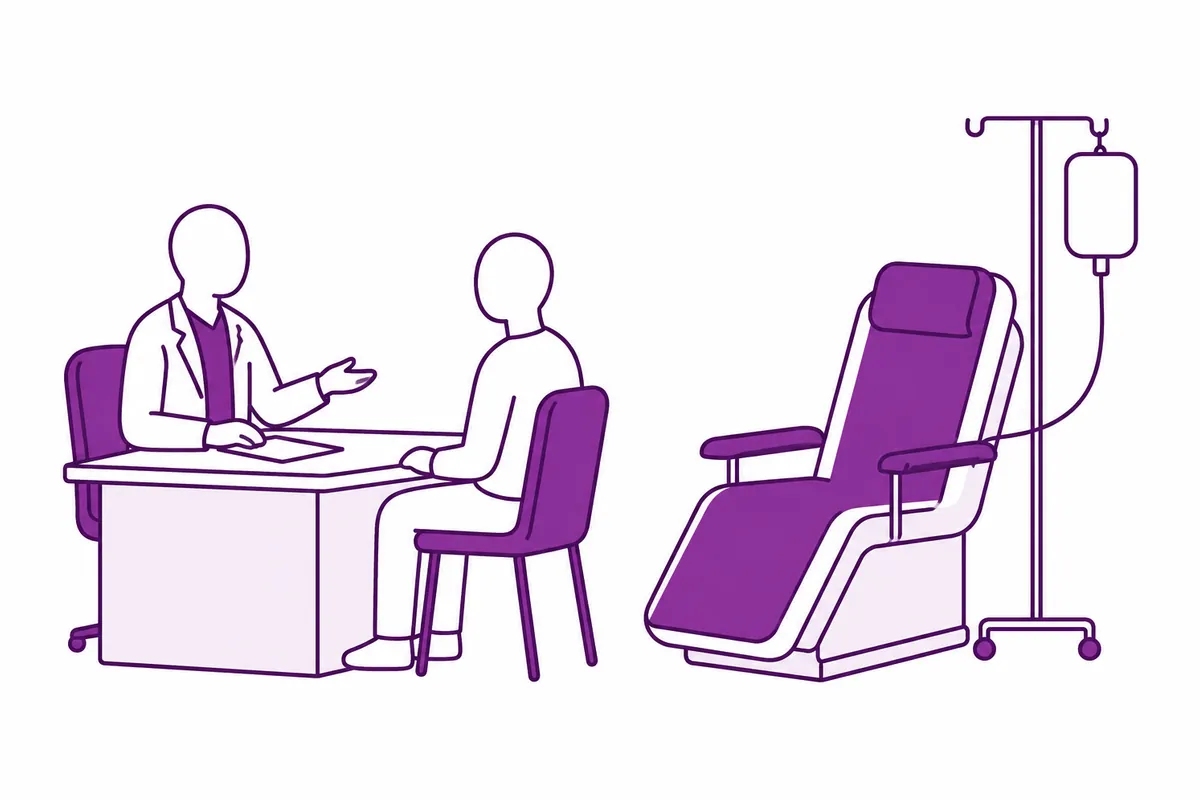
At most centres
Consultation and Day-care Chemotherapy
Specialist consultation, day-care chemotherapy in an infusion bay, blood tests, follow-up and supportive care. This is the bulk of a cancer course by number of visits.
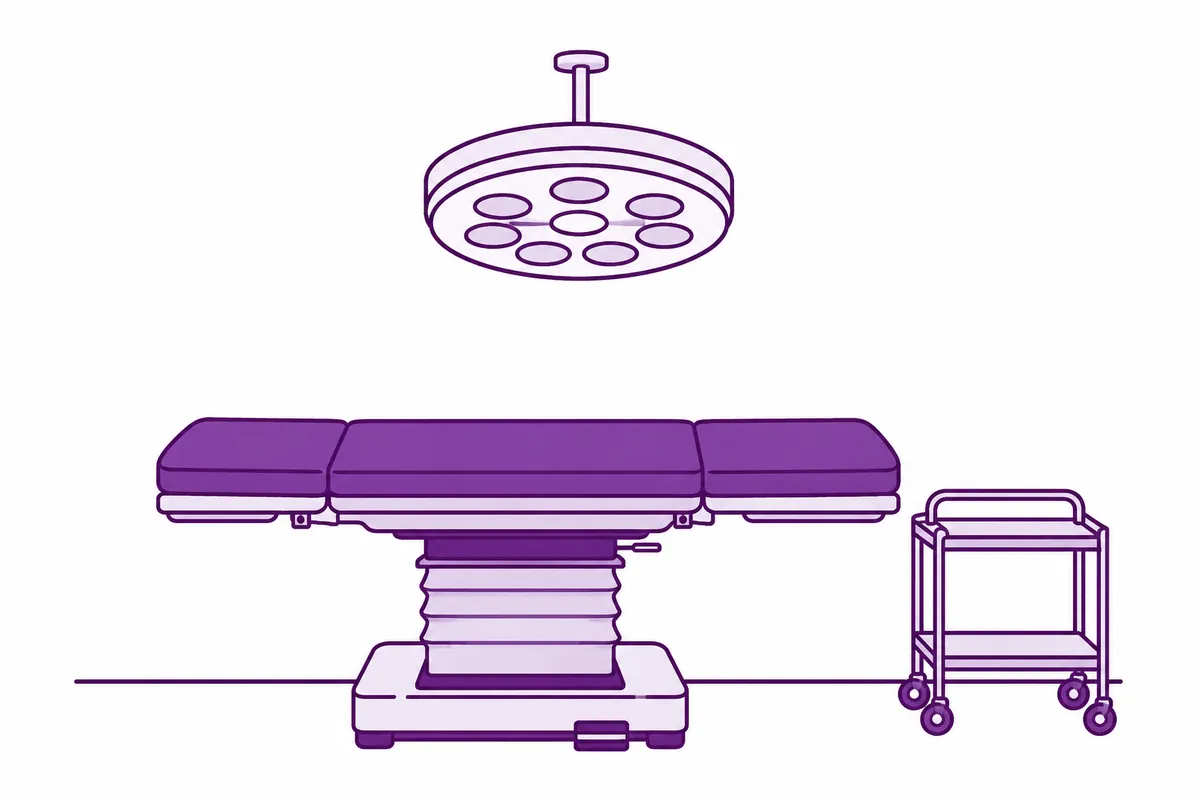
At the surgical centres
Oncology Surgery
Cancer operations are centralised where the theatre, the anaesthesia team and the intensive care exist. District clinics do not perform them.
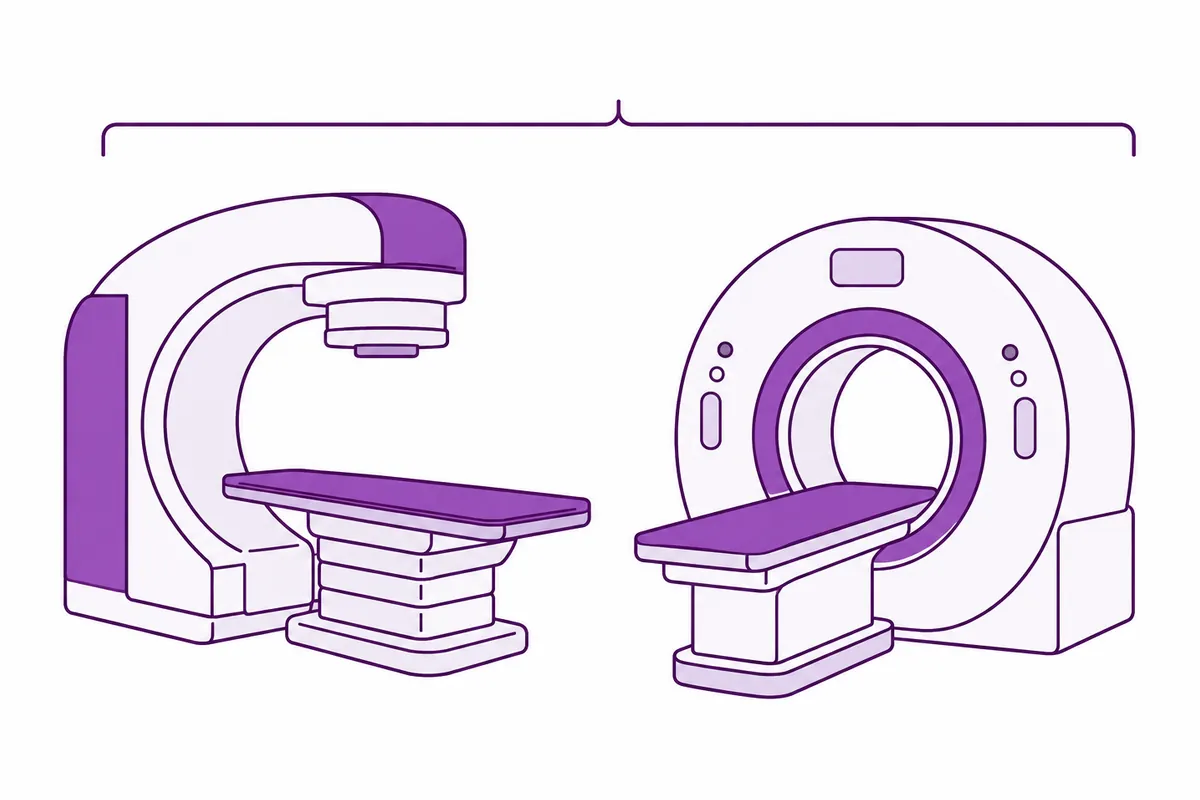
At partner centres
Radiation Therapy and PET-CT
Radiation needs a linear accelerator inside a shielded bunker. We coordinate it at NABH-accredited partner centres. CION itself is not NABH-accredited; the partner facilities are.
Local — at your nearest Hyderabad clinic
A first consultation happens at any of our Hyderabad clinics. Bring whatever you already have: biopsy report, scans, discharge summaries and previous prescriptions. No referral letter is needed.
You will see a specialist rather than a general physician. If your reports are incomplete, the missing tests get ordered at that visit rather than at a second appointment a week later.
You can ask for a female specialist when you book, and consultations run in Telugu, Hindi or English.
Travel · none beyond your nearest clinic.
This shows how care is usually organised across the network. Your own plan depends on your diagnosis and is decided with your oncologist.
Interactive
Which kind of centre fits your situation?
Answer 3 things and this will tell you which shape of hospital usually suits, and what to ask when you call. It does not assess your cancer and it is not a diagnosis.
Start by getting the diagnosis right
Before choosing a hospital, get the tissue diagnosis finished. Until a biopsy has confirmed what this is, and the pathology report names the type, no centre can give you a real plan. Choosing a hospital first and diagnosing second is the most common expensive mistake.
At this stage you want a centre that finishes the diagnosis quickly. It should not push you into a treatment decision in the same week. Any well-run oncology service can do this. Proximity matters more than prestige right now, because you may make several visits.
Ask 3 things on the phone. How long until the biopsy report. Whether receptor or marker testing is ordered at the same time. Whether the case goes to a tumour board once the report is in.
Next step · complete the pathology before comparing hospitals.
This tool gives general guidance on choosing a centre. It does not assess your cancer, does not give a diagnosis and is not medical advice. Speak to an oncologist about your own case — request a callback or call 1800 202 8726.
The 3 shapes
Cancer-only Institute, Multi-speciality Hospital, or Clinic Network?
This is the choice Hyderabad actually presents. Nobody names the trade-offs, so here they are, including the ones that count against us.
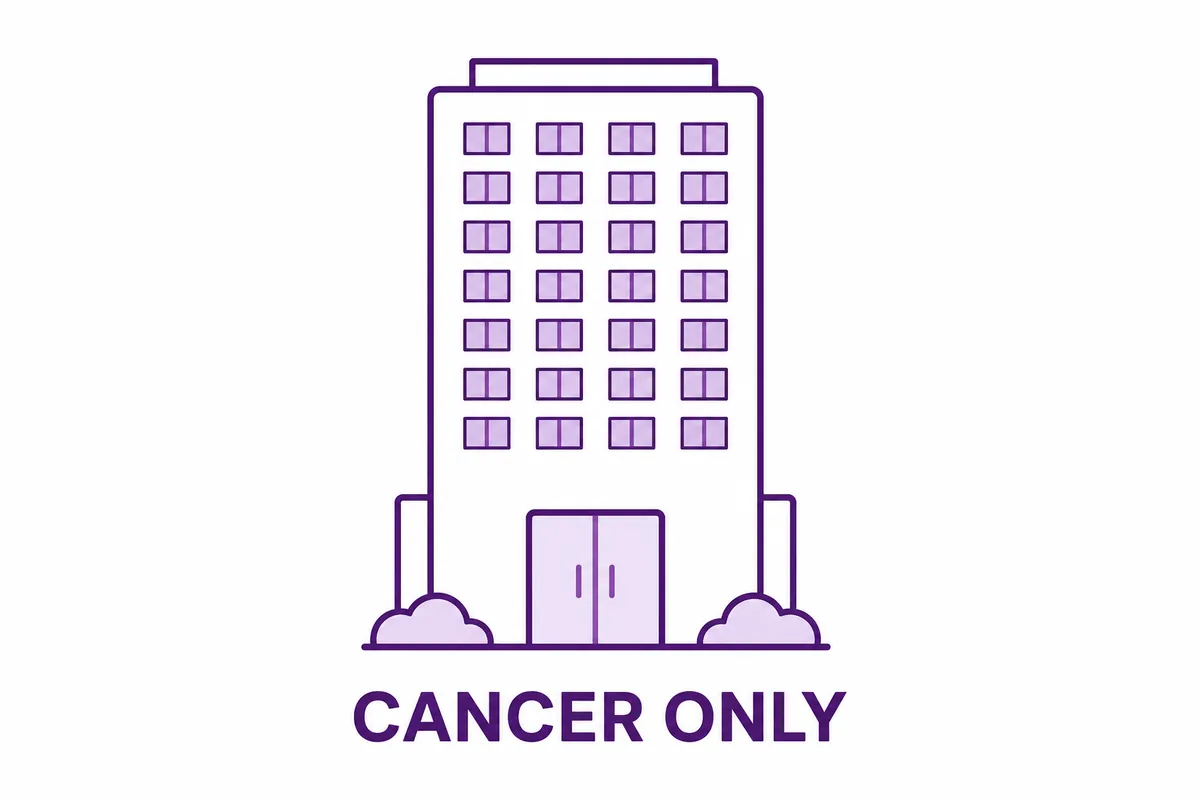
Cancer-only Institute
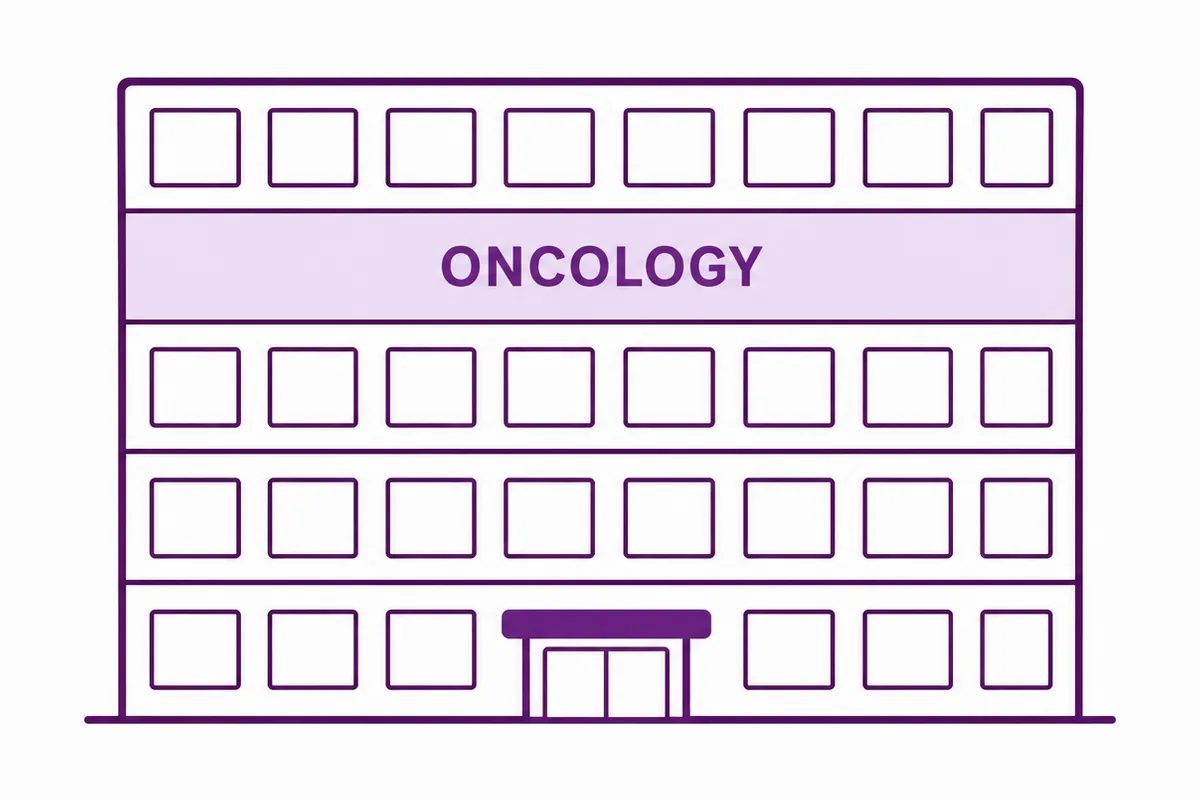
Multi-speciality Hospital
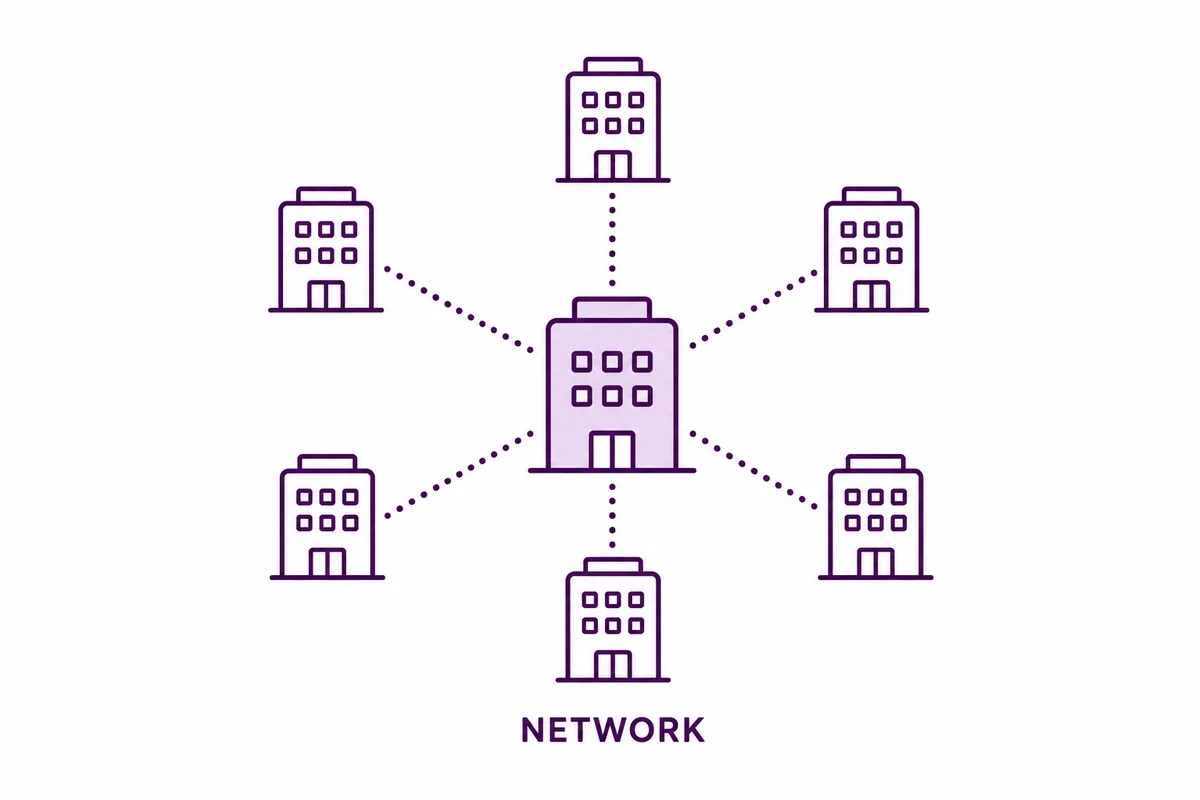
Cancer Clinic Network
| Cancer-only Institute | Multi-speciality Hospital | Cancer Clinic Network | |
|---|---|---|---|
| Built for | Cancer and nothing else. Deepest bench for rare and complex disease. | Everything. Oncology is one department among many. | Keeping routine cancer care close to where people live. |
| Who reviews your case | Usually a full tumour board, often sub-specialised by organ. | Varies widely. Sometimes a board, often a single consultant. | A shared panel across the network, meeting on a fixed schedule. |
| Travel burden | High if you live outside the city. Every visit is a city trip. | High for district families, for the same reason. | Low for consultation and chemotherapy. Higher for radiation and surgery. |
| Radiation and PET-CT | Usually on site. | Usually on site at the larger units. | Coordinated at partner centres, not at every clinic. |
| Complex surgery | Strongest. High volumes of difficult operations. | Strong at the larger units, thinner at smaller ones. | Centralised at the surgical centres, not done at district clinics. |
| Where it strains | Waiting lists, and distance for district families. | Cancer competes with every other department for theatre and beds. | Anything needing heavy equipment has to be coordinated elsewhere. |
| Suits you best if | Your disease is rare or advanced, and you live in or can move to the city. | You are already under their care for other conditions. | You need many months of routine visits and live outside central Hyderabad. |
CION is the third column. Some diseases are rare, and some operations are performed by only a handful of surgeons in India. In those cases a dedicated institute is very likely the better call. We will say so at the consultation.
Not sure which column you belong in?
Tell us the diagnosis and your district. We will say plainly whether we are the right centre for you, or which kind is.
Toll free 1800 202 8726 · No referral needed · Telugu, Hindi and English
The thing families fear most
No unnecessary tests, and no incentive to order them
Overtreatment is the fear nobody at a hospital wants to discuss. It deserves a direct answer, so here is ours.
Our oncologists are not rewarded for the number of tests or procedures they order. That removes the quiet pressure that bends decisions in a fee-per-procedure system.
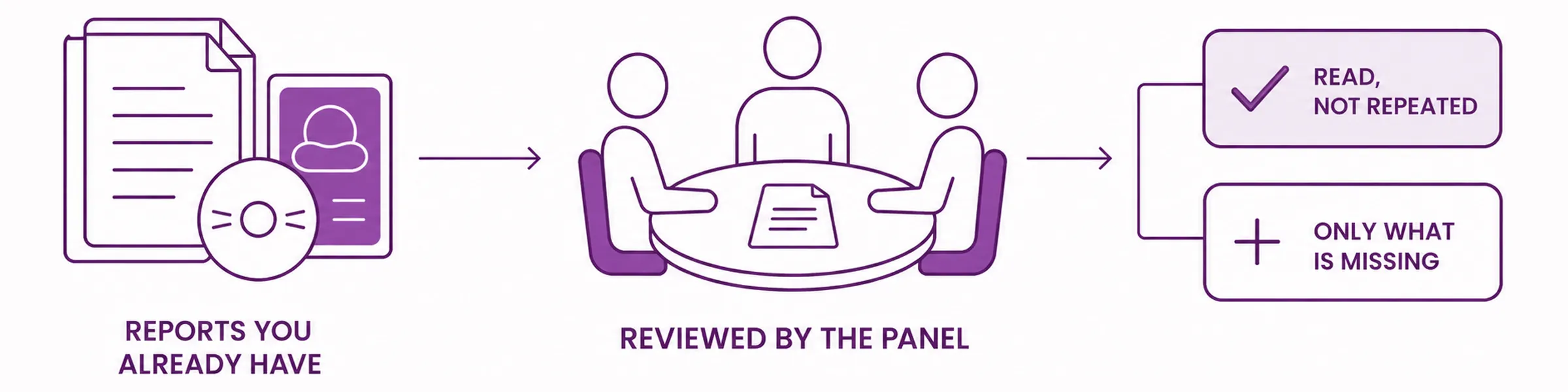
Reports you already have
Bring the scans and pathology done elsewhere, in the original. A recent, technically adequate scan is one we can work from. Nothing needs redoing simply because another centre did it.
Reviewed by the panel
Every case goes to a cancer panel, so what gets recommended has to survive 3 specialists looking at it. A test that only one person wants tends not to make it through.
Read, not repeated
Repeat imaging happens when there is a clinical reason, and you should be told what that reason is. Only what is genuinely missing gets ordered.
If money is the barrier
Say so at the first visit. Patient support and financial counselling exist for exactly this. Families who raise it early get help arranging the course. Families who stay silent tend to abandon treatment halfway, which is the worst outcome of all.
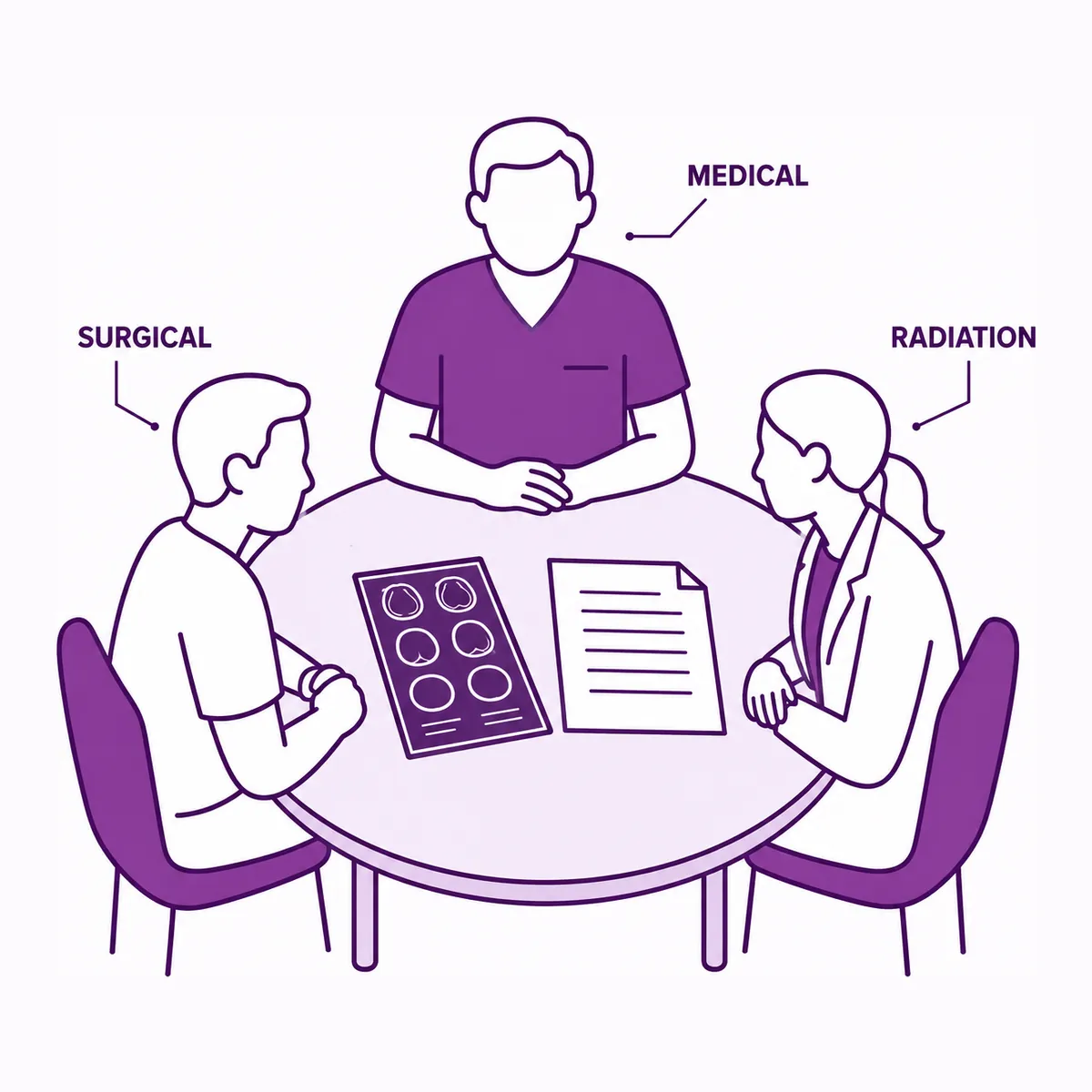
How the plan gets made
One doctor, or a team?
Your case is argued by 3 specialists at once, not decided by one. The plan is whatever survives that argument.
What it is
A scheduled meeting. Your scans, your pathology report and your history go in front of medical, surgical and radiation oncologists at the same time. Each argues from their own discipline.
Why it changes your treatment
Sequencing. For some cancers, systemic treatment before surgery shrinks the disease and allows a smaller operation. For others it wastes months. That call is genuinely contested.
What you get
The panel’s recommendation, in writing. You are entitled to ask who sat on the board and what the alternatives were.
What to ask for
The date your case is listed, and the 3 specialties reviewing it. A centre that runs a real board will answer both without hesitating.
If you live outside the city
You do not have to move to Hyderabad for Cancer Treatment
Families abandon treatment over the travel, not over the treatment. That is the real barrier here, and it has very little to do with medicine.
What the travel actually costs
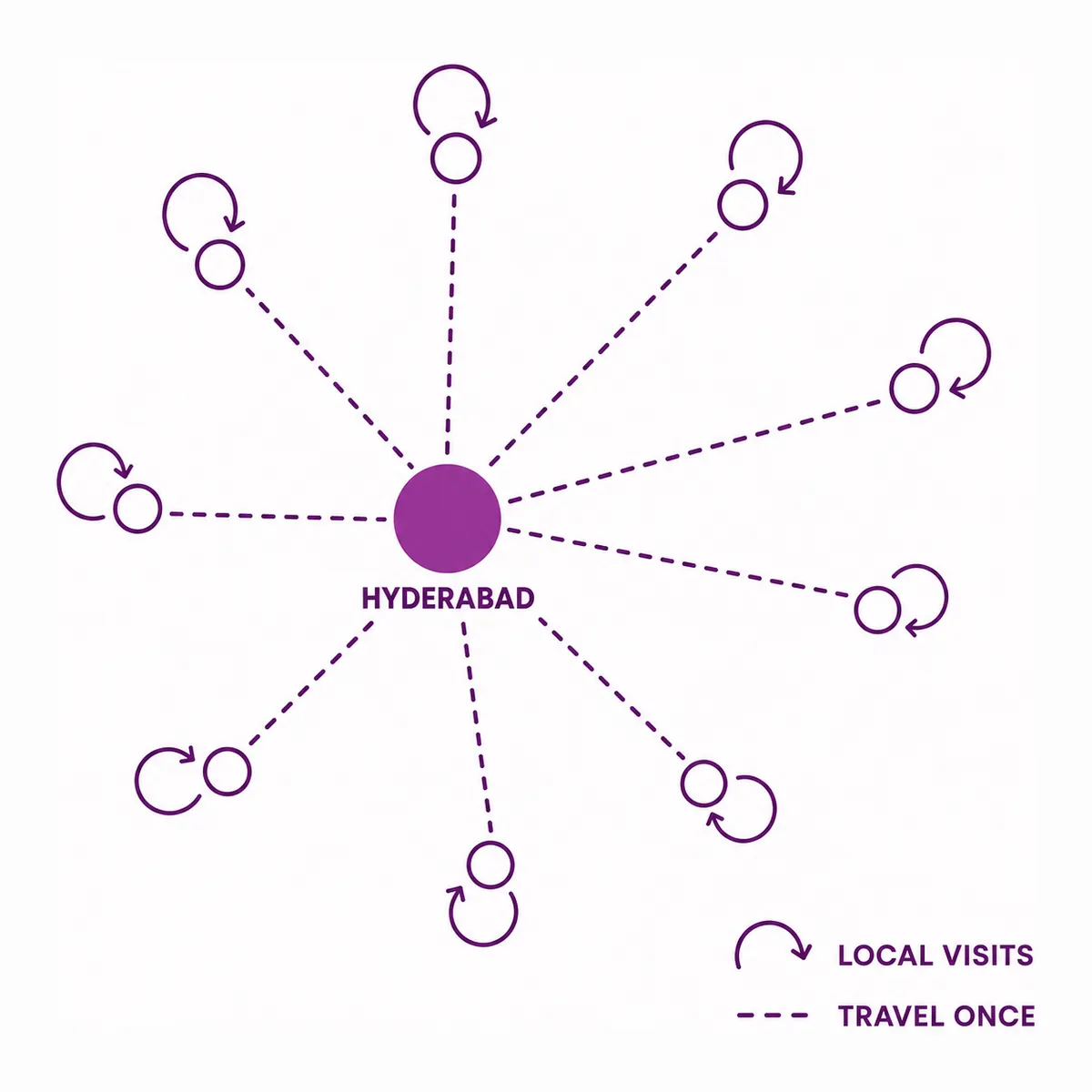
A course of chemotherapy might mean 15 to 20 visits over 6 months. From a district town that is 15 to 20 long bus journeys, days of lost wages, and often a night in a lodge.
The state agrees
Telangana is establishing day-care cancer centres in district teaching hospitals, precisely so patients stop travelling to Hyderabad for routine care.
What stays near home
38 centres across 16 districts means consultation, chemotherapy cycles and follow-up all happen locally. That is most of the course by number of visits.
What you travel for
Surgery, radiation and PET-CT, because those genuinely need city equipment. Then back home for everything else.
Money
What Cancer Treatment costs, and what the schemes cover
All figures anywhere on this site are indicative. Nobody can quote your cost before your diagnosis and plan are settled, and anyone who does is guessing.
Ask for the course, not the procedure
Get an indicative estimate broken into surgery, systemic treatment, radiation and tests. The single surgery figure is the one everyone compares and the one that misleads most.
Aarogyasri and NTR Vaidya Seva
Telangana’s Rajiv Aarogyasri and Andhra Pradesh’s Dr. NTR Vaidya Seva both cover eligible cancer treatment at empanelled centres, radiation therapy included. Both schemes have been revised recently, so check your own entitlement at the desk rather than relying on a figure online.
The room-rent trap
If you have private insurance, check the room-rent limit on your policy. Exceed it and some insurers scale down the whole claim, not just the room line. Room category is the one cost variable genuinely in your hands.
Cost detail by treatment lives on the treatment pages — for breast cancer, see the breast cancer hub. For an indicative estimate for your own case, request a callback.
Get an indicative estimate for the whole course
Not for one procedure. Bring your reports and the scheme desk will check your entitlement at the same visit.
Toll free 1800 202 8726 · All figures indicative, never a quotation · No referral needed
Where to find us
Our centres in and around Hyderabad
Addressed by landmark, because that is how this city navigates. Each centre also names the areas it serves, so you can place it without a map. Consultation and day-care Chemotherapy run at every one of them.
Not sure which centre fits best?
Tell us where you are and what the diagnosis is. We will name the closest centre that has the right specialists, rather than the closest one on the map.
The panel
The Oncologists who would review your case
Read this across, not down. Your case does not go to one of these columns. It goes in front of the relevant ones together, which is what criterion 1 on this page is about. Every name links to that specialist’s own page.
Medical & Haemato Oncology
Chemotherapy, targeted and immune treatment, and blood cancers
7 specialists
- Dr. Naresh GunduHOD, Medical Oncology10+ years
- Dr. T. Raghavender Reddy10+ years
- Dr. Basudev PokhrelHaematologist10+ years
- Dr. C. Raghavendra ReddyHead of the Centre8+ years
- Dr. Bharati Devi Gorantla8+ years
- Dr. Owais Mohammed8+ years
- Dr. N. Kiranmayee7+ years
Surgical Oncology
Cancer operations
7 specialists
- Dr. Muralidhar Muddusetty20+ years
- Dr. Mohammed ImaduddinHOD, Surgical Oncology10+ years
- Dr. Raghavendra Naik10+ years
- Dr. Vinay MamidalaHead of the Centre8+ years
- Dr. Paila Gowri Naidu7+ years
- Dr. Sridhar Kamani6+ years
- Dr. Vajja Sandeep Kumar5+ years
Radiation Oncology
Planning and delivering radiotherapy
3 specialists
- Dr. Venkata Sushma P15+ years
- Dr. Kirti Ranjan Mohanty10+ years
- Dr. Gangadhar Vajrala10+ years
Asked quietly, answered plainly
The questions families ask when the doctor leaves the room
6 things people ask us once the consultation is over. Tap any one to open it.
Will a bigger, more expensive hospital give better treatment?
Not automatically. For most common cancers, the treatment protocols are the same everywhere — the NCCN and ESMO guidelines are published and widely followed. What differs is three things. Whether a panel makes the plan. Whether the surgeon does that operation often. Whether the course is finished without interruption.
Price tracks room category, city location and brand far more than it tracks clinical quality. A family that spends everything on the first admission and then cannot afford the chemotherapy cycles has bought the wrong thing.
Is a cancer-only hospital always better than a general hospital?
For rare cancers and complex operations, usually yes. Volume matters in surgery, and a dedicated institute sees more unusual disease in a month than a general unit sees in a year.
For common cancers needing standard treatment over many months, the advantage shrinks and can reverse. Suppose a dedicated institute is 3 hours away and you need 20 visits. The practical outcome may be worse than good care nearby, because interrupted treatment is worse than either.
Am I being given more treatment than I need?
It is a fair question and you should ask it out loud. The useful version is specific: ask which of the recommended tests change the treatment decision, and what would happen if a particular one were skipped.
A good oncologist will answer that directly, because for each test there is a real reason or there is not. Also ask whether your case went to a tumour board. Panel review is the strongest protection against a single doctor over-reaching in their own specialty.
Should I go to Hyderabad, or is treatment near home good enough?
Split the question by treatment type. Diagnosis, consultation and chemotherapy can be delivered well close to home, and doing them locally protects your ability to complete the course.
Surgery and radiation are different. Those need equipment and teams that exist in a limited number of places, and travelling for them is usually the right call. Plan the journey and the money for that part in advance rather than discovering it mid-course.
If I ask for a Second Opinion, will my doctor be offended or drop me?
A competent oncologist expects it and will hand over your file. Second opinions are routine in cancer care and are frequently useful, because the sequencing of treatment is genuinely debatable in many cases.
You do not need to frame it as distrust. “My family would like one more view before we start” is enough. If the reaction is pressure or delay, that answer itself is information about the centre.
Should we tell the patient the diagnosis?
Yes. Across Telangana and Andhra Pradesh, families often hear the diagnosis first and decide to keep it from the patient. It is almost always done out of love. It rarely works and it makes treatment harder.
People sense that something serious is being managed around them, and the fear of the unknown is heavier than the fact. Consent, adherence to a long treatment course and decisions about work and money all need the patient to know. Bring the disagreement into the consultation and let the oncologist help.
Frequently asked questions
Which is the best Cancer Hospital in Hyderabad?
There is no single best one. The right centre depends on your cancer type, your stage and what your family can sustain over the whole course. Judge a hospital on 5 things. Whether a tumour board reviews your case. Which parts of treatment happen at that address. How the doctors are paid. How it responds to a second-opinion request. Whether it gives you an indicative estimate for the full course rather than one procedure.
Do I need a referral to see an oncologist at CION?
No. You can book a consultation directly on 1800 202 8726 or through the form on this page. Bring any biopsy report, scans, discharge summaries and prescriptions you already have, even if they are incomplete.
Is CION NABH accredited?
CION itself is not NABH-accredited. Care that needs an accredited facility — including radiation therapy and inpatient surgical care at partner sites — is delivered inside NABH-accredited partner centres. We state this plainly because several hospital websites in this city imply accreditation they do not hold.
Does Aarogyasri cover Cancer Treatment?
Rajiv Aarogyasri in Telangana and Dr. NTR Vaidya Seva in Andhra Pradesh both cover eligible cancer treatment at empanelled centres, and radiation therapy is among the treatments covered. Eligibility depends on your documents, and both schemes have been revised recently. Have the scheme desk check your entitlement rather than relying on a figure found online.
Can I get Chemotherapy near my home and surgery in Hyderabad?
Yes, and for district families that is usually the sensible arrangement. Surgery is centralised where the theatre and intensive care are. Chemotherapy cycles and follow-up can run at the centre closest to you, which removes most of the travel from the longest part of the course.
How many Oncologists does CION have?
More than 17 oncologists work across the network, spanning medical, surgical and radiation oncology, supported by pathology, genetic counselling and psycho-oncology. The panel that reviews your case is drawn from all 3 oncology specialties rather than one.
Is the first consultation free?
Yes. The first specialist consultation is free, and no referral letter is needed to book it. Bring whatever reports you already have, even an incomplete set.
If the cost of treatment itself is a barrier, say so at that visit. Financial counselling exists precisely for this, and it works far better before treatment starts than halfway through.
Do you charge for a second opinion?
No. A written second opinion is free. Bring your biopsy or pathology report, your scan films and the treatment plan you have been given, and you will get our view in writing.
You do not need to leave your current doctor to get one, and you are not committing to treatment here by asking. A written opinion is also the version worth having, because you can take it back to the team treating you.
Can I ask for a female oncologist?
Yes. Say so when you book and it will be arranged where a female specialist is available at that centre. For many women it is the difference between attending the appointment and postponing it, so it is a normal request rather than an awkward one.
What should I bring to the first appointment?
Every report you have, in the original. Biopsy or pathology report, all scan films and CDs, blood test results, discharge summaries, and the list of medicines currently prescribed. Also bring your ration card or scheme documents if you may be eligible for Aarogyasri or NTR Vaidya Seva. Incomplete paperwork is not a reason to delay the visit.
Still deciding?
Bring whatever reports you have. The consultation is free, and so is a written second opinion.
Bring your reports. Get a plan, not a sales pitch.
The consultation is free, and so is a written second opinion. Your existing scans get read rather than repeated, and your case goes in front of the panel. No referral needed.
Toll free 1800 202 8726 · Advancing Care. Passionately.
Medically reviewed by Dr. N. Kiranmayee, Medical Oncology. Last reviewed: 05 Aug 2026. This page is general information about choosing cancer care and is not a substitute for consultation with a qualified oncologist. All costs referred to are indicative.