
Breast cancer care across CION centres in Hyderabad · ArogyaSri, CGHS & cashless insurance accepted · Call 1800 202 8726
Breast Cancer · Patient Guide

Breast Cancer — Types, Symptoms & When to See a Specialist

Breast cancer is the most common cancer in Indian women — and one of the most curable when caught early. Survival rates for Stage I breast cancer in modern Indian centres now exceed 95%. Yet the average Indian woman is still diagnosed at a more advanced stage than her counterpart in many Western countries, largely because regular breast self-examination, clinical breast examination, and screening mammography are not yet routine. Understanding the early warning signs, knowing your individual risk, and acting promptly on any change can shift outcomes dramatically.

  • Most common cancer in Indian women — and one of the most curable when caught early
  • Stage I 5-year survival above 95% with timely diagnosis and modern treatment
  • Tumor board for every patient — multidisciplinary, evidence-based care
  • Written second opinion — 45-minute consultation · transparent costs
4.8 · 1000+ Google reviews · 15,000+ patients treated

Book a consultation

Leave your details and our team will call you back.

Free call back. Your details stay private.

17+
Cancer Specialists
on Panel
96.9%
Breast Cancer
Survival Rate*
15,000+
Patients
Treated
4.8★
Google Rating
(800+ reviews)
Patient Guide

What is Breast Cancer?

Breast cancer occurs when cells in the breast — most often in the ducts that carry milk to the nipple, or in the milk-producing lobules — grow uncontrollably and form a tumour. Most breast cancers begin as a small, painless lump that grows slowly over months or years. Some begin as a pre-invasive cancer (called ductal carcinoma in situ, or DCIS) confined to the duct, which over time can progress to invasive cancer that grows into surrounding breast tissue and, eventually, beyond the breast.

Breast cancer is the most common cancer in women worldwide and the most common cancer in urban Indian women. It is also one of the most successfully treated cancers when caught early — modern treatment combines surgery (often breast-conserving rather than full mastectomy), radiation, chemotherapy, targeted therapy, hormonal therapy and immunotherapy, tailored to each tumour's biology. Men can also develop breast cancer, though it is rare and accounts for less than 1% of all cases. Outcomes today depend more on stage at diagnosis and tumour biology than on the patient's age or family history alone — which is why early detection through self-examination, clinical examination and screening mammography matters so much.

Cell type & molecular subtype

Types of Breast Cancer

Breast cancers are classified in two complementary ways — by the cell type from which the cancer arises, and by the molecular receptors it expresses. Both classifications matter for treatment.

Invasive Ductal Carcinoma (IDC)

The most common type, accounting for around 70–80% of breast cancers. IDC begins in the milk ducts and breaks through the duct wall to grow into the surrounding breast tissue. Treatment usually combines surgery (lumpectomy or mastectomy), radiation, and systemic therapy guided by molecular receptor status.

Invasive Lobular Carcinoma (ILC)

Accounts for around 10–15% of breast cancers. ILC begins in the milk-producing lobules and tends to grow in a sheet-like pattern that can be harder to feel as a distinct lump and harder to see on mammograms. Treatment principles are similar to IDC but the surgical approach may need to be more cautious.

Ductal Carcinoma In Situ (DCIS)

Pre-invasive breast cancer confined to the milk ducts and not yet invading surrounding tissue. DCIS is typically detected by screening mammography rather than as a felt lump. Treatment is usually surgery (often breast-conserving) sometimes followed by radiation, with cure rates above 95%.

Triple-Negative Breast Cancer (TNBC)

A molecular subtype rather than a tissue type — defined by tumours that lack oestrogen receptors, progesterone receptors and HER2. TNBC tends to occur in younger women and to grow more aggressively, but is highly responsive to chemotherapy. Modern immunotherapy and PARP inhibitor combinations have meaningfully improved outcomes.

HER2-Positive Breast Cancer

A molecular subtype defined by over-expression of the HER2 protein. Once considered the most aggressive form of breast cancer, HER2-positive disease is now one of the most treatable thanks to HER2-targeted therapies (trastuzumab, pertuzumab, T-DM1, T-DXd). Cure rates for HER2-positive early breast cancer now match or exceed those of other types.

Hormone Receptor-Positive Breast Cancer

Tumours that express oestrogen and/or progesterone receptors — the most common molecular subtype, accounting for around 70% of breast cancers. These cancers respond to hormonal therapy (tamoxifen, aromatase inhibitors, fulvestrant, CDK4/6 inhibitors), which can dramatically reduce recurrence even after surgery.

Inflammatory Breast Cancer

A rare but aggressive form of breast cancer that presents with rapid swelling, redness, warmth and an orange-peel appearance of the breast skin — often without a distinct lump. Easily mistaken for an infection (mastitis). Requires urgent specialist evaluation and intensive multimodal treatment.

Male Breast Cancer

Rare, accounting for less than 1% of all breast cancers. Usually presents as a painless lump behind the nipple in older men, sometimes with nipple retraction or discharge. Treated with similar principles to female breast cancer, with hormonal therapy particularly important since most male breast cancers are hormone receptor-positive.

For detailed information on diagnosis, breast-conserving surgery and oncoplastic options, sentinel lymph node biopsy, modern radiation therapy, targeted therapy and personalised systemic therapy, see our dedicated page on breast cancer treatment in Hyderabad.

Early warning signs

Common Signs & Symptoms of Breast Cancer

Most breast cancers begin as a painless lump, but several other early signs are equally important. Watch for any of the following:

Indian context

Breast Cancer in Telangana & Andhra Pradesh

Breast cancer is now the most common cancer in women across urban Telangana and Andhra Pradesh — and incidence is rising steadily, driven by urbanisation, delayed childbearing, falling rates of prolonged breastfeeding, and rising obesity. A particular Indian pattern matters: breast cancer in Indian women tends to occur about a decade earlier than in Western women, with a meaningful share of cases in women under 40.

Despite this, screening mammography remains underused, and most women are still diagnosed only when they notice a lump themselves — often after months of monitoring. The single most useful step in this region is straightforward: any woman over 40 should have a clinical breast examination annually and a screening mammogram every 1 to 2 years, and any woman with a strong family history should consider genetic counselling and BRCA testing, with mammography starting earlier. Aarogyasri coverage for eligible families and EMI options make modern breast cancer treatment accessible.

Talk to our team

Have questions about breast cancer? Speak to a specialist.

Call the helpline or leave your details, and someone will help you arrange a consultation at the CION centre nearest you. One helpline serves every CION centre.

Call 1800 202 8726 Helpline open 24/7

Request a call back

Share your number and a specialist's team will call you.

Free call back. Your details stay private.

Speak with a CION Breast Specialist

45-minute consultation, tumor-board reviewed, written second opinion — decisions for healing, not billing.

Why it happens

Common Causes & Risk Factors

Breast cancer typically develops from a combination of inherited, hormonal, and lifestyle factors. Established risk factors include:

  • Female sex
  • Increasing age (most breast cancers occur after the age of 40)
  • A personal history of breast cancer or certain benign breast conditions (atypical hyperplasia, lobular carcinoma in situ)
  • Family history of breast or ovarian cancer in a first-degree relative
  • Inherited mutations in BRCA1, BRCA2 or other breast cancer susceptibility genes (PALB2, TP53, CHEK2, ATM, PTEN)
  • Early onset of periods (before age 12) or late menopause (after age 55)
  • Never having been pregnant, or first pregnancy after age 30
  • Not breastfeeding, or breastfeeding for short durations only
  • Long-term hormone replacement therapy after menopause
  • Long-term use of certain oral contraceptive pills (small increase in risk)
  • Previous radiation therapy to the chest (especially before age 30)
  • Obesity, particularly after menopause
  • Heavy alcohol consumption
  • Physical inactivity
  • Dense breast tissue on mammography
Red flags

When to See a Breast Cancer Specialist

Any of the following should prompt a clinical breast examination and, when needed, mammography or breast ultrasound — without further self-monitoring:

  • A new lump or thickening felt in the breast or armpit
  • A change in the size, shape, or feel of one breast
  • Any new skin or nipple change — dimpling, puckering, redness, retraction, scaling, or discharge
  • Blood-stained or clear-and-watery nipple discharge from one breast
  • A breast that becomes red, swollen or warm without an obvious infection (especially if not breastfeeding)
  • An ulcer or non-healing wound on the breast skin
  • An abnormal screening mammogram or breast ultrasound
  • A first-degree relative with breast or ovarian cancer, especially diagnosed at a young age (consider BRCA testing)

A short specialist consultation and the right diagnostic test — imaging, biopsy, or blood test as appropriate — is usually enough to confirm or rule out cancer. Early action is always easier than catching up later.

A New Breast Lump or Mammogram Due?

Free consultation. Tumor-board reviewed. No commitment to start treatment.

or
Call 18002028726
Where to get care

Specialist Breast Cancer Care at CION Cancer Clinics

Our NABH-accredited centres across Hyderabad deliver evidence-based breast cancer care — from clinical breast examination, mammography, ultrasound and MRI through to image-guided core-needle biopsy, breast-conserving surgery (lumpectomy with oncoplastic reconstruction), modified radical mastectomy with immediate or delayed reconstruction, sentinel lymph node biopsy, advanced radiation therapy (IMRT/IGRT/partial breast irradiation), chemotherapy, hormonal therapy, HER2-targeted therapy, CDK4/6 inhibitors, immunotherapy and PARP inhibitors for eligible patients — guided by NCCN and ESMO protocols and reviewed for every patient by a multidisciplinary breast tumour board.

For a detailed walk-through of breast cancer diagnosis, treatment options, costs, and our specialist team, see our dedicated page on breast cancer treatment in Hyderabad, meet our specialist breast cancer doctors, or learn why patients across Telangana choose CION as the best breast cancer hospital in Hyderabad.

Disclaimer: This page is intended for general informational purposes only and does not constitute medical advice, diagnosis, or treatment. Always consult a qualified oncologist for guidance specific to your medical condition. Content on this page is periodically reviewed and updated by CION's medical team in accordance with current clinical guidelines.
Take the first step

Early Action is Always Easier Than Catching Up Later

Free consultation, clear next steps, no pressure to start treatment.

Real Stories. Real Voices.

15,000+ patients chose CION. Hear from them directly.

These aren't paid endorsements or written reviews. These are video testimonials from real patients and families — recorded on their own phones, in their own words. Pick any one. Watch it. Then decide.


4.8★800+ Google reviews
50+video testimonials
15,000+patients treated

Successful Radiation Therapy — Dr. Kirti Ranjan Mohanty

Watch video →

Surgery, Chemo & Radiation — Dr. Imad, Dr. Vinay, Dr. Owais, Dr. Kirti

Watch video →

Successful Chemotherapy — Dr. C Raghavendra Reddy

Watch video →

Successful Radical Thymectomy — Dr. Imaduddin & Dr. Vinay

Watch video →

Successful Breast Cancer Surgery — Dr. Imaduddin & Dr. Vinay

Watch video →

Successful Chemotherapy — Dr. Bharati Devi Gorantla

Watch video →
Meet the Specialists

17+ senior cancer specialists. One panel for your case.

Trained at AIIMS, Tata Memorial, and leading international centres. Combined 150+ years of experience. Every complex case is reviewed by 3+ of them — together.

Dr. Naresh Gundu
Medical Oncologist

Dr. Naresh Gundu

MBBS, DNB (Internal Medicine), DM (Medical Oncology)

View Profile
Dr. C. Raghavendra Reddy
Medical Oncologist

Dr. C. Raghavendra Reddy

MBBS(Gold Medal), DNB(General Medicine), DM(Medical Oncology)(Gold Medal)

View Profile
Dr. Bharati Devi Gorantla
Medical Oncologist

Dr. Bharati Devi Gorantla

MBBS, MD(General Medicine), DM(Medical Oncology)(Adyar,Chennai), ECMO, MRCP SCE(UK)

View Profile
Dr. Owais Mohammed
Medical Oncologist

Dr. Owais Mohammed

MBBS, MD (General Medicine), DrNB (Medical Oncology), ECMO, MRCP SCE (Medical Oncology) (UK)

View Profile
Dr. T. Raghavender Reddy
Medical Oncologist

Dr. T. Raghavender Reddy

MBBS, DM (Medical Oncology), MD (Radiation Oncology)

View Profile
Dr. N. Kiranmayee
Medical Oncologist

Dr. N. Kiranmayee

MBBS, DM (Medical Oncology), MD (Internal Medicine)

View Profile
Dr. Muralidhar Muddusetty
Surgical Oncologist

Dr. Muralidhar Muddusetty

MBBS (AIIMS), MS (Surgery) (AIIMS), DNB (Surgical Oncology), MRCS (Edinburgh)

View Profile
Dr. Raghavendra Naik
Surgical Oncologist

Dr. Raghavendra Naik

MBBS, MS (General Surgery), M.Ch (Surgical Oncology)

View Profile
Dr. Mohammed  Imaduddin
Surgical Oncologist

Dr. Mohammed Imaduddin

M.B.B.S, MS (General Surgery), M.Ch (Surgical Oncology)

View Profile
Dr. Vinay Mamidala
Surgical Oncologist

Dr. Vinay Mamidala

MBBS, MS(General Surgery), M.Ch(Surgical Oncology), FMAS, FARIS(Ongoing)
View Profile
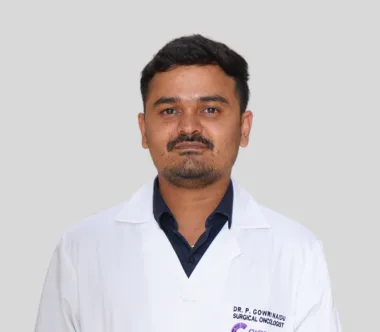
Dr. Paila Gowri Naidu
Surgical Oncologist

Dr. Paila Gowri Naidu

MBBS, MS (General Surgery), M.Ch (Surgical Oncology), FMAS

View Profile
Dr. Venkata Sushma P
Radiation Oncologist

Dr. Venkata Sushma P

MBBS, MD (Radiation Oncology)

View Profile
Dr. Kirti Ranjan Mohanty
Radiation Oncologist

Dr. Kirti Ranjan Mohanty

MBBS, MD (Radiation Oncology)

View Profile
Dr. Gangadhar Vajrala
Radiation Oncologist

Dr. Gangadhar Vajrala

MBBS, MD (Radiation Oncology), MPH

View Profile
Dr. Basudev Pokhrel
Hematologist

Dr. Basudev Pokhrel

MBBS, M.D (Immunohematology & Blood Transfusion)

View Profile
Dr. Vajja Sandeep Kumar
Surgical Oncologist

Dr. Vajja Sandeep Kumar

MBBS, MS (General Surgery), DrNB (Surgical Oncology), FALS Oncology

View Profile
Dr. Sridhar Kamani
Surgical Oncologist

Dr. Sridhar Kamani

MBBS, MS (General Surgery), DrNB (Surgical Oncology)

View Profile

Want a specific doctor for your case? Mention them when booking.

Book Free Consultation

Where to find us

Our centres in and around Hyderabad

Addressed by landmark, because that is how this city navigates. Each centre also names the areas it serves, so you can place it without a map. Consultation and day-care Chemotherapy run at every one of them.

CION Ameerpet

Beside Blue Fox Hotel, Satyam Theatre Road

Begumpet SR Nagar Punjagutta
CION Kukatpally

Opposite Big Bazaar, Mumbai Highway

KPHB JNTU Bharat Nagar
CION L.B. Nagar

Anu Arcade, next to L.B. Nagar Metro station

Vanasthalipuram Nagole Hayathnagar
CION Tolichowki

Inside Premier Hospital, Khader Bagh Road

Mehdipatnam Attapur Rethibowli
CION Masab Tank

Mahavir Hospital, AC Guards, Lakdikapul

Lakdikapul Khairatabad Basheer Bagh
CION Banjara Hills

Road No. 12

Jubilee Hills Madhapur Film Nagar
CION Kompally

Suchitra Circle, NH-44

Suchitra Circle Alwal Dundigal
CION Balanagar

Balanagar Main Road

Balanagar Fatehnagar Moosapet
CION Siddipet

Lohith Sai Hospital, Shivaji Nagar

Gajwel Husnabad Dubbaka
CION Sangareddy

X Roads, Pothreddipalle

Narayankhed Zaheerabad Patancheru

Talk to our team

Have questions about breast cancer? Speak to a specialist.

Call the helpline or leave your details, and someone will help you arrange a consultation at the CION centre nearest you. One helpline serves every CION centre.

Call 1800 202 8726 Helpline open 24/7

Request a call back

Share your number and a specialist's team will call you.

Free call back. Your details stay private.

Common questions

Breast Cancer — Frequently Asked Questions

What is the first sign of breast cancer?

The most common first sign is a new painless lump or thickening in the breast or armpit. Other early signs include a change in the size, shape or contour of one breast, skin changes over the breast (dimpling, puckering, redness, an orange-peel appearance), nipple changes (recent inward retraction, scaling, persistent crusting), and discharge from one nipple — especially if blood-stained or clear-and-watery. Pain is not usually an early sign of breast cancer, but any persistent unexplained breast pain in one area also deserves evaluation. Any new or changing breast finding deserves a clinical examination — not further self-monitoring.

Are all breast lumps cancer?

No — the great majority of breast lumps are benign. Fibroadenomas (smooth, mobile lumps common in younger women), simple cysts, fibrocystic changes and benign breast disease together account for most breast lumps, especially in women under 35. However, distinguishing benign from cancerous lumps cannot be done reliably by feel alone — it requires a clinical examination combined with imaging (ultrasound for younger women, mammography for women over 35–40) and, when needed, a core-needle biopsy. The combination of these three steps — clinical examination, imaging and biopsy when needed — is called triple assessment and gives a definitive answer in nearly all cases.

Should I get a mammogram? At what age?

Most current guidelines recommend annual or biennial screening mammography for women aged 40–74 at average risk. Women with a strong family history of breast or ovarian cancer, a known BRCA1 or BRCA2 mutation, or previous chest radiation may need to start earlier — sometimes from age 25–30 — and may benefit from breast MRI in addition to mammography. Women with dense breasts may benefit from supplemental ultrasound. Women over 75 should discuss continued screening with their doctor based on overall health. A specialist breast clinic can advise on the right screening schedule for your individual risk.

Is breast cancer curable?

Yes — breast cancer is highly curable when caught early. Stage I breast cancer has 5-year survival rates above 95%, and many patients with early-stage hormone-receptor-positive or HER2-positive disease are cured outright with modern treatment. Even locally advanced (Stage III) breast cancer is cured in a substantial proportion of patients with combined chemotherapy, surgery, radiation and targeted or hormonal therapy. Advanced (Stage IV) breast cancer is not usually curable but can often be controlled for many years with modern systemic therapy, with patients living active lives.

Should I get tested for BRCA gene mutations?

BRCA1 and BRCA2 testing is recommended for women with a strong family history of breast cancer or ovarian cancer — particularly if a first-degree relative was diagnosed before age 50, if multiple relatives are affected, if breast and ovarian cancers occur in the same family, if a male relative had breast cancer, or if the family is of Ashkenazi Jewish background. BRCA testing is also recommended for women diagnosed with breast cancer before 50, triple-negative breast cancer at any age, bilateral breast cancer, or both breast and ovarian cancer. Genetic counselling before testing is essential — it ensures the right person in the family is tested first and that results are interpreted in context. BRCA testing is now available across Hyderabad.

Explore more

Breast Cancer Topics

Browse our complete guide to breast cancer — types, symptoms, tests and treatments. Tap any topic to read more.

HER2-Targeted Therapy

Cost of a full year of HER2 therapy in India De-escalated HER2 treatment for small tumours What happens if your heart function drops during treatment? Ejection fraction monitoring on HER2 therapy HER2-low breast cancer HER2-positive and hormone-positive together The full HER2 treatment pathway How does pertuzumab work, and who is it for? How does trastuzumab emtansine work, and who is it for? How long will you be on pertuzumab? Is adding pertuzumab worth the extra cost? Missed a dose of pertuzumab? What to do Missed a dose of trastuzumab emtansine? What to do Neratinib as extended adjuvant HER2 therapy Pertuzumab, fertility, menopause and sexual health How much does pertuzumab actually help? The numbers explained Pertuzumab cost in India Diarrhoea and rash on pertuzumab Heart function monitoring on dual HER2 blockade Pertuzumab infusion day Medicines, foods and supplements to avoid on pertuzumab Tests and monitoring while you are on pertuzumab Pertuzumab myths Pertuzumab (Perjeta) for breast cancer Pertuzumab side effects Pertuzumab T-DM1 infusion day Liver enzyme rises and nerve changes on T-DM1 Low platelets and bleeding risk on T-DM1 T-DM1 myths T-DM1 vs continuing trastuzumab after residual disease Trastuzumab emtansine (T-DM1) after residual disease Trastuzumab biosimilars in India Trastuzumab emtansine, fertility, menopause and sexual health How much does trastuzumab emtansine actually help? The numbers explained Trastuzumab emtansine cost in India Medicines, foods and supplements to avoid on trastuzumab emtansine Trastuzumab emtansine side effects Trastuzumab emtansine (Kadcyla) for breast cancer Lapatinib and tucatinib Why exactly twelve months of trastuzumab?

Hormone Therapy Medicines

Anastrozole, fertility, menopause and sexual health How much does anastrozole actually help? The numbers explained Anastrozole cost in India Medicines, foods and supplements to avoid on anastrozole Cholesterol, bone density and long-term effects of anastrozole Tests and monitoring while you are on anastrozole Anastrozole myths Anastrozole side effects Anastrozole vs tamoxifen Anastrozole (Arimidex) for breast cancer Exemestane, fertility, menopause and sexual health How much does exemestane actually help? The numbers explained Exemestane cost in India Medicines, foods and supplements to avoid on exemestane Joint pain and fatigue on exemestane Tests and monitoring while you are on exemestane Exemestane myths Exemestane side effects Why exemestane is taken after food and its steroidal effects Exemestane (Aromasin) for breast cancer Fulvestrant, fertility, menopause and sexual health How much does fulvestrant actually help? The numbers explained Fulvestrant cost in India Injection site pain and reactions on fulvestrant The fulvestrant injection Medicines, foods and supplements to avoid on fulvestrant Tests and monitoring while you are on fulvestrant Fulvestrant myths Fulvestrant side effects Fulvestrant vs aromatase inhibitors in advanced disease Fulvestrant (Faslodex) for breast cancer How much does goserelin actually help? The numbers explained Bone loss and mood changes on ovarian suppression Goserelin cost in India The goserelin implant Medicines, foods and supplements to avoid on goserelin Sudden menopause symptoms from ovarian suppression Tests and monitoring while you are on goserelin Goserelin myths Goserelin side effects Goserelin injections vs surgical ovary removal Goserelin (Zoladex) for breast cancer Hot flushes, joint pain and fatigue on fulvestrant How does anastrozole work, and who is it for? How does exemestane work, and who is it for? How does fulvestrant work, and who is it for? How does goserelin work, and who is it for? How does letrozole work, and who is it for? Postmenopausal hormone-receptor-positive breast cancer How long will you be on anastrozole? How long will you be on exemestane? How long will you be on fulvestrant? How long will you be on goserelin? How long will you be on letrozole? Taking anastrozole Taking exemestane Taking letrozole Letrozole, fertility, menopause and sexual health How much does letrozole actually help? The numbers explained Bone thinning on letrozole Letrozole cost in India Medicines, foods and supplements to avoid on letrozole Joint pain and morning stiffness on letrozole Tests and monitoring while you are on letrozole Letrozole myths Letrozole side effects Letrozole vs anastrozole vs exemestane Letrozole (Femara) for breast cancer Missed a dose of anastrozole? What to do Missed a dose of exemestane? What to do Missed a dose of fulvestrant? What to do Missed a dose of goserelin? What to do Missed a dose of letrozole? What to do Exemestane after letrozole or anastrozole Will your periods and fertility return after stopping goserelin?

Targeted & Newer Medicines

Abemaciclib, fertility, menopause and sexual health How much does abemaciclib actually help? The numbers explained Abemaciclib cost in India Diarrhoea on abemaciclib Two years of abemaciclib after surgery Medicines, foods and supplements to avoid on abemaciclib Tests and monitoring while you are on abemaciclib Abemaciclib myths Abemaciclib side effects Abemaciclib vs other CDK4/6 inhibitors Abemaciclib (Verzenio) for breast cancer CDK4/6 inhibitors in early breast cancer after surgery Adjuvant olaparib after surgery for BRCA carriers Alpelisib, fertility, menopause and sexual health How much does alpelisib actually help? The numbers explained Alpelisib cost in India High blood sugar on alpelisib Medicines, foods and supplements to avoid on alpelisib Tests and monitoring while you are on alpelisib Alpelisib myths Alpelisib (Piqray) for breast cancer Rash and mouth sores on alpelisib Alpelisib side effects Alpelisib vs everolimus after endocrine therapy fails Alpelisib for PIK3CA-mutated breast cancer CDK4/6 inhibitors in breast cancer Everolimus in hormone-resistant breast cancer How does abemaciclib work, and who is it for? How does ribociclib work, and who is it for? How does sacituzumab govitecan work, and who is it for? How long will you be on alpelisib? How long will you be on ribociclib? How long will you be on sacituzumab govitecan? Taking abemaciclib Taking alpelisib Taking ribociclib Liquid biopsy in metastatic breast cancer Missed a dose of abemaciclib? What to do Missed a dose of alpelisib? What to do Missed a dose of ribociclib? What to do Missed a dose of sacituzumab govitecan? What to do Newer drugs Elacestrant and oral SERDs for ESR1-mutant disease PARP inhibitors for BRCA-mutated breast cancer Do you need a PIK3CA test before alpelisib? Ribociclib, fertility, menopause and sexual health How much does ribociclib actually help? The numbers explained Ribociclib cost in India ECG monitoring and QT prolongation on ribociclib Medicines, foods and supplements to avoid on ribociclib Low white cell counts on ribociclib Tests and monitoring while you are on ribociclib Ribociclib myths Ribociclib side effects Ribociclib (Kisqali) for breast cancer Sacituzumab govitecan, fertility, menopause and sexual health How much does sacituzumab govitecan actually help? The numbers explained Sacituzumab govitecan cost and availability in India Diarrhoea on sacituzumab govitecan and how it is managed Medicines, foods and supplements to avoid on sacituzumab govitecan Tests and monitoring while you are on sacituzumab govitecan Sacituzumab govitecan myths Low counts, fever risk and hair loss on sacituzumab govitecan Sacituzumab govitecan infusion days Sacituzumab govitecan side effects Sacituzumab govitecan for triple-negative breast cancer Sacituzumab govitecan vs standard chemotherapy in triple negative breast cancer How newer drugs are sequenced with older ones

Metastatic Breast Cancer

What comes after a CDK4/6 inhibitor stops working? Ascites and abdominal swelling in advanced breast cancer Is my back pain bone metastasis or something else? Bone marrow involvement in advanced breast cancer Bone metastases in breast cancer Brain metastases in breast cancer Tumour markers CA 15-3 and CEA in metastatic breast cancer Chest wall and local recurrence after mastectomy Clinical trials in metastatic breast cancer Cost of long-term metastatic breast cancer treatment in India Explaining metastatic breast cancer to family and friends First-line treatment for hormone-positive metastatic breast cancer Confusion, thirst and drowsiness Lines of treatment in metastatic breast cancer Liver metastases in breast cancer Living well with metastatic breast cancer for years Lung metastases and pleural effusion in breast cancer Malignant pleural effusion Metastatic breast cancer and pink-ribbon culture Prognosis in metastatic breast cancer Treatment sequence in metastatic HER2-positive breast cancer Treatment options in metastatic triple negative breast cancer Oligometastatic breast cancer Why receptors are re-tested on a metastatic biopsy Scan intervals and monitoring in metastatic disease Understanding scan reports in metastatic breast cancer Skin metastases and nodules on the chest Surgery and radiation in metastatic breast cancer Treatment holidays and breaks in metastatic breast cancer When do doctors switch treatment in metastatic disease? Where breast cancer spreads and what each site feels like Working and earning with metastatic breast cancer
Call now Book free consultation