
 CION Ameerpet
Emotional Support on Long-Term Treatment
Living With Uncertainty on Long-Term Immunotherapy — When There Is No End Date
Immunotherapy often has no fixed stopping point. It is continued for as long as it keeps working and stays tolerable, which can mean months or years of scans, decisions and waiting. In line with NCCN and ASCO supportive-care guidance, this page treats that uncertainty as a real part of treatment, with practical ways to carry it and clear routes to qualified support.
Medically reviewed by Dr. C. Raghavendra Reddy, Medical Oncologist, MBBS (Gold Medal) · DNB · DM (Medical Oncology, Gold Medal) · Last reviewed August 2026
- No fixed finish line — unlike a set number of chemotherapy cycles, immunotherapy is usually continued by response, not by a calendar.
- The not-knowing is the burden — many people manage hard treatment well and still struggle with not knowing how long it lasts.
- Hope is tiring to hold — a good scan brings relief and starts the next three-month wait in the same breath.
- Support is part of care — distress screening and psycho-oncology referral are routine supportive care, not an extra.
17+
Cancer Specialists
on Panel
on Panel
96.9%
Breast Cancer
Survival Rate*
Survival Rate*
15,000+
Patients
Treated
Treated
4.8★
Google Rating
(800+ reviews)
(800+ reviews)
Start Here
Why Is Open-Ended Cancer Treatment So Hard to Live With?
Open-ended treatment is hard because there is nothing to count down to. Chemotherapy is usually planned as a set number of cycles. Immunotherapy is often continued for as long as it keeps working and stays tolerable, so the family cannot plan around an end date. Living without that date is its own burden.
Most people get through hard treatment by counting. Six cycles. Twenty-five sittings. Six weeks of recovery. The counting is what makes it survivable, because the far edge is visible from the first day. Long-term immunotherapy takes the counting away. Whether treatment continues is reviewed scan by scan, based on how the disease is responding and how well the treatment is being tolerated, rather than fixed at the start.
So the calendar never closes. Leave from work is extended again. A daughter postpones moving cities again. Money that was set aside for the treatment now has to cover an unknown length of it. The emotional arithmetic changes too. A good scan brings relief and, in the same breath, the next three-month wait. This is the part almost nobody is prepared for, and feeling it is not a sign that you are coping badly.
It is also not something you are expected to simply absorb. Oncology bodies including NCCN and ASCO treat distress during cancer treatment as something to be screened for and supported routinely, alongside physical side effects. Raising it in a consultation is a normal use of that consultation, not a distraction from it.
Did you know?
Distress screening is a formal part of cancer care, not an optional extra. The NCCN Distress Management guideline recommends that distress be recognised, screened for and addressed at every stage of treatment. That is why asking for psychological support during immunotherapy is a standard request, not a special one. (Source: NCCN Distress Management guideline.)
How People Cope
How Do People Cope With Treatment That Has No End Date?
Most people cope by shrinking the horizon. Instead of asking how long treatment will last, they plan to the next scan and no further. Alongside that, they share the practical load, keep one part of life that is not about cancer, and use counselling early rather than as a last resort.
None of these remove the uncertainty. They make it a size that can be carried. These are the approaches oncology teams see working most often on treatment that runs for years.
- Plan to the next scan, not to the end. A three-month block is something you can hold. An open-ended one is not.
- Separate the two questions. Is it working right now? is usually answerable. How long will this go on? often is not. Keeping them apart stops one from poisoning the other.
- Share the watching. Rotate appointment duty, symptom tracking and paperwork across more than one family member, so no single person is permanently on alert.
- Keep one thing that is not cancer. Work, prayer, a garden, a class, a weekly call with a friend. Something on the calendar that treatment does not own.
- Say the hard sentence out loud. To a partner, a friend, or a counsellor. Unspoken fear about the future tends to grow; spoken fear tends to shrink.
- Write the questions down before each review. Uncertainty feels worse when the consultation ends and the question you most needed to ask went unasked.
This is general supportive guidance, not a clinical assessment. If what you are feeling is heavier than this page describes, see When is this more than uncertainty? below.
12+ Centres in Hyderabad · Pick yours
CION cancer care is closer than you think.
We're never more than 30 minutes away. Same panel of specialists at every centre. Same tumour board reviews. Same NCCN protocols. Pick the closest one and call directly — or let us pick for you.
CION Ameerpet
CION Kukatpally
CION L.B. Nagar
CION Tolichowki
CION Masab Tank
CION Banjara Hills
CION Kompally
CION Balanagar
CION Siddipet
CION Sangareddy
Not sure which centre fits best? Tell us where you are — we'll suggest the closest one with the right specialists.
Help me pick the right centre
Beyond Hyderabad
35+ centres across Telangana & Andhra Pradesh
Travelling for treatment? We may have a centre right where you are.
Telangana
Andhra Pradesh
Don't see your city? Call 18002028726 — we'll find your nearest CION partner centre.
Meet the Specialists
17+ senior cancer specialists. One panel for your case.
Trained at AIIMS, Tata Memorial, and leading international centres. Combined 150+ years of experience. Every complex case is reviewed by 3+ of them — together.

Medical Oncologist

Medical Oncologist
Dr. C. Raghavendra Reddy
MBBS(Gold Medal), DNB(General Medicine), DM(Medical Oncology)(Gold Medal)

Medical Oncologist
Dr. Bharati Devi Gorantla
MBBS, MD(General Medicine), DM(Medical Oncology)(Adyar,Chennai), ECMO, MRCP SCE(UK)

Medical Oncologist
Dr. Owais Mohammed
MBBS, MD (General Medicine), DrNB (Medical Oncology), ECMO, MRCP SCE (Medical Oncology) (UK)

Medical Oncologist

Medical Oncologist

Surgical Oncologist
Dr. Muralidhar Muddusetty
MBBS (AIIMS), MS (Surgery) (AIIMS), DNB (Surgical Oncology), MRCS (Edinburgh)

Surgical Oncologist

Surgical Oncologist

Surgical Oncologist
Dr. Vinay Mamidala
MBBS, MS(General Surgery), M.Ch(Surgical Oncology), FMAS, FARIS(Ongoing)

Surgical Oncologist

Radiation Oncologist

Radiation Oncologist

Radiation Oncologist

Hematologist

Interventional Radiologist
Dr. Mohammed Imran

Surgical Oncologist
Dr. Vajja Sandeep Kumar
MBBS, MS (General Surgery), DrNB (Surgical Oncology), FALS Oncology

Surgical Oncologist
Want a specific doctor for your case? Mention them when booking.
Book Free ConsultationBook an appointment with our specialist
Share your name and number — we'll call you back within 30 minutes to schedule your consultation.
You Do Not Have to Hold This Alone
Speak with our care team about support for you and your family, alongside ongoing immunotherapy.
What Helps
What Actually Helps When the Uncertainty Will Not Lift?
What helps most is making the uncertainty specific. Ask the team what they are watching, what would change the plan, and when the next review is due. A vague, endless unknown is much harder to carry than a defined one, even when the defined answer is still that nobody knows yet.
Uncertainty on long-term treatment is rarely one thing. It is usually three or four separate worries stacked on top of each other, and each one has a different practical handle.
| What is uncertain | What it feels like | What tends to help |
|---|---|---|
| How long treatment continues | No finish line to count down to | Ask what is reviewed at each scan and what would prompt a change. Then plan in scan-to-scan blocks. |
| Whether it is still working | Dread building for days before every scan | Name the scan anxiety to your team. Ask when the result will be discussed and by whom, so the waiting has a fixed end. |
| What it is costing the family | Guilt about the money, and guilt about minding the money | Get the costs written down and reviewed openly with the family and the care team. Ask what insurance or a government scheme covers. Any figure is indicative only, as of August 2026. |
| What happens if it stops working | A question that feels too frightening to ask | Ask it anyway, in a planned consultation. Knowing what the options are, including the option of not continuing active treatment, is usually less frightening than not knowing. |
The second row is worth its own attention. For many people on maintenance treatment, the hardest days of the quarter are the four or five before a response assessment, not the infusion days. If that is true for you, our guide to scan anxiety before every response assessment covers what helps in that specific window. Response-assessment scans at CION are coordinated at partner imaging centres, so ask your coordinator to confirm the scan date and the review date together, in one conversation.
Did you know?
The waiting between scans has its own well-recognised pattern in oncology, often called scan anxiety. It typically builds in the days before a scan, peaks while waiting for the result, and settles afterwards. That pattern is why knowing exactly when and with whom the result will be discussed usually helps more than reassurance does. (Source: ASCO patient-education and supportive-care guidance.)
The Money Part
Why Does the Cost of Long Treatment Bring Its Own Guilt?
Because treatment with no end date has no final bill to prepare for. Patients describe feeling they are spending their children's future month by month. Children describe guilt about even thinking of the cost. Both feelings are common on long-term treatment, and neither is a reason to hide the numbers from each other.
Financial strain and emotional strain are not separate problems on open-ended treatment. They feed each other. A family that has not discussed money openly usually ends up with each person privately calculating, privately worrying, and privately deciding not to mention it. The patient assumes the family is counting. The family assumes the patient is not to be troubled. Nobody says anything, and the silence costs more than the conversation would have.
What helps is boring and practical. Ask for the expected cost per cycle in writing. Ask what changes it, such as a longer day-care stay or an extra test. Ask which scheme or insurance policy applies and what it does not cover. Treat every figure as indicative only, as of August 2026, because prices and cover both change. Then have the conversation once, with everyone in the room, instead of forty times in your own head.
Two related guides go deeper on this: the guilt of spending the family's savings on treatment, written for the patient, and feeling like a financial burden on your children, written for parents on long-term treatment who have stopped asking for what they need.
When to Ask for More Help
When Is This More Than Uncertainty, and Who Should You Talk To?
Speak to a professional if low mood, hopelessness or sleeplessness has lasted more than two weeks, if you have stopped doing things you are still able to do, or if worry is interfering with eating and relationships. If you have any thought of harming yourself, get help the same day.
Nothing on this page is a diagnosis, and nothing here can tell you what you are experiencing. What it can do is tell you who is qualified to say, and how to reach them quickly.
- Your oncology team's care coordinator. Usually the fastest route to a referral, and the person who can also fix the practical triggers, such as scan and review dates.
- A psycho-oncologist or counsellor. Psychological support for patients and families is part of supportive cancer care. CION can connect you with a psycho-oncologist alongside ongoing treatment.
- Tele-MANAS, 14416 or 1-800-891-4416. India's free, government-run 24-hour mental health helpline, available in Telugu and other regional languages.
- KIRAN, 1800-599-0019. The Ministry of Social Justice and Empowerment's national 24-hour mental health rehabilitation helpline, also free and multilingual.
- Your own doctor. Long-term worry has physical effects, from sleep to blood pressure, and those deserve their own review rather than being folded into the cancer consultation.
This page offers general supportive information only. It does not diagnose any mental health condition and does not replace assessment by a qualified professional. Decisions about your treatment stay with your treating oncologist.
Support Alongside Treatment
Talk to Someone Who Understands Long-Term Treatment
You do not need a crisis, or a diagnosis, to ask for support. Earlier is always easier than later.
Real Stories. Real Voices.
15,000+ patients chose CION. Hear from them directly.
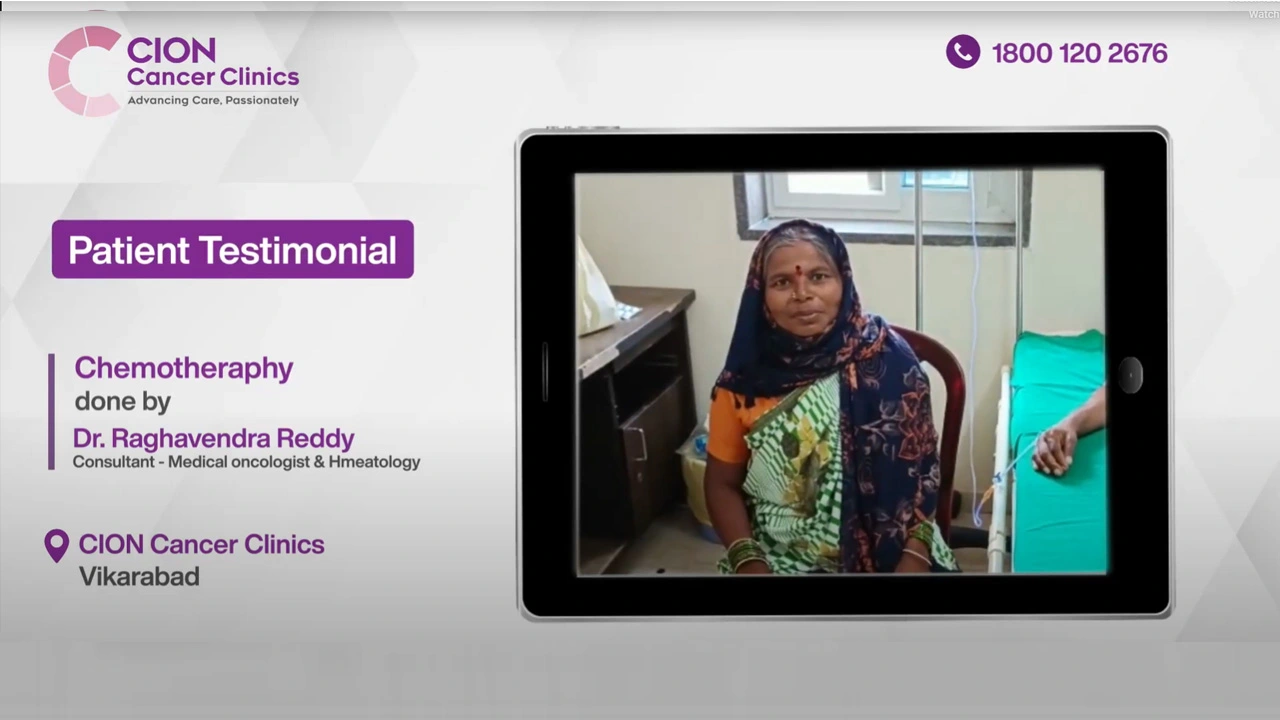
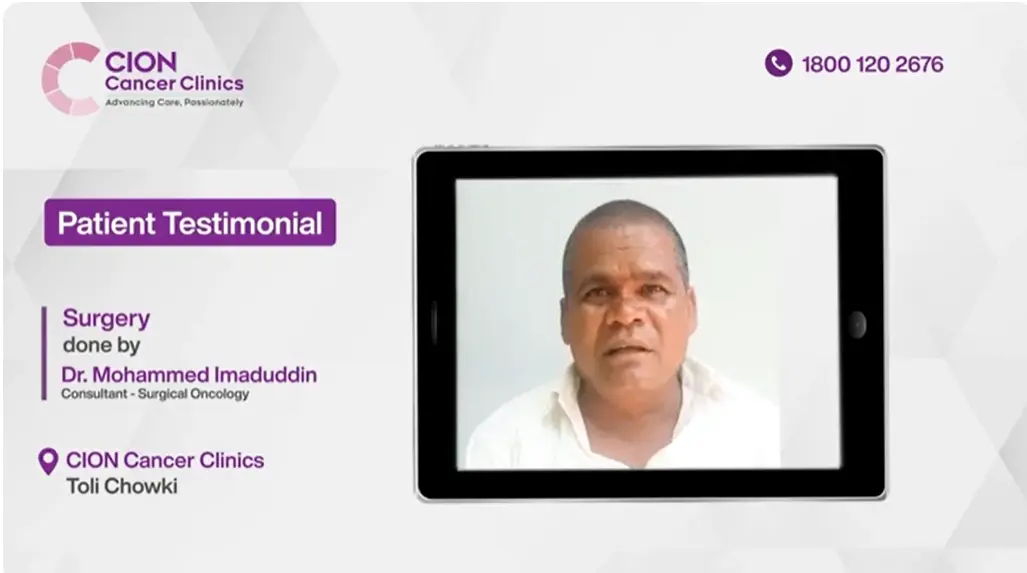
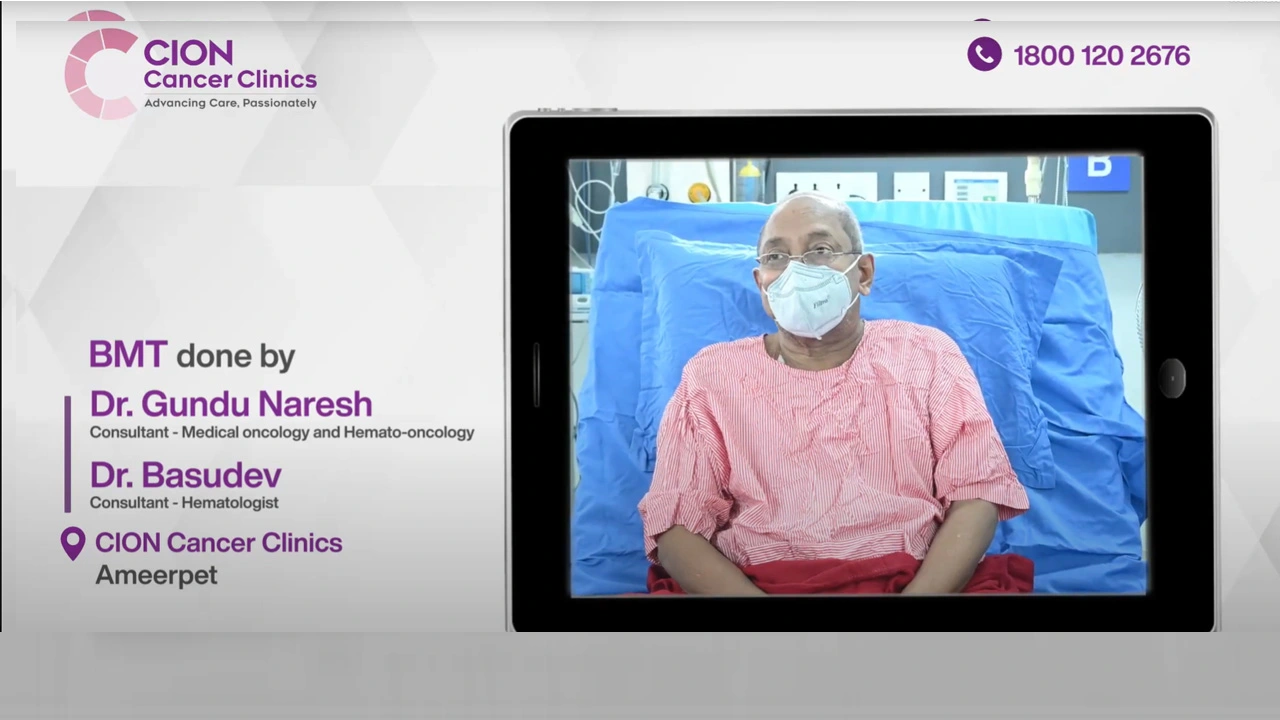
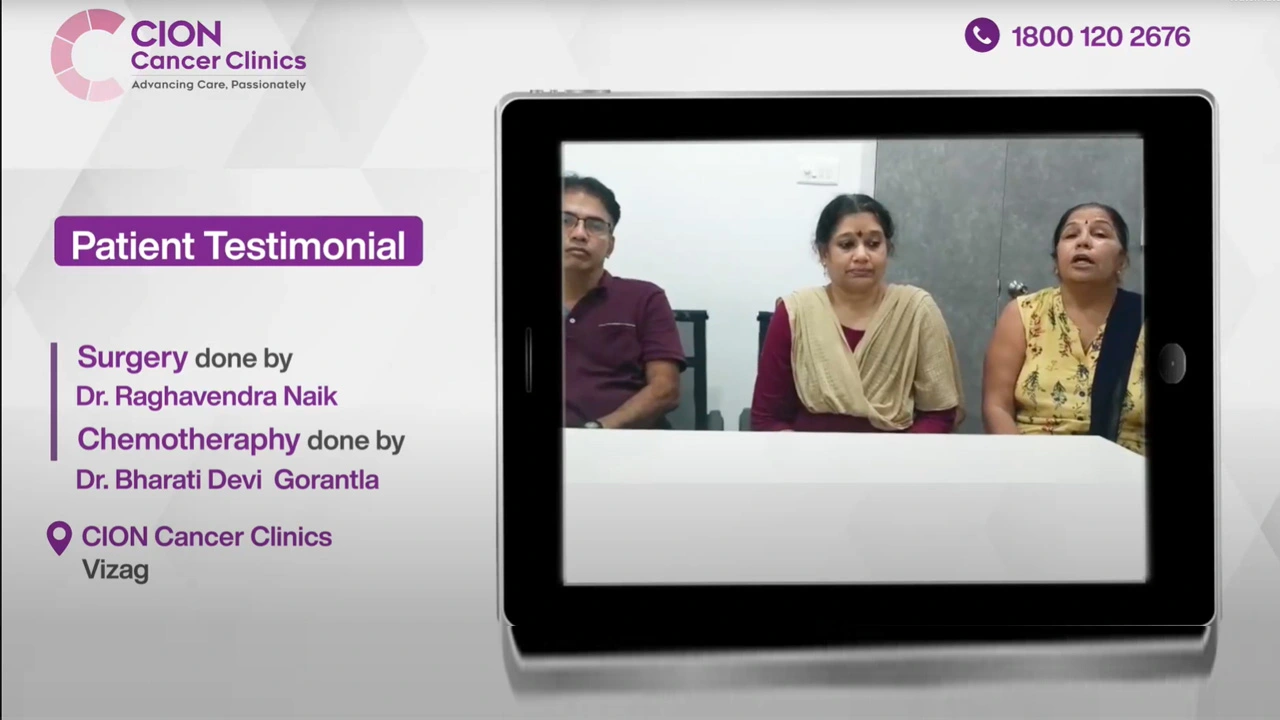
These aren't paid endorsements or written reviews. These are video testimonials from real patients and families — recorded on their own phones, in their own words. Pick any one. Watch it. Then decide.
4.8★800+ Google reviews
50+video testimonials
15,000+patients treated
Read all 800+ reviews on Google
Start Your Story. Book Free Consultation.
Common questions
Living With Uncertainty on Immunotherapy: Your Questions Answered
Why is open-ended cancer treatment harder to live with than treatment with a fixed end date?
Because there is nothing to count down to. Chemotherapy is usually planned as a set number of cycles, so however hard it is, the far edge of it is visible from the start. Long-term immunotherapy is often continued for as long as it keeps working and stays tolerable, with the decision reviewed scan by scan rather than fixed in advance. That means leave from work, family plans and savings are all committed to an unknown length of time. Oncology bodies including NCCN and ASCO treat this kind of distress as something to be screened for and supported, in the same routine way as physical side effects.
How do people cope with immunotherapy that has no end date?
Most people cope by shrinking the horizon. Instead of asking how long treatment will last, they plan to the next scan and no further, which turns an endless unknown into a three-month block they can actually hold. Beyond that, the things that consistently help are sharing the practical load with more than one family member, keeping one part of life that is not about cancer, writing questions down before each review so the consultation is used well, and using counselling early rather than treating it as a last resort. None of this removes the uncertainty. It makes it a size you can carry.
Is it normal to feel low after a good scan result?
Yes, and it is more common than most people expect. A stable or responding scan brings genuine relief, and in the same breath it starts the next wait. Many people describe a flat or tearful few days after good news, partly because the tension they had been holding finally releases, and partly because a good result on open-ended treatment means the treatment continues rather than ends. Feeling this way does not mean you are ungrateful or coping badly. If the low mood lasts more than two weeks, mention it to your oncology team so support can be arranged.
How do I stop feeling guilty about what the treatment is costing my family?
Guilt about cost is one of the most common feelings on long-term treatment, and hiding the numbers usually makes it worse rather than better. What tends to help is getting the costs written down, reviewing them openly with both the family and the care team, and asking directly what is covered by insurance or by a government scheme. Any figure you are given is indicative only and can change. Patients often feel they are spending their children's future, and children often feel guilty for even thinking about the money. Both feelings are normal, and both are easier to carry once they are said out loud.
What can I ask my oncologist to make the uncertainty easier to carry?
Ask what they are watching at each review, what would prompt a change in the plan, and when the next assessment is due. Ask who will explain the scan result and how soon after the scan that conversation happens, so the waiting has a fixed end instead of an open one. Ask what the options are if this treatment stops working, including the option of not continuing active treatment. These questions do not usually produce a certain answer, but they turn a vague, endless unknown into a defined one, which most people find far easier to hold.
When should I speak to a professional about how I am feeling?
Speak to someone if low mood, hopelessness, or difficulty sleeping has lasted more than two weeks, if you have stopped doing things you are still physically able to do, or if the worry is interfering with eating, sleep, or relationships. If you have any thought of harming yourself, ask for help the same day. Start with your oncology team's care coordinator, who can arrange a psycho-oncology referral, or call Tele-MANAS on 14416 or 1-800-891-4416, India's free 24-hour mental health helpline, available in Telugu and other regional languages. Nothing on this page is a diagnosis or a substitute for that assessment.