Lung Cancer: Modern, Compassionate Care in Hyderabad
A cough that won’t go away deserves a check — but most coughs are not cancer. And lung cancer isn’t only a smoker’s disease: about a quarter of cases in India are in people who never smoked. Thanks to molecular testing, targeted therapy and immunotherapy, outcomes have transformed — a clear, non-judgemental guide to the signs, causes and treatment.
Free consultation with a medical or radiation oncologist
Written & medically reviewed by Dr. C. Raghavendra Reddy, Medical Oncologist (MBBS, DM Medical Oncology, DNB), CION Cancer Clinics — with our radiation oncology team. Molecular-guided systemic therapy is central to modern lung cancer care. · Reviewed 9 July 2026
Overview
What is lung cancer?
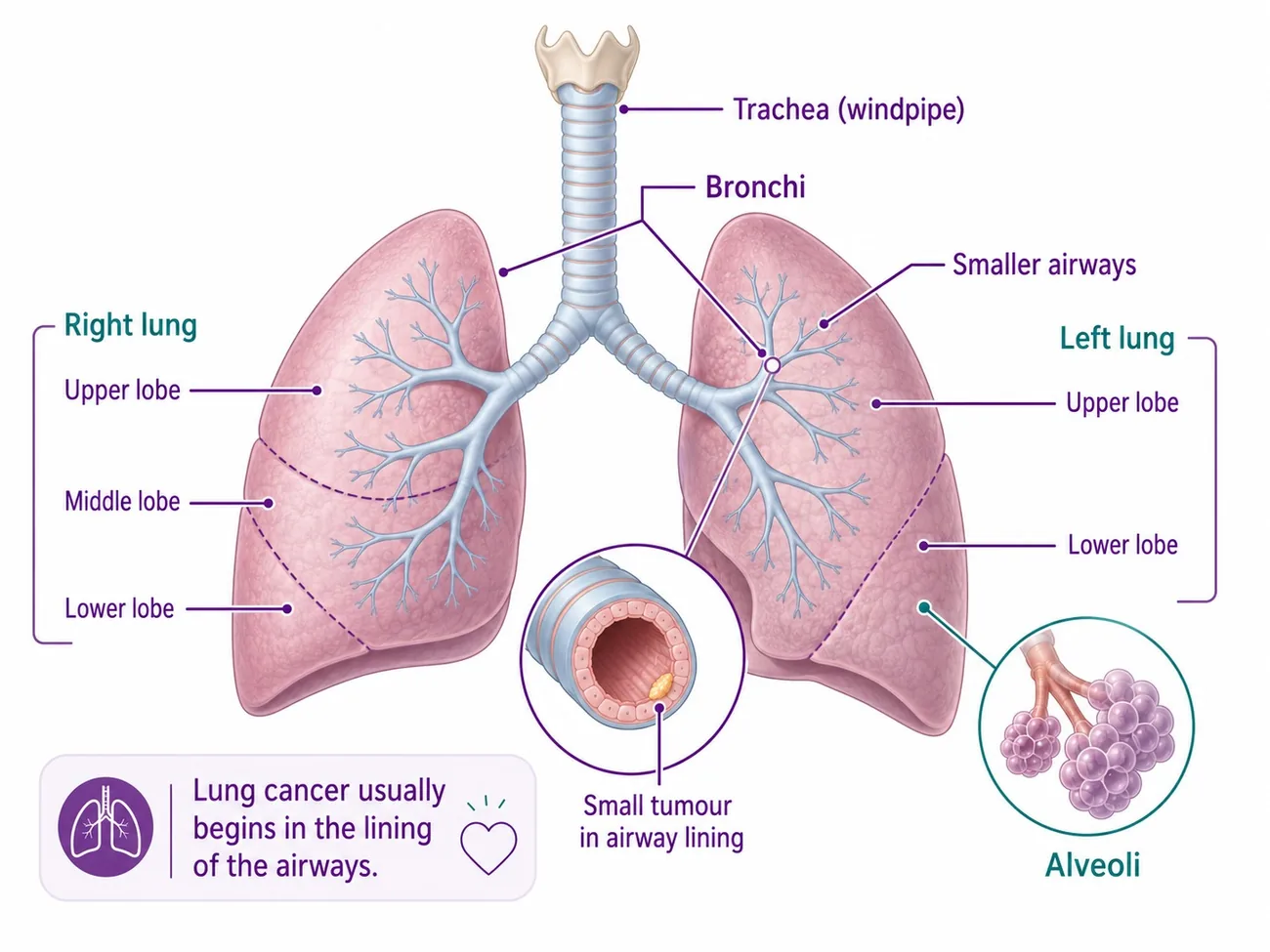
Lung cancer begins when cells in the lung — usually in the lining of the airways — grow out of control. It’s the leading cause of cancer death worldwide, but outcomes have improved greatly with modern treatment. There are two main types — non-small cell (about 85%) and small cell — and, importantly, it is not only a smoker’s disease.
Because symptoms often appear late and can look like other conditions, a change that persists is worth a check — the earlier lung cancer is found, the more can be done.
Lung cancer usually begins in the lining of the airways.
The common worry
A cough that won’t go away? Get it checked
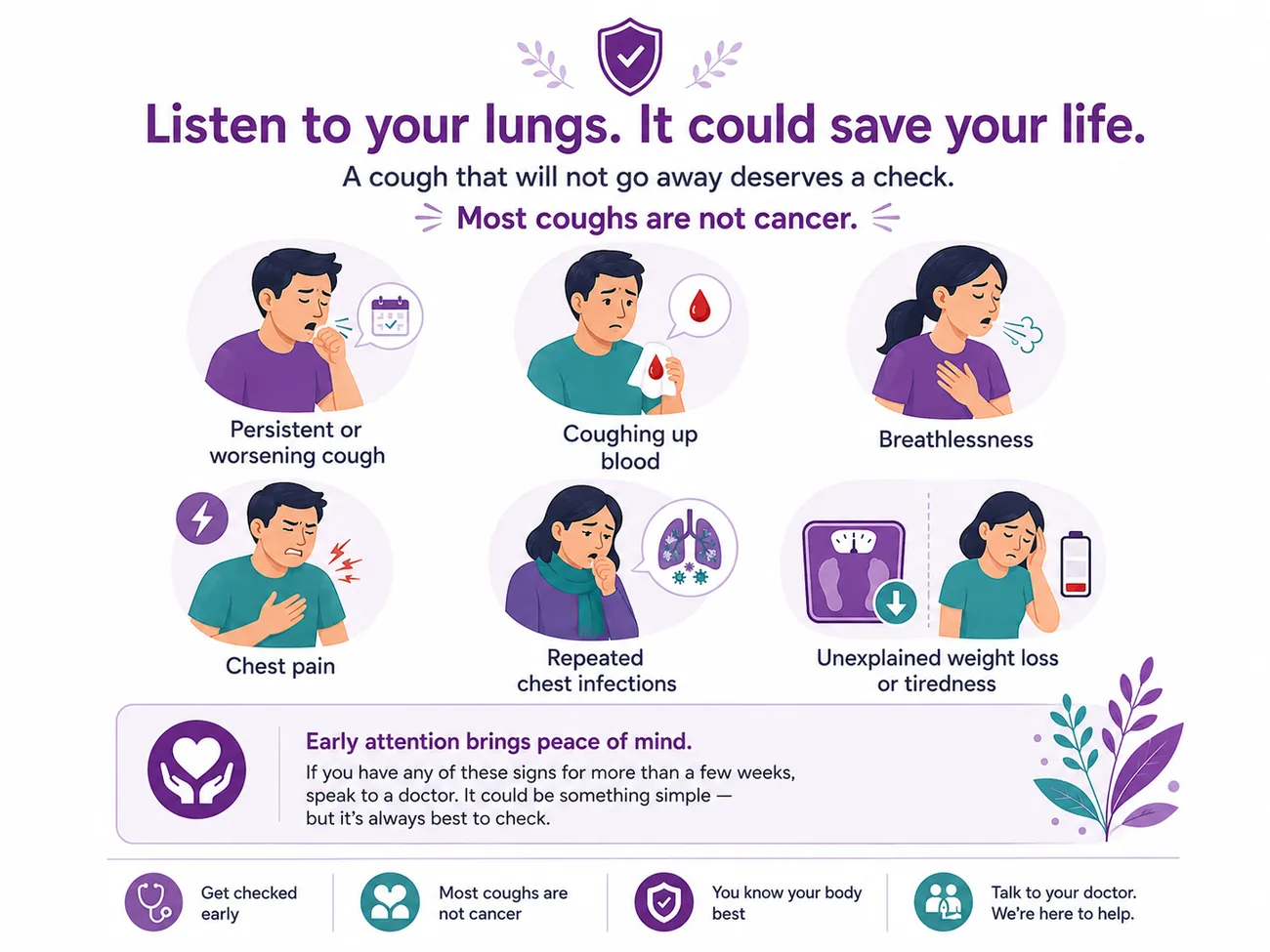
A cough that lasts more than about three weeks — or coughing up blood, or new breathlessness — deserves a check. But most coughs are not cancer. Infections, asthma and, in India, TB are far more common. Still, don’t dismiss a persistent cough as “just a smoker’s cough” or assume it’s only TB — checking early changes what’s possible.
Should I get this checked?
Tick anything that applies. This is an awareness guide, not a diagnosis — most of these symptoms have causes other than cancer.
Your result
Tick what applies
Most of these symptoms are not caused by cancer. Your guidance appears here.
This tool doesn’t diagnose anything or replace medical advice. Coughing up blood, or any symptom that persists, should be checked by a doctor — most causes are treatable.
Symptoms
Signs & symptoms
The commonest signs are a persistent or worsening cough, coughing up blood, breathlessness, chest pain, and repeated chest infections. Later, there may be unexplained weight loss, tiredness or a hoarse voice. Symptoms often appear late and are easily mistaken for other conditions — so anything persistent deserves a check.
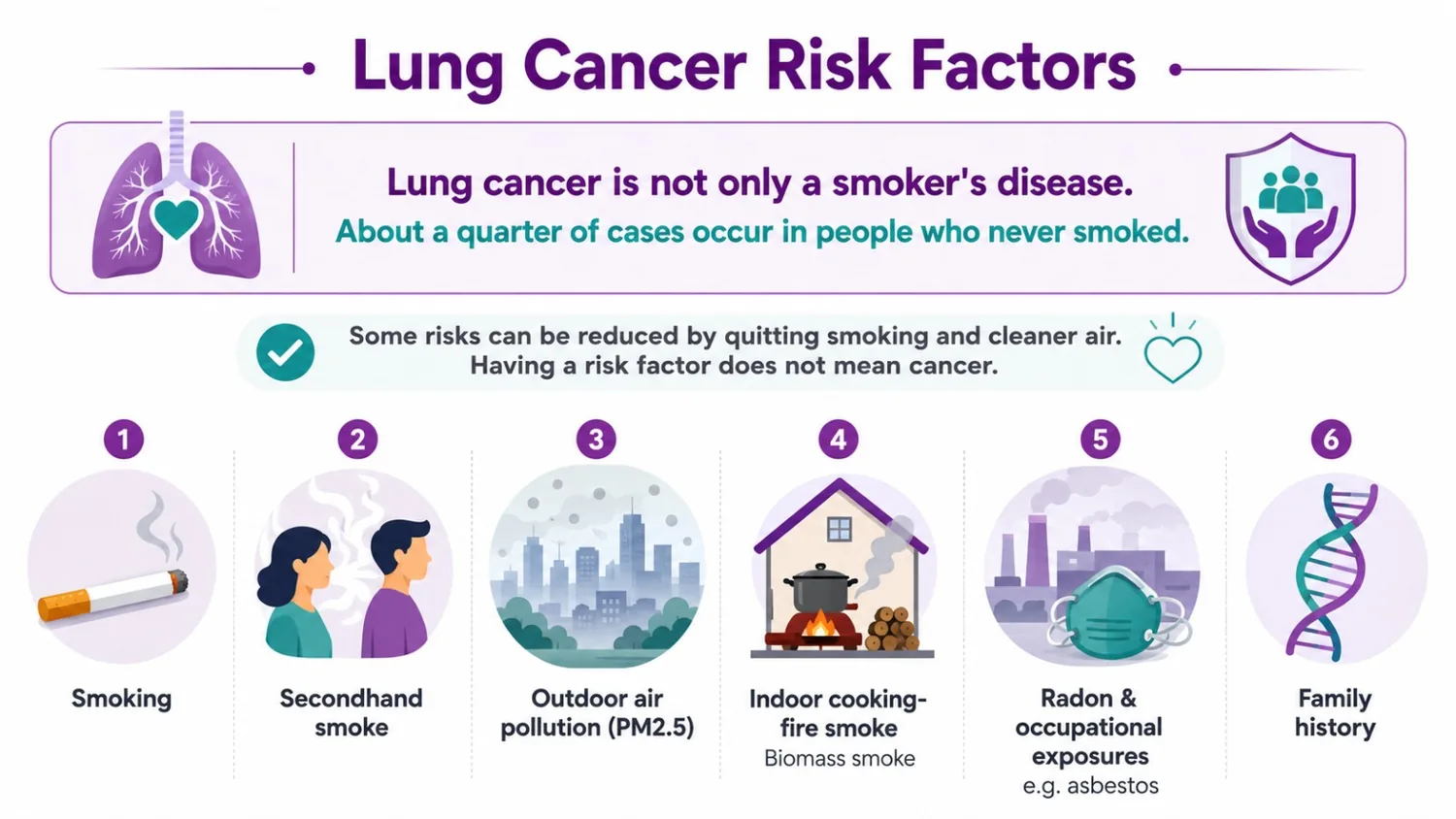
In India, about a quarter of lung cancers occur in people who have never smoked — more often women, and usually a type called adenocarcinoma — linked to air pollution, indoor cooking-fire smoke, and inherited factors. Smoking is still the biggest single cause, but blame helps no one — everyone with symptoms deserves to be checked and cared for, without judgement.
Never-smokers get it too
A large share of Indian cases — especially in women — are in people who never smoked. Lung cancer in non-smokers
Air & cooking-smoke matter
Outdoor air pollution and indoor biomass cooking-smoke raise risk — a very Indian story. Air pollution & lung cancer
Care without blame
Whether or not you ever smoked, you deserve prompt, compassionate care — and never-smokers often have highly treatable, targetable cancers.
A never-smoker with a persistent cough deserves the same prompt evaluation as a smoker — and often has an adenocarcinoma with a targetable mutation.
Causes & risk
Causes, risk & reducing risk
The biggest risk is smoking (including bidis and hookah) and secondhand smoke — but air pollution and fine particulate matter, indoor cooking-fire smoke, radon, workplace exposures like asbestos, and a family history all raise risk too. Some risks are reducible: quitting smoking at any age helps, and so does cleaner air. Having a risk factor doesn’t mean you’ll get cancer.
Types & molecular testing — why treatment is personalised
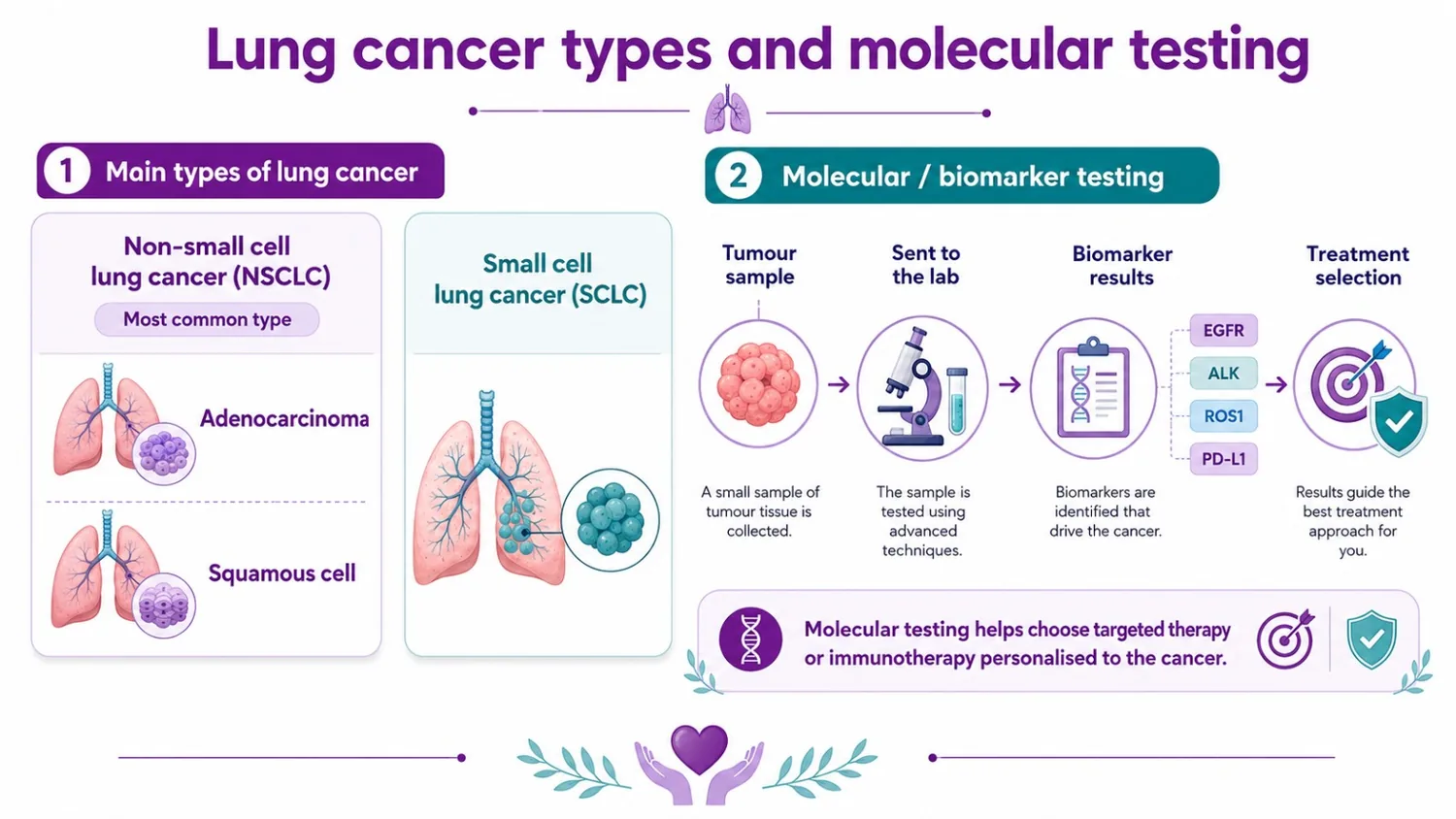
Knowing the type and molecular profile guides treatment. Lung cancer is mainly non-small cell (NSCLC — the most common, including adenocarcinoma and squamous cell) or small cell (SCLC — faster-growing). For NSCLC, molecular (biomarker) testing looks for changes such as EGFR, ALK, ROS1 or PD-L1 — opening the door to targeted therapy or immunotherapy, which have transformed treatment.
Understand the types & testing
Simplified for understanding. Your exact type and molecular results are confirmed by testing your biopsy, and guide your personalised plan. More: NSCLC vs SCLC · molecular testing.
Staging
The stages of lung cancer
Non-small cell lung cancer is staged I to IV by size and spread; small cell is often described as limited or extensive. Many lung cancers are found late — but even advanced lung cancer is now very treatable, especially when molecular testing guides targeted therapy or immunotherapy.
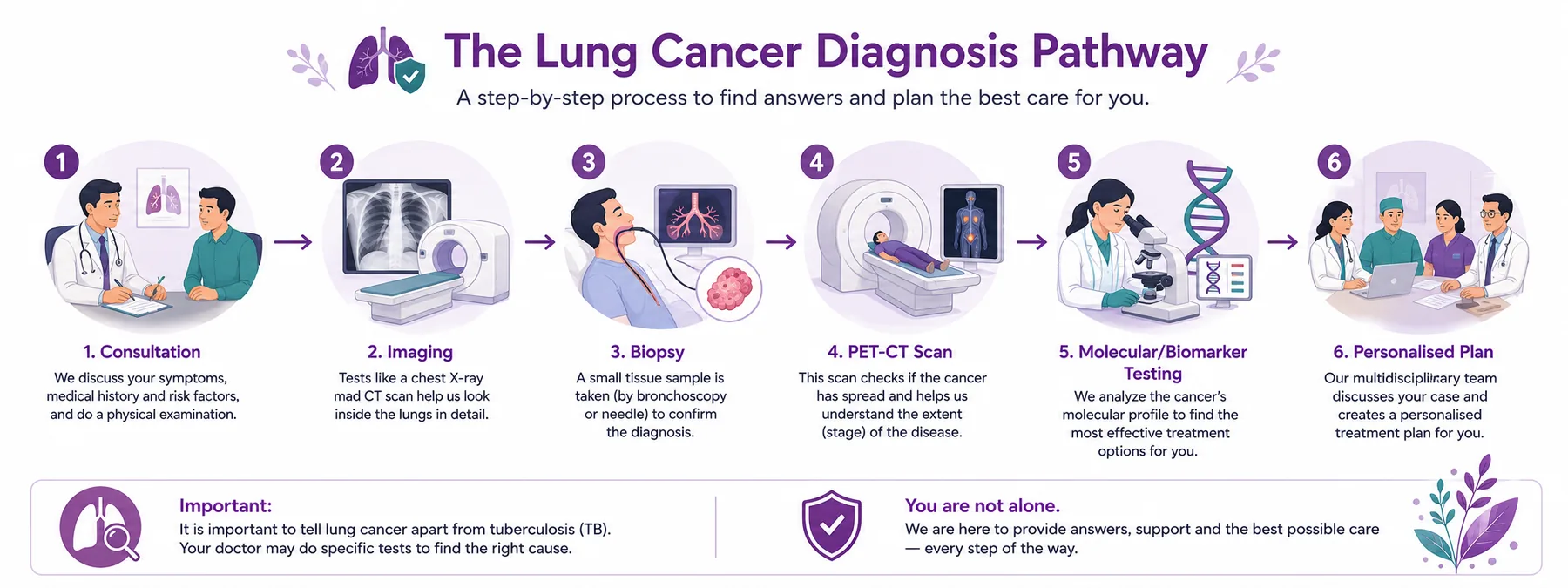
Diagnosis usually starts with a chest X-ray and CT, then a biopsy (often by bronchoscopy or a needle) to confirm, a PET-CT to check the extent, and molecular/biomarker testing to guide treatment. In India, it’s also important to tell lung cancer apart from TB, which can look similar. For high-risk heavy smokers, low-dose CT screening can find it early.
From first scan to a personalised, molecular-guided plan — and telling lung cancer apart from TB.
Diagnostic services we offer — book any of these directly:
Chest X-ray & CT scan
Usually the first tests — to look inside the lungs in detail and spot anything suspicious.
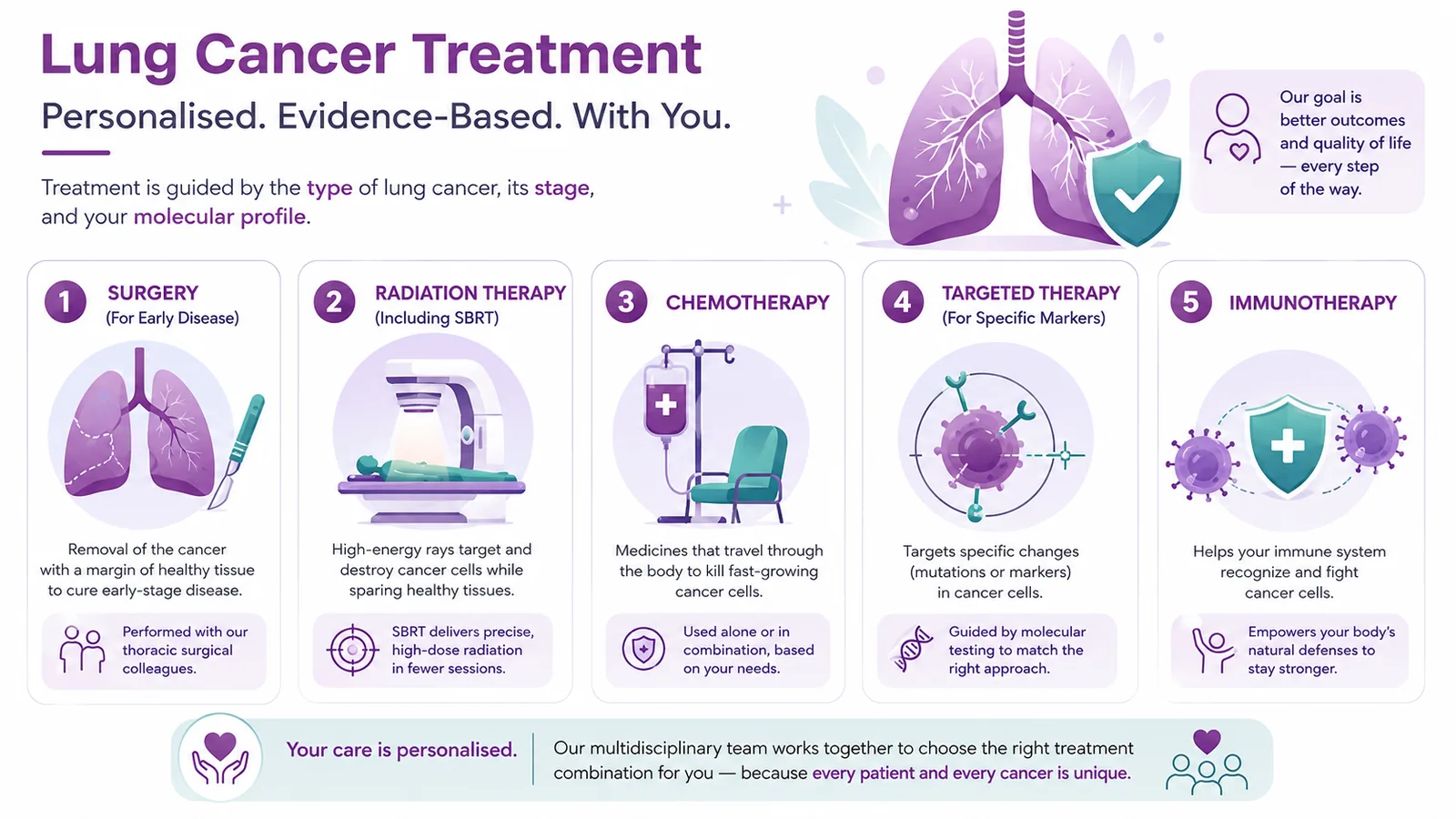
Treatment is guided by the type, stage and molecular profile, and usually combines approaches. Surgery (for early NSCLC) removes the tumour; radiation — including stereotactic radiosurgery (SBRT) — treats early inoperable or locally advanced disease; and chemotherapy, targeted therapy (for cancers with a specific marker) and immunotherapy treat the whole body. See our full guide to lung cancer treatment in Hyderabad.
A coordinated team. CION’s medical and radiation oncologists provide the chemotherapy, targeted therapy, immunotherapy and radiation (including SBRT) in-house — the core of modern lung-cancer care — and coordinate closely with specialist thoracic surgical colleagues for surgery. So your care is joined up across the whole team.
Treatments we deliver or coordinate — book a consult for any of these:
Thoracic surgery (coordinated)
For early-stage disease, to remove the tumour — coordinated with specialist thoracic surgical colleagues.
Here’s something important, especially if you’ve just been diagnosed: lung cancer treatment has been transformed over the past decade. Molecular testing, targeted therapy and immunotherapy mean that even advanced lung cancer can often be controlled for a long time, and early-stage disease is potentially curable. Your outlook depends on the type, stage and molecular profile — not on a single grim number.
Molecular testing changed everything
Finding a marker like EGFR or ALK can open up targeted tablets that work especially well.
Immunotherapy controls advanced disease
For many, immunotherapy keeps even stage IV lung cancer in check for far longer than before.
Early disease is potentially curable
Found early, lung cancer can often be removed or treated with SBRT with the aim of cure.
Indicative cost of lung cancer treatment in Hyderabad
Cost depends on the type, stage and treatment — surgery, radiation, chemotherapy, targeted therapy or immunotherapy — so it’s best given as an indicative range after assessment. Eligible treatment, including radiation, may be covered under Aarogyasri / PMJAY at empanelled centres.
Estimate an indicative range
Indicative range
—
Figures are indicative only and not a quotation — targeted therapy and immunotherapy in particular vary widely and run over many months, and surgery is coordinated with thoracic colleagues and may be billed at the operating centre. For an accurate estimate, request a callback. See also immunotherapy cost.
A cough that won’t go away? Talk to a specialist — free
A persistent cough, coughing up blood, breathlessness, or a chest scan finding shouldn’t wait — whether or not you’ve smoked. Book a free consultation and, if you already have a report, a free written second opinion.
Reviewed by medical & radiation oncologists and a thoracic tumour board
Cost should not delay care. Under Aarogyasri and PMJAY, eligible lung cancer treatment — including radiation — may be largely covered at empanelled centres. Our team helps check eligibility and guides you on insurance and EMI.
9 clinics in Hyderabad · 35+ across Telangana & AP
CION cancer care is closer than you think.
We're never more than 30 minutes away. Same panel of specialists at every centre. Same tumour board reviews. Same NCCN protocols. Pick the closest one and call directly — or let us pick for you.
Don't see your city? Call
18002028726
— we'll find your nearest CION partner centre.
Meet the oncologists
Lung cancer is treated by a team, not one doctor.
Care is led by medical and radiation oncology, coordinated with specialist thoracic surgical colleagues — part of 17 senior specialists across CION.
Share your name and number — we'll call you back within 30 minutes to schedule your consultation.
A cough for more than three weeks? Coughing up blood? Get it checked.
Most coughs aren’t cancer — but a persistent symptom deserves a check, whether or not you’ve smoked. Early action means simpler treatment and better outcomes. Our oncologists see these cases every day.
The worries and myths we hear most about lung cancer, and the facts — shared with honesty and without judgement.
“Only smokers get lung cancer.”
Fact: About a quarter of Indian lung cancers are in never-smokers — linked to air pollution and cooking-smoke. Symptoms deserve checking whether or not you smoked.
“Lung cancer is always a death sentence.”
Fact: Not any more — targeted therapy and immunotherapy can control even advanced lung cancer for a long time, and early disease is potentially curable.
“A long cough is just a smoker’s cough, or TB.”
Fact: Maybe — but a cough lasting over three weeks, or coughing up blood, should always be checked. Don’t assume; in India it’s important to tell it apart from TB.
“If I’ve smoked for years, there’s no point quitting now.”
Fact: Quitting at any age improves outcomes and how well treatment works — and your lungs begin to recover. It’s never too late.
“There’s nothing that can be done for advanced lung cancer.”
Fact: Modern molecular-guided treatment can control advanced lung cancer, extend life and ease symptoms — far more than was possible a decade ago.
“Lung cancer is always caused by something you did.”
Fact: Lung cancer is never a reason for blame — pollution, genes and chance all play a part, and everyone deserves compassionate care.
“A biopsy will make the cancer spread.”
Fact: Biopsy is a safe, standard step done under controlled conditions. The real risk is delay, which lets a treatable cancer grow.
“Lung cancer is contagious — I could catch it.”
Fact: Lung cancer is not infectious. You can’t catch it by living with, caring for or being close to someone who has it.
“A normal chest X-ray means I definitely don’t have lung cancer.”
Fact: A chest X-ray can miss small or hidden tumours. If symptoms persist, a CT scan and further tests may still be needed to be sure.
“Molecular testing is an unnecessary extra.”
Fact: For non-small cell lung cancer, molecular testing is now essential — it can reveal a target (EGFR, ALK, ROS1, PD-L1) that unlocks a far more effective treatment.
“Chemotherapy always means being bedridden and losing all my hair.”
Fact: Side effects vary and are actively managed today — and much lung-cancer treatment is now targeted therapy or immunotherapy, which work differently. Many people continue much of daily life.
“Surgery is the only real treatment, and CION can’t help without it.”
Fact: Surgery suits early disease and is coordinated with thoracic surgeons — but radiation (including SBRT), chemotherapy, targeted therapy and immunotherapy are the core of care and are delivered in-house.
“Treatment is unaffordable — we can’t manage it.”
Fact: Under Aarogyasri and PMJAY, eligible treatment — including radiation — may be largely covered at empanelled centres. We help check eligibility, insurance and EMI.
“Immunotherapy is experimental and not available here.”
Fact: Immunotherapy is an established, standard part of lung-cancer care and is available at CION — used where testing shows it’s likely to help.
“Once lung cancer comes back, there’s no point treating it.”
Fact: Recurrent lung cancer is still treatable — further systemic therapy, radiation or a change of targeted/immuno approach can control it and preserve quality of life.
“Home remedies or alternative cures alone can treat it.”
Fact: Relying on unproven remedies wastes the window when lung cancer is most treatable. Discuss anything complementary with your oncology team, not as a replacement.
“A second opinion will offend my doctor or waste time.”
Fact: A second opinion is normal and welcomed in cancer care — it confirms the plan and gives you confidence. At CION it’s free with a report.
“If I ignore the cough, it’ll probably just go away.”
Fact: A cough that lasts more than three weeks, or coughing up blood, doesn’t need ignoring — it needs checking. Most causes are treatable, and acting early matters.
Biomarker testing (EGFR/ALK/ROS1/PD-L1) guides targeted therapy and immunotherapy — personalised to your cancer.
Advanced radiation incl. SBRT
Precise radiation and stereotactic radiosurgery — a genuine CION strength for lung tumours.
Thoracic surgery, coordinated
Surgery is delivered with specialist thoracic surgical colleagues — we join up the whole pathway around you.
Thoracic board & PET-CT
Multidisciplinary planning with PET-CT and molecular testing, and TB-aware diagnosis.
Compassionate, non-blaming care
Care with dignity for everyone — smokers and never-smokers alike — plus smoking-cessation support.
Close, NABH-accredited care
9 clinics across Hyderabad and 35+ across Telangana, within NABH-accredited facilities.
Real stories · real courage
15,000+ patients chose CION. Hear from them directly.
These aren't paid endorsements or written reviews. These are video testimonials from real patients and families — recorded on their own phones, in their own words. Pick any one. Watch it. Then decide.
4.8★800+ Google reviews
50+video testimonials
15,000+patients treated
Successful Chemotherapy & Radiation Done by Dr. Owais Mohammed & Dr. Kirti Ranjan
Watch video →
Successful Chemotherapy Done by Dr. C Raghavendra Reddy
Watch video →
Surgery, Chemo & Radiation Done by Dr. Imaduddin, Dr. Vinay, Dr. Owais, Dr. Kirti
Watch video →
Successful Radical Thymectomy Done by Dr. Mohammed Imaduddin & Dr. Vinay Mamidala
Watch video →
Successful Surgery Done by Dr. Rajender Byshetty
Watch video →
Successful Chemo & Surgery Done by Dr. Imad, Dr. Vinay, Dr. Owais & Dr. Raghavendra
Watch video →
Successful Chemo & Surgery Done by Dr. Imad, Dr. Vinay, Dr. Owais & Dr. Raghavendra
Watch video →
Successful Chemo & Radiation Done by Dr. Owais Mohammed & Dr. Kirti Ranjan Mohanty
Watch video →
Successful Breast Cancer Surgery Done by Dr. Imaduddin Mohammed & Dr. Vinay Mamidala
Watch video →
Successful Chemotherapy Done by Dr. Bharati Devi Gorantla
Watch video →
Successful Chemo & Surgery Done by Dr. Owais Mohammed & Dr. Imaduddin Mohammed
Watch video →
Successful Chemotherapy Done by Dr. Gundu Naresh
Watch video →
Successful Bone Marrow Transplantation - Neuroblastoma
Watch video →
Successful Surgery & Chemo - Carcinoma of Caecum
Watch video →
Successful Oral chemotherapy & mastectomy surgery
Watch video →
Successful Oral chemotherapy & mastectomy surgery
Watch video →
Successful Chemotherapy
Watch video →
Successful Surgery by Dr. Mohammed Imaduddin
Watch video →
Successful Bone Marrow Transplantation
Watch video →
Successful Oral chemotherapy & mastectomy surgery
Watch video →
Successful Oral chemotherapy & mastectomy surgery
Watch video →
Successful Chemotherapy
Watch video →
Successful Buccal Mucosa Surgery
Watch video →
Successful Complex Surgery Mandibulectomy Reconstruction
Care goes beyond treatment — breathing, wellbeing, quitting smoking and follow-up, for patient and family.
Breathlessness & pulmonary rehab
Techniques and rehabilitation to ease breathlessness and keep you active. Learn more
Smoking-cessation support
Practical, non-judgemental help to stop smoking — it helps at any stage. Ten ways to quit
Psycho-oncology
Emotional support for you and your family through diagnosis and treatment. Learn more
Nutrition support
Diet support to keep strength up through treatment and recovery. Learn more
Pain & palliative care
Comfort and symptom control at any stage, alongside active treatment. Learn more
Follow-up & second opinion
A clear review of your diagnosis and options, and structured follow-up. Learn more
FAQ
Frequently asked questions about lung cancer
Do only smokers get lung cancer?
No. Smoking is the biggest cause, but in India about a quarter of lung cancers occur in people who never smoked — more often women — linked to air pollution, indoor cooking-smoke and inherited factors. Anyone with persistent symptoms should be checked, whether or not they have smoked.
Is a long-lasting cough always lung cancer?
No — most persistent coughs are not cancer. Infections, asthma, acid reflux and, in India, TB are far more common. But a cough lasting more than about three weeks, coughing up blood, or new breathlessness should always be checked — most causes are treatable, and if it is cancer, finding it earlier helps.
What are the early warning signs of lung cancer?
The commonest signs are a persistent or worsening cough, coughing up blood, breathlessness, chest pain and repeated chest infections. Later there may be unexplained weight loss, tiredness or a hoarse voice. Symptoms often appear late and are easily mistaken for other conditions, so anything that persists for more than about three weeks deserves a check.
Is lung cancer a death sentence?
Not the way it once was. Lung cancer is still serious and often found late, but molecular testing, targeted therapy and immunotherapy have transformed treatment — even advanced lung cancer can often be controlled for a long time, and early-stage disease is potentially curable. Your outlook depends on the type, stage and molecular profile.
Could it be TB instead of lung cancer?
Possibly — TB is common in India and can look very similar to lung cancer on a scan or with a cough. That is exactly why a persistent cough, or one that does not improve with TB treatment, should be properly investigated — including a biopsy if needed — to be sure of the diagnosis.
What is molecular or biomarker testing?
It is testing of the tumour for specific changes — such as EGFR, ALK, ROS1 or PD-L1 — that guide treatment. If your cancer has one of these, targeted therapy or immunotherapy tailored to it may work especially well. It is now a routine, important part of diagnosing non-small cell lung cancer.
What is the difference between NSCLC and SCLC?
Non-small cell lung cancer (NSCLC) accounts for about 85% of cases and includes adenocarcinoma, squamous cell and large cell carcinoma; it tends to grow more slowly, and early-stage disease is often treated with surgery, sometimes followed by chemotherapy, targeted therapy or immunotherapy. Small cell lung cancer (SCLC) is about 15%, is strongly linked to smoking and grows fast — but responds well to chemotherapy combined with immunotherapy and radiation, and is usually treated with systemic therapy rather than surgery.
What causes lung cancer, and who is at higher risk?
The biggest risk is smoking, including bidis and hookah, and secondhand smoke. But air pollution and fine particulate matter, indoor cooking-fire or biomass smoke, radon, occupational exposures such as asbestos, and a family history all raise risk too — which is why lung cancer is not only a smoker’s disease. Having a risk factor does not mean you will get lung cancer, and some risks can be reduced.
How is lung cancer diagnosed?
Diagnosis usually starts with a chest X-ray and CT scan, then a biopsy — often by bronchoscopy or a needle — to confirm the type, a PET-CT to check how far it has spread, and molecular/biomarker testing to guide treatment. In India it is also important to tell lung cancer apart from TB, which can look similar. For high-risk heavy smokers, low-dose CT screening can find it early.
What are the stages of lung cancer?
Non-small cell lung cancer is staged I to IV. Stage I is small and confined to the lung; stage II is larger or involves nearby lymph nodes; stage III is locally advanced, involving central (mediastinal) lymph nodes; and stage IV has spread beyond the chest. Small cell lung cancer is usually described as limited (confined to one side of the chest) or extensive. Even advanced disease is often very treatable with modern therapy.
Is stage 4 lung cancer terminal?
Stage 4 (metastatic) lung cancer usually cannot be cured, but “terminal” is misleading — for many people it can now be controlled for a long time. Targeted therapy (for cancers with a marker like EGFR or ALK) and immunotherapy can keep advanced lung cancer in check and preserve quality of life, sometimes for years. Your outlook depends on the type, molecular profile and how the cancer responds.
Can lung cancer be cured?
When found early, lung cancer is highly treatable and often curable — early-stage disease can be removed by surgery or treated with SBRT with the aim of cure. Advanced lung cancer is usually not curable, but modern targeted therapy and immunotherapy can control it for a long time. This is why acting on persistent symptoms early makes such a difference.
How is lung cancer treated?
Treatment is guided by the type, stage and molecular profile, and usually combines approaches. Surgery removes the tumour in early non-small cell disease; radiation, including stereotactic radiosurgery (SBRT), treats early inoperable or locally advanced disease; and chemotherapy, targeted therapy and immunotherapy treat the whole body. At CION, medical and radiation oncology deliver the systemic therapy and radiation in-house, while surgery is coordinated with specialist thoracic surgical colleagues.
What are targeted therapy and immunotherapy?
Targeted therapy is medicine — often a daily tablet — that works against a specific change in the cancer, such as EGFR, ALK or ROS1, found by molecular testing. Immunotherapy helps your own immune system recognise and attack the cancer, and is guided partly by a marker called PD-L1. Both have transformed lung-cancer outcomes, especially in advanced disease, and are a core part of modern care.
What is SBRT, and how is it used in lung cancer?
SBRT (stereotactic body radiotherapy, or stereotactic radiosurgery) delivers very precise, high-dose radiation in just a few sessions. In lung cancer it is especially useful for small, early tumours in people who cannot have surgery, and for treating limited areas of spread. It is a genuine CION strength and is delivered in-house by our radiation oncology team.
Does quitting smoking still help after a diagnosis?
Yes. Stopping smoking at any age, and even after a lung cancer diagnosis, improves how well treatment works, reduces complications and helps your lungs and overall health. It is never too late to benefit, and our team offers practical, non-judgemental smoking-cessation support alongside treatment.
What is a lung nodule — does it mean cancer?
A lung nodule is a small spot on the lung often found by chance on a scan. Most nodules are not cancer — many are old infections or scar tissue. Depending on its size and appearance, your doctor may simply repeat a scan after a few months to check for change, or recommend further tests. A nodule is not the same as a diagnosis of cancer.
How much does lung cancer treatment cost in Hyderabad?
Cost depends on the type, stage and treatment — surgery, radiation, chemotherapy, targeted therapy or immunotherapy — so it is best given as an indicative range after assessment. Targeted therapy and immunotherapy in particular vary widely and run over many months. Eligible treatment, including radiation, may be covered under Aarogyasri or PMJAY at empanelled centres. Use the estimator on this page and request a callback for an exact figure.
Is lung cancer hereditary or contagious?
Lung cancer is not contagious — you cannot catch it from someone who has it. It is not usually inherited in a simple way either, but a family history of lung cancer can modestly raise your risk, alongside smoking, air pollution and other factors. If lung cancer runs in your family and you have symptoms or risk factors, it is worth discussing screening or assessment with a doctor.
Can I get a second opinion on my lung cancer diagnosis at CION?
Yes, and it is welcomed. A second opinion is a normal, valuable part of cancer care — it can confirm the diagnosis and stage, review the molecular testing, and make sure the treatment plan is right for you. At CION a second opinion is free with a report, and can often be arranged quickly so treatment is not delayed.
Explore
Explore lung cancer care
Our guide to lung cancer — symptoms, types, diagnosis, stages, treatment, doctors and support — plus the wider cancer-care cluster. Tap any topic to read more.
A cough that won’t go away? Let’s get you clear answers — without judgement.
Most coughs aren’t cancer — and whether or not you’ve smoked, a persistent symptom deserves a check. When lung cancer is found, modern molecular-guided care can do more than ever. Book a consultation or second opinion at any of our 9 Hyderabad clinics, part of 35+ centres across Telangana & Andhra Pradesh.
Medical disclaimer: This page is for general information and awareness and does not replace professional medical advice, diagnosis or treatment. Coughing up blood or sudden severe breathlessness needs urgent medical attention. Always consult a qualified oncologist. Costs shown are indicative only and not a quotation. Content is periodically reviewed by CION’s medical team.
Explore Every Topic
All Lung Cancer Topics
Browse our complete library of lung cancer guides — symptoms, types, diagnosis, stages, treatment and living with lung cancer.

 CION Ameerpet