Kidney Cancer: Often Found Early — and Highly Curable
Most kidney cancers are found by chance — on a scan done for something else — because they’re usually silent. That’s often good news: caught small and early, kidney cancer is highly curable. And if you’ve noticed blood in your urine, don’t ignore it — it’s often harmless, but it should always be checked.
Free consultation with a medical oncologist
Kidney-sparing focus & modern immunotherapy for advanced disease
9 clinics in Hyderabad · 35+ across Telangana & AP
Written & medically reviewed by Dr. C. Raghavendra Reddy, Medical Oncologist (DM Medical Oncology; DNB), CION Cancer Clinics — with our radiation oncology team. · Reviewed 9 July 2026
Overview
What is kidney cancer?
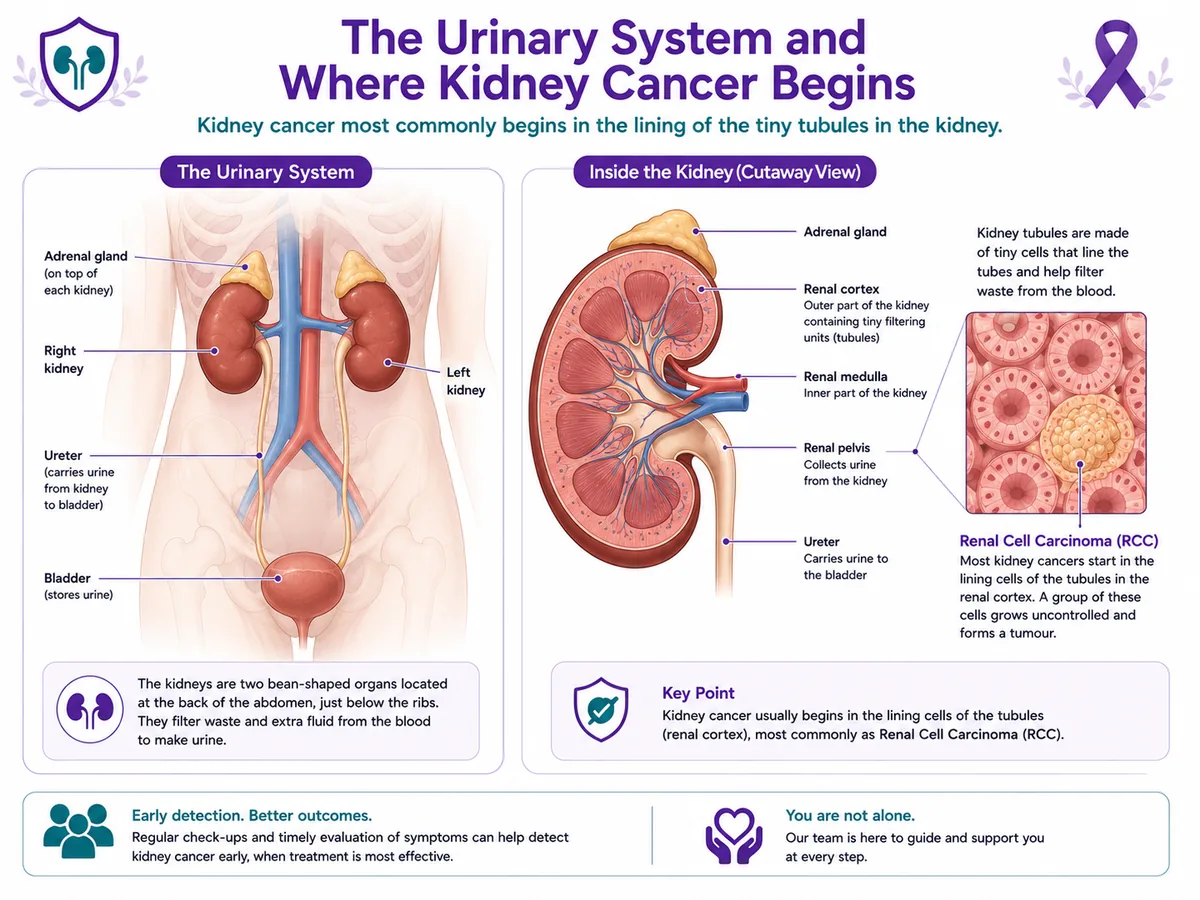
Kidney cancer begins when cells in the kidney grow out of control — the commonest type by far is renal cell carcinoma (RCC), which starts in the lining of the kidney’s tiny filtering tubes. Because early kidney cancer usually causes no symptoms, it’s often found by chance — and, caught early, it’s highly curable.
The two kidneys sit at the back of the abdomen, with an adrenal gland on top of each. You have two — which matters when we talk about treatment, because for many small tumours the whole kidney doesn’t need to be removed.
Kidney cancer usually begins in the lining of the kidney’s filtering tubes.
Blood in urine or a mass?
Found something on a scan, or blood in your urine? What it means
Two things bring most people here: a mass found unexpectedly on a scan, or blood in the urine. Both are worth taking seriously — but neither means the worst. Many kidney masses are benign or early and curable, and blood in the urine, while it must always be checked, is often not cancer.
Should I get this checked?
Tick anything that applies. This is an awareness guide, not a diagnosis.
Your result
Tick what applies
Most kidney symptoms and risks don’t mean cancer. Your guidance appears here.
This tool doesn’t diagnose anything or replace medical advice. Blood in the urine, or a lump or persistent symptom, should be checked by a doctor — most turn out to be harmless, and early kidney cancer is very treatable.
Symptoms
Signs & symptoms
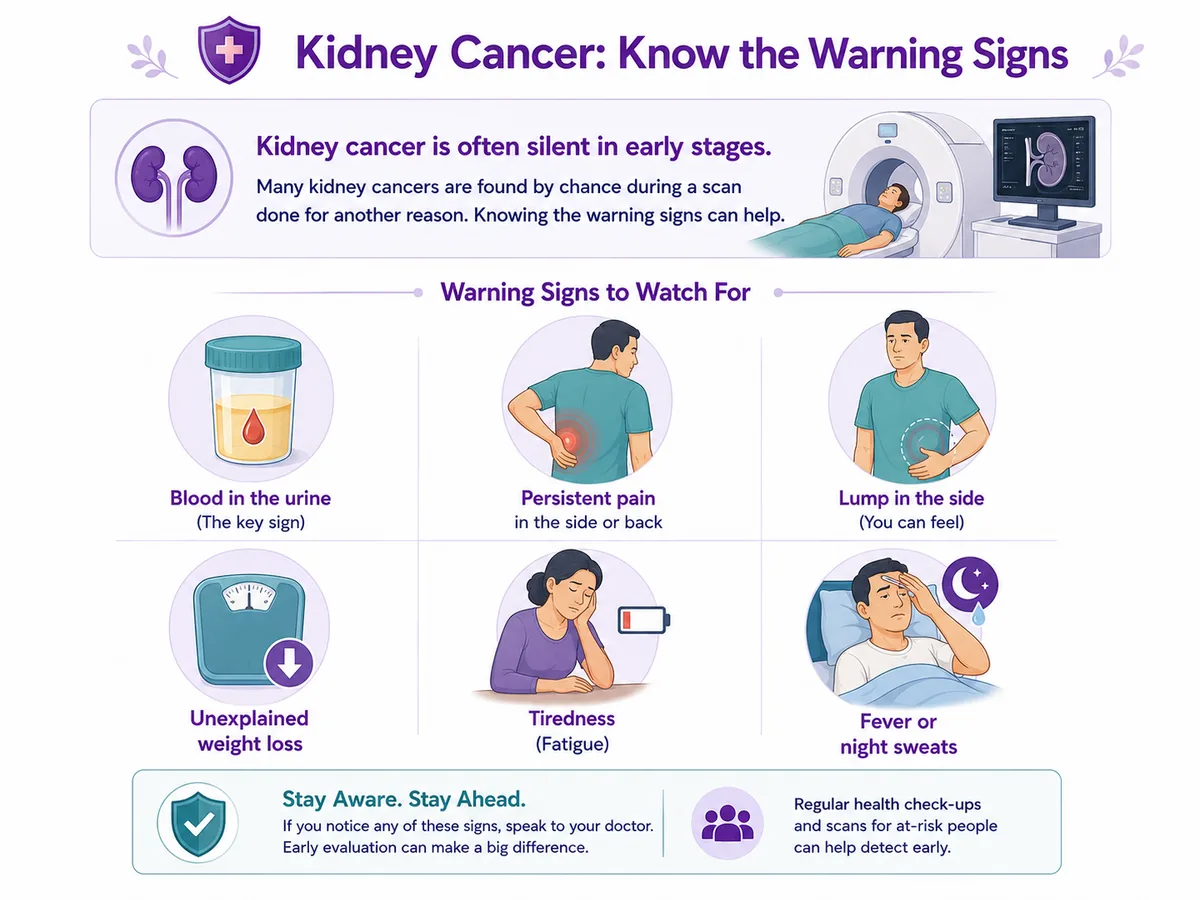
Kidney cancer is often silent, which is why so many are found by chance. When there are symptoms, the key one is blood in the urine; others include a persistent ache in the side or back, a lump, unexplained weight loss, tiredness, and sometimes fever. The old “classic triad” (blood, pain and a lump together) is actually uncommon and usually a late sign.
Blood in the urine (the key sign)
Persistent side or back pain
A lump in the side or abdomen
Unexplained weight loss
Tiredness
Fever or night sweats
Painless blood in the urine is the symptom to act on — even if it happens once and clears. If that’s you, book a consultation.
Found by chance
Often found by accident — and why that’s often good news
Most kidney cancers today are found by accident — on an ultrasound or CT done for something else entirely, like back pain or a routine check. Because they’re picked up before causing symptoms, they tend to be small and early — and that’s exactly when kidney cancer is most curable. So an unexpected finding, frightening as it is, is often a lucky one.
Often not cancer
Up to a third of small kidney masses turn out to be benign — a scan can often tell how likely a mass is to be cancer.
Highly curable
Small, early kidney cancers are usually cured with surgery — often kidney-sparing.
You have time
Most are slow-growing, so there’s usually time to plan the right approach carefully — no need to panic.
Causes & risk
Causes & risk factors
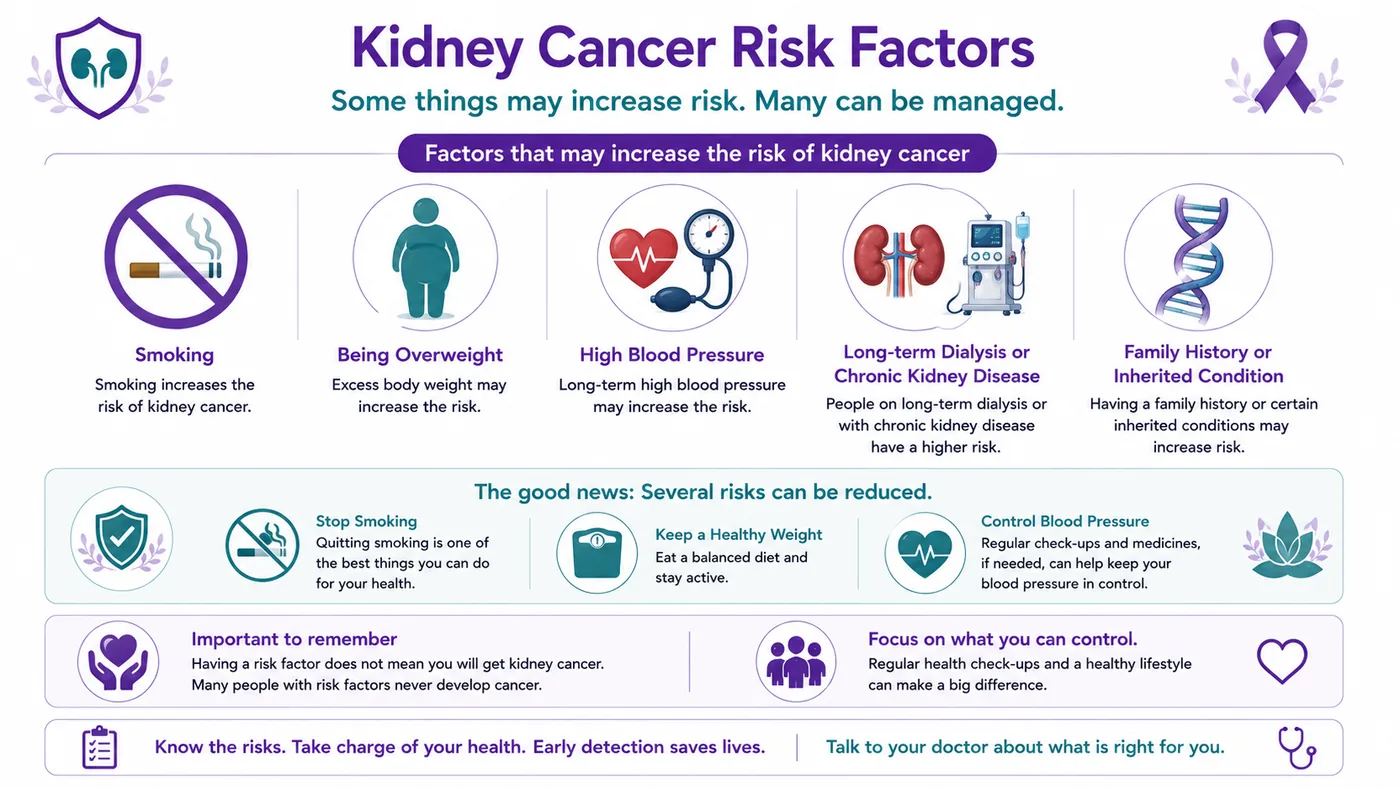
Kidney cancer doesn’t have a single cause, but several things raise the risk — and many are within your control. Smoking, excess weight and high blood pressure are the biggest modifiable risks; long-term dialysis or kidney disease, and inherited conditions like von Hippel-Lindau, also increase it. Having a risk factor doesn’t mean you’ll get kidney cancer.
Most kidney cancers are renal cell carcinoma (RCC), and the commonest RCC subtype is clear cell; papillary and chromophobe are less common. A different cancer, urothelial carcinoma, can start in the renal pelvis (the part that collects urine) and behaves more like bladder cancer.
Understand the types
Simplified for understanding. Your exact type is confirmed by your team and guides your personalised plan.
Staging
The stages of kidney cancer
Kidney cancer is staged I to IV — from a small cancer confined to the kidney, through a larger or locally spread cancer, to one that has spread to distant organs like the lungs or bones. Early stages are highly curable with surgery.
Understand the stages
Simplified for understanding. Your exact stage and plan are confirmed by your team after tests.
Diagnosis
How kidney cancer is diagnosed
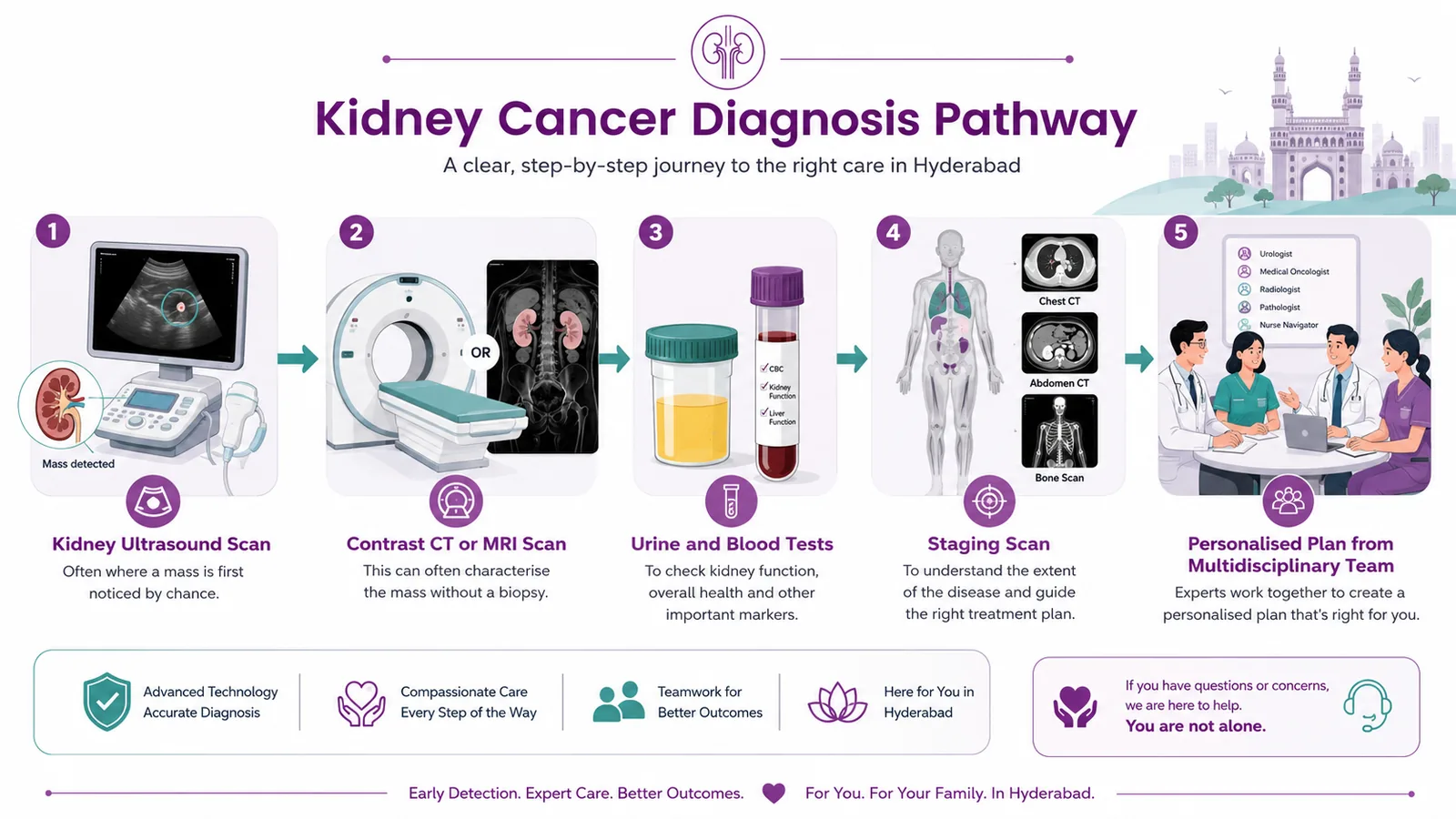
A kidney mass is usually first seen on an ultrasound or CT — often, as noted, by chance. A contrast CT or MRI can then characterise it, and in many cases a suspicious mass is treated without a prior biopsy, because imaging is often enough. Urine and blood tests and a staging scan complete the picture.
From a scan to a precise, personalised plan — often without a biopsy.
Diagnostic services we offer — book any of these directly:
Kidney ultrasound
Often where a kidney mass is first noticed — a simple, first-line scan of the kidneys.
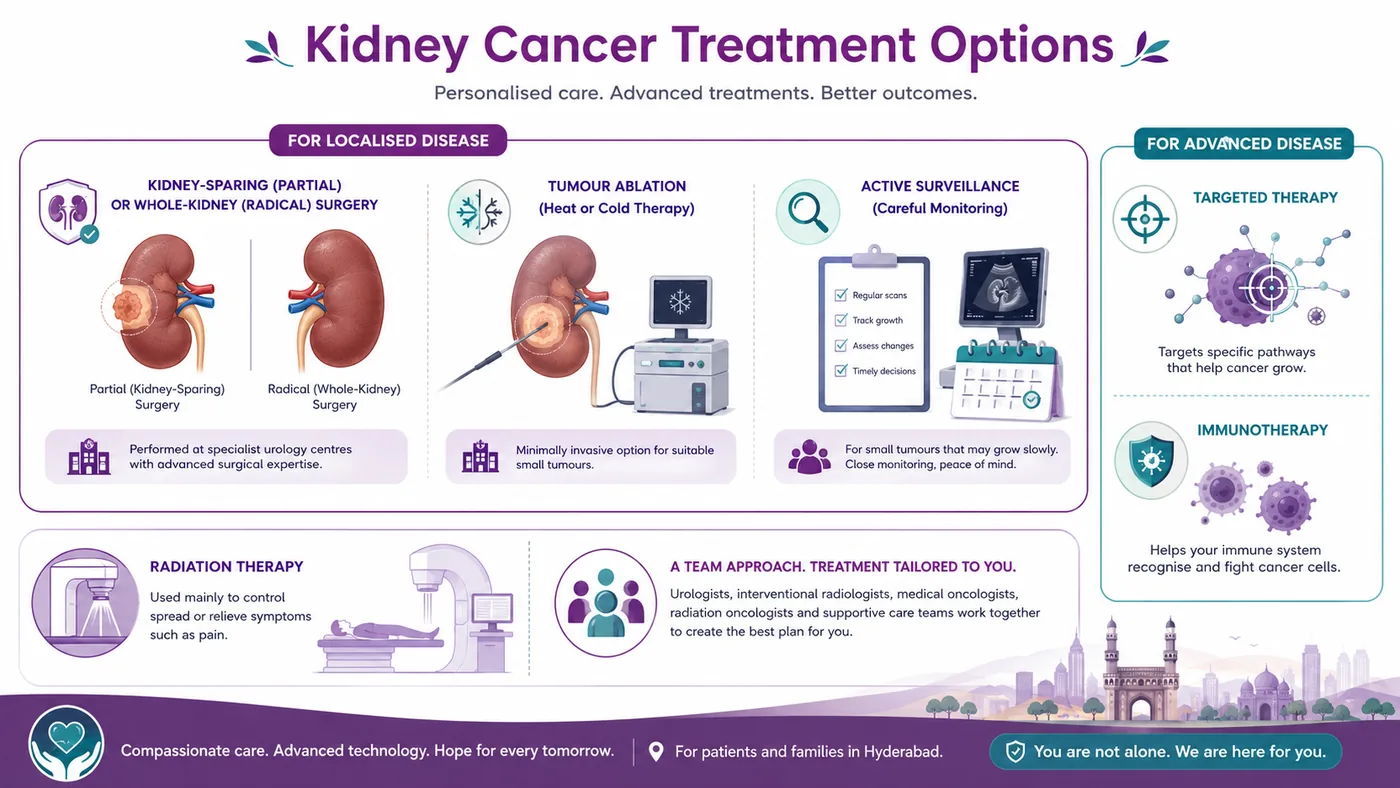
For kidney cancer confined to the kidney, surgery is the mainstay and often curative — increasingly kidney-sparing. Small tumours can sometimes be destroyed by ablation or safely monitored with active surveillance. And for advanced kidney cancer, immunotherapy and targeted therapy — not chemotherapy — are the modern, effective treatments. See our full guide to kidney cancer treatment in Hyderabad.
A coordinated team. CION provides medical oncology (immunotherapy and targeted therapy) and radiation in-house, and works with specialist urologists / uro-oncology surgeons and interventional radiology for kidney surgery and ablation — so your whole pathway is planned and managed together.
Treatments & care we coordinate — book a consult for any of these:
Kidney-sparing (partial) surgery
Removes just the tumour and keeps the rest of the kidney — coordinated with specialist urology / uro-oncology.
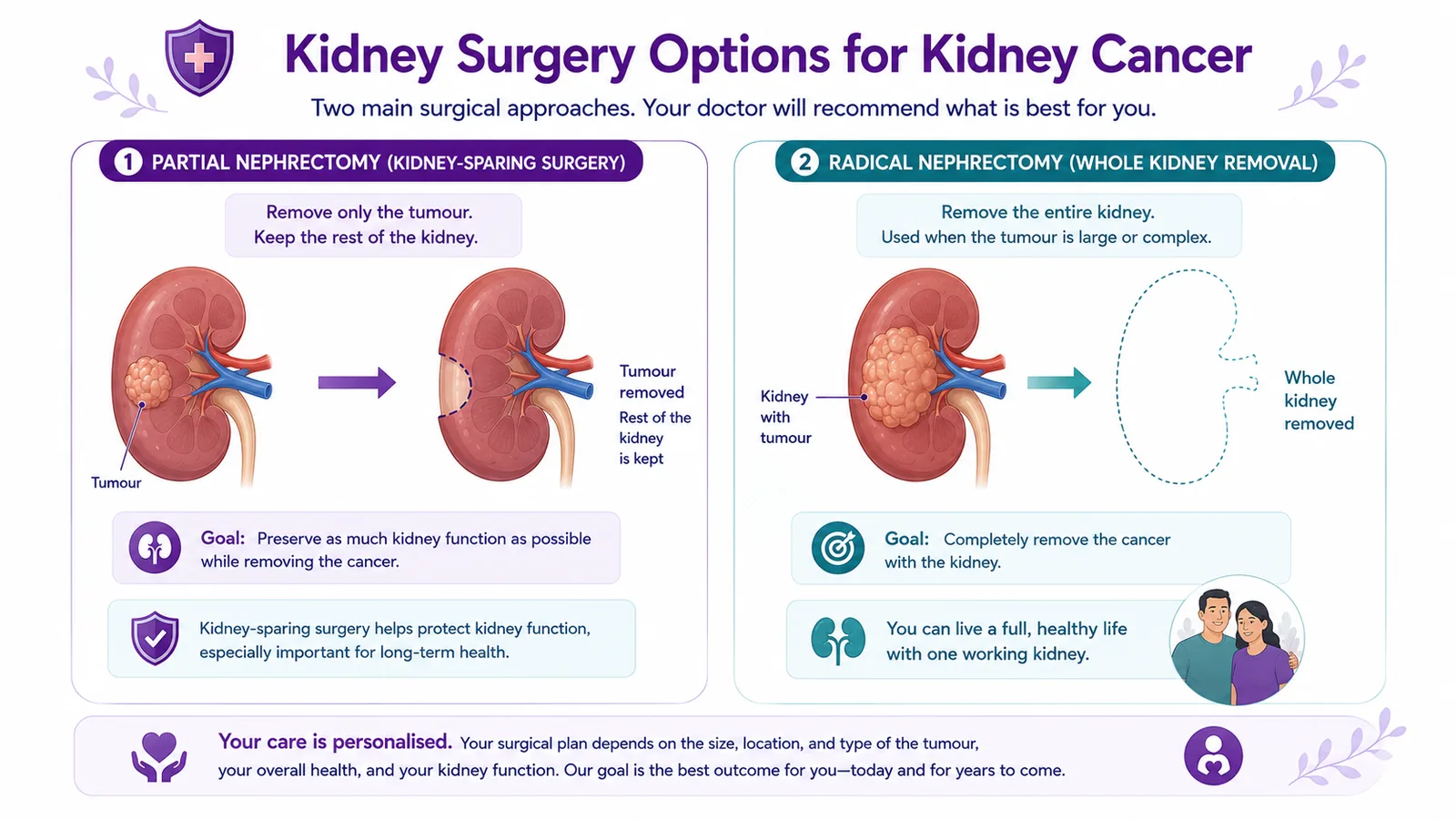
Two of the biggest worries — losing a kidney, and life afterwards — deserve clear answers. For many small tumours, surgeons now remove just the tumour and keep the rest of the kidney (a partial nephrectomy), with the same cancer control as removing the whole kidney. And even if a whole kidney must be removed, one healthy kidney does the work of two — most people live completely normal lives.
Keep the kidney where possible
For small tumours, partial nephrectomy removes the tumour and preserves kidney function — same cancer control.
Live well with one kidney
One healthy kidney does the work of two. Most people live full, normal lives after a kidney is removed.
Function is protected
Preserving kidney function matters for long-term health — a key reason we favour kidney-sparing approaches.
Cost
Indicative cost of kidney cancer treatment in Hyderabad
Cost varies widely with the stage and treatment — and some treatments (kidney surgery or ablation) are delivered at specialist partner centres and may be billed there. It’s best given as an indicative range after assessment. Eligible treatment may be covered under Aarogyasri / PMJAY at empanelled centres.
Estimate an indicative range
Indicative range
—
Figures are indicative only and not a quotation — kidney surgery and ablation may be delivered and billed at specialist partner centres. For an accurate estimate, request a callback.
A mass found on a scan, blood in your urine, or a persistent side or back ache shouldn’t wait. Book a free consultation and, if you already have a report, a free written second opinion.
Reviewed by a medical oncologist and a uro-oncology tumour board
Kidney-sparing focus & modern immunotherapy for advanced disease
Aarogyasri / PMJAY & insurance guidance
Support
Financial support & Aarogyasri
Cost should not delay care. Under Aarogyasri and PMJAY, eligible kidney cancer treatment may be largely covered at empanelled centres. Our team helps check eligibility and guides you on insurance and EMI.
9 clinics in Hyderabad · 35+ across Telangana & AP
CION cancer care is closer than you think.
We're never more than 30 minutes away. Same panel of specialists at every centre. Same tumour board reviews. Same NCCN protocols. Pick the closest one and call directly — or let us pick for you.
Share your name and number — we'll call you back within 30 minutes to schedule your consultation.
Blood in your urine, or a mass found on a scan? Get it checked.
Found early, kidney cancer is highly curable — and blood in the urine, even once, is worth a check. Our oncologists coordinate the whole pathway, from imaging to kidney-sparing surgery and modern drug therapy.
The worries and myths we hear most about kidney cancer, and the facts.
“A mass on my kidney means cancer.”
Fact: Up to a third of small kidney masses are benign — and if it is cancer, being found early (as most are) means it’s usually very curable.
“Blood in the urine that stops is nothing to worry about.”
Fact: Painless blood in the urine, even once, should always be checked — it can be the only sign of a kidney or bladder cancer.
“Kidney cancer means losing the whole kidney.”
Fact: Small tumours are increasingly treated by removing just the tumour and keeping the kidney — and you can live a full life with one kidney anyway.
“If chemo doesn’t work, kidney cancer can’t be treated.”
Fact: Surgery cures most early cancers, and immunotherapy and targeted therapy now control advanced disease, often for years.
“Every kidney tumour needs surgery immediately.”
Fact: Some small tumours can be safely monitored (active surveillance), especially in older patients — not everything needs immediate surgery.
“Kidney cancer is a death sentence.”
Fact: Found early it’s highly curable, and even advanced disease is now often controlled with modern therapy.
“Living with one kidney means a life of restrictions.”
Fact: Most people with one healthy kidney live completely normal lives — working, exercising and eating normally, with routine follow-up.
“A biopsy will make the cancer spread.”
Fact: Kidney biopsy is safe and done under controlled conditions — and often isn’t even needed, because imaging can characterise most masses.
“Kidney cancer is contagious.”
Fact: Cancer is not infectious. You cannot catch kidney cancer from, or pass it to, anyone.
“If there’s no pain, it can’t be serious.”
Fact: Early kidney cancer is usually painless — that’s exactly why it’s often silent and found by chance. Painless doesn’t mean harmless.
“Only heavy smokers get kidney cancer.”
Fact: Smoking raises the risk, but many people with kidney cancer never smoked. Excess weight, high blood pressure and family history all play a part.
“Treatment is unaffordable — we can’t manage it.”
Fact: Under Aarogyasri and PMJAY, eligible treatment may be largely covered at empanelled centres. We help check eligibility, insurance and EMI.
“Ablation and surveillance aren’t ‘real’ treatment.”
Fact: For the right small tumour, ablation and careful active surveillance are proper, evidence-based options that avoid bigger surgery.
“Once kidney cancer spreads, nothing can be done.”
Fact: Advanced kidney cancer is now often controlled — sometimes for years — with immunotherapy and targeted therapy, and surgery in selected cases.
“Home remedies alone can cure it.”
Fact: Relying on unproven remedies wastes the window when kidney cancer is most treatable. Discuss anything complementary with your oncology team, not as a replacement.
“A second opinion will offend my doctor or waste time.”
Fact: A second opinion is normal and welcomed in cancer care — it confirms the plan and gives you confidence. At CION it’s free with a report.
“Kidney cancer always comes back after surgery.”
Fact: Most early kidney cancers are cured by surgery and don’t return. Regular follow-up scans are there to catch the uncommon recurrence early.
“If I ignore the blood in my urine, it’ll probably just go away.”
Fact: It may stop — but the cause still needs checking. Finding a kidney or bladder problem early is what makes it easily treatable.
Why CION
Why choose CION for kidney cancer care
Modern systemic therapy
Immunotherapy and targeted therapy for advanced kidney cancer — a genuine advance — led by medical oncology.
Coordinated uro-oncology pathway
Kidney-sparing and radical surgery, and ablation, via specialist urology / uro-oncology and interventional partners — planned together.
Kidney-sparing focus
Preserving kidney function wherever possible, with active surveillance an option for small tumours.
Imaging-led diagnosis
Characterising masses on scans, often without a biopsy — sparing unnecessary procedures.
Uro-oncology tumour board
Every case discussed by a multidisciplinary team, matching treatment to the tumour and to you.
Close, NABH-accredited care
9 clinics across Hyderabad and 35+ across Telangana, within NABH-accredited facilities.
Real stories · real courage
15,000+ patients chose CION. Hear from them directly.
These aren't paid endorsements or written reviews. These are video testimonials from real patients and families — recorded on their own phones, in their own words. Pick any one. Watch it. Then decide.
4.8★800+ Google reviews
50+video testimonials
15,000+patients treated
Successful Chemotherapy & Radiation Done by Dr. Owais Mohammed & Dr. Kirti Ranjan
Watch video →
Successful Chemotherapy Done by Dr. C Raghavendra Reddy
Watch video →
Surgery, Chemo & Radiation Done by Dr. Imaduddin, Dr. Vinay, Dr. Owais, Dr. Kirti
Watch video →
Successful Radical Thymectomy Done by Dr. Mohammed Imaduddin & Dr. Vinay Mamidala
Watch video →
Successful Surgery Done by Dr. Rajender Byshetty
Watch video →
Successful Chemo & Surgery Done by Dr. Imad, Dr. Vinay, Dr. Owais & Dr. Raghavendra
Watch video →
Successful Chemo & Surgery Done by Dr. Imad, Dr. Vinay, Dr. Owais & Dr. Raghavendra
Watch video →
Successful Chemo & Radiation Done by Dr. Owais Mohammed & Dr. Kirti Ranjan Mohanty
Watch video →
Successful Breast Cancer Surgery Done by Dr. Imaduddin Mohammed & Dr. Vinay Mamidala
Watch video →
Successful Chemotherapy Done by Dr. Bharati Devi Gorantla
Watch video →
Successful Chemo & Surgery Done by Dr. Owais Mohammed & Dr. Imaduddin Mohammed
Watch video →
Successful Chemotherapy Done by Dr. Gundu Naresh
Watch video →
Successful Bone Marrow Transplantation - Neuroblastoma
Watch video →
Successful Surgery & Chemo - Carcinoma of Caecum
Watch video →
Successful Oral chemotherapy & mastectomy surgery
Watch video →
Successful Oral chemotherapy & mastectomy surgery
Watch video →
Successful Chemotherapy
Watch video →
Successful Surgery by Dr. Mohammed Imaduddin
Watch video →
Successful Bone Marrow Transplantation
Watch video →
Successful Oral chemotherapy & mastectomy surgery
Watch video →
Successful Oral chemotherapy & mastectomy surgery
Watch video →
Successful Chemotherapy
Watch video →
Successful Buccal Mucosa Surgery
Watch video →
Successful Complex Surgery Mandibulectomy Reconstruction
Not necessarily — up to a third of small kidney masses turn out to be benign, and a scan can often tell how likely a mass is to be cancer. If it is, being found early and small (as incidental findings usually are) is genuinely good news, because early kidney cancer is highly curable. Your team will explain exactly what your scan shows.
Is blood in the urine always serious?
Blood in the urine is often not cancer — but it should always be checked, even if it happens only once, is painless, or goes away. It can be the only sign of a kidney or bladder cancer, and finding the cause early matters. Do not ignore it.
Will I lose my whole kidney? Can I live with one?
Often not — for small tumours, surgeons increasingly remove just the tumour and keep the rest of the kidney (a partial nephrectomy), with the same cancer control. And even if a whole kidney is removed, one healthy kidney does the work of two, so most people live completely normal lives.
Can kidney cancer be cured if chemotherapy does not work on it?
Yes. It is true chemotherapy and radiation do not work well for the commonest kidney cancer — but that is not the whole story. Surgery cures most early kidney cancers, and advanced disease is now often controlled for years with immunotherapy and targeted therapy, which have transformed outcomes over the last decade.
I have a small kidney tumour — do I need surgery straight away?
Not always. For small tumours, especially in older or frailer people, careful active surveillance — monitoring with regular scans — is sometimes the right choice, because small kidney tumours often grow slowly. Your team will advise what is safest for you.
What is renal cell carcinoma (RCC)?
Renal cell carcinoma is by far the commonest type of kidney cancer. It begins in the lining of the kidney's tiny filtering tubes. The commonest RCC subtype is clear cell; papillary and chromophobe are less common. A different cancer, urothelial carcinoma, can start in the renal pelvis (the part that collects urine) and behaves more like bladder cancer.
What are the early warning signs of kidney cancer?
Kidney cancer is often silent early on, which is why so many are found by chance on a scan. When there are symptoms, the key one is blood in the urine; others include a persistent ache in the side or lower back, a lump in the side or abdomen, unexplained weight loss, tiredness and sometimes fever. Painless blood in the urine is the one symptom always worth checking.
What causes kidney cancer and who is at higher risk?
Kidney cancer does not have a single cause, but several things raise the risk — and many are within your control. Smoking, excess body weight and high blood pressure are the biggest modifiable risks; long-term dialysis or chronic kidney disease, older age, and inherited conditions such as von Hippel-Lindau disease also increase it. Having a risk factor does not mean you will get kidney cancer.
How is kidney cancer diagnosed?
A kidney mass is usually first seen on an ultrasound or CT — often by chance. A contrast CT or MRI can then characterise it, and in many cases a suspicious mass is treated without a prior biopsy, because imaging is often enough. Urine and blood tests and a staging scan complete the picture, and a biopsy is used selectively.
Do I need a biopsy for kidney cancer?
Not always. Unlike many cancers, kidney masses can often be characterised confidently on imaging (contrast CT or MRI), so a suspicious mass is frequently treated without a prior biopsy. A biopsy is used selectively — for example, when imaging is not conclusive, before ablation, or when the result would change the plan. Your team will advise whether you need one.
What are the stages of kidney cancer?
Kidney cancer is staged I to IV. Stage I is small and confined to the kidney (up to 7 cm); stage II is larger but still confined; stage III has spread to nearby tissue, a large vein or nearby lymph nodes; and stage IV has spread to distant organs such as the lungs or bones. Early stages are highly curable with surgery, and even stage IV is now often controlled with modern therapy.
How is kidney cancer treated?
For cancer confined to the kidney, surgery is the mainstay and often curative — increasingly kidney-sparing (partial nephrectomy). Small tumours can sometimes be destroyed by ablation or safely monitored with active surveillance. For advanced kidney cancer, immunotherapy and targeted therapy — not chemotherapy — are the modern, effective treatments. Radiation is used mainly to control spread or ease symptoms.
What is kidney-sparing (partial nephrectomy) surgery?
Kidney-sparing surgery, or partial nephrectomy, removes just the tumour and keeps the rest of the kidney. For many small tumours it gives the same cancer control as removing the whole kidney, while preserving kidney function — which matters for long-term health. At CION this surgery is coordinated with specialist urology / uro-oncology surgeons, while medical and radiation oncology are provided in-house.
Why is chemotherapy not used for kidney cancer?
The commonest kidney cancer (clear cell RCC) does not respond well to traditional chemotherapy or radiation — so, unlike many cancers, chemo is not the mainstay. Instead, surgery cures most early disease, and advanced kidney cancer is treated with immunotherapy and targeted therapy, which have transformed outcomes over the last decade. So "chemo does not work" is not the same as "cannot be treated".
What is immunotherapy for kidney cancer?
Immunotherapy helps your own immune system recognise and attack kidney cancer cells. Together with targeted therapy — drugs that block specific pathways the cancer uses to grow — it is now the standard modern treatment for advanced kidney cancer, often controlling the disease for years. At CION these systemic treatments are led by medical oncology, in-house.
Can advanced (stage IV) kidney cancer be treated?
Yes. Once very hard to treat, advanced kidney cancer is now often controlled — sometimes for years — with immunotherapy and targeted therapy, and surgery in selected cases. Treatment focuses on controlling the cancer and quality of life. Advanced does not mean untreatable.
How much does kidney cancer treatment cost in Hyderabad?
It varies widely with the stage and treatment — and some treatments (kidney surgery or ablation) are delivered at specialist partner centres and may be billed there. It is best given as an indicative range after assessment. Eligible treatment may be covered under Aarogyasri or PMJAY at empanelled centres. Use the cost estimator on this page for an indicative figure, then request a callback for an accurate estimate.
Can kidney cancer be prevented or the risk reduced?
There is no guaranteed way to prevent kidney cancer, but you can lower your risk. Stopping smoking is one of the best things you can do, and keeping a healthy weight and controlling blood pressure also help. Regular check-ups matter if you are on long-term dialysis or have a family history. Knowing the signs — especially not ignoring blood in the urine — helps catch it early.
Explore
Explore kidney cancer care
Our guide to kidney cancer — treatment, doctors, tests and support — plus the neighbour and metastasis cluster. Tap any topic to read more.
Found a kidney mass, or noticed blood in your urine? Get clear answers.
Most kidney masses are found early — often by chance — and are very treatable, and blood in the urine is usually not cancer. But both deserve a proper check. Book a consultation or second opinion at any of our 9 Hyderabad clinics, part of 35+ centres across Telangana & Andhra Pradesh.
Medical disclaimer: This page is for general information and awareness and does not replace professional medical advice, diagnosis or treatment. Heavy or painful blood in the urine, or severe flank pain, needs prompt medical attention. Always consult a qualified oncologist or urologist. Costs shown are indicative only and not a quotation. Content is periodically reviewed by CION’s medical team.

 CION Ameerpet