
 CION Ameerpet
Choosing a Centre · Tumour Board Review
What Is a Tumour Board — And Was Your Case Discussed?
Somewhere between your biopsy report and your treatment plan, a group of doctors either sat down together and discussed your case — or they did not. Most families never find out which. This page explains what a tumour board is, who is in the room, how to check in one question whether your case actually went through one, and how to ask for it if it did not.
Medically reviewed by Dr. Bharati Devi Gorantla, Medical Oncologist, MBBS · MD · DM (Adyar, Chennai) · ECMO · MRCP SCE (UK) · Last reviewed August 2026
- One question, asked early — “Was my case discussed at the tumour board, and what did it conclude?” Ask it before the first cycle, not after.
- A record, not a reassurance — A real board review has a date, the specialties present and a written conclusion. Ask for a copy for your own file.
- You are allowed to request it — Asking for a multidisciplinary review is a routine request, not a complaint. A reasonable team will arrange it.
- It also tells you who catches trouble — The same group that plans the treatment decides who manages an immune-related side effect, and where you would be admitted.
17+
Cancer Specialists
on Panel
on Panel
96.9%
Breast Cancer
Survival Rate*
Survival Rate*
15,000+
Patients
Treated
Treated
4.8★
Google Rating
(800+ reviews)
(800+ reviews)
The short answer
What is a tumour board?
A tumour board is a scheduled meeting where doctors from several specialties review one patient’s case together and agree a plan. Pathology, imaging, stage and treatment options are discussed at the same table. The output is a documented recommendation from a group, not a decision taken by one doctor alone.
In most Indian centres the same meeting is called a multidisciplinary team meeting, or simply the MDT. The name matters less than the structure. A board exists so that the person who read your biopsy, the person who read your scan and the people who would treat you are all looking at the same case on the same day. NCCN and ESMO both describe multidisciplinary review as standard practice in planning cancer treatment rather than an optional refinement.
| Who is at the table | What they bring | The question they answer |
|---|---|---|
| Medical oncologist | Drug treatment — chemotherapy, immunotherapy, targeted therapy | Is a systemic treatment appropriate here, and in what order? |
| Surgical oncologist | Whether disease can be removed, and at what cost to function | Is surgery possible, and is it the right first step? |
| Radiation oncologist | Whether radiotherapy adds control, alone or alongside drugs | Does radiation belong in this plan, and at which point? |
| Pathologist | The tissue itself — subtype, grade, receptor and biomarker reports | Is the diagnosis certain, and is the biomarker work complete? |
| Radiologist | Re-reading the scans against what the report says | Is the stage written on the report the stage visible on the images? |
| Nuclear medicine input | PET-CT interpretation, brought in when functional imaging is in question | What does the scan actually show, and what is it unable to show? |
| Specialist nurse or day-care coordinator | What the schedule looks like in practice — visits, monitoring, access | Can this plan be delivered and monitored safely for this family? |
| Pharmacist | Availability, dosing, interactions, procurement and cold chain | Can this medicine be sourced and handled correctly, every cycle? |
| Palliative and supportive care | Symptom control and daily function alongside treatment | What keeps the patient well enough to continue? |
If only one specialty is in the room, it is a clinic, not a board. That is worth knowing before you choose where to be treated — How to Choose a Centre for Immunotherapy sets out where multidisciplinary review sits among the other things a centre has to be able to do.
Did you know?
Most families are never told whether their case went to a tumour board, and most never ask. The single question “was my case discussed at the tumour board, and what did it conclude?” costs nothing, takes ten seconds, and changes the conversation — because the honest answers are “yes, here it is”, “not yet”, or “we do not hold one”, and all three tell you something you need to know.
How to check
Was your case discussed at a tumour board?
Ask, and ask for it in writing. A case that has been through a tumour board leaves a dated record: the date of the meeting, the specialties present, the conclusion, and any test still awaited. If nobody can produce that record, the discussion was informal or did not happen.
This is not an accusation and should not be delivered as one. Plenty of sound decisions begin with two doctors talking in a corridor, and a corridor conversation is not negligence. But it is not a board either, and it does not travel. If you move city, change centre, or land in a casualty department at midnight, the only version of that discussion that helps you is the one written down. Ask for these five things:
- The date of the meeting. A conclusion reached before your biomarker report arrived may no longer be the current plan.
- Which specialties were present. Individual names are not essential. Pathology, imaging and at least two treating specialties are.
- The conclusion, in one or two sentences, in your file. Not a summary given verbally in the clinic and then lost.
- What was considered and set aside, and why. The discarded options are often more informative than the chosen one.
- What is still pending. A biomarker result, a repeat biopsy, a PET-CT slot. A plan waiting on a report is not yet a plan.
If you are being asked to sign anything before that conclusion exists in writing, slow down. Understanding Your Immunotherapy Consent Form covers what the form you are handed actually commits you to, and what should already be settled before it reaches you.
Your request
Can you ask for your case to be discussed?
Yes. Any patient or family can ask for a multidisciplinary review, and a reasonable team will arrange it. It is a routine request, not a complaint and not a challenge to your doctor. Ask early, ask in writing, and ask what the board needs before it can discuss your case.
- 1
Ask it in the room
Say it plainly: “Can my case be discussed at the tumour board?” Asked before treatment starts, it is a normal question with a normal answer.
- 2
Put the request in writing
One line in an email or a note to the clinic is enough. Written requests get scheduled; verbal ones get remembered differently by everyone.
- 3
Gather the material
Pathology report with blocks or slides, all imaging on a disc rather than as printed films, blood results, and any biomarker testing already sent.
- 4
Ask what is still missing
Biomarker testing takes days to come back. A board cannot settle eligibility on a report that has not arrived, so find out what is being waited for.
- 5
Ask when the board sits
Many centres meet weekly. Ask for the date, so you are waiting for something specific instead of waiting blind.
- 6
Ask for the conclusion on paper
Take a copy home. It is the document that tells any other doctor what was already considered, so nothing has to be repeated from scratch.
If a scan is requested to complete the picture, remember that staging and response-assessment PET-CT is coordinated at partner imaging centres rather than done in-house, so the appointment date and any travel time quoted to you are indicative only. Build a little slack into the plan. Questions to Ask a Centre Before Starting Immunotherapy lists the rest of what is worth settling in the same conversation.
12+ Centres in Hyderabad · Pick yours
CION cancer care is closer than you think.
We're never more than 30 minutes away. Same panel of specialists at every centre. Same tumour board reviews. Same NCCN protocols. Pick the closest one and call directly — or let us pick for you.
CION Ameerpet
CION Kukatpally
CION L.B. Nagar
CION Tolichowki
CION Masab Tank
CION Banjara Hills
CION Kompally
CION Balanagar
CION Siddipet
CION Sangareddy
Not sure which centre fits best? Tell us where you are — we'll suggest the closest one with the right specialists.
Help me pick the right centre
Beyond Hyderabad
35+ centres across Telangana & Andhra Pradesh
Travelling for treatment? We may have a centre right where you are.
Telangana
Andhra Pradesh
Don't see your city? Call 18002028726 — we'll find your nearest CION partner centre.
Meet the Specialists
17+ senior cancer specialists. One panel for your case.
Trained at AIIMS, Tata Memorial, and leading international centres. Combined 150+ years of experience. Every complex case is reviewed by 3+ of them — together.

Medical Oncologist

Medical Oncologist
Dr. C. Raghavendra Reddy
MBBS(Gold Medal), DNB(General Medicine), DM(Medical Oncology)(Gold Medal)

Medical Oncologist
Dr. Bharati Devi Gorantla
MBBS, MD(General Medicine), DM(Medical Oncology)(Adyar,Chennai), ECMO, MRCP SCE(UK)

Medical Oncologist
Dr. Owais Mohammed
MBBS, MD (General Medicine), DrNB (Medical Oncology), ECMO, MRCP SCE (Medical Oncology) (UK)

Medical Oncologist

Medical Oncologist

Surgical Oncologist
Dr. Muralidhar Muddusetty
MBBS (AIIMS), MS (Surgery) (AIIMS), DNB (Surgical Oncology), MRCS (Edinburgh)

Surgical Oncologist

Surgical Oncologist

Surgical Oncologist
Dr. Vinay Mamidala
MBBS, MS(General Surgery), M.Ch(Surgical Oncology), FMAS, FARIS(Ongoing)

Surgical Oncologist

Radiation Oncologist

Radiation Oncologist

Radiation Oncologist

Hematologist

Interventional Radiologist
Dr. Mohammed Imran

Surgical Oncologist
Dr. Vajja Sandeep Kumar
MBBS, MS (General Surgery), DrNB (Surgical Oncology), FALS Oncology

Surgical Oncologist
Want a specific doctor for your case? Mention them when booking.
Book Free ConsultationBook an appointment with our specialist
Share your name and number — we'll call you back within 30 minutes to schedule your consultation.
Have the Plan Looked At by More Than One Specialty
A consultation covers the diagnosis, what the biomarker report does and does not say, and what a multidisciplinary review would add. No rushed decisions, and no pressure to be treated here.
Why it changes things
What difference does a tumour board make?
It changes who checks the plan. A board re-reads the pathology, confirms the stage, reviews biomarker results and raises options a single specialty may not. In a proportion of cases the recommendation changes. NCCN and ESMO describe multidisciplinary review as standard practice in cancer care, not an optional extra.
- The pathology is read again. Subtype, grade and receptor or biomarker reporting are checked by the pathologist against the slides, not simply copied from the report header.
- The stage is tested against the images. A radiologist looking at the scan can reach a different conclusion from the one summarised in the text of a report.
- The order of treatment gets questioned. Surgery first or drug treatment first is a genuine decision, and it is answered differently depending on who is asked.
- Something outside one specialty’s habit gets raised. A referral, a supportive-care need, a trial worth asking about, or a test nobody had ordered yet.
- Fitness and other illnesses are weighed. Diabetes, kidney function, an autoimmune condition or a heart problem can change what is safe long before it changes what is possible.
None of this predicts how one particular patient will respond to treatment. What it does is reduce the chance that the plan was built on an unchecked assumption — a different kind of benefit, and a real one.
Immunotherapy in particular
Why does this matter more for immunotherapy?
Because immunotherapy eligibility is decided on paper before it is decided in a clinic. PD-L1 scoring, MSI or mismatch-repair status, the approved indication, autoimmune history and baseline steroid use all have to be read together. A board is where a pathologist and an oncologist settle those questions in one sitting.
| The question | Why one specialty cannot settle it alone |
|---|---|
| Is the biomarker report complete and correctly scored? | PD-L1 is scored by different methods for different cancers, and the pathologist is the person who can say what a given number means for this tumour |
| Does the approved indication actually cover this situation? | CDSCO approval, and the indications set out in NCCN or ESMO guidance, are specific to cancer type, stage and what treatment has already been given |
| Does an autoimmune history or a baseline steroid change the risk? | An existing autoimmune condition, or steroids already being taken for another reason, shifts both the risk and the monitoring plan |
| Should this come before, after, or instead of another treatment? | Sequencing against surgery, radiotherapy or chemotherapy is a decision no single specialty owns |
| How will response be assessed, and where? | Response-assessment PET-CT is coordinated at partner imaging centres rather than performed at CION, so the timing has to be planned into the cycle schedule |
| Who manages an immune-related side effect, and where would you be admitted? | Immune reactions can involve the gut, lungs, liver, thyroid, adrenal glands or heart, and the escalation route needs naming before it is needed |
If cell therapy comes up. CION Cancer Clinics does not provide CAR-T or any other cell therapy, and does not stock CAR-T product. If a board or a treating team raises it as an option, the correct next step is a referral to a licensed cell-therapy centre with apheresis, cell processing and intensive-care capability — not a search for a unit willing to attempt it locally.
The honest limits
What can a tumour board not do?
It cannot promise a result. A board improves the process by which your plan is made; it does not change how any individual will respond to treatment. It cannot create eligibility the pathology does not support, it does not replace your consent, and it cannot arrange treatment the centre does not provide.
- It is not a prediction about you. A well-run discussion makes a considered plan more likely. It says nothing about what will happen in your particular case.
- It does not replace consent. A recommendation is an offer. You still decide, and you are entitled to the risks and the alternatives in language you understand before you sign.
- It cannot invent eligibility. Sometimes the conclusion is that immunotherapy is not appropriate for this cancer, this stage or this patient. That is a real answer, and a useful one.
- It cannot deliver what the centre does not have. Where the right treatment sits elsewhere — cell therapy above all — the board’s job is to say so and refer, not to improvise.
- It does not remove your right to a second opinion. A board is several specialties inside one institution. A second opinion is a different institution. Having both is normal.
One thing that is not a tumour board question at all. If a symptom appears between cycles — frequent loose motions, new breathlessness or a dry cough, chest pain or palpitations, or collapse, confusion and severe weakness — that is not something to raise at the next meeting or hold until the next appointment.
Call 1800 202 8726 now, or go straight to the nearest emergency department and say the patient is on immunotherapy, naming the drug and the date of the last cycle.
Before the first cycle
Get the Board’s Conclusion in Writing
Bring your reports and imaging. We will set out what was considered, what was recommended, and what is still pending — on paper, so it travels with you.
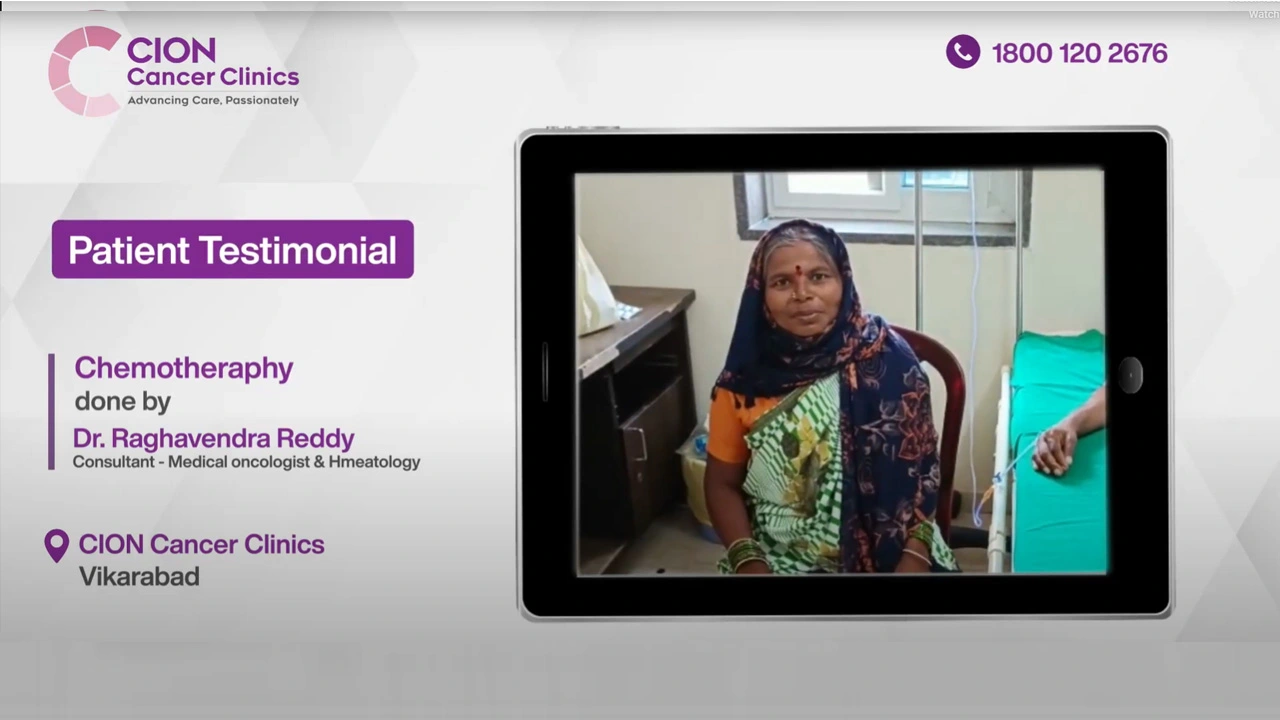
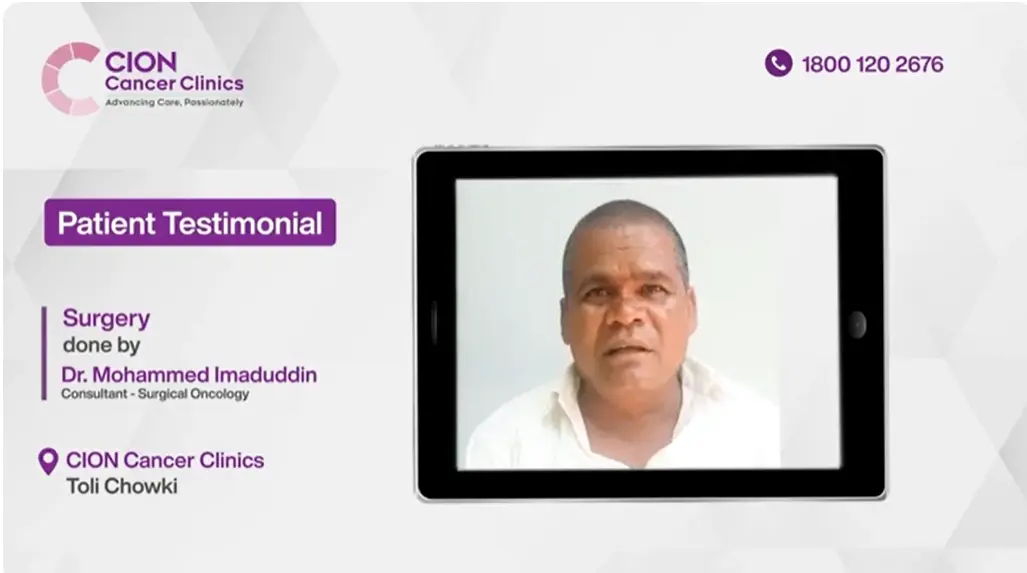
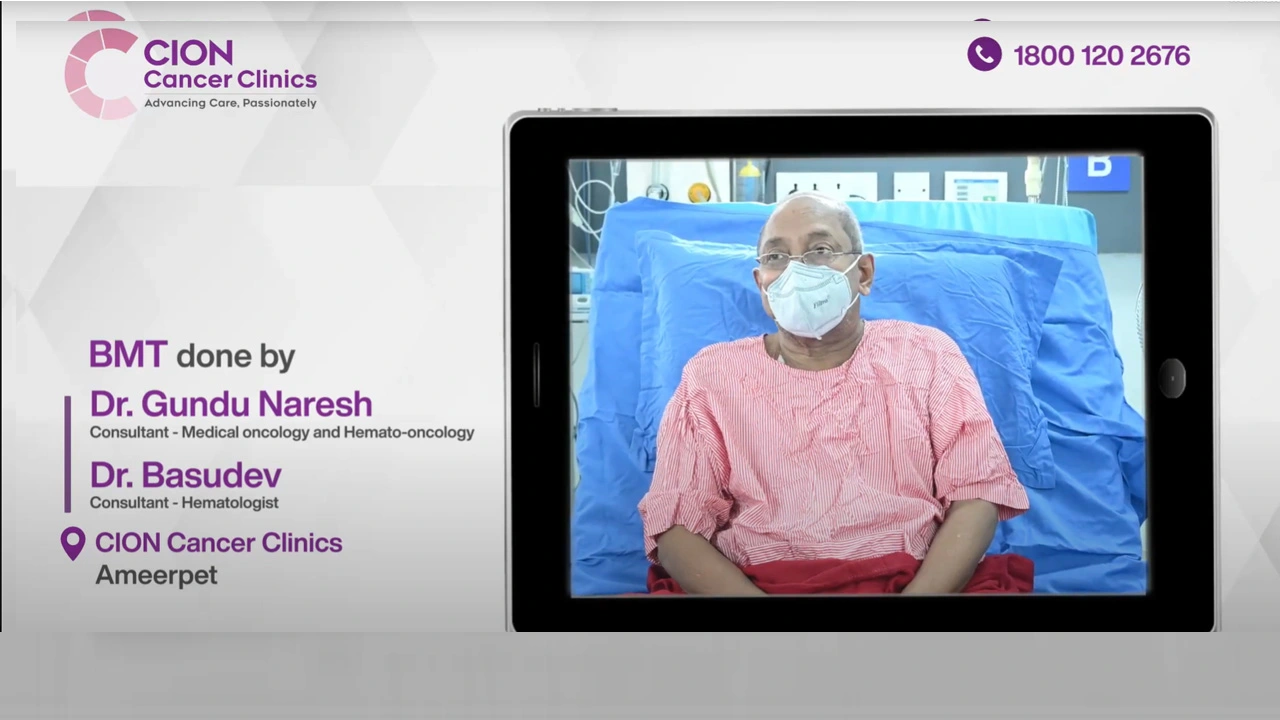
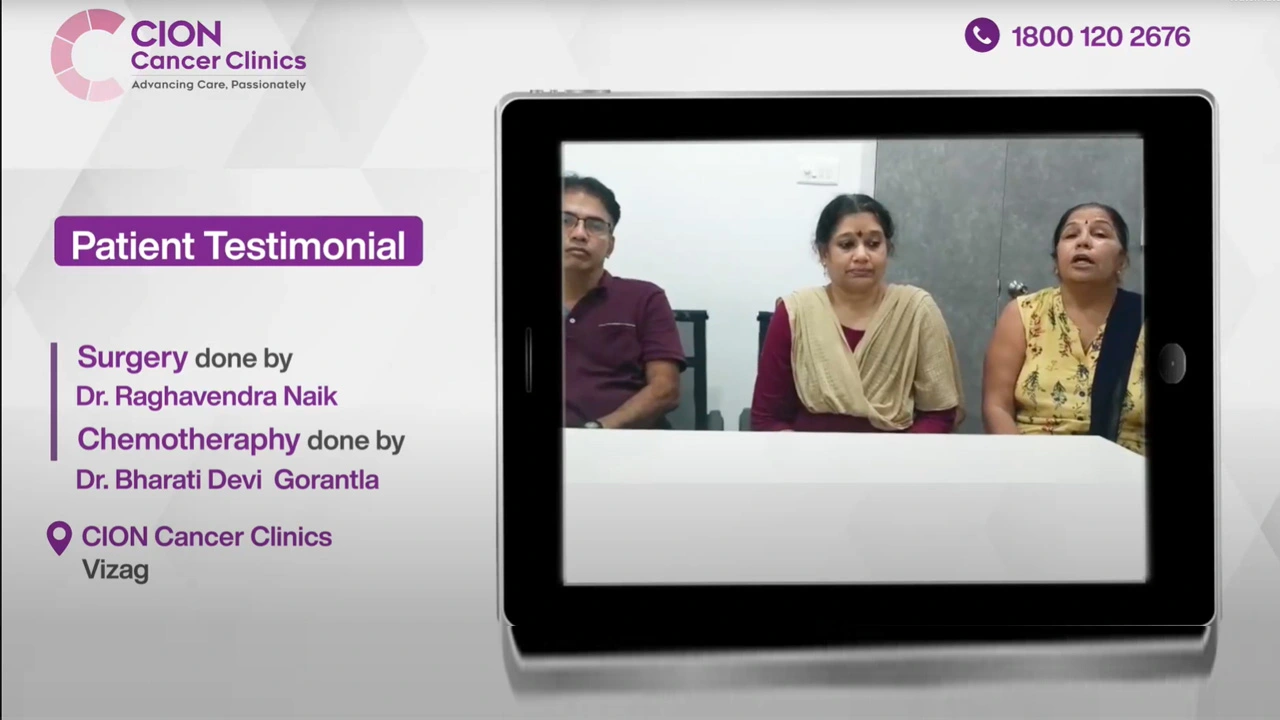
Real Stories. Real Voices.
15,000+ patients chose CION. Hear from them directly.
These aren't paid endorsements or written reviews. These are video testimonials from real patients and families — recorded on their own phones, in their own words. Pick any one. Watch it. Then decide.
4.8★800+ Google reviews
50+video testimonials
15,000+patients treated
Read all 800+ reviews on Google
Start Your Story. Book Free Consultation.
Common questions
Tumour Boards: Your Questions Answered
What is a tumour board?
A tumour board is a scheduled meeting where doctors from several specialties review one patient's case together and agree a plan. Pathology, imaging, stage and treatment options are discussed at the same table. In most Indian centres it is also called a multidisciplinary team meeting, or MDT. The point of it is that no single doctor decides alone. A medical oncologist, a surgical oncologist, a radiation oncologist, a pathologist and a radiologist each read the same case from a different angle, and the conclusion is written into your file as a recommendation from the group.
Who attends a tumour board meeting?
Typically a medical oncologist, a surgical oncologist, a radiation oncologist, a pathologist and a radiologist, with a specialist nurse or day-care coordinator, a pharmacist, and palliative or supportive care input where relevant. Nuclear medicine input is brought in when PET-CT is being discussed. Attendance varies by centre and by case, and not every specialty is needed for every patient. What should be constant is that the tissue diagnosis and the imaging are both represented, along with at least two treating specialties. If only one specialty is in the room, it is a clinic, not a board.
How do I know if my case was discussed at a tumour board?
Ask, and ask for it in writing. A case that has genuinely been through a board leaves a dated record: the date of the meeting, the specialties present, the conclusion, and anything the board is still waiting for. Request a copy for your own file. If nobody can produce that record, the discussion was probably informal. A corridor conversation between two doctors is not the same thing and does not travel with you to the next hospital. Being told your case was discussed is not the same as being shown that it was.
Can I ask for my case to be reviewed by a tumour board?
Yes. Any patient or family can ask for a multidisciplinary review, and a reasonable team will arrange it. It is a routine request, not a complaint and not a challenge to your doctor. Ask early, put the request in writing if you can, and ask what the board needs before it can discuss your case properly. Usually that means the pathology report and blocks, all imaging on a disc, blood results, and any biomarker testing that has been sent. Ask when the board sits, so you know what you are waiting for.
Does a tumour board decide whether I get immunotherapy?
It decides what is recommended, and your consent decides what happens next. For immunotherapy the board is where the eligibility questions are settled: whether the biomarker report is complete and correctly scored, whether the approved indication covers your cancer type and stage, whether an autoimmune history or baseline steroid changes the risk, and whether a drug treatment should come before, after or instead of another approach. Quite often the conclusion is that immunotherapy is not appropriate for this situation. That is a real result and a useful one.
Does a tumour board discussion replace a second opinion?
No. A board is several specialties inside one institution looking at your case together. A second opinion is a different institution looking at it independently. They answer different questions and there is no conflict in having both. Asking for one does not offend a reasonable team. If you do seek a second opinion, take the board's written conclusion with you along with your reports and imaging, because it tells the next doctor what was already considered and set aside, which saves repeating tests and saves time.