
 CION Ameerpet
Hyderabad's Expert Anal Cancer Oncology Team
Anal Cancer Treatment in Hyderabad — Surgery-Sparing Chemoradiation Care
One of the most important things to know about anal cancer is that surgery is not the standard first treatment. For the great majority of patients, the primary treatment is radiation and chemotherapy given together — curing most cases while preserving the anus and normal bowel function, without the need for a permanent colostomy bag.
- IMRT-Based Chemoradiation — primary curative treatment for 80–90% of patients, no surgery required
- Surgery-Sparing Approach — preserves the anus and avoids permanent colostomy in the vast majority of cases
- Multidisciplinary Tumour Board — radiation, medical and surgical oncology review every case before treatment
- NCCN & ESMO Protocols — across 7 NABH-accredited Hyderabad locations · EMI accepted
17+
Cancer Specialists
on Panel
on Panel
96.9%
Breast Cancer
Survival Rate*
Survival Rate*
15,000+
Patients
Treated
Treated
4.8★
Google Rating
(800+ reviews)
(800+ reviews)
What Is Anal Cancer?
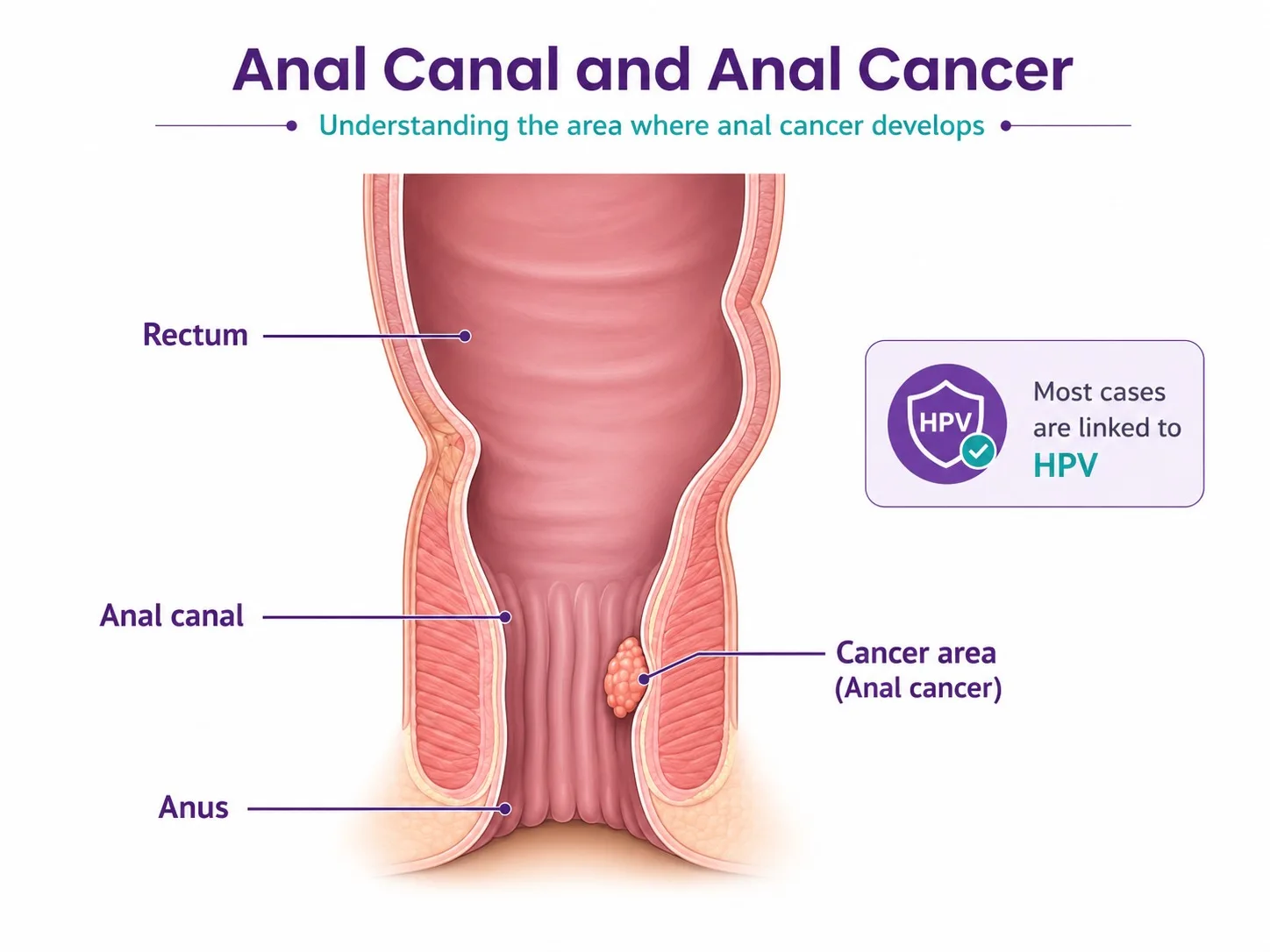
The anus is the short passage — about 3 to 4 centimetres long — at the very end of the digestive tract, through which stool leaves the body. Anal cancer develops when cells in the lining of the anus or the anal canal begin to grow abnormally. It is relatively rare, accounting for a small fraction of gastrointestinal cancers, but its incidence has been rising over the past two decades — primarily because of increasing rates of HPV (human papillomavirus) infection, which is responsible for around 80 to 90% of all anal cancers.
Anal cancer is broadly divided into two anatomical locations — each with a slightly different treatment approach:
- Anal canal cancer — develops in the inner part of the anus, which connects to the rectum above; this is the most common location and is treated primarily with chemoradiation
- Anal margin cancer — develops in the outer area of skin around the anus; smaller early-stage anal margin cancers may sometimes be treated with local surgery, though chemoradiation is still used for most
Did You Know? Unlike most other gastrointestinal cancers, anal cancer is treated primarily with radiation and chemotherapy — not surgery. This combined treatment approach cures approximately 80 to 90% of anal cancers while preserving normal bowel function, avoiding the need for a permanent colostomy bag in the vast majority of patients.
The Link Between HPV and Anal Cancer
Human papillomavirus (HPV) is a very common virus transmitted through skin-to-skin contact, including sexual contact. Most people who carry HPV never develop any symptoms and the virus clears on its own. However, certain types of HPV — particularly HPV-16 — can, in some people, cause abnormal cell changes in the anus over time that eventually develop into cancer. This process typically takes many years.
The important message from this is twofold:
- HPV vaccination, available to both men and women and most effective when given before exposure to HPV, significantly reduces the risk of developing anal cancer and several other HPV-related cancers (watch a Mayo Clinic doctor explain how the HPV vaccine helps prevent cancer). If you have children or teenagers who have not yet been vaccinated, speak to your doctor about HPV vaccination.
- Having HPV does not mean cancer is inevitable. Most people with HPV never develop cancer. But for those who do develop anal cancer, the HPV connection means the cancer tends to respond very well to chemoradiation — HPV-related anal cancers are among the most radiation-sensitive cancers known.
Who Is at Risk of Anal Cancer?
Anal cancer is not a "lifestyle" cancer — most cases trace back to a viral infection that can take many years to cause cellular changes. Knowing the risk factors helps you decide when to seek a specialist evaluation.
HPV Infection
The primary cause of anal cancer. Certain types of HPV (particularly HPV-16 and HPV-18) cause the cellular changes that lead to anal cancer over many years.
Weakened Immune System
People living with HIV are at significantly higher risk because a weakened immune system is less able to clear HPV infections or suppress abnormal cell growth. Regular screening is strongly recommended for HIV-positive individuals.
Smoking
People who smoke have a meaningfully higher risk of anal cancer. Smoking may impair the body's ability to clear HPV infections naturally.
Prior HPV-Related Cancer
A history of cervical, vulvar, or vaginal cancer means shared HPV risk factors, so women who have had one of these are at elevated risk of anal cancer.
Multiple Sexual Partners or STIs
Multiple sexual partners or a history of sexually transmitted infections increases the likelihood of HPV exposure — the underlying cause of most anal cancers.
A diagnosis of anal cancer carries no moral judgement — HPV is extremely common and most people are exposed to it at some point in their lives without knowing it. What matters is getting the right specialist care as early as possible.
Signs and Symptoms of Anal Cancer
Anal cancer symptoms are often mistaken for far more common conditions — particularly haemorrhoids (piles) or a skin infection. This is one of the main reasons anal cancer is sometimes diagnosed late. Any symptom in or around the anus that lasts more than 2 to 4 weeks and does not improve should be evaluated by a specialist, not assumed to be haemorrhoids.
- Bleeding from the anus — the most common symptom; may appear as bright red blood on toilet paper or in the toilet bowl
- Pain, aching, or discomfort in or around the anus — particularly pain that does not have an obvious cause like haemorrhoids or a fissure
- A lump, mass, or hardened area near the anus — may be mistaken for a haemorrhoid
- Itching or a feeling of irritation around the anus
- Discharge from the anus — mucus or unusual secretion
- A change in bowel habits — feeling that the bowel has not emptied fully, or needing to go to the toilet more frequently than usual
Rectal bleeding is never something to ignore — even if haemorrhoids seem the most likely cause. If you have any of these symptoms, especially if they persist, a specialist consultation with a clinical examination is the right first step.
12+ Centres in Hyderabad · Pick yours
CION cancer care is closer than you think.
We're never more than 30 minutes away. Same panel of specialists at every centre. Same tumour board reviews. Same NCCN protocols. Pick the closest one and call directly — or let us pick for you.
CION Ameerpet
CION Kukatpally
CION L.B. Nagar
CION Tolichowki
CION Masab Tank
CION Banjara Hills
CION Kompally
CION Balanagar
CION Siddipet
CION Sangareddy
Not sure which centre fits best? Tell us where you are — we'll suggest the closest one with the right specialists.
Help me pick the right centre
Beyond Hyderabad
35+ centres across Telangana & Andhra Pradesh
Travelling for treatment? We may have a centre right where you are.
Telangana
Andhra Pradesh
Don't see your city? Call 18002028726 — we'll find your nearest CION partner centre.
Meet the Specialists
17+ senior cancer specialists. One panel for your case.
Trained at AIIMS, Tata Memorial, and leading international centres. Combined 150+ years of experience. Every complex case is reviewed by 3+ of them — together.

Medical Oncologist

Medical Oncologist
Dr. C. Raghavendra Reddy
MBBS(Gold Medal), DNB(General Medicine), DM(Medical Oncology)(Gold Medal)

Medical Oncologist
Dr. Bharati Devi Gorantla
MBBS, MD(General Medicine), DM(Medical Oncology)(Adyar,Chennai), ECMO, MRCP SCE(UK)

Medical Oncologist
Dr. Owais Mohammed
MBBS, MD (General Medicine), DrNB (Medical Oncology), ECMO, MRCP SCE (Medical Oncology) (UK)

Medical Oncologist

Medical Oncologist

Surgical Oncologist
Dr. Muralidhar Muddusetty
MBBS (AIIMS), MS (Surgery) (AIIMS), DNB (Surgical Oncology), MRCS (Edinburgh)

Surgical Oncologist

Surgical Oncologist

Surgical Oncologist
Dr. Vinay Mamidala
MBBS, MS(General Surgery), M.Ch(Surgical Oncology), FMAS, FARIS(Ongoing)

Surgical Oncologist

Radiation Oncologist

Radiation Oncologist

Radiation Oncologist

Hematologist

Interventional Radiologist
Dr. Mohammed Imran

Surgical Oncologist
Dr. Vajja Sandeep Kumar
MBBS, MS (General Surgery), DrNB (Surgical Oncology), FALS Oncology

Surgical Oncologist
Want a specific doctor for your case? Mention them when booking.
Book Free ConsultationBook an appointment with our specialist
Share your name and number — we'll call you back within 30 minutes to schedule your consultation.
Talk to Hyderabad's Anal Cancer Specialists Today
Whether you've just been diagnosed or want a second opinion before starting treatment, our radiation and medical oncology team is available across 7 Hyderabad locations.
How Is Anal Cancer Diagnosed at CION?
An accurate diagnosis is the foundation of every effective anal cancer treatment plan. CION's diagnostic pathway combines clinical examination, biopsy, and modern imaging to confirm the diagnosis and stage the disease — so the tumour board can recommend the right treatment from the first day.
Clinical Examination and Biopsy
Diagnosis begins with a careful physical examination of the anus and anal canal, including a digital rectal examination. Any suspicious lesion is sampled — a small piece of tissue is taken (biopsy) and examined under a microscope to confirm whether cancer is present and identify the exact type of cancer cell.
MRI of the Pelvis
The most important scan for assessing the depth of tumour invasion into the anal canal wall, involvement of nearby lymph nodes in the groin and pelvis, and planning the radiation treatment field.
CT Scan (Chest, Abdomen, Pelvis)
Used to check whether the cancer has spread to distant organs such as the liver or lungs — a key step before finalising the treatment plan.
PET-CT
Used for staging and identifying involved lymph nodes that may not appear enlarged on CT alone. Particularly valuable for ensuring the radiation field covers all affected areas.
Anoscopy
A short, thin camera is passed into the anus to directly visualise the tumour and assess its extent within the anal canal — providing information no scan alone can capture.
Anal Cancer Staging and Survival Rates
Anal cancer is staged using the AJCC TNM system. Stage determines the extent of radiation treatment needed — larger and more advanced tumours receive higher radiation doses — but even advanced-stage anal cancer is treated with chemoradiation, not surgery, as the primary approach.
| Stage | Tumour Size and Extent | Nodes / Spread | 5-Year Survival | Primary Treatment |
|---|---|---|---|---|
| Stage I | Tumour ≤2cm | No node involvement, no spread | 70–90% | Chemoradiation (IMRT) |
| Stage II | Tumour 2–5cm | No node involvement, no spread | 60–80% | Chemoradiation (IMRT) |
| Stage IIIA | Any size; or spread to regional lymph nodes only | Groin or pelvic nodes | 50–70% | Chemoradiation (IMRT) — larger radiation field |
| Stage IIIB | Adjacent organ invasion or multiple regional nodes | Groin + pelvic nodes | 35–55% | Chemoradiation (IMRT) with dose escalation |
| Stage IV | Spread to distant organs | Any N, M1 | 15–30% | Chemotherapy + immunotherapy; chemoradiation for local control |
Note: These survival figures are for squamous cell carcinoma of the anal canal treated at specialist oncology centres. HPV-positive anal cancers generally have better responses to chemoradiation than HPV-negative tumours.
Why Surgery Is Not the First Step — How Anal Cancer Is Really Treated
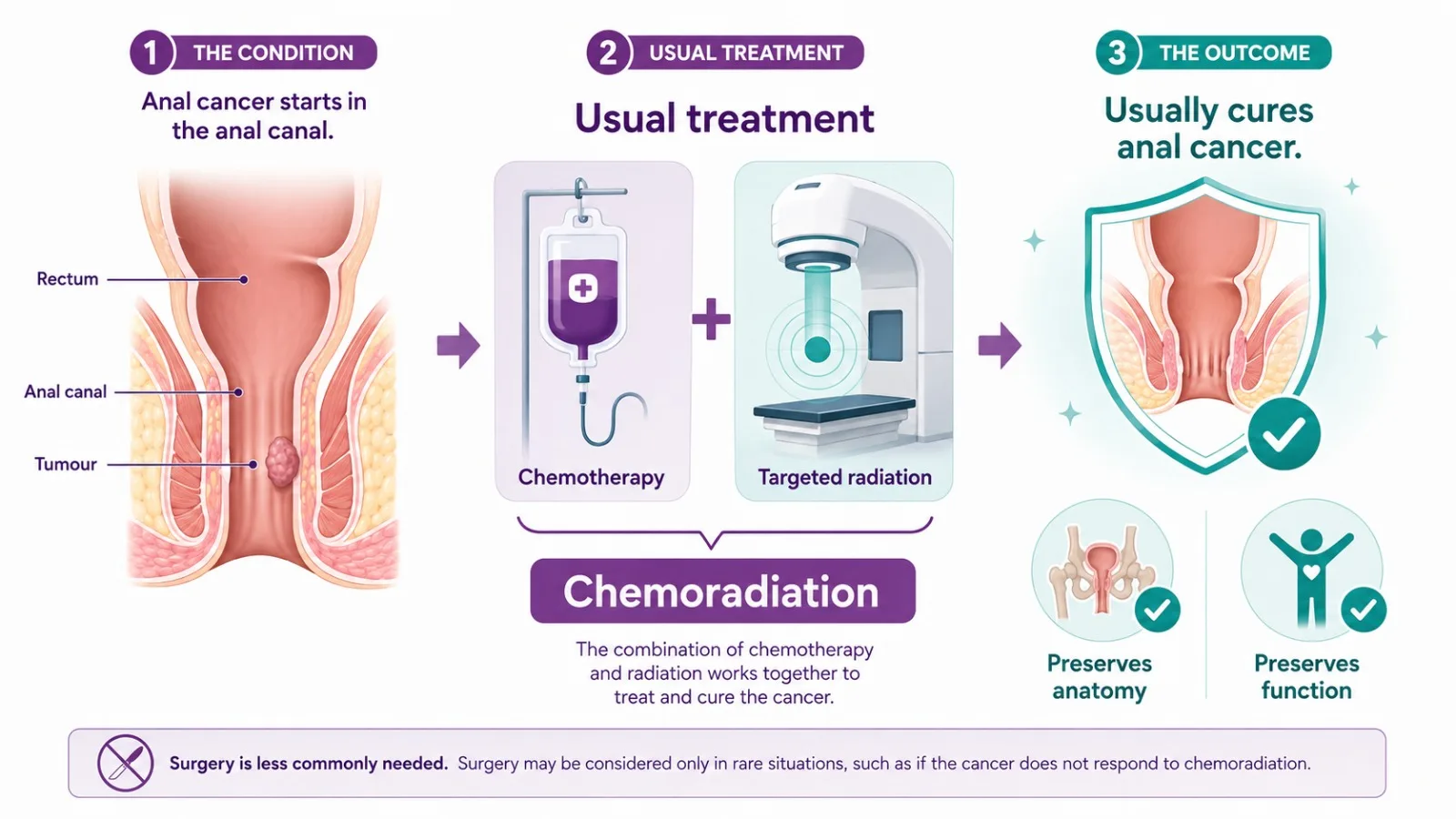
Most patients diagnosed with anal cancer expect to be told they need surgery. This is because surgery is the primary treatment for most other digestive tract cancers — stomach, colon, rectal. Anal cancer is the exception, and understanding this difference is important.
The standard curative treatment for anal cancer is a combination of radiation therapy and chemotherapy given at the same time — called concurrent chemoradiation. The chemotherapy makes cancer cells more sensitive to the radiation, allowing the radiation to destroy the tumour more effectively. Together, they cure approximately 80 to 90% of anal cancers.
This matters enormously for quality of life. Surgery for anal cancer — when required — involves removing the anus itself and creating a permanent opening in the abdomen (colostomy) for passing stools. Chemoradiation, when it works (and it works in the vast majority of cases), avoids this entirely. The anus is preserved. Normal bowel function continues. No permanent bag.
This is why, at CION, the first treatment offered to almost every patient with anal cancer — at any stage from I to IIIB — is chemoradiation, not an operation. Surgery is reserved for the minority of patients whose cancer does not respond adequately to chemoradiation, or whose cancer comes back after treatment.
Did You Know? HPV vaccination protects against the types of HPV most commonly responsible for anal cancer. The vaccine is most effective when given before HPV exposure — ideally in early adolescence — but also provides protection for older individuals who have not yet been exposed. Ask your doctor about HPV vaccination for yourself or your children.
Chemoradiation Treatment at CION — What to Expect
Chemoradiation is delivered over 5 to 6 weeks as an outpatient treatment. Patients drive or travel to their nearest CION centre and return to normal activities on non-treatment days. Here is what the journey looks like, step by step.
Planning the Radiation Treatment
Before treatment begins, a planning session takes place in the radiation oncology department. The patient lies in the same position that will be used during every treatment session. A specialised CT scan maps the exact location of the tumour and surrounding structures — the bladder, rectum, hip joints, and reproductive organs. This information is used to plan the radiation beam so it covers the cancer precisely while avoiding unnecessary exposure to healthy tissue.
IMRT Radiation Therapy (5 to 6 Weeks)
Radiation is delivered using IMRT — Intensity-Modulated Radiation Therapy. IMRT shapes the radiation beam into a precise 3D contour that matches the tumour and any involved lymph nodes. The key benefit for anal cancer is that the anus sits very close to the bladder, the lower bowel, and the reproductive organs. IMRT reduces the radiation dose reaching these sensitive structures — significantly lowering the risk of long-term bladder, bowel, and sexual side effects compared to older radiation techniques. Treatment is given once a day, 5 days a week, for approximately 5 to 6 weeks. Each session takes only a few minutes, though setup time means a typical visit lasts 20 to 30 minutes.
Concurrent Chemotherapy
At the same time as radiation, chemotherapy is given to make the tumour cells more sensitive to the radiation's effects. The standard chemotherapy combination used for anal cancer has been in use for over 40 years and has a well-established safety record. It is given as a drip (intravenous infusion) during specific weeks of the radiation course. Nausea, fatigue, skin reactions in the treated area, and temporary changes in bowel habit are the most common side effects — all managed and monitored throughout treatment by CION's oncology team.
After Treatment — Waiting and Watching Before Any Surgery Decision
One aspect of anal cancer management that many patients and families are not prepared for is what happens in the weeks immediately after chemoradiation finishes. The treatment does not destroy the cancer instantly — it triggers a process of tumour cell death that continues for weeks after the last radiation session. For this reason, doctors do not assess the final response immediately.
Standard practice — endorsed by international guidelines — is to wait 8 to 12 weeks after the end of treatment before performing any examination to assess how well the cancer has responded. During this waiting period, the tumour continues to shrink. An MRI scan and a clinical examination at this point determines:
- Complete response — the cancer has completely disappeared on imaging and examination. The patient continues with close monitoring (no surgery required). This is the outcome in the majority of cases.
- Partial response — some tumour remains but has reduced significantly. A further period of observation may be recommended before a final assessment.
- Poor or no response — the cancer has not responded adequately. Salvage surgery (APR) is then considered by the surgical oncology team.
This 8 to 12 week wait after treatment is a normal and intended part of the anal cancer treatment pathway — not a sign that something has gone wrong. CION's team prepares every patient for this period before treatment begins, so there are no unexpected surprises.
When Surgery Is Needed — Salvage APR
For the minority of patients — approximately 10 to 20% — whose cancer does not respond fully to chemoradiation, or whose cancer returns after a period of remission, surgery becomes the next step. This operation — called an abdominoperineal resection (APR) — removes the anus, the anal canal, and the lower rectum, and creates a permanent colostomy (an opening in the abdomen through which stool passes into a bag). APR is a major operation requiring specialist surgical oncology expertise and a dedicated stoma care team. CION coordinates salvage APR surgery through its surgical oncology pathway for patients who require it.
Treatment for Advanced or Metastatic Anal Cancer
For the small proportion of patients diagnosed with Stage IV anal cancer — where the cancer has spread to distant organs such as the liver or lungs — chemotherapy is the main systemic treatment, typically combined with a targeted medicine or immunotherapy. Immunotherapy — medicines that help the immune system recognise and destroy cancer cells — has shown meaningful benefit in advanced anal cancer that has progressed after initial chemotherapy. Radiation may also be used to control local symptoms. CION's medical oncology team designs an individualised plan for every advanced-stage patient.
Every Case Reviewed by a Team Before Treatment Begins
Anal cancer management requires close collaboration between radiation oncology, medical oncology, and surgical oncology. At CION, every anal cancer case is reviewed by our multidisciplinary tumour board before any treatment starts:
- MRI pelvis reviewed to define the exact tumour extent and plan the radiation treatment field
- Chemoradiation vs local excision decision for very small anal margin cancers
- Radiation dose and field planning based on tumour stage — higher doses for larger or node-positive tumours
- Chemotherapy regimen selection based on kidney function, hearing, and overall fitness
- HIV status and immune function assessment — HIV-positive patients require careful management and coordination with an infectious disease specialist
- Response assessment plan established before treatment begins — patients know exactly what to expect at 8 to 12 weeks
- Salvage surgical oncology pathway for non-responders
- Immunotherapy discussion for advanced cases
- NCCN and ESMO Protocol Adherence
- Digital coordination across all 7 Hyderabad locations
Why Patients Choose CION for Anal Cancer Treatment in Hyderabad
Ten reasons our patients pick CION — across volume, surgery-sparing protocols, evidence-based pathways, and supportive care.
1,000+ Anal Cancer cases
7 locations across Hyderabad
5-Star NABH Accredited
NCCN & ESMO Protocol Adherence
Multidisciplinary Tumour Board
Full supportive care
Dedicated Second Opinion service
EMI Facility
4.8 / 5 Google rating
India's fastest-growing cancer network
Anal Cancer Treatment Cost in Hyderabad
Treatment costs depend on the stage of the cancer, the duration of radiation therapy, and whether any additional treatment is required after chemoradiation:
| Treatment | Approx. Cost (INR) | Notes |
|---|---|---|
| IMRT Radiation Therapy (full course) | ₹1,50,000 – ₹3,00,000 | 5–6 weeks; dose varies by stage |
| Concurrent Chemotherapy (full course) | ₹60,000 – ₹1,50,000 | Given during specific weeks of radiation |
| Full Chemoradiation Course (combined) | ₹2,00,000 – ₹4,00,000 | Most patients need only this |
| Salvage APR Surgery (if required) | ₹3,50,000 – ₹8,00,000 | For non-responders after chemoradiation; includes stoma care setup |
| Immunotherapy for Advanced Disease (per course) | ₹1,00,000 – ₹2,50,000 | For Stage IV or recurrent disease after prior treatment |
| Chemotherapy for Stage IV (per cycle) | ₹25,000 – ₹80,000 | Combination regimen; multiple cycles |
Costs are indicative. A personalised cost estimate is provided following your initial oncology consultation at CION.
Financial Support Options
- EMI Facility — flexible instalment-based payment options available for all patients.
- Private Health Insurance — CION works with all major TPAs for cashless hospitalisation.
Anal Cancer Care Near You — In Hyderabad & Beyond
CION operates 35+ centres across Telangana and Andhra Pradesh. Find your nearest anal cancer specialist or explore care options in your city.
Anal Cancer Care in Hyderabad — by Location
Anal Cancer Care Beyond Hyderabad
Travelling for treatment? We may have a centre right where you are — across Telangana and Andhra Pradesh.
Vizag
Warangal
Karimnagar
Nizamabad
Mahabubnagar
Suryapet
Nalgonda
Sangareddy
Siddipet
Vizianagaram
Srikakulam
Bobbili
Not seeing your city? Call 18002028726 — we'll connect you to the nearest CION centre or arrange a teleconsultation.
Take The First Step
Consult an Anal Cancer Specialist Today
Same-week appointments across 7 Hyderabad locations. Free written second opinion included.
Real Stories. Real Voices.
15,000+ patients chose CION. Hear from them directly.
These aren't paid endorsements or written reviews. These are video testimonials from real patients and families — recorded on their own phones, in their own words. Pick any one. Watch it. Then decide.
4.8★800+ Google reviews
50+video testimonials
15,000+patients treated
























Read all 800+ reviews on Google
Start Your Story. Book Free Consultation.Frequently Asked Questions about Anal Cancer Treatment
Common questions about anal cancer treatment in Hyderabad — answered by CION's oncology team.
What causes anal cancer?
About 80 to 90% of anal cancers are caused by HPV (human papillomavirus) — a very common virus spread through skin-to-skin contact, including sexual contact. Most people who carry HPV never develop any illness; the virus clears on its own. In some cases, however, certain types of HPV cause gradual changes in the cells lining the anus that can develop into cancer over many years. Other risk factors include a weakened immune system (such as from HIV infection), smoking, and a history of other HPV-related cancers.
What are the symptoms of anal cancer?
The most common symptom is bleeding from the anus — often mistaken for haemorrhoids (piles). Other symptoms include pain or discomfort in or around the anus, a lump or hardened area near the anus, itching, unusual discharge, or a change in bowel habits. Because these symptoms overlap with much more common conditions, diagnosis is sometimes delayed. Any anal symptom lasting more than 2 to 4 weeks without improvement should be assessed by a specialist, not assumed to be haemorrhoids.
Is anal cancer curable?
Yes — anal cancer is curable in the majority of patients, even at locally advanced stages. The standard treatment, a combination of radiation and chemotherapy given together, cures approximately 80 to 90% of anal cancers while preserving the anus and normal bowel function. Even Stage III disease has 5-year survival rates of 35 to 70% depending on the extent of spread. Stage I and II disease has very high cure rates. Early diagnosis and access to specialist chemoradiation at a centre experienced in treating anal cancer significantly improves outcomes.
Does anal cancer require surgery?
No — for the great majority of patients, surgery is not the first treatment. Anal cancer is treated primarily with a combination of radiation and chemotherapy given together, which cures most cases without any operation. Surgery becomes relevant only for the minority of patients — roughly 10 to 20% — whose cancer does not respond adequately to chemoradiation, or whose cancer comes back after treatment. When surgery is needed, it involves removing the anus and creating a permanent colostomy (an opening in the abdomen for passing stools). This is why the surgery-sparing nature of chemoradiation is so important.
What is chemoradiation for anal cancer?
Chemoradiation means giving radiation therapy and chemotherapy at the same time. The radiation targets and destroys the tumour. The chemotherapy — given as a drip during specific weeks of the radiation course — makes the cancer cells more sensitive to the radiation, improving the chances of a complete cure. Treatment typically lasts 5 to 6 weeks of daily radiation sessions (Monday to Friday). CION uses IMRT — a precise radiation technique that shapes the beam to the tumour and protects nearby healthy structures including the bladder, lower bowel, and reproductive organs.
What is the survival rate for anal cancer?
Survival depends on stage. Stage I anal cancer has a 5-year survival rate of 70 to 90% with chemoradiation. Stage II achieves 60 to 80%. Stage IIIA (with nearby lymph node involvement) 50 to 70%. Stage IIIB 35 to 55%. Stage IV (spread to distant organs) 15 to 30%. Anal cancer responds particularly well to chemoradiation — better than many other pelvic cancers — partly because the vast majority of cases are HPV-related, and HPV-positive tumours are highly sensitive to radiation.
Is anal cancer caused by HPV?
Yes — around 80 to 90% of anal cancers are caused by HPV (human papillomavirus), particularly HPV types 16 and 18. HPV is a very common virus; most sexually active people are exposed to it at some point. In most cases the immune system clears it without any lasting effects. In some people, however, certain HPV types cause slow changes in the cells of the anus that, over many years, can develop into cancer. HPV vaccination — recommended for both boys and girls — protects against the types most associated with anal cancer and several other cancers.
Can anal cancer come back after treatment?
Anal cancer can recur after chemoradiation, though the majority of patients remain in remission. Recurrence is most likely within the first 2 to 3 years after treatment, which is why close follow-up with regular clinical examinations, MRI scans, and blood tests is important during this period. Local recurrence — cancer coming back in the same area — may be treated with salvage surgery (APR). Distant recurrence — spread to other organs — is treated with chemotherapy and immunotherapy. Long-term surveillance continues even after 5 years of being disease-free.
What is the cost of anal cancer treatment in Hyderabad?
The full course of chemoradiation — including both radiation therapy and concurrent chemotherapy — costs approximately ₹2,00,000 to ₹4,00,000 in Hyderabad. This covers the great majority of patients whose cancer responds to chemoradiation without needing surgery. If salvage surgery (APR) is subsequently required, the cost adds ₹3,50,000 to ₹8,00,000. Immunotherapy for advanced disease costs ₹1,00,000 to ₹2,50,000 per course. CION provides a personalised cost estimate after your initial consultation. EMI payment options are available.
Can I get a second opinion for anal cancer?
Absolutely — and for anal cancer, a second opinion is especially valuable if: surgery has been recommended as the first treatment (for most anal cancers, chemoradiation should come first); if you have been told the cancer is too advanced to treat (Stage III anal cancer still responds well to chemoradiation in most patients); or if you are unsure whether your centre has experience with IMRT-based chemoradiation specifically for anal cancer. CION offers a dedicated Second Opinion service where our multidisciplinary team reviews your biopsy, MRI, and existing recommendation.
Disclaimer: This content is intended for informational purposes only and does not constitute medical advice, diagnosis, or treatment. Always consult a qualified oncologist for guidance specific to your medical condition. The information on this page is periodically reviewed and updated by CION's medical team in accordance with current clinical guidelines.