CT scan guide · Hyderabad
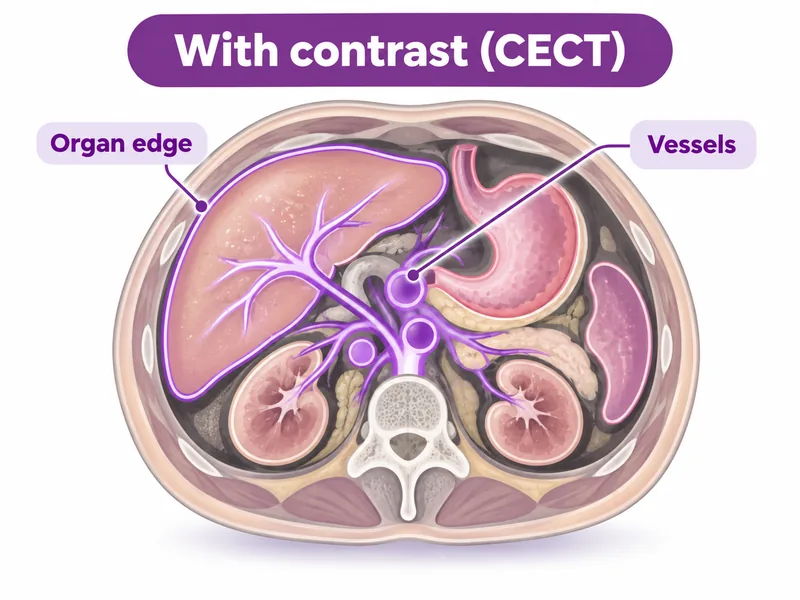
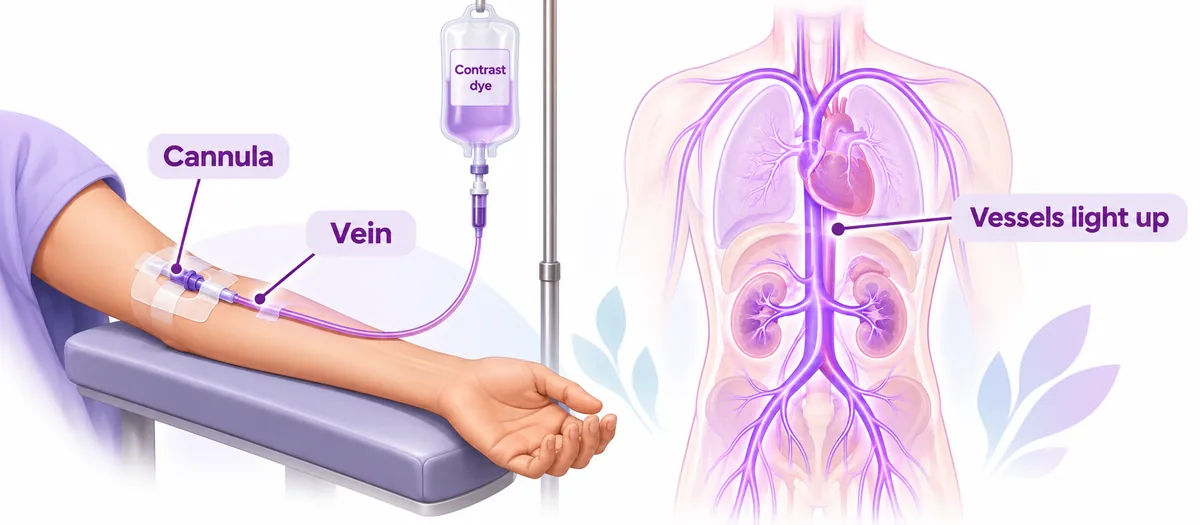
If your CT prescription says 'plain', 'NCCT', 'with contrast' or 'CECT', this guide explains what those terms mean. The main difference is whether a special dye, called contrast, is used during the scan — it makes blood vessels, soft tissues and abnormal areas show up more clearly. Your doctor decides whether you need it.
4.8 · 800+ Google reviews · 15,000+ patients treated
CECT vs NCCT
A CT scan combines a series of X-ray images and uses a computer to build detailed, cross-sectional pictures of the inside of your body. The one thing patients most often ask about is the word contrast on the prescription. The difference between a contrast CT scan and a plain one comes down to whether a special dye is used to highlight certain structures during the scan.
You will see this written in a few ways. NCCT (or 'plain') means a non-contrast scan with no dye. CECT (or 'with contrast') means a contrast-enhanced scan that uses an iodine-based dye. You do not choose between them yourself — your doctor specifies which one is needed based on what they are looking for.
Talk to us
Have your prescription to hand? One call and our care team will talk you through it.
Side by side
Pick the one on your prescription to see what it is, and what it is usually used for.
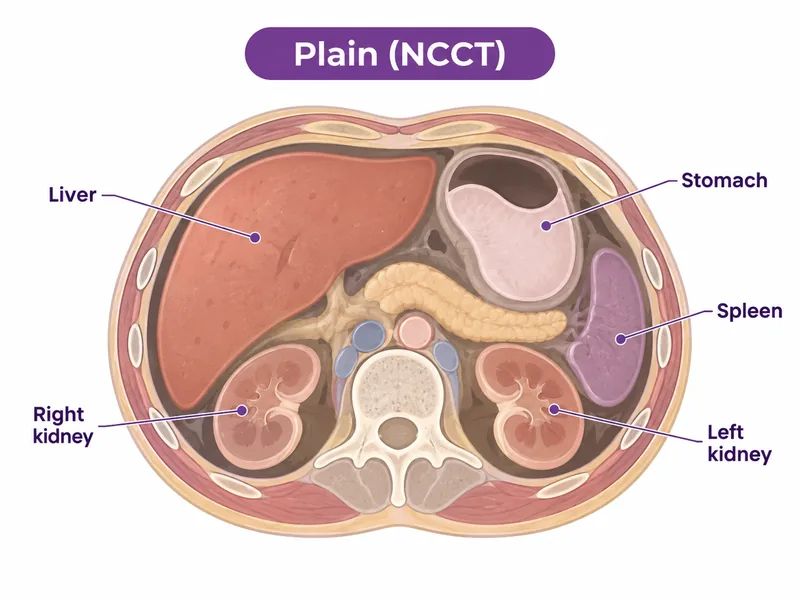
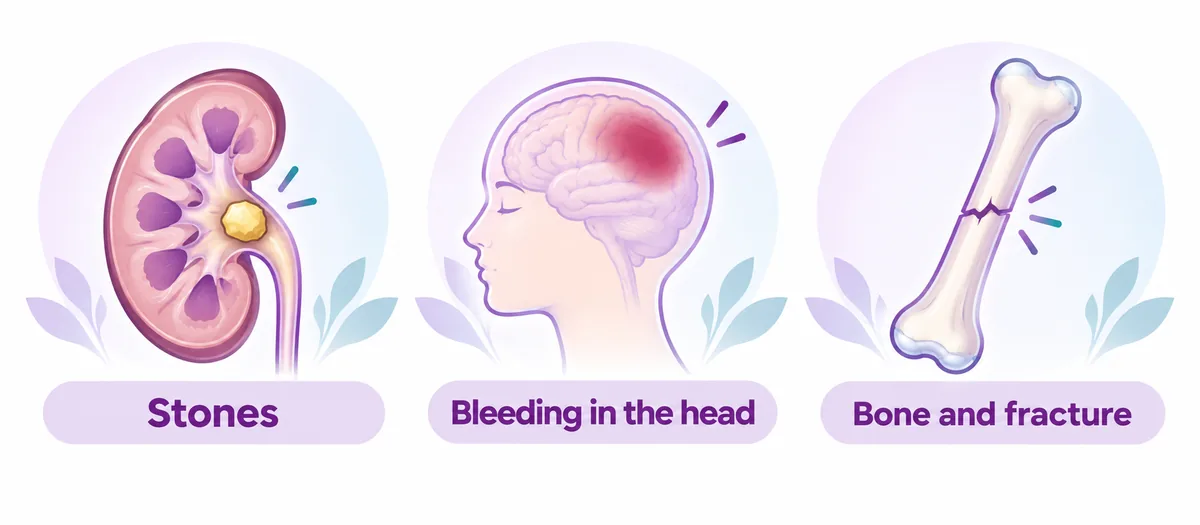
A non-contrast CT, also written NCCT, uses X-rays alone with no dye. It relies on the natural differences in density between tissues to form the image. It is commonly used to look for kidney and ureteric stones, bleeding in the head, and bone or fracture detail. Because there is no injection, it is quick and simple, and needs little preparation.
Free second opinion
Share the scan your doctor advised and your locality. We'll help you understand the prescription and arrange it at a trusted centre near you — with a free written second opinion if you'd like one.
CT contrast dye is not radioactive. RadiologyInfo.org (from the Radiological Society of North America and the American College of Radiology) notes that the iodine-based dye used for a CECT is passed naturally out of the body through the kidneys, typically within about a day of the scan — and drinking water afterwards helps clear it.
Routes
Depending on the study your doctor has advised, contrast can be given in different ways:
Safety
For most people, contrast is safe. A minority experience a brief warm sensation or a metallic taste as it is injected. There is a small risk to the kidneys, mainly in people with pre-existing kidney problems, so kidney function is checked before a contrast scan. Allergic reactions are uncommon and usually mild, but you should always tell the team about any previous reaction to contrast. Drinking water afterwards helps flush the dye out.
Bring your prescription
Bring your prescription. Our team helps you understand whether you need plain or contrast — and you're welcome to a free written second opinion before you spend on any scan.
Imaging access · Hyderabad
CION arranges CT scans through trusted partner imaging centres across Hyderabad, so you can choose the one closest to you. Call 1800 202 8726 and we'll guide you to the earliest available appointment.
These are partner diagnostic centres within the CION network. Toll-free booking: 1800 202 8726.
Which one?
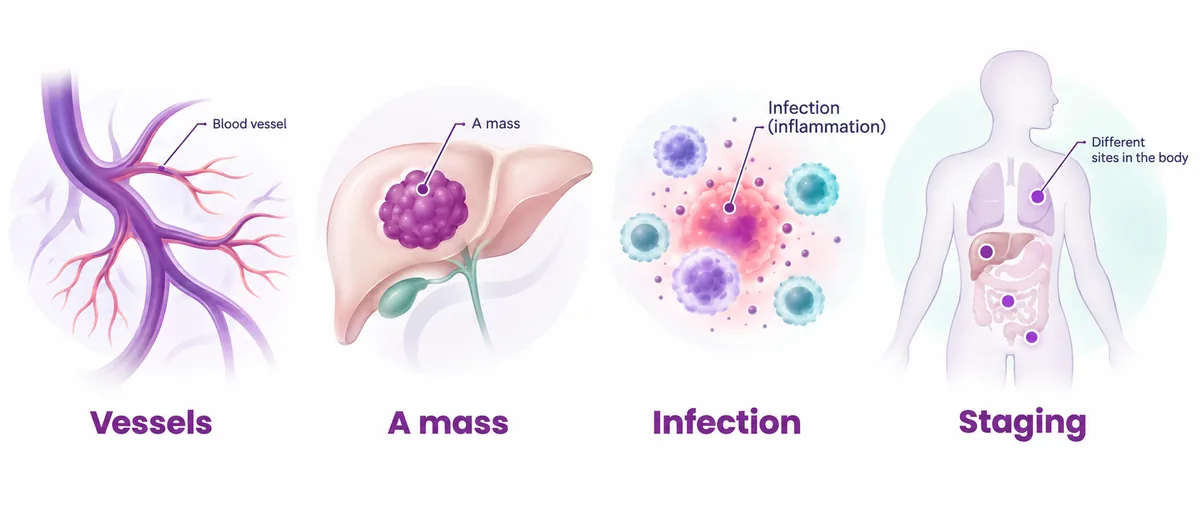
That depends entirely on the clinical question your doctor is trying to answer:
The short answer
You do not choose this yourself — your doctor specifies it on the prescription. A contrast study generally costs a little more than a plain scan.
For full pricing by scan type, see our guide to CT Scan Cost in Hyderabad. If your doctor has advised a PET-CT rather than a standard CT, see PET-CT Scan Cost in Hyderabad. Contrast also affects pricing for region scans such as a CT chest scan, where it is commonly used.
Why choose CION
Common questions
NCCT is a non-contrast CT, using X-rays alone. CECT is a contrast-enhanced CT, using an iodine-based dye to make vessels, organs and abnormal areas show up more clearly. Your doctor decides which is needed.
For most people it is safe. There is a small risk mainly in those with pre-existing kidney problems, so kidney function is checked first, and drinking water afterwards helps clear the dye.
Fasting for a few hours reduces the small chance of nausea from the dye and helps with bowel imaging in abdominal scans. Follow the specific instructions you are given.
Tell the team before the scan if you have ever reacted to contrast. Reactions are uncommon and usually mild, and the team can take precautions or choose an alternative approach.
Usually yes — a contrast study generally costs a little more than a plain scan because of the dye and the extra imaging involved. CION shares an indicative price upfront, with CT scans starting from ₹1,000, once your prescription is reviewed.
No — your doctor specifies whether contrast is needed based on what they are looking for. If you are unsure why, a free written second opinion can help explain it.
Free second opinion
Tell us the scan your doctor advised and your locality. We'll help you understand whether you need plain or contrast and arrange it at a vetted centre near you — CT scans from ₹1,000.
Medical disclaimer. This page is for general information only and is not a substitute for professional medical advice, diagnosis or treatment. Always follow the advice of a qualified doctor regarding which scan or test is appropriate for you and how to interpret the results. If something is worrying you, contact your own care team or call us on 1800 202 8726.