Skin Cancer Care · NABH Accredited · 7 Hyderabad Locations
Skin Cancer Treatment in Hyderabad — Expert Oncology Care Across 7 Locations
Skin cancer is the most common cancer worldwide — and while it is highly treatable when caught early, delayed diagnosis can let even a simple basal cell carcinoma progress into a complex condition. At CION Cancer Clinics — Hyderabad's most accessible cancer care network — our surgical and medical oncology team delivers evidence-based skin cancer treatment across 7 locations, so the right care is never far away.
5-Star NABH Accredited — 1,000+ cancer cases treated every year across the CION network
Full Surgical Spectrum — Mohs micrographic surgery, wide local excision & sentinel lymph node biopsy with reconstructive coordination
4.8 · 1,000+ Google reviews · 15,000+ patients treated
1,000+
Cancer Cases Treated / Year
7
Hyderabad Locations NABH Accredited
15,000+
Patients Treated
4.8★
Google Rating (1,000+ reviews)
Written by Dr. Naresh Gundu — Medical Oncologist · MBBS, Chalmeda Ananda Rao Institute · DNB Internal Medicine, Sir Ganga Ram Hospital, New Delhi · CION Cancer Clinics, Hyderabad.
Medically Reviewed by Dr. N. Kiranmayee — Medical Oncologist · DM Medical Oncology, Govt. Kilpauk Medical College, Tamil Nadu · MD Internal Medicine, NIMS Hyderabad · CION Cancer Clinics, Hyderabad.
Last Medically Reviewed: May 2026
Skin Cancer in Hyderabad — What You Need to Know
Skin cancer develops when DNA damage — most commonly caused by prolonged exposure to ultraviolet (UV) radiation — causes skin cells to grow uncontrollably. India sees a significant and rising burden of skin cancers, with squamous cell carcinoma being particularly prevalent due to high UV exposure, outdoor occupations, and limited sun protection habits.
The good news: the vast majority of skin cancers are curable when detected early. Basal cell carcinoma and squamous cell carcinoma have cure rates exceeding 95% with appropriate treatment. Even melanoma — the most dangerous form — has dramatically improved survival rates with modern immunotherapy and targeted therapy when diagnosed before it spreads.
Choosing a specialist oncology centre over a general hospital or dermatology clinic makes a measurable difference in outcomes, particularly for melanoma, Mohs surgery cases, and skin cancers requiring reconstructive procedures.
💡
Did You Know?
According to the World Health Organisation (WHO), between 2 and 3 million non-melanoma skin cancers and 132,000 melanoma skin cancers occur globally every year. Early detection and specialist treatment are the most effective tools for improving survival.
Subtypes We Treat
Types of Skin Cancer We Treat
Skin cancer is not a single disease — this short Mayo Clinic explainer on the most common types of skin cancer shows how the subtypes differ at a glance. The treatment approach, prognosis, and urgency differ significantly across subtypes. At CION, every patient's diagnosis is confirmed at the histopathological level before any treatment plan is finalised.
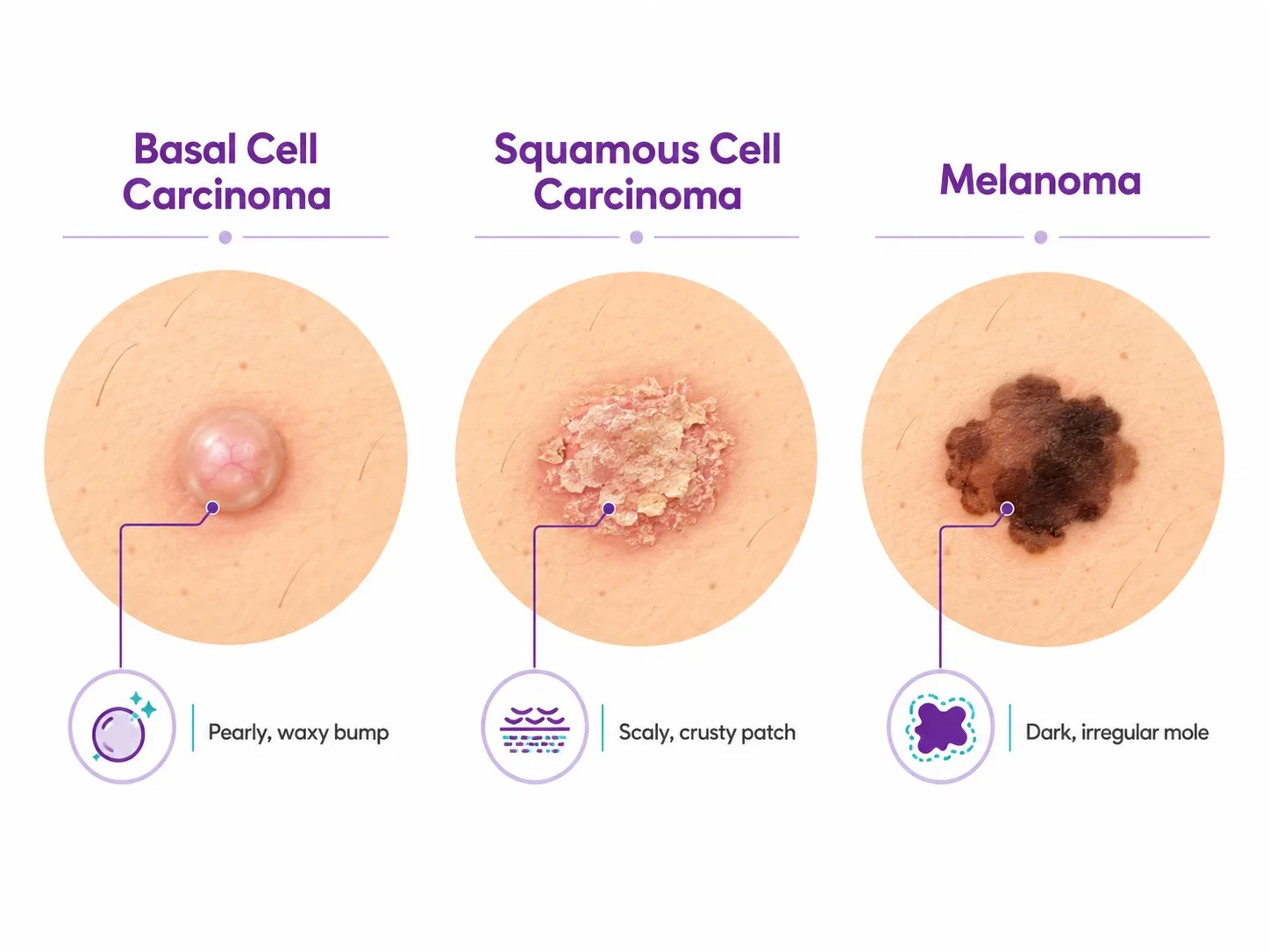
The three common skin cancers look genuinely different — comparing them helps you judge whether a spot needs checking.
~75–80% of cases
Basal Cell Carcinoma (BCC)
The most common type, accounting for approximately 75–80% of all skin cancers. BCC develops in the basal cells — the deepest layer of the outer skin — and almost always appears on sun-exposed areas such as the face, head, and neck. It typically presents as a pearly or waxy bump, a flat flesh-coloured lesion, or a bleeding or scabbing sore. BCC rarely spreads to other organs but can cause significant local destruction if neglected. Highly curable with surgery.
2nd most common
Squamous Cell Carcinoma (SCC)
SCC develops in the squamous cells of the outer skin layers. It typically appears as a red, scaly patch, an open sore, or a wart-like growth on sun-exposed areas including the face, ears, neck, arms, and hands. Unlike BCC, SCC carries a meaningful risk of spreading to lymph nodes and other organs if left untreated. Curable with early surgical intervention.
Most dangerous
Melanoma
The most dangerous form of skin cancer, melanoma develops in the melanocytes — the pigment-producing cells. It can appear anywhere on the body, not just sun-exposed areas, and often develops from an existing mole that changes shape, size, colour, or begins to bleed. Melanoma can spread rapidly to lymph nodes and distant organs. When detected early, it is highly curable; advanced melanoma is now treated with effective immunotherapy and targeted therapy. CION's medical oncology team follows current NCCN and ESMO guidelines for melanoma treatment in Hyderabad.
Rare, aggressive
Merkel Cell Carcinoma
A rare but aggressive skin cancer that develops in Merkel cells — specialised cells associated with touch sensation. It typically appears as a flesh-coloured or bluish-red nodule, often on the face or neck. Merkel cell carcinoma grows and spreads quickly, requiring prompt specialist oncology intervention. CION's multidisciplinary tumour board reviews all Merkel cell cases individually.
Specialist subtypes
Other Rare Skin Cancers
Less common skin cancers include cutaneous lymphoma (cancer of the skin's lymphatic cells), Kaposi sarcoma, skin adnexal tumours, and dermatofibrosarcoma protuberans (DFSP). CION's oncology team is equipped to diagnose and manage rare subtypes through its tumour board review process.
Know Your Risk
Risk Factors for Skin Cancer
Understanding your risk is the first step in prevention and early detection. The following factors increase the likelihood of developing skin cancer:
Prolonged or unprotected UV exposure — sunlight is the leading cause of skin cancer worldwide.
History of sunburns — particularly blistering sunburns in childhood or adolescence.
Outdoor occupations — farming, construction, and long daily commuting in high-UV environments.
Family history of skin cancer or melanoma — first-degree relatives raise your baseline risk.
Personal history of a previous skin cancer — significantly increases the chance of new lesions.
Weakened immune system — from organ transplant medications, HIV/AIDS, or chemotherapy.
Exposure to radiation or carcinogenic chemicals — including arsenic.
Chronic skin inflammation, scarring, or non-healing wounds — long-standing lesions need oncology assessment.
Self-examination
Early Detection — The ABCDE Rule
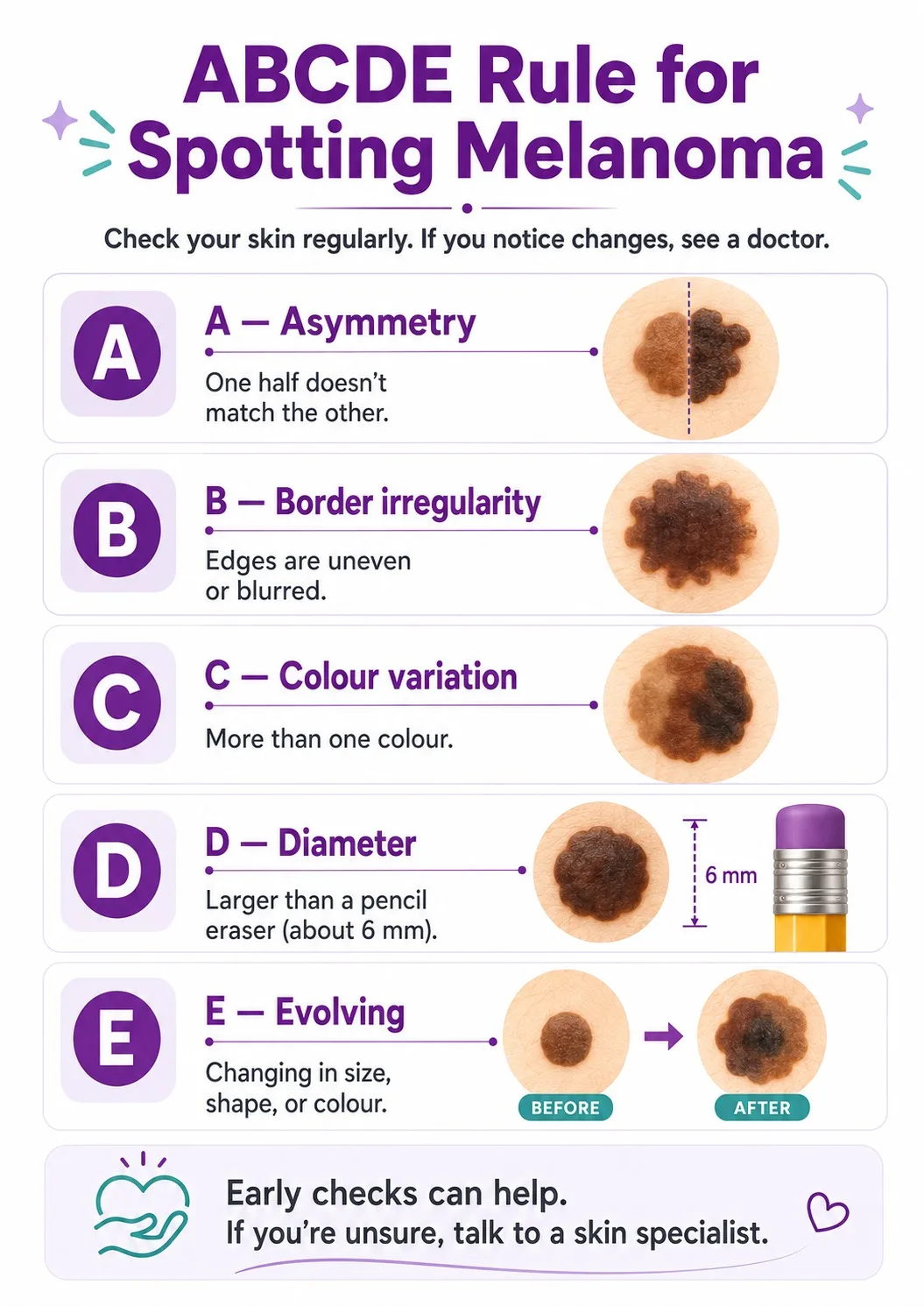
Most skin cancers are visible to the naked eye before they spread. Regular self-examination and knowing what to look for can lead to diagnosis at a highly treatable stage. The ABCDE rule is the internationally recognised guide for identifying suspicious moles or skin lesions.
The ABCDE self-check — if any letter applies to a mole, have a skin specialist review it.
A
Asymmetry
One half of the mole or lesion does not match the other half in shape.
B
Border
Edges are irregular, ragged, notched, or blurred rather than smooth and well-defined.
C
Colour
Variation in colour within the same lesion — shades of brown, black, red, white, or blue.
D
Diameter
Larger than 6mm across (roughly the size of a pencil eraser), though melanomas can be smaller.
E
Evolving
Any change in size, shape, colour, or new symptoms such as bleeding, itching, or crusting.
If you notice any of these signs — or a sore on the skin that does not heal within 4 weeks — consult a skin cancer specialist in Hyderabad at your nearest CION location without delay. Early detection is the single most important factor in skin cancer outcomes.
💡
Did You Know?
The ABCDE rule has been shown to help identify early-stage melanoma in self-examination studies. Tumours caught at Stage I melanoma have a five-year survival rate exceeding 98%, according to the American Cancer Society.
12+ Centres in Hyderabad · Pick yours
CION cancer care is closer than you think.
We're never more than 30 minutes away. Same panel of specialists at every centre. Same tumour board reviews. Same NCCN protocols. Pick the closest one and call directly — or let us pick for you.
Don't see your city? Call
18002028726
— we'll find your nearest CION partner centre.
Meet the Specialists
17+ senior cancer specialists. One panel for your case.
Trained at AIIMS, Tata Memorial, and leading international centres. Combined 150+ years of experience. Every complex case is reviewed by 3+ of them — together.
An accurate diagnosis is essential before any treatment begins. Our diagnostic pathway is thorough, efficient, and aligned with international oncology standards.
1
Clinical Skin Examination
A detailed physical examination of the lesion and full skin surface by a trained oncologist. Suspicious lesions are assessed for the ABCDE criteria and documented for monitoring or biopsy.
2
Skin Biopsy
Histopathological confirmation through one of four techniques chosen by your surgeon:
Excisional biopsy — entire lesion removed for analysis; standard for smaller suspicious lesions.
Incisional biopsy — a portion of a larger lesion is sampled.
Punch biopsy — circular blade used to extract a small cylindrical sample; commonly used for thicker lesions.
Shave biopsy — superficial lesion shaved off at skin level under local anaesthesia.
3
Staging Investigations
For melanoma, high-risk SCC, and Merkel cell carcinoma, additional staging tests determine whether the cancer has spread:
Sentinel Lymph Node Biopsy — minimally invasive assessment of the nearest lymph node for cancer spread.
CT Scan / MRI — to evaluate lymph node involvement and distant spread.
PET-CT Scan — for staging advanced melanoma and detecting distant metastases.
NCCN protocol-driven
Skin Cancer Treatment Options at CION Cancer Clinics
Treatment is determined by the type, stage, size, and location of the cancer, as well as the patient's age and overall health. CION follows NCCN protocol-driven treatment planning, reviewed by a multidisciplinary tumour board for every case.
Surgical Oncology
Surgery is the first-line treatment for the majority of skin cancers. CION's surgical oncology team performs excisional surgery (the gold standard for most BCCs and SCCs), Mohs micrographic surgery for cosmetically sensitive areas, wide local excision for melanoma with margins guided by Breslow thickness, sentinel lymph node biopsy, and regional lymph node dissection when nodes are involved.
Reconstructive Surgery
For skin cancers in cosmetically sensitive locations — the face, nose, ear, eyelid — tumour removal can leave a significant defect. CION coordinates post-surgical reconstructive care to restore function and appearance, including skin grafts, local flap repairs, and tissue rearrangement. Discuss your reconstruction options with your surgeon at CION before any procedure.
Radiation Therapy
Delivered using advanced IMRT and IGRT techniques. Used when surgery is not feasible due to tumour location, size, or patient health; as adjuvant therapy for high-risk SCCs or Merkel cell carcinoma with close/positive margins; for patients who decline surgery; and for palliation in advanced or metastatic cases.
Medical Oncology — Systemic
Chemotherapy for advanced or metastatic SCC and Merkel cell carcinoma not amenable to surgery or radiation. Immunotherapy (pembrolizumab, nivolumab) and BRAF-targeted therapy for advanced melanoma — detailed in the section below.
Topical & Local Therapies
Topical chemotherapy (5-FU) for superficial BCCs and actinic keratosis. Imiquimod stimulates the local immune response. Cryotherapy with liquid nitrogen freezes small, superficial early-stage lesions. Photodynamic therapy (PDT) uses a photosensitising agent activated by light to destroy cancerous and pre-cancerous cells — effective for superficial BCCs, actinic keratosis, and Bowen's disease.
Differentiation
Advanced Melanoma Treatment — Immunotherapy and Targeted Therapy
Advanced and metastatic melanoma was once considered very difficult to treat. Over the past decade, the development of immune checkpoint inhibitors and BRAF-targeted therapy has transformed melanoma outcomes. CION's medical oncology team delivers these protocols in alignment with NCCN and ESMO guidelines.
Immune Checkpoint Inhibitors
Immunotherapy for Melanoma
Checkpoint inhibitors release the natural brakes on the immune system, allowing it to recognise and attack melanoma cells. CION delivers:
Pembrolizumab (Keytruda) — PD-1 inhibitor; first-line for advanced melanoma; also adjuvant after surgery for high-risk Stage III.
Nivolumab (Opdivo) — PD-1 inhibitor; used alone or with ipilimumab (CTLA-4 inhibitor).
Combination checkpoint blockade (nivolumab + ipilimumab) — for high-volume metastatic disease; higher response rates with careful toxicity monitoring.
40–50% of melanomas
Targeted Therapy for BRAF-Mutated Melanoma
Approximately 40–50% of melanomas carry a BRAF V600E mutation. For these patients, BRAF-targeted therapy offers rapid tumour response rates:
Vemurafenib or dabrafenib (BRAF inhibitors) combined with cobimetinib or trametinib (MEK inhibitors) for improved durability and reduced resistance.
BRAF mutation testing is performed on all advanced melanoma cases at CION as a standard part of the diagnostic workup.
Tumor board for every patient
Multidisciplinary Tumour Board — Every Case Reviewed by a Team
At CION, every skin cancer case — from a straightforward BCC to a complex metastatic melanoma — is reviewed by a multidisciplinary tumour board comprising surgical oncologists, medical oncologists, and radiation oncologists. This ensures:
The correct treatment sequence — surgery first, or systemic therapy to downstage before surgery.
Appropriate sentinel node biopsy decisions for melanoma.
Coordination of reconstructive planning alongside tumour removal.
Alignment with current NCCN and ESMO evidence-based guidelines.
Consistent care coordination across all 7 Hyderabad locations via digital patient records.
Why Choose Us
Why Patients Choose CION for Skin Cancer Treatment in Hyderabad
Ten reasons our patients pick CION — Mohs micrographic surgery, advanced immunotherapy, reconstructive care, and NCCN protocols.
1,000+ cancer cases
Treated every year across the CION network
7 locations across Hyderabad
Kukatpally, Kompally, Ameerpet, Tolichowki, MasabTank, L.B. Nagar, Banjara Hills — up to 70% less travel than single-centre hospitals
5-Star NABH Accredited
Cancer Care Institutes
NCCN Protocol Adherence
Same evidence-based guidelines used at leading global cancer centres
Mohs micrographic surgery
Full-spectrum skin cancer surgical care
Advanced melanoma immunotherapy
Pembrolizumab, nivolumab — and BRAF-targeted therapy
Reconstructive care coordination
After skin cancer removal
Multidisciplinary tumour board review
For every patient — before any treatment decision
Aarogyasri empanelled & EMI
Cashless treatment for eligible Telangana residents; EMI options for all
4.8 / 5 Google rating
Across 1,000+ patient reviews — India's fastest-growing cancer care network with 35+ centres
Transparent Costs
Skin Cancer Treatment Cost in Hyderabad
The cost of skin cancer treatment in Hyderabad varies based on the cancer type, stage, and treatment plan. The reference ranges below are based on current market data. A personalised estimate is provided after your initial oncology consultation at CION.
Treatment
Approx. Cost (INR)
Notes
Excisional Surgery (BCC / SCC)
₹30,000 – ₹1,50,000
Varies by tumour size and location
Mohs Micrographic Surgery
₹60,000 – ₹2,00,000
Higher for complex facial cases requiring reconstruction
Radiation Therapy (full course)
₹60,000 – ₹1,50,000
IMRT / IGRT techniques may vary
Melanoma Surgery + Sentinel Node Biopsy
₹75,000 – ₹2,50,000
Staging investigations additional
Immunotherapy (per cycle)
₹80,000 – ₹2,50,000+
Pembrolizumab / nivolumab; may be covered under insurance
Full Treatment (multi-modal)
₹2,50,000 – ₹4,00,000+
Depending on stage, treatment plan, and room category
Financial Support Options
Aarogyasri Scheme — cashless treatment coverage for eligible Telangana residents (White Ration Card holders). CION is Aarogyasri empanelled.
EMI Facility — flexible instalment-based payment options available for all patients.
Private Health Insurance — CION works with all major TPAs for cashless hospitalisation.
About CION Cancer Clinics
CION Cancer Clinics is India's fastest-growing cancer care network, with over 35 centres across Telangana and Andhra Pradesh. Dedicated exclusively to oncology, CION delivers NABH-accredited, NCCN protocol-driven cancer care — bringing world-class treatment closer to patients across the region.
Disclaimer: This content is intended for informational purposes only and does not constitute medical advice, diagnosis, or treatment. Always consult a qualified oncologist for guidance specific to your medical condition. The information on this page is periodically reviewed and updated by CION's medical team in accordance with current clinical guidelines.
💡
Did You Know?
Mohs micrographic surgery has the highest cure rate for basal cell and squamous cell carcinoma — exceeding 99% for primary BCC — while preserving the most healthy tissue. It is especially valuable for cancers on the face, nose, and ears where cosmetic outcomes matter.
Real outcomes, real patients
Hear from patients who chose CION for their cancer journey
From early-stage diagnoses to advanced melanoma — these are the people behind our 4.8/5 rating across 1,000+ Google reviews.
15,000+ patients chose CION. Hear from them directly.
These aren't paid endorsements or written reviews. These are video testimonials from real patients and families — recorded on their own phones, in their own words. Pick any one. Watch it. Then decide.
4.8★800+ Google reviews
50+video testimonials
15,000+patients treated
Successful Chemotherapy & Radiation Done by Dr. Owais Mohammed & Dr. Kirti Ranjan
Watch video →
Successful Chemotherapy Done by Dr. C Raghavendra Reddy
Watch video →
Surgery, Chemo & Radiation Done by Dr. Imaduddin, Dr. Vinay, Dr. Owais, Dr. Kirti
Watch video →
Successful Radical Thymectomy Done by Dr. Mohammed Imaduddin & Dr. Vinay Mamidala
Watch video →
Successful Surgery Done by Dr. Rajender Byshetty
Watch video →
Successful Chemo & Surgery Done by Dr. Imad, Dr. Vinay, Dr. Owais & Dr. Raghavendra
Watch video →
Successful Chemo & Surgery Done by Dr. Imad, Dr. Vinay, Dr. Owais & Dr. Raghavendra
Watch video →
Successful Chemo & Radiation Done by Dr. Owais Mohammed & Dr. Kirti Ranjan Mohanty
Watch video →
Successful Breast Cancer Surgery Done by Dr. Imaduddin Mohammed & Dr. Vinay Mamidala
Watch video →
Successful Chemotherapy Done by Dr. Bharati Devi Gorantla
Watch video →
Successful Chemo & Surgery Done by Dr. Owais Mohammed & Dr. Imaduddin Mohammed
Watch video →
Successful Chemotherapy Done by Dr. Gundu Naresh
Watch video →
Successful Bone Marrow Transplantation - Neuroblastoma
Watch video →
Successful Surgery & Chemo - Carcinoma of Caecum
Watch video →
Successful Oral chemotherapy & mastectomy surgery
Watch video →
Successful Oral chemotherapy & mastectomy surgery
Watch video →
Successful Chemotherapy
Watch video →
Successful Surgery by Dr. Mohammed Imaduddin
Watch video →
Successful Bone Marrow Transplantation
Watch video →
Successful Oral chemotherapy & mastectomy surgery
Watch video →
Successful Oral chemotherapy & mastectomy surgery
Watch video →
Successful Chemotherapy
Watch video →
Successful Buccal Mucosa Surgery
Watch video →
Successful Complex Surgery Mandibulectomy Reconstruction
The best treatment depends on the type and stage of skin cancer. For most basal cell carcinomas and squamous cell carcinomas, surgical removal — either excisional surgery or Mohs micrographic surgery — is the most effective option with cure rates exceeding 95%. Melanoma treatment depends on the stage: early-stage melanoma is treated with surgery; advanced melanoma is treated with immunotherapy (pembrolizumab or nivolumab) and BRAF-targeted therapy where applicable. CION's tumour board selects the most appropriate protocol for every individual case.
What is the cost of skin cancer treatment in Hyderabad?
Skin cancer treatment costs in Hyderabad typically range from approximately ₹30,000 for simple excisional surgery to ₹4,00,000 or more for multi-modal treatment involving surgery, immunotherapy, and radiation. Mohs surgery costs between ₹60,000 and ₹2,00,000 depending on complexity. CION provides a personalised estimate after your oncology consultation. Aarogyasri and EMI payment options are available.
Is skin cancer curable in India?
Yes — the vast majority of skin cancers are curable, especially when caught early. Basal cell carcinoma and squamous cell carcinoma have cure rates exceeding 95% with prompt surgical treatment. Even melanoma, the most serious form, is highly curable at Stage I and Stage II. Access to immunotherapy and targeted therapy at specialist centres like CION has significantly improved outcomes even for advanced melanoma.
Which type of skin cancer is most dangerous?
Melanoma is the most dangerous form of skin cancer. Although it accounts for only about 1% of skin cancer cases, it causes the majority of skin cancer deaths due to its ability to spread rapidly to lymph nodes and other organs. However, melanoma detected at an early stage has an excellent prognosis — five-year survival rates exceed 98% for Stage I disease. Merkel cell carcinoma is another aggressive but rare subtype requiring specialist management.
What are the early signs of skin cancer?
The most important warning signs are: a new skin growth or mole that appears suddenly; a mole that changes in size, shape, colour, or begins to bleed or itch; a sore that does not heal within 4 weeks; a rough or scaly red patch; or a pearly, waxy bump on sun-exposed skin. Use the ABCDE rule (Asymmetry, Border, Colour, Diameter, Evolving) to assess moles during regular self-examination. If you notice any of these signs, consult a specialist without delay.
What is Mohs surgery and when is it used?
Mohs micrographic surgery is the most precise technique for removing skin cancer. The surgeon removes thin layers of cancerous tissue one at a time, examining each layer under a microscope immediately in the clinic while the patient waits. The procedure continues until all margins are free of cancer cells. It is used for BCCs and SCCs in cosmetically sensitive or high-risk locations — the face, nose, ears, eyelids, and scalp — where preserving healthy tissue is important. It has the highest cure rate of any skin cancer surgical technique.
How is melanoma different from other skin cancers?
Melanoma develops in the melanocytes (pigment cells) and can appear anywhere on the body, not just sun-exposed areas. Unlike BCC and SCC which grow slowly and rarely spread, melanoma can metastasise rapidly to lymph nodes, lungs, liver, and brain if not treated promptly. It requires wider surgical margins, sentinel lymph node assessment, and in advanced stages, systemic treatment with immunotherapy or BRAF-targeted therapy — all of which CION's oncology team is equipped to deliver.
What is the survival rate for skin cancer?
Survival rates vary significantly by type and stage. Basal cell carcinoma and squamous cell carcinoma have near-100% cure rates when treated early. For melanoma: Stage I — five-year survival exceeds 98%; Stage II — approximately 80–85%; Stage III — 60–70% with modern immunotherapy; Stage IV — historically poor but now significantly improved with checkpoint inhibitor therapy, with 5-year survival reaching 40–50% in some trials. Early detection remains the most powerful tool for improving outcomes.
Can I get a second opinion before starting skin cancer treatment?
Absolutely. CION offers a dedicated Second Opinion service where our tumour board reviews your existing biopsy results, pathology reports, and imaging before recommending a treatment plan. This is particularly valuable for melanoma diagnoses, complex facial skin cancers, or cases where surgery involving reconstruction is planned. A second opinion before any major procedure is considered best practice in oncology.
What government schemes cover skin cancer treatment in Hyderabad?
CION Cancer Clinics is empanelled under the Aarogyasri Health Care Trust, providing cashless treatment coverage for eligible Telangana residents holding a White Ration Card. Most private health insurers also offer cashless hospitalisation at CION, and our team assists with insurance approvals and TPA coordination. EMI payment options are also available for all patients.
Need a Second Opinion?
Free consultation with a specialist. No commitment.

 CION Ameerpet