Diet & Nutrition During Sarcoma Treatment
If you are caring for someone on sarcoma treatment, you have probably watched a plate of food go untouched and wondered what you can actually do. Eating well during sarcoma treatment is not about a special "anti-cancer diet" — it is about getting enough protein and calories into a body that is fighting both the cancer and the side effects of chemotherapy, radiation and surgery. Good nutrition helps your loved one keep their strength, tolerate full treatment doses, recover faster after surgery and stay out of hospital. This guide explains, in plain terms, what to feed them, how to manage nausea and low appetite, and how CION's dietitians support families across 7 NABH-accredited Hyderabad locations.
- Protein first — to protect muscle, heal wounds and keep blood counts up during chemo
- Small, frequent meals — easier to manage than three big plates when appetite is low
- Food safety during low counts — what to avoid when the white-cell count drops
- Free dietitian counselling — a personalised plan built around your loved one's chemo schedule
on Panel
Survival Rate*
Treated
(800+ reviews)
Why Diet Matters So Much During Sarcoma Treatment
Sarcoma treatment is demanding on the body. Surgery, chemotherapy for sarcoma and radiation all draw heavily on the body's protein and energy reserves at exactly the time appetite tends to fall. When intake drops below what the body needs, the patient starts breaking down their own muscle for fuel — a process called cachexia — which leaves them weaker, slower to heal, and less able to tolerate full chemotherapy doses. Keeping a patient well-nourished is therefore not a "nice to have": it is one of the most practical things a caregiver can influence to support the treatment plan.
The two things that matter most are protein and calories. Protein rebuilds the tissues that surgery and chemotherapy damage and helps maintain the white-cell count; calories give the body the everyday energy it needs so that protein is used for repair rather than burned for fuel. A common, reasonable target during active treatment is roughly 1.2 to 1.5 grams of protein per kilogram of body weight per day — for a 60 kg adult, that is around 70–90 g of protein daily — alongside enough calories to hold weight steady. Your CION dietitian will set the exact numbers for your loved one's weight and stage.
There is one myth worth clearing up early: "starving the cancer" does not work. Cutting out sugar, going on extreme fasts, or following an unproven "anti-cancer diet" does not slow a sarcoma — it simply starves the patient, who needs every calorie to get through treatment. The goal during treatment is to maintain weight and strength, not to lose it. You can see how nutrition fits into the wider picture on our sarcoma — overview hub.
What to Eat During Sarcoma Chemotherapy — Practical Indian Foods
You do not need exotic or expensive ingredients. Everyday Indian kitchen staples, prepared with a little extra protein and softness in mind, do the job. The trick is to make every bite count: when appetite is small, choose foods that pack the most protein and calories into the smallest, gentlest serving.
| Goal | Easy Indian foods to offer | Caregiver tip |
|---|---|---|
| Protein | Dal, rajma, chana, paneer, curd, eggs, chicken & fish curry, sprouts, milk, soya chunks | Add a spoon of milk powder or a beaten egg to khichdi, porridge or dal to boost protein invisibly |
| Calories | Ghee, nut pastes, banana, sheera/halwa, full-fat milk, peanut chikki, idli with ghee | Stir a teaspoon of ghee or ground nuts into rice, dal or milk — easy extra calories without more volume |
| Easy to swallow | Curd rice, daliya, khichdi, ragi malt, banana milkshake, custard, soft idli, upma | Soft, moist, room-temperature foods go down best when the mouth is sore or dry |
| Hydration | Coconut water, buttermilk (chaas), lemon-jeera water, thin soups, ORS, fruit juice | Sip small amounts through the day rather than forcing large glasses at once |
Small and frequent beats big and rare
Three large meals are overwhelming when the stomach feels full quickly. Instead, offer six to eight small "mini-meals" or snacks spread across the day — a few spoons of curd rice mid-morning, a glass of banana milkshake in the afternoon, a small bowl of dal in the evening. Many patients eat best in the morning, before fatigue and nausea build up, so make breakfast the biggest and most protein-rich meal of the day.
When food just won't go in — oral supplements
On the worst days, a patient may manage to drink when they cannot chew. Ready-made medical nutrition drinks and high-protein powders (available at any Hyderabad pharmacy) are a useful bridge — they deliver concentrated protein and calories in a small glass. They are meant to top up meals, not replace real food entirely. Your dietitian will tell you which product and how many servings a day suit your loved one, so you are not guessing in the pharmacy aisle.
Eating Through the Side Effects of Treatment
Most eating problems during sarcoma treatment come from manageable side effects, not from the cancer itself. Matching the food to the specific symptom is what makes the difference between a plate eaten and a plate refused.
Nausea & vomiting: Offer cool, bland, dry foods — toast, idli, khakhra, crackers — and keep strong cooking smells out of the patient's room. Ginger (in tea or chews), small sips of nimbu-jeera water, and eating before hunger turns to nausea all help. Make sure anti-nausea medicines prescribed by the oncologist are taken on schedule, not only after vomiting starts.
Mouth sores (mucositis): Switch to soft, moist, lukewarm foods — curd rice, mashed banana, custard, daliya. Avoid spicy, salty, citrus and crunchy foods that sting. A pinch-of-salt-and-baking-soda mouth rinse before meals can soothe the mouth enough to eat.
Taste changes & metallic taste: Use plastic or wooden spoons instead of steel, season with lemon, tamarind, mint or coriander to cut the metallic taste, and try cold foods like curd or milkshakes, which often taste more neutral than hot dishes.
Constipation or loose motions: These swing either way with chemo and pain medicines. For constipation, increase fluids, soft fibre (papaya, soaked figs, cooked vegetables); for diarrhoea, switch to the bland BRAT-style foods — banana, rice, curd, toast — and replace fluids with ORS. Tell the care team if it persists more than a day.
If your loved one is not eating or drinking for more than 24 hours, is vomiting everything back, or is becoming confused or very weak, do not try to manage it at home — call the CION care team. These are situations where a brief hospital review for fluids and anti-sickness medicines can prevent a much bigger problem.
CION cancer care is closer than you think.
We're never more than 30 minutes away. Same panel of specialists at every centre. Same tumour board reviews. Same NCCN protocols. Pick the closest one and call directly — or let us pick for you.
Not sure which centre fits best? Tell us where you are — we'll suggest the closest one with the right specialists.
Help me pick the right centre35+ centres across Telangana & Andhra Pradesh
Travelling for treatment? We may have a centre right where you are.
Don't see your city? Call 18002028726 — we'll find your nearest CION partner centre.
17+ senior cancer specialists. One panel for your case.
Trained at AIIMS, Tata Memorial, and leading international centres. Combined 150+ years of experience. Every complex case is reviewed by 3+ of them — together.
Dr. C. Raghavendra Reddy
MBBS(Gold Medal), DNB(General Medicine), DM(Medical Oncology)(Gold Medal)
Dr. Bharati Devi Gorantla
MBBS, MD(General Medicine), DM(Medical Oncology)(Adyar,Chennai), ECMO, MRCP SCE(UK)
Dr. Owais Mohammed
MBBS, MD (General Medicine), DrNB (Medical Oncology), ECMO, MRCP SCE (Medical Oncology) (UK)
Dr. Muralidhar Muddusetty
MBBS (AIIMS), MS (Surgery) (AIIMS), DNB (Surgical Oncology), MRCS (Edinburgh)
Dr. Vinay Mamidala
MBBS, MS(General Surgery), M.Ch(Surgical Oncology), FMAS, FARIS(Ongoing)
Dr. Mohammed Imran
Dr. Vajja Sandeep Kumar
MBBS, MS (General Surgery), DrNB (Surgical Oncology), FALS Oncology
Want a specific doctor for your case? Mention them when booking.
Book Free ConsultationBook an appointment with our specialist
Share your name and number — we'll call you back within 30 minutes to schedule your consultation.
Get a Personalised Nutrition Plan
Whether your loved one is days into chemotherapy or recovering from sarcoma surgery, our dietitians will set realistic protein and calorie targets and a meal plan you can actually cook at home — across 7 Hyderabad locations with same-week appointments.
Food Safety When Blood Counts Are Low (Neutropenia)
Chemotherapy for sarcoma often lowers the white-cell count for several days after each cycle — the "nadir" — leaving the patient much more vulnerable to infection, including infection carried in food. During these low-count windows, kitchen hygiene becomes part of the treatment. The aim is not a sterile diet but sensible caution.
Generally safe during low counts
- Freshly cooked, hot, well-done food eaten soon after cooking — dal, rice, fully cooked chicken/fish/egg
- Pasteurised, packaged milk and curd, sealed bottled water or boiled-and-cooled water
- Thick-skinned fruits that are washed and peeled at home — banana, papaya, oranges
Best avoided during low counts
- Street food, roadside chaat, cut fruit and juices from outside, raw chutneys and salads washed in tap water
- Undercooked eggs or meat, unpasteurised milk, paneer left at room temperature, leftover food kept overnight
- Tap water and unfiltered ice — use only boiled or sealed bottled water, especially in Hyderabad's summer months
Wash your own hands before cooking and serving, use separate boards for raw and cooked food, and serve meals on freshly washed plates. These small habits protect a patient whose immune system simply cannot fight off the bugs a healthy person shrugs off.
Nutrition Around Sarcoma Surgery and What CION Provides
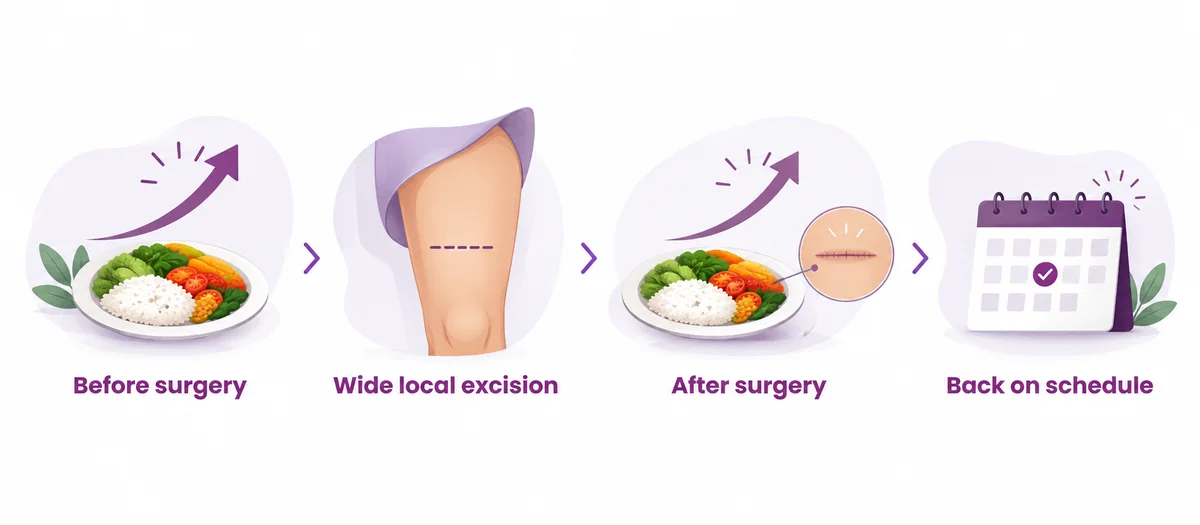
Around surgery, nutrition has a different job. In the days before a planned wide local excision, going in well-nourished helps wounds heal and lowers the chance of complications, so this is the time to push protein rather than restrict it. After surgery — once the team confirms the gut is working and it is safe to eat — protein again becomes the priority, because the body is rebuilding muscle, skin and any reconstructed tissue. A patient who heals well is also a patient who can start radiation or further chemotherapy on time.
At CION, nutrition is built into sarcoma care rather than left to families to figure out alone. Every patient on active treatment can be screened for malnutrition and weight loss, and our dietitians work alongside the medical oncology team so that the meal plan moves in step with the chemotherapy schedule, the surgery date, and the side effects of the week. The counselling is practical and Indian-kitchen-based: we work with the foods your family already cooks, the budget you have, and the patient's own likes and dislikes — not a printout that gets ignored.
What our nutrition support includes
Nutrition Screening & Targets
Weight history, intake and side effects are reviewed to set a daily protein and calorie target specific to your loved one's weight and treatment phase.
A Meal Plan You Can Cook
A simple, Indian-food plan built around the chemo cycle, the patient's tastes and your budget — with oral-supplement guidance for the hard days.
Review at Every Cycle
Weight and intake are checked at each visit and the plan is adjusted as side effects change — escalating support if intake falls too low.
Why Families Trust CION for Sarcoma Care & Nutrition Support
Good nutrition is part of good cancer care — not an afterthought. Here is how CION supports families through sarcoma treatment.
Dietitians built into the cancer team
Indian-kitchen, budget-friendly plans
Protein-first targets, set per patient
Side-effect specific guidance
Caregiver coaching
Review at every chemo cycle
7 NABH-accredited Hyderabad locations
EMI facility & insurance accepted
4.8 / 5 Google rating
You Don't Have to Figure Out Food Alone
Caring for someone through sarcoma treatment is hard enough. Let our dietitians take the guesswork out of mealtimes with a plan that fits your kitchen and your loved one's treatment.
15,000+ patients chose CION. Hear from them directly.
These aren't paid endorsements or written reviews. These are video testimonials from real patients and families — recorded on their own phones, in their own words. Pick any one. Watch it. Then decide.
Read all 800+ reviews on Google
Start Your Story. Book Free Consultation.Diet & Nutrition During Sarcoma Treatment — Frequently Asked Questions
What should someone eat during sarcoma chemotherapy?
Focus on protein and calories using everyday Indian foods: dal, rajma, chana, paneer, curd, eggs, chicken or fish curry, milk, sprouts and soya for protein, with ghee, nut pastes, banana and full-fat milk to add calories. Offer six to eight small "mini-meals" rather than three big plates, make breakfast the largest meal of the day, and keep foods soft and moist if the mouth is sore. The goal during chemotherapy for sarcoma is to maintain weight and strength, not to follow any restrictive "anti-cancer" diet.
How much protein does a sarcoma patient need each day?
During active treatment a common target is roughly 1.2 to 1.5 grams of protein per kilogram of body weight per day — about 70 to 90 grams a day for a 60 kg adult — alongside enough calories to keep weight steady. Protein protects muscle, helps surgical wounds heal, and supports the blood counts that chemotherapy lowers. Your CION dietitian will set the exact target for your loved one's weight and treatment phase, because needs change around surgery and between chemo cycles.
Are there foods to avoid when blood counts are low after chemo?
Yes. When the white-cell count drops in the days after a chemo cycle, avoid street food, roadside chaat, cut fruit and juices from outside, raw salads and chutneys washed in tap water, undercooked eggs or meat, unpasteurised milk, paneer left at room temperature, and leftover food kept overnight. Use only boiled or sealed bottled water and avoid unfiltered ice. Stick to freshly cooked, hot, well-done food, pasteurised packaged dairy, and fruit that is washed and peeled at home.
My loved one has lost a lot of weight and won't eat — what should I do?
Unintended weight loss of more than about 5% of body weight (around 3 kg for a 60 kg adult) is a warning sign that intake is too low and is worth flagging to the care team. Try energy- and protein-dense mini-meals, add ghee, milk powder or a beaten egg to soft dishes, and use oral nutrition drinks to bridge the worst days. If the patient is not eating or drinking for more than 24 hours, is vomiting everything back, or is becoming weak or confused, call the CION team rather than waiting — a short review for fluids and anti-sickness medicines can prevent a bigger problem.
Do supplements or an "anti-cancer diet" help fight sarcoma?
No. Cutting out sugar, extreme fasting, or unproven "anti-cancer" diets do not slow a sarcoma — they simply starve a patient who needs every calorie to get through treatment. High-dose antioxidant tablets (large-dose vitamin C, E or green-tea extract) are not a safe substitute for food and can theoretically interfere with chemotherapy and radiation. A balanced, protein-rich diet supplies what the body needs. Always check any supplement, herbal tonic or immunity booster with your CION oncologist before giving it during treatment.