
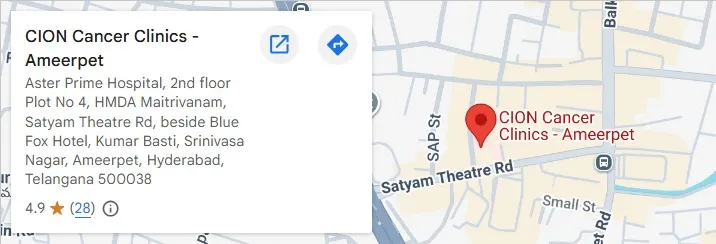
 CION Ameerpet
If you have just been told you have thyroid cancer — or you are reading before a scan — the question on your mind is simple: how serious is this? Here is the honest, reassuring answer: for most people, thyroid cancer is one of the most treatable cancers there is, which is why it is often called the “good cancer”. But that label can mislead. This guide explains what the high survival rates really mean, which types are more dangerous, and when thyroid cancer genuinely needs to be taken seriously.
The most honest answer is: it is serious enough to treat properly, but for most people it is not life-threatening. Both halves of that sentence matter. Thyroid cancer is a real cancer — it deserves a specialist, a clear diagnosis, and a proper plan. At the same time, the two most common types are among the most treatable cancers in all of oncology.
That is where the nickname “good cancer” comes from. The common forms grow slowly, are usually caught early, and respond very well to surgery and, when needed, radioactive iodine. Many doctors dislike the term — no cancer feels “good” to the person diagnosed — but it reflects a genuine truth about the outlook for most patients.
So whether thyroid cancer is “dangerous” really depends on three things: the type of thyroid cancer you have, the stage it is found at, and your age. The sections below walk through each, so you can understand where your situation is likely to sit — and why a specialist assessment is the only way to know for certain.
“Thyroid cancer” is not one disease — it covers several types with very different outlooks. This is the single biggest factor in how serious a case is.
Papillary cancer makes up the large majority of thyroid cancers. It grows slowly, is usually found early, and responds extremely well to treatment — most often surgery, sometimes followed by radioactive iodine. Even when it spreads to lymph nodes in the neck, the overall outlook for younger patients usually stays very good. This is the type most people are referring to when they call thyroid cancer the “good cancer”.
Follicular cancer is the second most common type. Like papillary cancer, it is a “differentiated” cancer, which means the cells still behave enough like normal thyroid cells to absorb iodine — so radioactive iodine therapy works well against it. Its outlook is generally excellent, though it is slightly more likely than papillary cancer to spread to distant sites such as the lungs or bones, which is taken into account when planning treatment.
Medullary thyroid cancer is uncommon and arises from a different cell type, so it does not respond to radioactive iodine. It can be more serious than the differentiated types and is sometimes inherited, which means family screening may be advised. It is still very treatable when caught early, primarily with surgery, but it needs a specialist team and careful follow-up, including a blood test called calcitonin.
Anaplastic thyroid cancer is the type that makes thyroid cancer dangerous — but it is rare, making up only a small percentage of cases. It grows quickly and needs urgent, intensive treatment by a multidisciplinary team. It is the reason the “good cancer” label is misleading: it is true for the common types, but not for this one. Rapid specialist assessment is essential if this type is suspected.
Beyond the type, a few factors shift how serious a thyroid cancer is. No single one decides the outcome — they are weighed together by your specialist. This table shows what tends to be reassuring versus what prompts closer attention.
| Factor | More Reassuring | More Serious — Needs Closer Care |
|---|---|---|
| Type of cancer | Papillary or follicular (differentiated) | Anaplastic or poorly differentiated |
| Stage at diagnosis | Confined to the thyroid; small tumour | Spread to distant organs (lungs, bones) |
| Age | Younger age at diagnosis | Older age, which can affect outlook |
| Lymph nodes | No node spread, or limited neck nodes | Extensive node involvement |
| Response to treatment | Takes up radioactive iodine well | Does not respond to standard treatment |
This is a general guide, not a personal prognosis. Only a specialist assessment — using your pathology, scans, and stage together — can tell you how serious your individual case is. Learn how thyroid cancer is staged.
These are the genuine reasons behind the reassuring survival figures for the common types — not marketing, but how the biology and treatment actually work.
It usually grows slowly
It is often found early
Surgery works well
Radioactive iodine can reach it
Follow-up catches recurrence early
Survival rates are among the highest
Worried about a thyroid cancer diagnosis? A clear, specialist explanation of your type and stage is often what turns worry into a manageable plan. Get a free second opinion from a CION thyroid specialist.
We're never more than 30 minutes away. Same panel of specialists at every centre. Same tumour board reviews. Same NCCN protocols. Pick the closest one and call directly — or let us pick for you.
CION Ameerpet
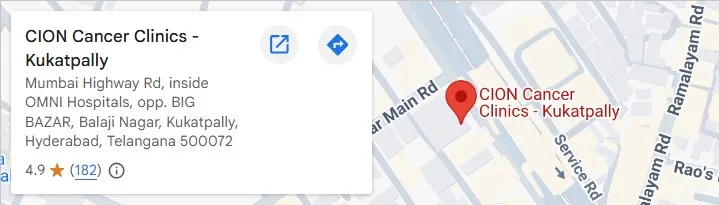 CION Kukatpally
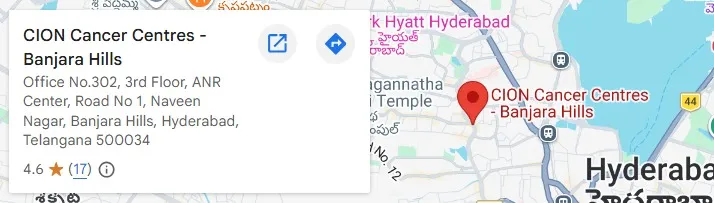 CION L.B. Nagar
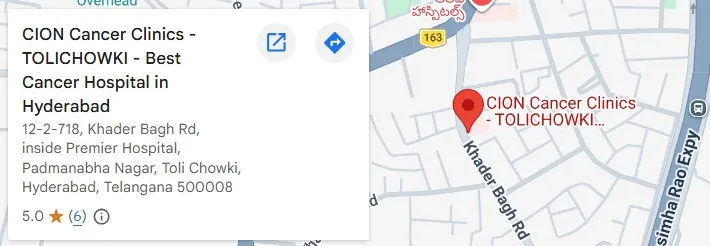 CION Tolichowki
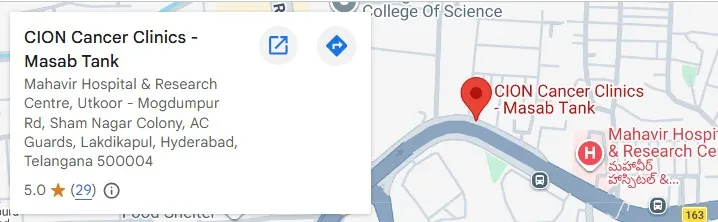 CION Masab Tank
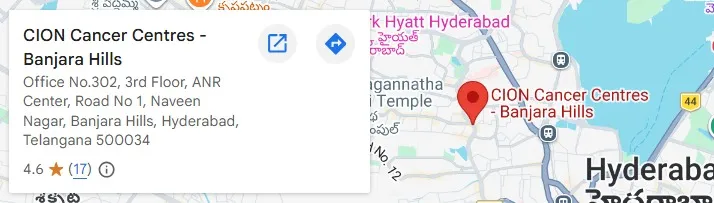 CION Banjara Hills
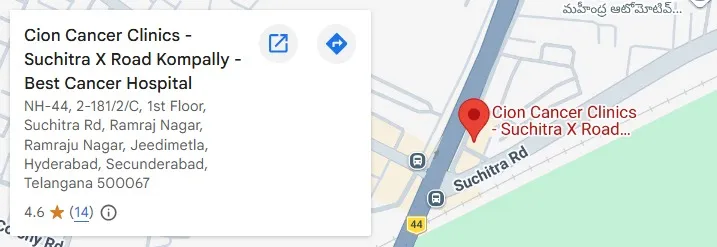 CION Kompally
CION Balanagar
CION Siddipet
CION Sangareddy
CION Kompally
CION Balanagar
CION Siddipet
CION Sangareddy
Not sure which centre fits best? Tell us where you are — we'll suggest the closest one with the right specialists.
Help me pick the right centreTravelling for treatment? We may have a centre right where you are.
Don't see your city? Call 18002028726 — we'll find your nearest CION partner centre.
Trained at AIIMS, Tata Memorial, and leading international centres. Combined 150+ years of experience. Every complex case is reviewed by 3+ of them — together.


MBBS(Gold Medal), DNB(General Medicine), DM(Medical Oncology)(Gold Medal)

MBBS, MD(General Medicine), DM(Medical Oncology)(Adyar,Chennai), ECMO, MRCP SCE(UK)

MBBS, MD (General Medicine), DrNB (Medical Oncology), ECMO, MRCP SCE (Medical Oncology) (UK)



MBBS (AIIMS), MS (Surgery) (AIIMS), DNB (Surgical Oncology), MRCS (Edinburgh)



MBBS, MS(General Surgery), M.Ch(Surgical Oncology), FMAS, FARIS(Ongoing)







MBBS, MS (General Surgery), DrNB (Surgical Oncology), FALS Oncology

Want a specific doctor for your case? Mention them when booking.
Book Free ConsultationShare your name and number — we'll call you back within 30 minutes to schedule your consultation.
CION's surgical, medical, and radiation oncologists assess your exact type, stage, and outlook together — so you understand how serious your case really is, and what the plan should be.
Survival statistics are reassuring, but they are easy to misread. A “five-year survival rate of 98%” does not mean people only live five years — it is simply the standard window researchers use to measure outcomes, and most people with the common thyroid cancers go on to live a normal lifespan well beyond it.
It is also important to know that these figures are averages from very large groups of people. They include every type, age, and stage together. They cannot predict what will happen to any one person, because they do not know your specific type, how early it was found, or how well it responds to treatment. That is why a number on a website is no substitute for a specialist looking at your details.
The practical takeaway is this: the high survival rates are real and genuinely reassuring for the common types — but the way to know your own outlook is an individual assessment, not a statistic. Understanding your stage is a key part of that.
The “good cancer” reassurance is true for most people — but it is not universal, and it should never become a reason to delay care. There are clear situations where thyroid cancer is more serious and needs prompt, specialist attention.
It is more serious when the type is anaplastic or another aggressive form, when the cancer is found late or has spread to distant organs, when it does not respond to radioactive iodine, or in older patients where the outlook can be different. In these situations, the cancer is still treated actively — and modern treatment can control disease in many cases — but the plan is more intensive and the team larger.
The reason none of this should cause panic is simple: you do not have to judge any of it yourself. A specialist assessment identifies exactly which situation applies to you. For the great majority, that conversation is reassuring; for the few where it is not, getting the right plan quickly is what makes the biggest difference.
A cancer diagnosis deserves an unrushed, expert answer about how serious it is — and a plan reviewed by a team, not one doctor.
A clear answer on how serious it is
45-minute detailed consultation
Multidisciplinary tumour board
Decisions for healing, not billing
Free first consultation
35+ centres across Telangana & AP
Real stories from patients treated at CION — from a frightening diagnosis to a clear plan and peace of mind.
These aren't paid endorsements or written reviews. These are video testimonials from real patients and families — recorded on their own phones, in their own words. Pick any one. Watch it. Then decide.
























Read all 800+ reviews on Google
Start Your Story. Book Free Consultation.Common questions about how serious thyroid cancer is, what “good cancer” really means, and the survival outlook — answered by CION's oncology team.
Disclaimer: This content is intended for informational purposes only and does not constitute medical advice, diagnosis, or treatment. Always consult a qualified oncologist for guidance specific to your medical condition. The information on this page is periodically reviewed and updated by CION's medical team in accordance with current clinical guidelines.