

Medical Oncologist
Removing the whole breast is not safer than removing the lump. That single fact changes most of these conversations, and almost nobody is told it plainly before they decide.
For early breast cancer where both are possible, a lumpectomy with radiation and a mastectomy give the same chance of surviving the disease. Removing more does not buy more safety. It is the fact families most often have backwards.
The names are unhelpful. Both are cancer operations, and both remove the cancer completely — the difference is how much healthy breast goes with it.
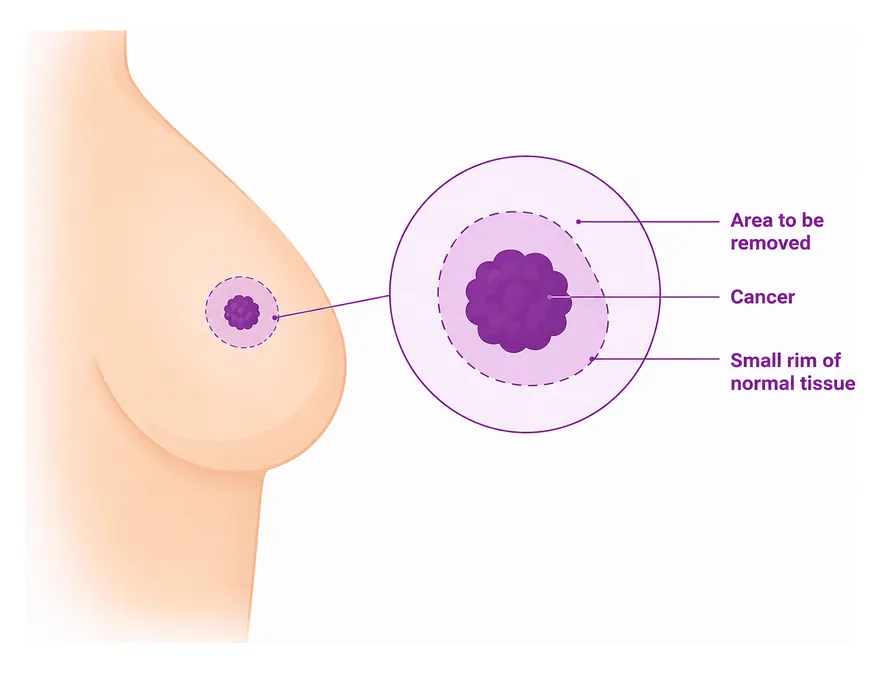
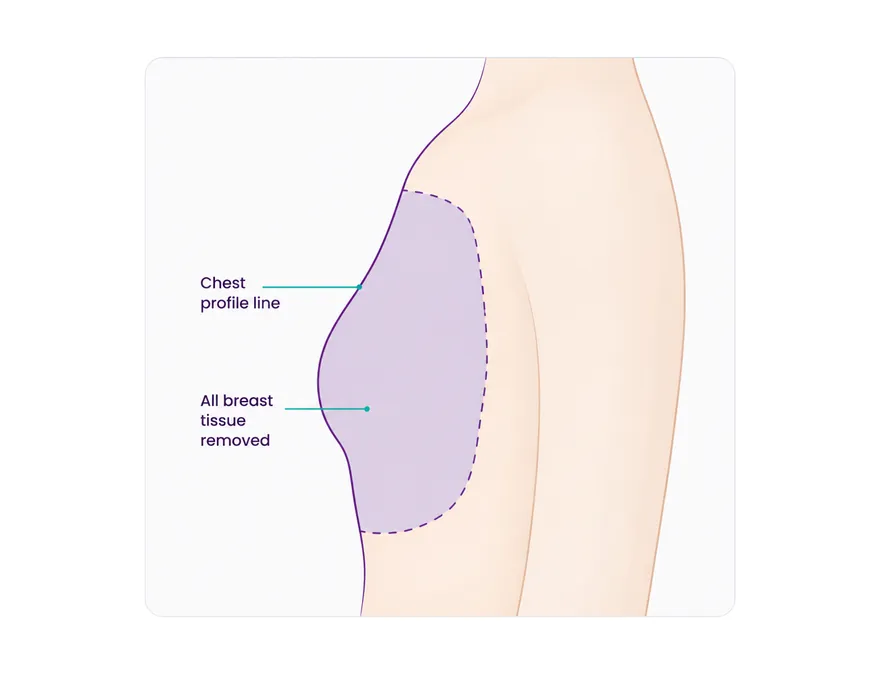
Either way, some lymph nodes from the armpit are usually removed and examined at the same time. That is a separate part of the operation and it happens with both.
Only the things that actually differ. The first row is the one that matters most, and it is the one people expect to read differently.
Written for early breast cancer where both operations are genuinely possible. It does not apply to every situation, and nothing here replaces what your own surgeon tells you after reading your reports.
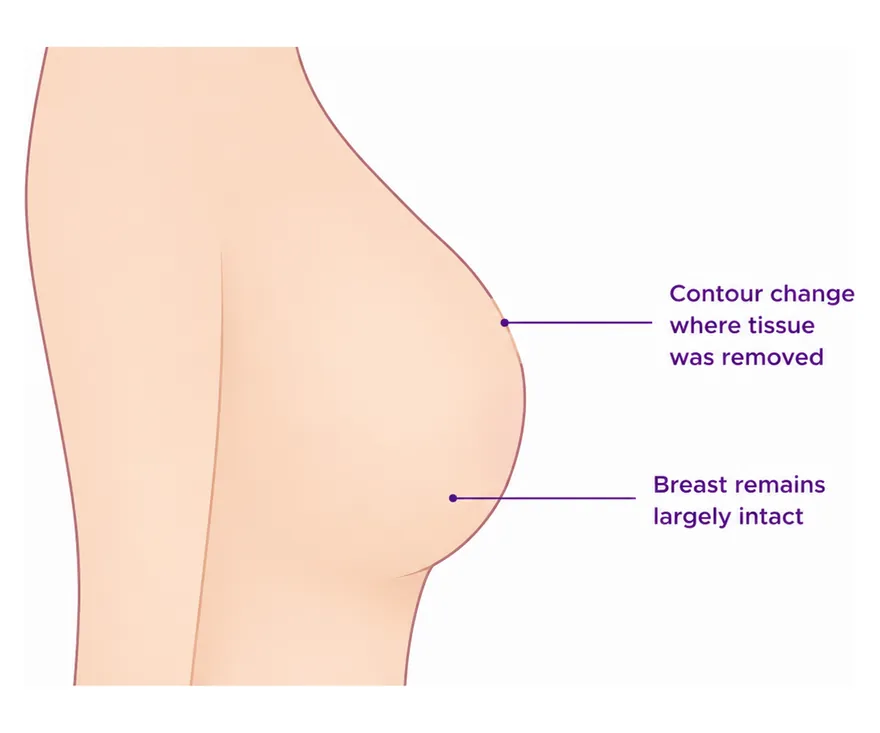
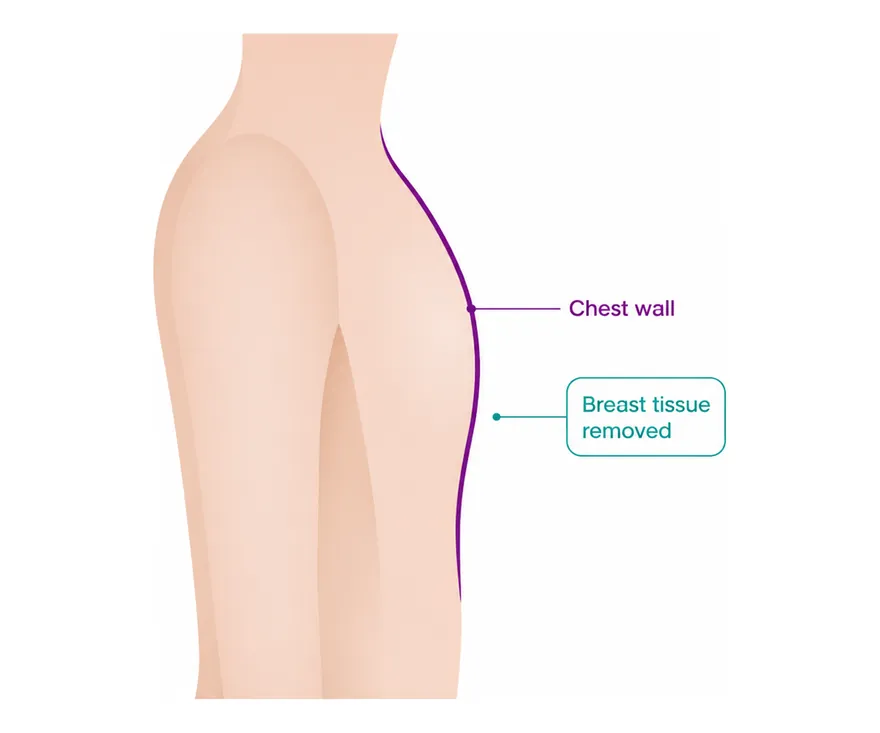
The question people are most anxious about and least often shown. Not showing it does not spare anyone — it leaves you imagining, and what people imagine is reliably worse than this.
Not a preference in these cases, and not a failure either. Three of the reasons are about shape and size, so they are easier to see than to describe.
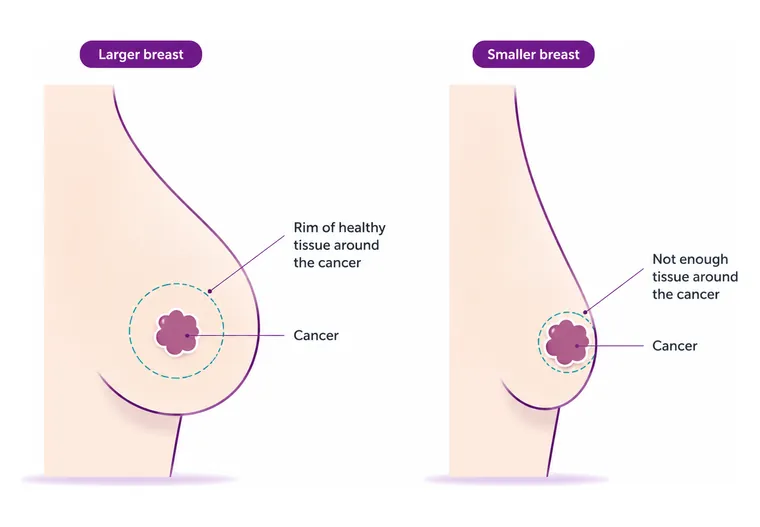
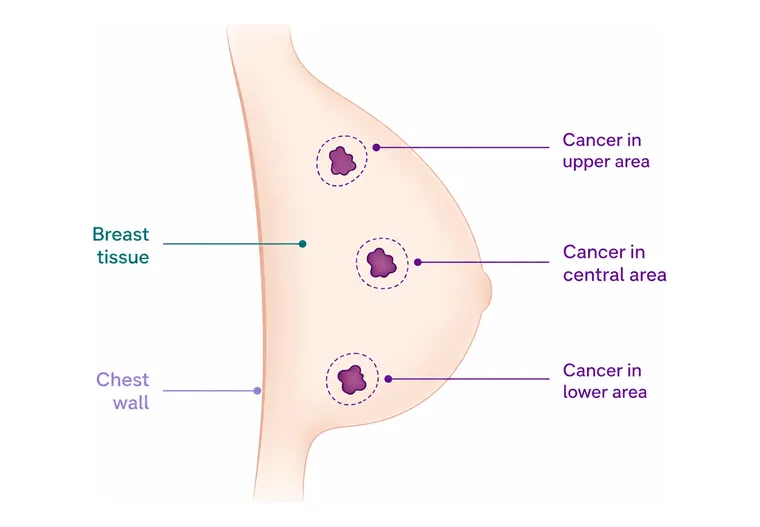
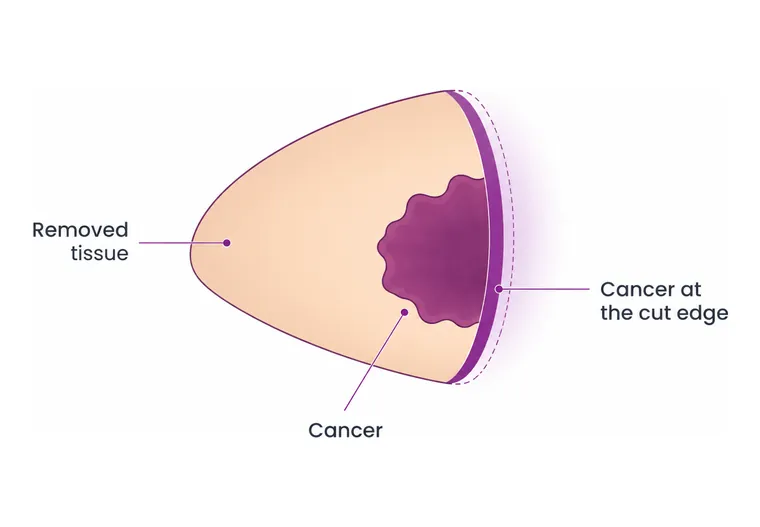
Radiation may not be possible for you, because that breast has been irradiated before or a connective tissue condition makes it unsafe. In that case a lumpectomy is not the same operation. The radiation is what makes the two equivalent, so without it the comparison on this page no longer holds.
Sometimes the picture changes. Medicines given before surgery can shrink a cancer enough that a lumpectomy becomes possible where it was not at first. It is one reason the order of treatment is a real decision rather than a formality. See how the plan gets built →
Talk to our team
Call the helpline or leave your details, and someone will help you arrange a consultation at the CION centre nearest you. One helpline serves every CION centre.
Pick a factor to see how it bears on the choice. These are the things being balanced in the room, so knowing them makes the conversation a two-way one.
What matters is not the size on its own but the size relative to the breast. A 2cm cancer in a large breast is straightforward to remove with a clear rim. The same cancer in a small breast may not leave enough behind.
Worth asking: “Given my breast size, is a lumpectomy realistic here — and what would the shape likely look like afterwards?”
In this part of the country, often not the woman having the operation. It is worth naming, because both directions of pressure push the choice away from medical grounds.
“Take everything, to be safe.”
The commonest thing families say, and it comes from love. It is also based on something untrue — that removing more tissue means a better chance. It does not. A mastectomy chosen for that reason is a bigger operation and a permanent change, bought for a benefit that is not there.
What to do Ask for the specific reason a mastectomy is being recommended, in a sentence you can repeat to the family.
“What will people say?”
The opposite pressure, and just as real. Worry about marriage prospects, about a husband’s reaction, about being seen as less than whole. Some women choose a lumpectomy for those reasons and are then too frightened to say so to the surgeon.
What to do Say it anyway. Appearance is a legitimate factor here, not a vain one, and a surgeon who knows it matters can plan for it.
The consent form has one name on it. Whatever the family decides between themselves, the choice belongs to the person being operated on.
When the medicine points equally either way, this is the part that decides it. There is no wrong answer here, and none of these is a small thing.
This tends to pull people toward mastectomy, and it is one of the most common reasons it gets chosen where both were possible. Fewer scans of that breast, and less to think about at each follow-up.
Worth knowing: the worry does not disappear entirely — follow-up continues either way. Some people find the annual mammogram reassuring rather than frightening once they have had a few. Ask yourself which you are.
All the operations, and lymph node surgery.
Types, procedure and recovery.
What curative intent actually means.
What to do in the first seven days.
Indicative figures and scheme cover.
Before surgery, not after.
Bring your reports and scans. A surgeon can tell you whether both operations are genuinely open to you. They can also say what each would mean in your case, and what the breast would likely look like afterwards. Consultations in Telugu, Hindi and English, and you can ask for a female specialist when you book.
CION runs 9 clinics across Hyderabad, within a network of 35+ centres across Telangana and Andhra Pradesh. Inpatient care is delivered inside NABH-accredited partner centres, and every breast cancer plan is reviewed by a tumour board before treatment begins.
Toll free 1800 202 8726 · Advancing Care. Passionately.
Trained at AIIMS, Tata Memorial, and leading international centres. Combined 150+ years of experience. Every complex case is reviewed by 3+ of them — together.

MBBS(Gold Medal), DNB(General Medicine), DM(Medical Oncology)(Gold Medal)

MBBS, MD(General Medicine), DM(Medical Oncology)(Adyar,Chennai), ECMO, MRCP SCE(UK)

MBBS, MD (General Medicine), DrNB (Medical Oncology), ECMO, MRCP SCE (Medical Oncology) (UK)



MBBS (AIIMS), MS (Surgery) (AIIMS), DNB (Surgical Oncology), MRCS (Edinburgh)



MBBS, MS(General Surgery), M.Ch(Surgical Oncology), FMAS, FARIS(Ongoing)






MBBS, MS (General Surgery), DrNB (Surgical Oncology), FALS Oncology

Want a specific doctor for your case? Mention them when booking.
Book Free ConsultationShare your name and number — we'll call you back within 30 minutes to schedule your consultation.
Where to find us
Addressed by landmark, because that is how this city navigates. Each centre also names the areas it serves, so you can place it without a map. Consultation and day-care Chemotherapy run at every one of them.
Talk to our team
Call the helpline or leave your details, and someone will help you arrange a consultation at the CION centre nearest you. One helpline serves every CION centre.