

Medical Oncologist
The words have landed and nothing feels ordered. This week is not for choosing a treatment. It is for gathering your file, completing the report and sitting in front of the right specialist.
Nothing has to be decided today. Breast cancer is very rarely a same-week emergency, and a plan made on incomplete information is the one real risk of hurrying.
People arrive at this page at four very different points. Pick the one that matches you and the next three steps change.
Seven steps, in the order that works. Nothing here commits you to a treatment, and the sections below go deeper on each one.
Reports, films, prescriptions, ID, ration card. Most week-two delays are a document that stayed at home.

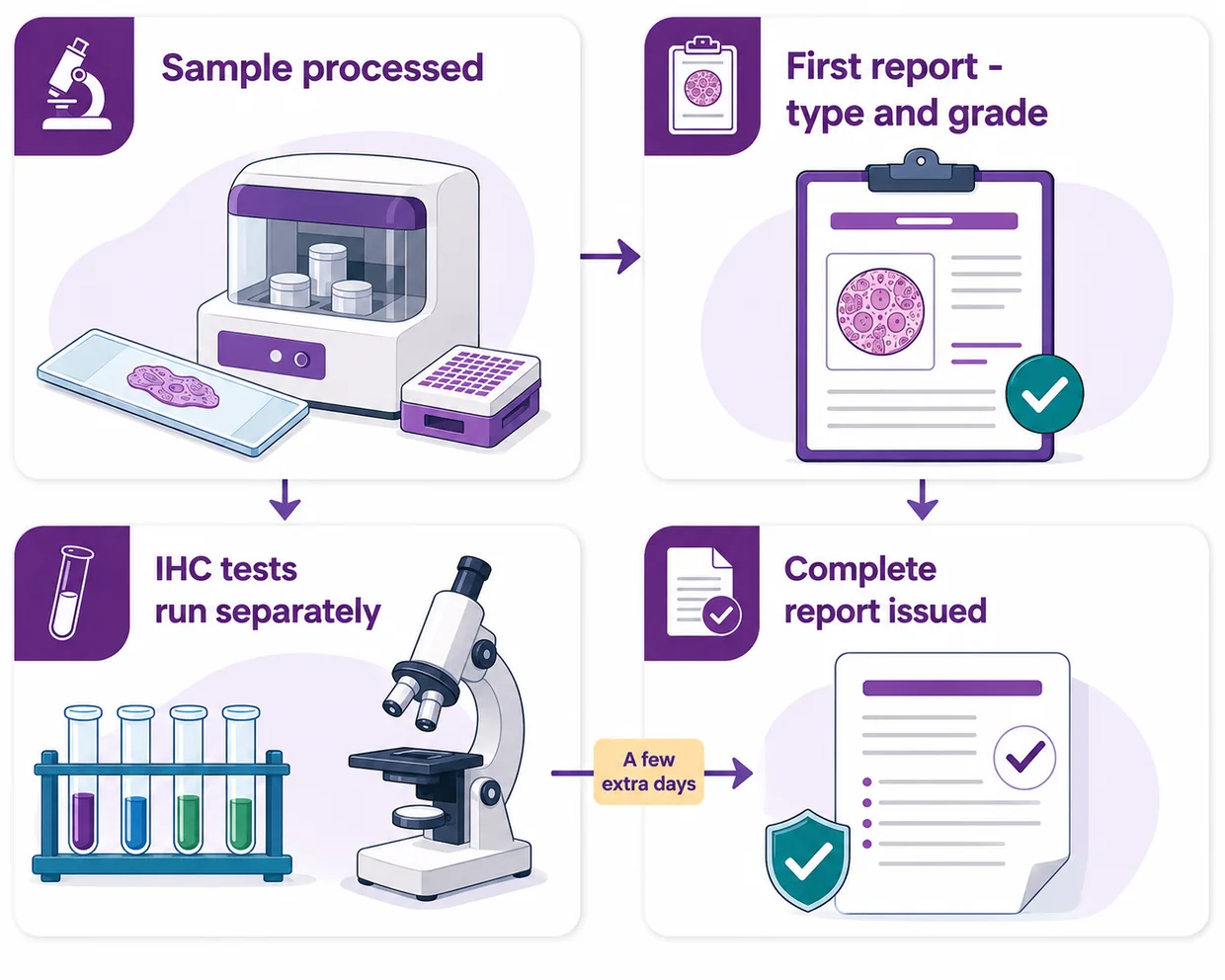
The IHC results follow a few days later and decide the treatment. Ask whether they have been ordered.
Not a general surgeon. The first plan tends to become the plan, so it should be the right one.
One person, with a notebook. You will not remember half of what is said in that room.

A written plan is what makes a second opinion, an insurance claim and a family conversation possible.
Aarogyasri in Telangana, Dr. NTR Vaidya Seva in AP. Started now, the paperwork rarely holds anything up.

Before surgery rather than after. Once an operation is done, some choices cannot be reopened.
With a complete file and the team agreed, treatment planning begins. How treatment works at CION →
Tick what you already have. Whatever stays unticked is your to-do list, and each one tells you exactly who to ask.
0 of 8 in the folder
The most common mistake in week one is reading a normal laboratory sequence as negligence.
A tissue sample is processed first, and a first report is issued covering the type and the grade. IHC testing is a separate laboratory step and adds a few more days. Only then is the picture complete.
Families read that gap as someone sitting on their file. It usually is not. It is the sequence working as designed — and the few days it takes are what stop a plan being built on half the facts.
What is worth chasing is confirmation that the test was actually ordered. What is not worth doing is moving hospitals to make it happen faster. The new hospital will ask for the same test, and the clock starts again.
Related: reading the report line by line · how breast cancer is diagnosed
Being sent from one specialist to another does not mean something has gone wrong. It means the right people are being brought in.
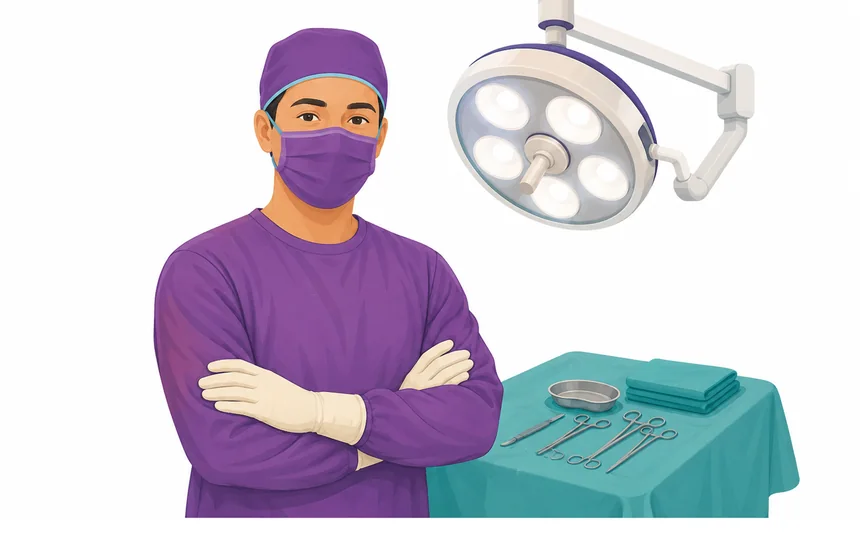
Decides whether an operation is needed, which operation, and when in the sequence it happens.
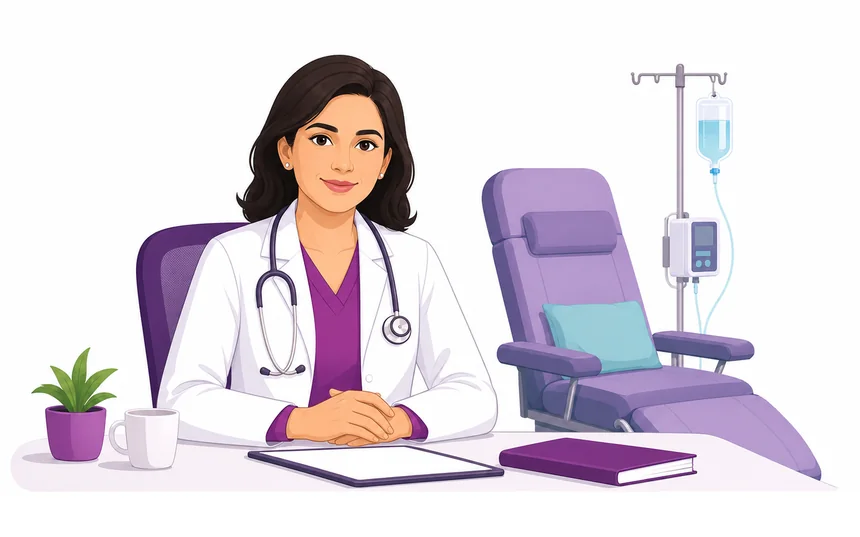
Decides the medicines — what is given, in what order, and for how long.

Decides whether radiation is needed, and plans it.
CION runs 9 clinics across Hyderabad, within a network of 35+ centres across Telangana and Andhra Pradesh. Inpatient care is delivered inside NABH-accredited partner centres. For families travelling in from a district, the consultation and the medical oncology can usually happen close to home. How breast cancer treatment works at CION →
Talk to our team
Call the helpline or leave your details, and someone will help you arrange a consultation at the CION centre nearest you. One helpline serves every CION centre.
At CION, every breast cancer plan is reviewed by a tumour board before treatment begins.
A surgical, a medical and a radiation oncologist read the same file together. That matters because a specialist working alone tends to reach for the treatment they personally perform. Three of them in one room cannot all do that.
Whether surgery comes first or medicines do is one of the biggest decisions in breast cancer, and it is easy to get wrong. It is settled by the team reading your IHC results, not by whoever you happened to see first.
A plan three specialists already agreed is easier for a reviewing doctor to confirm. Most families who get a second opinion on one come back and start treatment instead of continuing to look.
Bring the report, the scans, and the slides and block if you have them. No referral needed.
Who to tell is your decision. There is one common exception worth naming plainly.
Across Telangana and Andhra Pradesh, it is still common for a family to hear the diagnosis first and decide to keep it from the patient. It is almost always done out of love, and a wish to protect her from fear.
It rarely works. Patients almost always sense it, and the sensing is worse than the knowing. More practically, treatment involves consent, choices between options, and side effects that have to be recognised early. A patient who has not been told cannot take part in any of that, and often concludes the truth is worse than it is.
No. It is routine, and good doctors expect it. A specialist who is offended by a second opinion has told you something useful about themselves.
Get it before surgery rather than after. Once an operation has been done, some choices cannot be reopened. Before it, every option is still available.
Take the report, the scans, and the slides and block if a pathology review is wanted. Without the block, a reviewing team can only read someone else’s conclusion rather than form their own.
Think of a tailor measuring twice before cutting the cloth. Nobody thinks the first measurement was wrong. It is checked because once the cloth is cut, it cannot be uncut.
Surgery is the same. That is why a second opinion belongs before the operation, not after it.
And most second opinions agree with the first. That is not a wasted trip. It is the thing that lets a family stop wondering and start treatment.
Each of these is common, understandable, and costs families time they do not get back.
The pages people open after this one, in roughly the order they need them.
Line by line, in plain words.
What ER, PR and HER2 change.
What staging is and when it is decided.
Indicative costs and scheme cover.
The panel, and who leads your case.
How to request one at CION.
Support that runs alongside treatment: genetic counselling for families with a history of breast or ovarian cancer, and diet and nutrition guidance from the point treatment starts.
Bring whatever you have — even if the report is incomplete. An oncologist will tell you what it says, what is still missing, and what the next step actually is. No referral needed.
Toll free 1800 202 8726 · Advancing Care. Passionately.
Trained at AIIMS, Tata Memorial, and leading international centres. Combined 150+ years of experience. Every complex case is reviewed by 3+ of them — together.

MBBS(Gold Medal), DNB(General Medicine), DM(Medical Oncology)(Gold Medal)

MBBS, MD(General Medicine), DM(Medical Oncology)(Adyar,Chennai), ECMO, MRCP SCE(UK)

MBBS, MD (General Medicine), DrNB (Medical Oncology), ECMO, MRCP SCE (Medical Oncology) (UK)



MBBS (AIIMS), MS (Surgery) (AIIMS), DNB (Surgical Oncology), MRCS (Edinburgh)



MBBS, MS(General Surgery), M.Ch(Surgical Oncology), FMAS, FARIS(Ongoing)






MBBS, MS (General Surgery), DrNB (Surgical Oncology), FALS Oncology

Want a specific doctor for your case? Mention them when booking.
Book Free ConsultationShare your name and number — we'll call you back within 30 minutes to schedule your consultation.
Where to find us
Addressed by landmark, because that is how this city navigates. Each centre also names the areas it serves, so you can place it without a map. Consultation and day-care Chemotherapy run at every one of them.
Talk to our team
Call the helpline or leave your details, and someone will help you arrange a consultation at the CION centre nearest you. One helpline serves every CION centre.