NCCN-protocol care · 96.9% 1-yr breast cancer survival · ArogyaSri, CGHS & cashless insurance accepted · Free second opinion
1800 202 8726
WOMEN'S CANCER CARE · HYDERABAD

Is Breast Cancer Curable? — An Honest Answer, Stage by Stage

It is the first question most people ask, and it deserves an honest answer. The short version: many early breast cancers are treated with the goal of cure, and a large proportion of women are cured — but advanced (metastatic) breast cancer is generally treatable rather than curable. Curability depends most of all on the stage at diagnosis, along with the cancer's subtype, grade and how it responds to treatment. On this page a CION oncologist explains the outlook by stage, what drives prognosis, and the single biggest lever you can pull — finding it early.

  • Early stages, goal of cure — Stage 0, I and II breast cancers are usually treated with the goal of cure, and many women are cured. See early-stage breast cancer.
  • Advanced disease is treatable — Stage 4 is generally not curable but is treatable — controllable for years in many women, with good quality of life.
  • Early detection is the biggest lever — Catching it early through screening and prompt evaluation hugely improves the chance of cure.
  • Free first consultation — A full 45-minute, woman-led, doctor-led consultation for all cancer patients — decisions for healing, not billing.
4.8 · 800+ Google reviews · 15,000+ patients treated
Limited Slots Today

Ask About Your Outlook With a Specialist

₹950   Today: FREE  ·  Including free written second opinion

Free 1st consultation for all cancer patients
Confidential, woman-led, doctor-led care
Confidential. No commitment to start treatment.
or
Call 18002028726
17+
Cancer Specialists
on Panel
96.9%
Breast Cancer
Survival Rate*
15,000+
Patients
Treated
4.8★
Google Rating
(800+ reviews)
Women's Cancer Care

Is Breast Cancer Curable? The Honest Answer

The honest answer is: it depends, mostly on the stage. Many early-stage breast cancers are treated with the goal of cure, and a large proportion of women are cured — they finish treatment and never have the cancer return. Doctors are cautious with the word "cure" because we can rarely be certain for any one person, but for early breast cancer the realistic aim is exactly that. Advanced (stage 4 or metastatic) breast cancer is different: it is generally not curable, but it is very treatable — often controllable for years with good quality of life.

So rather than a single yes or no, the better question is "what is the outlook for my situation?" That depends on your stage, your cancer's subtype and grade, and how it responds to treatment. The most powerful factor — and the one you can most influence — is catching breast cancer early, before it has spread. That is why screening and prompt evaluation of any change matter so much.

Early: goal of cure

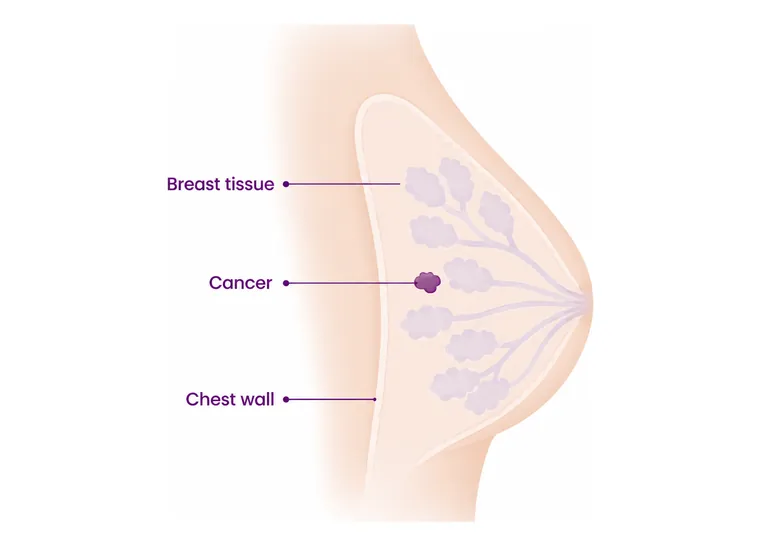
Stage 0, I and most stage II breast cancers are treated with the goal of cure, and a large proportion of women are cured.

Advanced: treatable

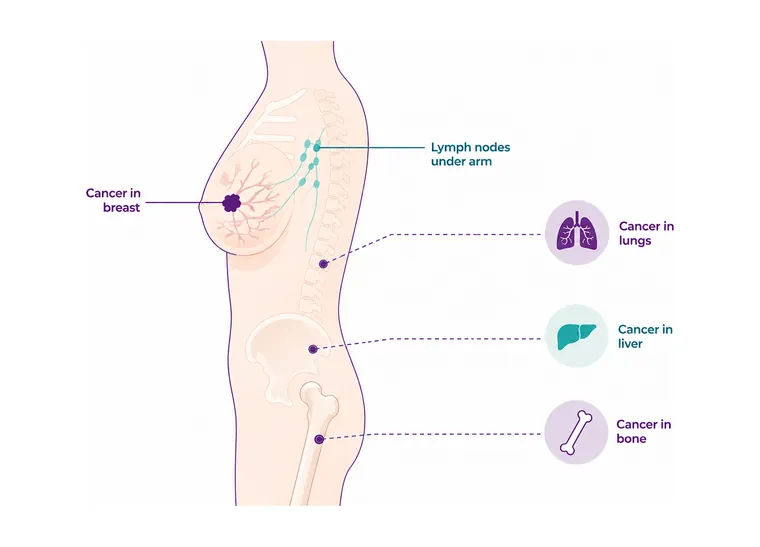
Stage 4 is generally not curable, but it is treatable — modern therapy can control it for years and protect quality of life.

Stage is the biggest factor

Curability depends most on the stage at diagnosis, which is why early detection through screening has such a large effect.

Did you know?

The gap in outlook between early and late breast cancer is enormous: SEER data put 5-year relative survival at roughly 99% when the cancer is localized, versus around 30% once it has spread to distant organs. That difference is largely about when the cancer is found — making early detection the single most powerful thing within reach. In India, where many cancers are still diagnosed late, this is exactly why screening and acting promptly on any breast change matter so much. Source: SEER (US National Cancer Institute); ICMR/NCRP.

12+ Centres in Hyderabad · Pick yours

CION cancer care is closer than you think.

We're never more than 30 minutes away. Same panel of specialists at every centre. Same tumour board reviews. Same NCCN protocols. Pick the closest one and call directly — or let us pick for you.

Not sure which centre fits best? Tell us where you are — we'll suggest the closest one with the right specialists.

Help me pick the right centre
Beyond Hyderabad

35+ centres across Telangana & Andhra Pradesh

Travelling for treatment? We may have a centre right where you are.

Don't see your city? Call 18002028726 — we'll find your nearest CION partner centre.

Outlook by Stage

Curability and Outlook, Stage by Stage

Because stage matters so much, it helps to look at curability one stage at a time. The figures below are SEER-style population averages from past patients — they describe groups, not individuals, and cannot predict any one person's outcome. They are a guide, not a verdict. For a full explanation of what each stage means, see our breast cancer stages hub.

Stage 0 (DCIS)

Non-invasive cancer confined to the milk ducts. Treated to prevent it ever becoming invasive, with an excellent outlook — the goal is, in effect, to keep you cancer-free for good.

Stage I–II (early)

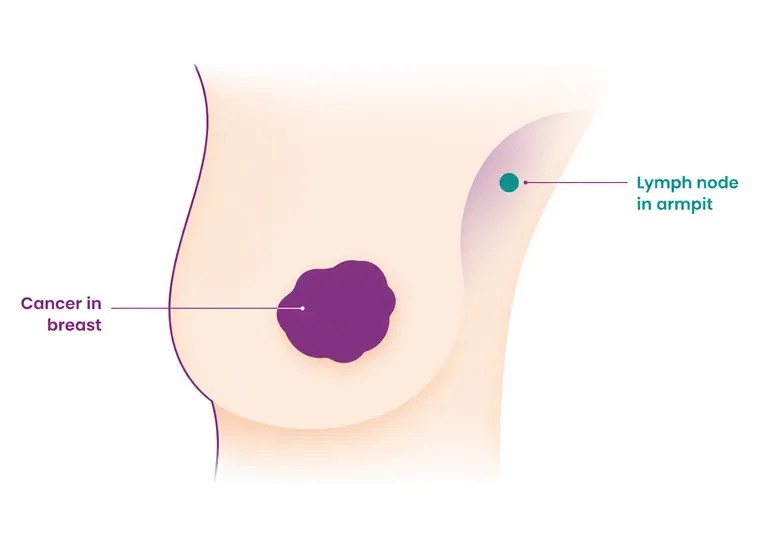
Small, contained invasive cancers treated with the goal of cure. SEER 5-year relative survival for localized breast cancer is around 99%, and many women never have a recurrence.

Stage III (locally advanced)

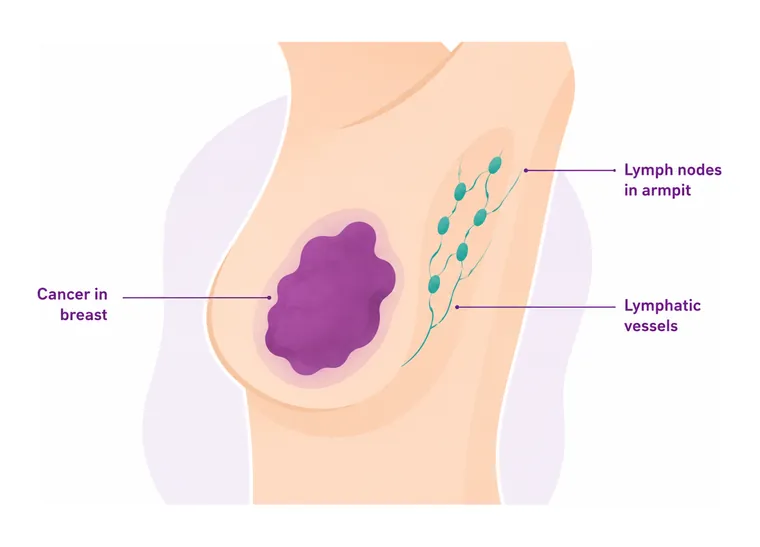
Larger or node-positive cancers, still treated with the aim of cure using a combination of treatments. SEER 5-year relative survival for regional disease is around 86%.

Stage IV (metastatic)

Generally not curable but treatable — controllable for years in many women. SEER 5-year relative survival for distant disease is around 30%, and improving with newer drugs.

What Drives Prognosis

What Drives Your Outlook

Stage is the biggest single factor, but it is not the only one. Several features of the cancer — and of you — combine to shape outlook and to guide how intensively it is treated. Understanding them helps explain why two women at the same stage can have different plans and different prospects.

Stage at diagnosis

How far the cancer has spread is the strongest driver of curability. Earlier stages are far more likely to be cured, which is why finding it early matters more than almost anything else.

Subtype (ER/PR/HER2)

Hormone-positive, HER2-positive and triple-negative cancers behave and respond differently. Subtype determines which effective treatments are available and how the cancer is likely to act.

Grade and biology

The grade describes how abnormal and fast-growing the cells look. Lower-grade cancers tend to behave less aggressively; higher-grade cancers may prompt more treatment.

Response to treatment

How well a cancer shrinks with treatment is a strong signal of outlook — sometimes more telling than the starting stage. A good response is genuinely reassuring.

The Biggest Lever

Early Detection: The Lever You Can Pull

Of all the factors that affect curability, the one most within your control is when the cancer is found. Cancers caught early — small and not yet spread — are far more likely to be cured than those found late. Early detection does not require anything dramatic: it means regular screening at the right age, knowing your own breasts, and acting promptly on any persistent change.

Regular screening

A mammogram can find tiny cancers and DCIS before any lump can be felt — the main way the most curable cancers are caught. Regular screening is the single most effective step.

Know your normal

Being familiar with how your breasts usually look and feel helps you notice a change early. Most changes are harmless, but the ones that are not need to be found quickly.

Act promptly on changes

A new lump, change in shape, skin or nipple change, or persistent pain deserves prompt evaluation. Delay is the enemy of cure; quick action is the friend of it.

Know your risk

Women with a strong family history or a known gene change may need earlier or more frequent screening. Understanding your risk helps your team decide how closely to watch.

Why Choose CION

Why CION for the Best Chance of Cure

The chance of cure is highest when the right treatment is chosen, in the right order, by the right people. CION is a woman-headed, tumour-board-led organisation built so that every decision is made by a full panel of specialists — giving you the best possible chance, with honesty at every step.

Tumour board for every patientEvery case is reviewed by 3+ specialists together, so the stage, subtype and grade are read as one and the treatment sequence is optimised — the right plan gives the best chance of cure.
Honest, realistic conversationsWe tell you the truth about outlook — neither false hope nor unnecessary fear — so you can make informed decisions and focus your energy where it counts.
Outcomes ahead of the averageCION's 1-year breast cancer survival runs meaningfully ahead of the national average — a reflection of accurate diagnosis and coordinated, team-based care.
35+ centres, 15,000+ patients, 4.8/517 super-specialist oncologists and 150+ years of combined experience, across 35+ centres in Telangana and AP, with a 4.8/5 Google rating.

Want an honest answer about your own outlook?

Survival statistics are averages — your situation is unique. A free 45-minute consultation with a CION specialist gives you an honest, personalised picture of your outlook and the best plan to achieve it.

or
Call 18002028726

By submitting, you consent to be contacted by CION about your enquiry.

Meet the Specialists

17+ senior cancer specialists. One panel for your case.

Trained at AIIMS, Tata Memorial, and leading international centres. Combined 150+ years of experience. Every complex case is reviewed by 3+ of them — together.

Dr. Naresh Gundu
Medical Oncologist

Dr. Naresh Gundu

MBBS, DNB (Internal Medicine), DM (Medical Oncology)

View Profile
Dr. C. Raghavendra Reddy
Medical Oncologist

Dr. C. Raghavendra Reddy

MBBS(Gold Medal), DNB(General Medicine), DM(Medical Oncology)(Gold Medal)

View Profile
Dr. Bharati Devi Gorantla
Medical Oncologist

Dr. Bharati Devi Gorantla

MBBS, MD(General Medicine), DM(Medical Oncology)(Adyar,Chennai), ECMO, MRCP SCE(UK)

View Profile
Dr. Owais Mohammed
Medical Oncologist

Dr. Owais Mohammed

MBBS, MD (General Medicine), DrNB (Medical Oncology), ECMO, MRCP SCE (Medical Oncology) (UK)

View Profile
Dr. T. Raghavender Reddy
Medical Oncologist

Dr. T. Raghavender Reddy

MBBS, DM (Medical Oncology), MD (Radiation Oncology)

View Profile
Dr. N. Kiranmayee
Medical Oncologist

Dr. N. Kiranmayee

MBBS, DM (Medical Oncology), MD (Internal Medicine)

View Profile
Dr. Muralidhar Muddusetty
Surgical Oncologist

Dr. Muralidhar Muddusetty

MBBS (AIIMS), MS (Surgery) (AIIMS), DNB (Surgical Oncology), MRCS (Edinburgh)

View Profile
Dr. Raghavendra Naik
Surgical Oncologist

Dr. Raghavendra Naik

MBBS, MS (General Surgery), M.Ch (Surgical Oncology)

View Profile
Dr. Mohammed  Imaduddin
Surgical Oncologist

Dr. Mohammed Imaduddin

M.B.B.S, MS (General Surgery), M.Ch (Surgical Oncology)

View Profile
Dr. Vinay Mamidala
Surgical Oncologist

Dr. Vinay Mamidala

MBBS, MS(General Surgery), M.Ch(Surgical Oncology), FMAS, FARIS(Ongoing)

View Profile
Dr. Paila Gowri Naidu
Surgical Oncologist

Dr. Paila Gowri Naidu

MBBS, MS (General Surgery), M.Ch (Surgical Oncology), FMAS

View Profile
Dr. Venkata Sushma P
Radiation Oncologist

Dr. Venkata Sushma P

MBBS, MD (Radiation Oncology)

View Profile
Dr. Kirti Ranjan Mohanty
Radiation Oncologist

Dr. Kirti Ranjan Mohanty

MBBS, MD (Radiation Oncology)

View Profile
Dr. Gangadhar Vajrala
Radiation Oncologist

Dr. Gangadhar Vajrala

MBBS, MD (Radiation Oncology), MPH

View Profile
Dr. Basudev Pokhrel
Hematologist

Dr. Basudev Pokhrel

MBBS, M.D (Immunohematology & Blood Transfusion)

View Profile
Dr. Mohammed Imran
Interventional Radiologist

Dr. Mohammed Imran

View Profile
Dr. Vajja Sandeep Kumar
Surgical Oncologist

Dr. Vajja Sandeep Kumar

MBBS, MS (General Surgery), DrNB (Surgical Oncology), FALS Oncology

View Profile
Dr. Sridhar Kamani
Surgical Oncologist

Dr. Sridhar Kamani

MBBS, MS (General Surgery), DrNB (Surgical Oncology)

View Profile

Want a specific doctor for your case? Mention them when booking.

Book Free Consultation

Talk to a breast cancer specialist today — your first consultation is free.

Woman-led, tumor-board-reviewed care that gives you the best chance of cure, across 35+ centres in Telangana & AP. Call 1800-202-8726.

Book Free Consultation Call 18002028726
Understanding "Cure"

What Doctors Mean by "Cure" and "Remission"

The words around recovery can be confusing, so it helps to define them. Doctors often prefer "remission" and "no evidence of disease" to the word "cure", because they cannot be completely certain a cancer will never return for any individual. But for early breast cancer, the practical reality is that many women are cured — they complete treatment and live the rest of their lives free of the disease. Understanding these terms helps you read your reports and conversations more clearly.

What this means for you is simple: the realistic goal for early breast cancer is long-term, lasting recovery, and a clear follow-up plan helps confirm and protect it over time.

"Remission"Means there is no detectable sign of the cancer. Complete remission ("no evidence of disease") is the goal of treatment for early cancer and, over time, often amounts to a cure.
"Cure" in practiceFor early breast cancer, many women complete treatment and never have the cancer return — which, in everyday terms, is a cure. Doctors stay cautious with the word, but the reality is genuinely hopeful.
"Controllable"For advanced disease, the aim is control — keeping the cancer in check for as long as possible with a good quality of life, rather than removing it completely.
Why follow-up mattersA structured recurrence-aware follow-up plan helps confirm lasting recovery and catch any change early, protecting the outcome you and your team have worked for.
How It's Achieved

How Treatment Aims for Cure in Early Cancer

When the goal is cure, treatment is designed to do two things: remove the cancer from the breast, and clear any cells that may have escaped before they can grow elsewhere. Combining local and systemic treatment, chosen by a tumour board for your specific cancer, gives the best chance of a lasting cure. Not everyone needs every element — the plan is matched to your stage, subtype and grade.

Surgery removes the cancerRemoving the tumour — often with breast-conserving surgery — is the foundation of curative treatment for early breast cancer, confirming the cancer is gone from the breast.
Radiation lowers local recurrenceRadiation after breast-conserving surgery reduces the chance of the cancer returning in the breast, an important part of treating it with the goal of cure.
Systemic therapy clears stray cellsHormone therapy, chemotherapy and targeted therapy — chosen by subtype — clear cancer cells that may have escaped the breast, cutting the chance of distant recurrence.
The right plan, decided togetherA tumour board balances these elements for your specific cancer — enough treatment to maximise the chance of cure, without unnecessary overtreatment.

Want a clear, honest read on your prognosis?

A CION specialist can review your reports, explain your outlook by stage and subtype in plain language, and lay out the plan with the best chance of cure or long-term control. Your first consultation is free.

or
Call 18002028726
Reading the Numbers

How to Read Survival Statistics Wisely

Survival percentages can be frightening if you misread them — so it is worth understanding what they really say. SEER 5-year relative survival is around 99% for localized, 86% for regional and 30% for distant breast cancer. But these are averages from large groups of patients treated years ago. They cannot tell you your future, they do not capture today's better treatments, and they lump together very different subtypes. Treat them as background context, not a personal prediction.

What matters far more for you is your specific stage, subtype, grade and treatment response — and access to coordinated, modern care. Encouragingly, CION's overall breast cancer outcomes run ahead of the national average, which is one reason where and how you are treated genuinely affects your odds.

CION breast cancer 1-year survival: 96.9% vs national average 85.4% (+11.5%). *1-year survival. Source: ICMR / National Cancer Registry Programme (NCRP).

They are averages, not predictionsSurvival rates describe what happened to large groups of past patients. They cannot tell any individual what will happen to her — your own path may be very different.
They lag behind treatmentBecause the data come from patients treated years ago, today's better drugs are not yet reflected — real outcomes are often improving faster than the published figures.
"Relative" survival has a meaningRelative survival compares people with the cancer to similar people without it — so it isolates the effect of the cancer itself rather than other causes.
Your details matter moreYour stage, subtype, grade and response to treatment — and the quality of your care — shape your outlook far more than any population average. Ask your team about your specific picture.
Protecting the Outcome

Staying Well After Curative Treatment

Being treated with the goal of cure is the start; protecting that outcome over the years that follow is the next step. Completing any long-term tablets, keeping up follow-up, and healthy habits all help confirm and maintain a lasting recovery — and let your team catch any change early. Our life after treatment guide covers this in depth.

Finish your hormone therapyIf your cancer was hormone-positive, completing the full course of anti-hormone tablets is one of the strongest ways to lower the risk of the cancer returning over the years ahead.
Keep up follow-upRegular check-ups and mammograms help confirm you remain well and catch any change early. We give you a clear schedule so you always know what to do and when.
Healthy habits support recoveryStaying active, maintaining a healthy weight, limiting alcohol and not smoking all support recovery and may lower recurrence risk — steady changes that add up.
Know the signs to reportUnderstanding what a possible recurrence might feel like and reporting any new, persistent change promptly means anything that does return is caught early.
Your Next Step

Get an Honest Answer About Your Outlook

No website can tell you your personal outlook — but a specialist who has read your reports can give you an honest, individual answer, and a plan to achieve the best possible result. CION offers a clear, woman-led pathway from first consultation onward, with your first consultation free.

1

Free 45-minute consultation

A specialist reviews your reports in full and gives you an honest, plain-language picture of your outlook by stage and subtype — no false promises, no unnecessary fear.

2

Confirm stage, subtype and grade

We make sure the diagnosis is complete and accurate — the factors that drive your prognosis — with up to 50% discounts on diagnostics.

3

Tumour board sets the best plan

3+ oncologists design the treatment with the best chance of cure or long-term control for your specific cancer — the right drugs, in the right order.

4

Treatment and protected recovery

Curative or controlling treatment as needed, followed by structured follow-up, nutrition and psycho-oncology support to protect the outcome over time.

REAL PATIENTS, REAL OUTCOMES

Women who beat the odds and got their lives back

Hear from patients treated at CION — diagnosis, treatment path, and where they are today.

Book Free Consultation Call 18002028726
Real Stories. Real Voices.

15,000+ patients chose CION. Hear from them directly.

These aren't paid endorsements or written reviews. These are video testimonials from real patients and families — recorded on their own phones, in their own words. Pick any one. Watch it. Then decide.

4.8★800+ Google reviews
50+video testimonials
15,000+patients treated

Successful Chemotherapy Done by Dr. C Raghavendra Reddy

Watch video →

Surgery, Chemo & Radiation Done by Dr. Imaduddin, Dr. Vinay, Dr. Owais, Dr. Kirti

Watch video →

Successful Radical Thymectomy Done by Dr. Mohammed Imaduddin & Dr. Vinay Mamidala

Watch video →

Successful Surgery Done by Dr. Rajender Byshetty

Watch video →

Successful Chemo & Surgery Done by Dr. Imad, Dr. Vinay, Dr. Owais & Dr. Raghavendra

Watch video →

Successful Chemo & Surgery Done by Dr. Imad, Dr. Vinay, Dr. Owais & Dr. Raghavendra

Watch video →

Successful Chemo & Radiation Done by Dr. Owais Mohammed & Dr. Kirti Ranjan Mohanty

Watch video →

Successful Breast Cancer Surgery Done by Dr. Imaduddin Mohammed & Dr. Vinay Mamidala

Watch video →

Successful Chemotherapy Done by Dr. Bharati Devi Gorantla

Watch video →

Successful Chemo & Surgery Done by Dr. Owais Mohammed & Dr. Imaduddin Mohammed

Watch video →

Successful Chemotherapy Done by Dr. Gundu Naresh

Watch video →

Successful Bone Marrow Transplantation - Neuroblastoma

Watch video →

Successful Surgery & Chemo - Carcinoma of Caecum

Watch video →

Successful Oral chemotherapy & mastectomy surgery

Watch video →

Successful Oral chemotherapy & mastectomy surgery

Watch video →

Successful Chemotherapy

Watch video →

Successful Surgery by Dr. Mohammed Imaduddin

Watch video →

Successful Bone Marrow Transplantation

Watch video →

Successful Oral chemotherapy & mastectomy surgery

Watch video →

Successful Oral chemotherapy & mastectomy surgery

Watch video →

Successful Chemotherapy

Watch video →

Successful Buccal Mucosa Surgery

Watch video →

Successful Complex Surgery Mandibulectomy Reconstruction

Watch video →
Common questions

Is breast cancer curable — your questions answered

Is breast cancer curable?

It depends mostly on the stage. Many early-stage breast cancers — stage 0, I and most stage II — are treated with the goal of cure, and a large proportion of women are cured: they finish treatment and never have the cancer return. Doctors are cautious with the word "cure" because they can rarely be completely certain for any one person, but for early breast cancer that is the realistic aim. Advanced (stage 4 or metastatic) breast cancer is different — it is generally not curable, but it is very treatable, often controllable for years with a good quality of life. So rather than a single yes or no, the better question is what the outlook is for your specific stage, subtype and grade.

What is the cure rate for early-stage breast cancer?

Early-stage breast cancer has an excellent outlook. SEER data put 5-year relative survival for localized breast cancer at around 99%, and many women never have a recurrence. Most early cancers are treated with the goal of cure, combining surgery to remove the cancer from the breast with radiation and, where appropriate, systemic therapy to clear any cells that may have escaped. The exact outlook within the early-stage group still varies with subtype and grade, which is why your plan is tailored. These figures are population averages and cannot predict any one person's outcome, but the overall picture for early breast cancer is genuinely encouraging — it is among the most treatable cancers when caught early.

Can stage 4 breast cancer be cured?

Stage 4, or metastatic, breast cancer is generally not curable, and we believe in being honest about that. But it is very treatable. Modern systemic therapy can control the cancer — sometimes for many years — shrink deposits, relieve symptoms and protect quality of life. The goal shifts from removing the cancer to keeping it under long-term control while keeping you feeling as well as possible. Increasingly, metastatic breast cancer is managed like a chronic, long-term condition, and how long control lasts varies a great deal by subtype. So while "cure" is not the realistic aim at stage 4, "treatable and controllable for years with good quality of life" very much is.

What factors affect whether breast cancer can be cured?

Several factors combine to shape outlook. The biggest is the stage at diagnosis — how far the cancer has spread — which is why earlier cancers are far more likely to be cured. The subtype (hormone-positive, HER2-positive or triple-negative) determines which effective treatments are available and how the cancer is likely to behave. The grade describes how abnormal and fast-growing the cells look. And how well the cancer responds to treatment is a strong signal of outlook, sometimes more telling than the starting stage. Your own age and general health matter too. Because stage is the largest single factor, and it is the one most affected by when the cancer is found, early detection is the most powerful thing within your control.

Does early detection really make a difference to cure?

Yes — it makes an enormous difference. The gap in outlook between early and late breast cancer is large: SEER data put 5-year relative survival at around 99% for localized cancer versus around 30% once it has spread to distant organs. Much of that difference is simply about when the cancer is found. Early detection does not require anything dramatic — it means regular screening at the right age, knowing how your breasts normally look and feel, and acting promptly on any persistent change. A mammogram can find tiny cancers and DCIS before any lump can be felt, which is how many of the most curable cancers are caught. In India, where many cancers are still diagnosed late, this is exactly why screening matters so much.

What is the difference between cure and remission?

Remission means there is no detectable sign of the cancer; complete remission, or "no evidence of disease", is the goal of treatment for early cancer. Doctors often prefer "remission" to "cure" because they cannot be completely certain a cancer will never return for any individual. In practice, though, for early breast cancer many women complete treatment and never have the cancer come back — which, in everyday terms, is a cure. For advanced disease, the relevant word is usually "controllable" rather than "cured" — keeping the cancer in check for as long as possible with a good quality of life. A structured, recurrence-aware follow-up plan helps confirm and protect a lasting recovery over time.

How should I read breast cancer survival statistics?

Carefully, and as background rather than a personal prediction. The percentages most often quoted — around 99% for localized, 86% for regional and 30% for distant breast cancer — are SEER 5-year relative survival figures. They are averages from large groups of patients treated years ago, so they cannot tell you your future, they do not capture today's better treatments, and they combine very different subtypes into one number. "Relative" survival compares people with the cancer to similar people without it, isolating the effect of the cancer itself. What matters far more for you is your specific stage, subtype, grade and treatment response, plus access to coordinated modern care. Ask your team about your individual picture rather than relying on a population average.

Does CION offer a free consultation to discuss my outlook?

Yes. CION offers a free first consultation for all cancer patients, including women who want an honest, individual answer about their outlook. It is a full 45-minute consultation — a specialist reviews your reports, confirms your stage, subtype and grade, and explains your prognosis in plain language, with neither false hope nor unnecessary fear. They then lay out the plan with the best chance of cure or long-term control for your specific cancer. CION's overall breast cancer outcomes run ahead of the national average, and the emphasis is on the right treatment in the right order. You can book on 1800-202-8726 or request a callback through the form on this page.

Explore more

Breast Cancer Topics

Browse our complete guide to breast cancer — types, symptoms, tests and treatments. Tap any topic to read more.

Call now Book free consultation