NCCN-protocol care · 96.9% 1-yr breast cancer survival · ArogyaSri, CGHS & cashless insurance accepted · Free second opinion
1800 202 8726
WOMEN'S CANCER CARE · HYDERABAD

Breast Lump: — Causes, Warning Signs & When to Worry

Finding a lump in your breast is frightening, but here is the reassuring truth: most breast lumps are not cancer. The great majority turn out to be harmless — fibroadenomas, simple cysts or normal lumpy (fibrocystic) tissue. Still, no one can tell from feel alone whether a lump is benign or not, so any new or changing lump deserves a proper check. On this page our specialists explain the common causes, the warning features that need attention, how to tell a lump from a cyst, and how a lump is safely evaluated by triple assessment — so you know exactly what to do next.

  • Most lumps are benign — fibroadenomas, cysts and fibrocystic change account for the large majority of breast lumps, especially in younger women.
  • Know the warning features — a hard, fixed, irregular, painless or growing lump, or one with skin or nipple change, needs prompt evaluation.
  • Don't self-diagnose — feel alone cannot rule cancer in or out; a quick ultrasound or scan settles most lumps in one visit.
  • Free first consultation — a full 45-minute, woman-led, doctor-led consultation for all cancer patients — decisions for healing, not billing.
4.8 · 800+ Google reviews · 15,000+ patients treated
Limited Slots Today

Get Your Breast Lump Checked

₹950   Today: FREE  ·  Including free written second opinion

Free 1st consultation for all cancer patients
Confidential, woman-led, doctor-led care
Confidential. No commitment to start treatment.
or
Call 18002028726
17+
Cancer Specialists
on Panel
96.9%
Breast Cancer
Survival Rate*
15,000+
Patients
Treated
4.8★
Google Rating
(800+ reviews)
Reassurance First

Most Breast Lumps Are Not Cancer

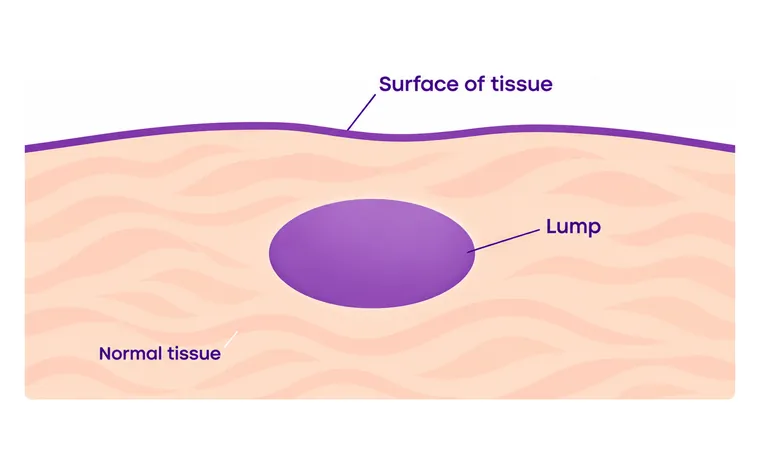
A breast lump is any area that feels different from the surrounding tissue — firmer, thicker or more distinct. Breasts are naturally lumpy and change with your menstrual cycle, pregnancy and age, so feeling a lump is very common. The most important thing to know is that the vast majority of breast lumps are benign (not cancer) — particularly in women under 40. Common harmless causes include fibroadenomas (smooth, rubbery, mobile lumps), simple cysts (fluid-filled sacs), and the general lumpiness of fibrocystic breast tissue.

That said, the only way to be sure is a proper check. No doctor, and certainly no app or self-exam, can reliably tell a benign lump from cancer by feel alone — which is exactly why a structured evaluation exists. If a lump turns out to need attention, finding it early gives the best possible outcome. So the right response to any new lump is calm, not panic: keep doing your breast self-exam, and get a persistent or changing lump looked at promptly.

Most are benign

The large majority of breast lumps that women find are non-cancerous — fibroadenomas, cysts and normal fibrocystic tissue lead the list, especially before menopause.

Feel can't tell

Benign and cancerous lumps can feel surprisingly similar. That is why imaging — and sometimes a needle test — is needed to be certain, rather than guessing from touch.

Early checks win

If a lump does need treatment, finding it early matters most. A prompt check turns worry into an answer — usually reassurance — within a single visit.

Did you know?

The great majority of breast lumps are not cancer — in women under 40, most are fibroadenomas or cysts. But because feel alone cannot distinguish benign from malignant, guidelines recommend that any new, persistent or changing breast lump be assessed with examination, imaging and, if needed, a needle test. The aim is reassurance for most women, and early diagnosis for the few who need it. Source: NCCN Breast Cancer guidance; ICMR/NCRP.

12+ Centres in Hyderabad · Pick yours

CION cancer care is closer than you think.

We're never more than 30 minutes away. Same panel of specialists at every centre. Same tumour board reviews. Same NCCN protocols. Pick the closest one and call directly — or let us pick for you.

Not sure which centre fits best? Tell us where you are — we'll suggest the closest one with the right specialists.

Help me pick the right centre
Beyond Hyderabad

35+ centres across Telangana & Andhra Pradesh

Travelling for treatment? We may have a centre right where you are.

Don't see your city? Call 18002028726 — we'll find your nearest CION partner centre.

The Common Causes

Common Causes of a Breast Lump — Most Are Harmless

Understanding what usually causes a breast lump helps replace fear with facts. The same examination and imaging that reassure most women are the ones that catch the few cancers early — so a check serves both purposes. Here are the most common reasons a woman feels a lump, and what each typically feels like.

Fibroadenoma

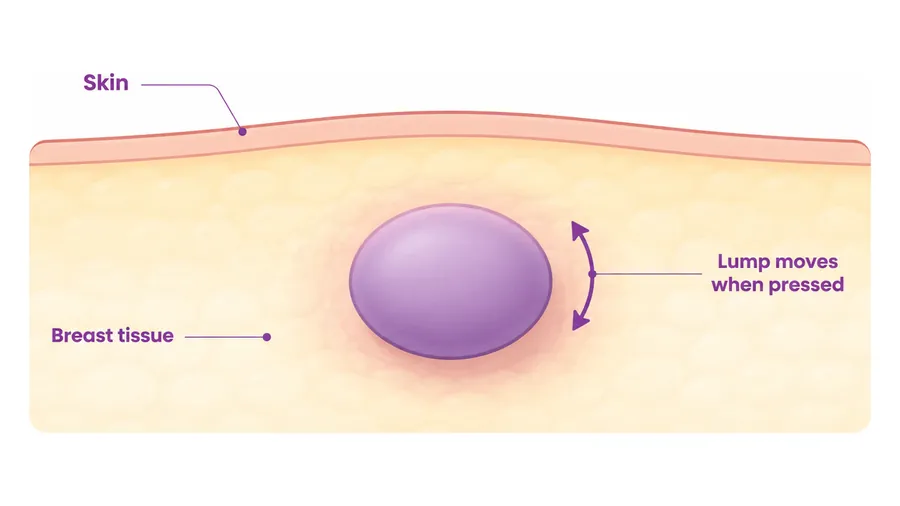
A smooth, firm, rubbery lump that moves easily under the fingers ("breast mouse"). These are benign growths of glandular and connective tissue, most common in women in their 20s and 30s. They often need no treatment beyond confirming what they are.

Breast cyst

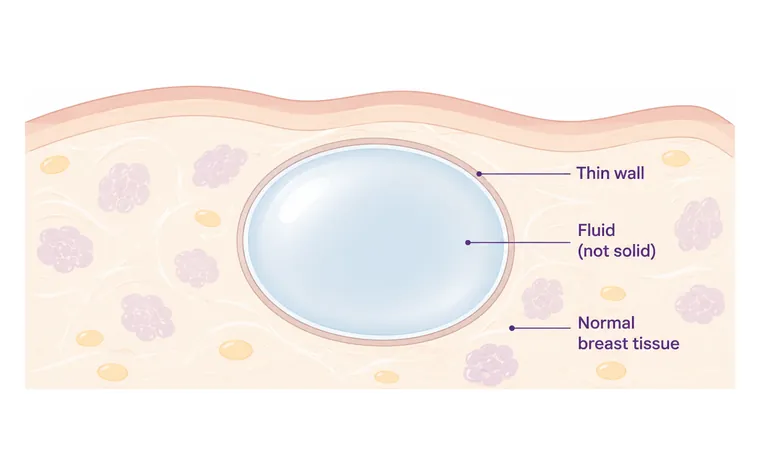
A fluid-filled sac that can feel like a soft or firm, often tender, smooth lump that may change with your cycle. Cysts are very common around the 40s. An ultrasound tells a fluid cyst from a solid lump in seconds — see our guide on breast lump vs cyst.

Fibrocystic change

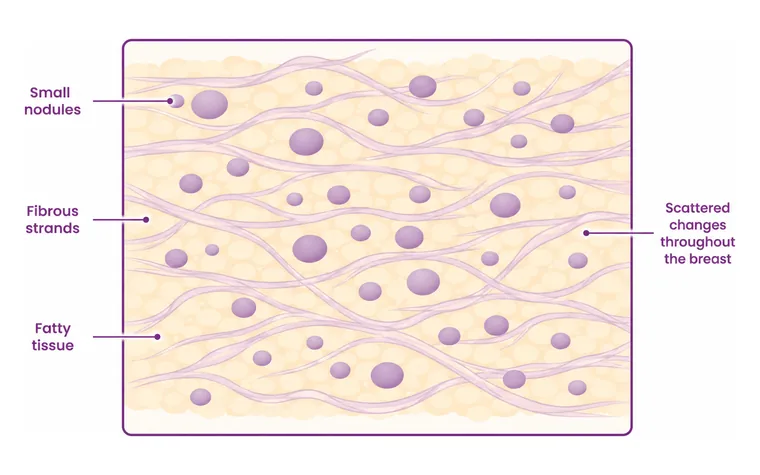
General lumpiness, ropiness or tenderness that often comes and goes with your period. It is not a disease and not cancer — it reflects normal hormone-driven changes in breast tissue, and is one of the commonest reasons women feel "lumps".

Infection or abscess

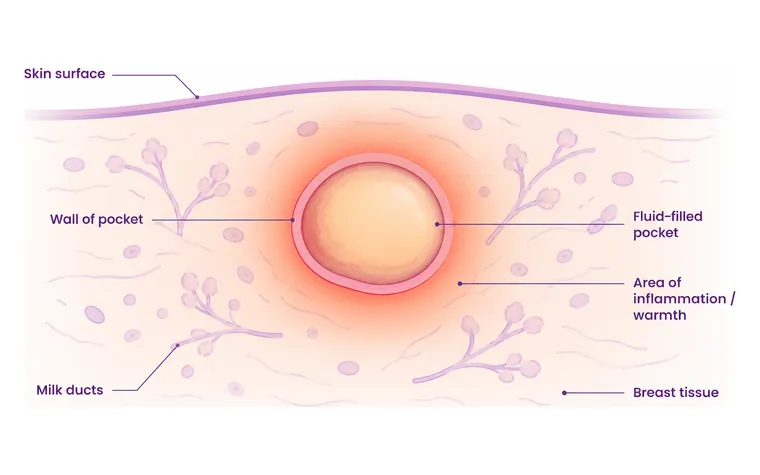
A tender, red, warm lump — sometimes with fever — may be an infection (mastitis) or abscess, more common while breastfeeding. This usually responds to treatment, but a lump that doesn't fully settle still needs a check.

Fat necrosis or lipoma

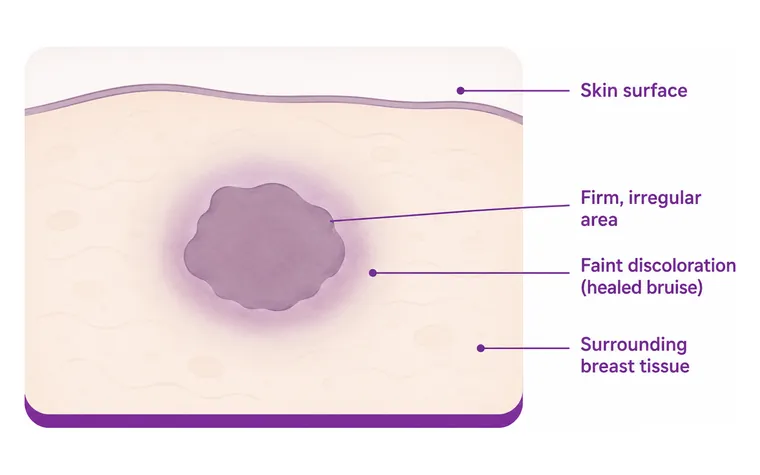
A firm lump can follow an injury or surgery (fat necrosis), or be a soft, harmless fatty lump (lipoma). Both are benign, but because they can mimic other lumps they are confirmed with imaging rather than assumed.

Breast cancer (a minority)

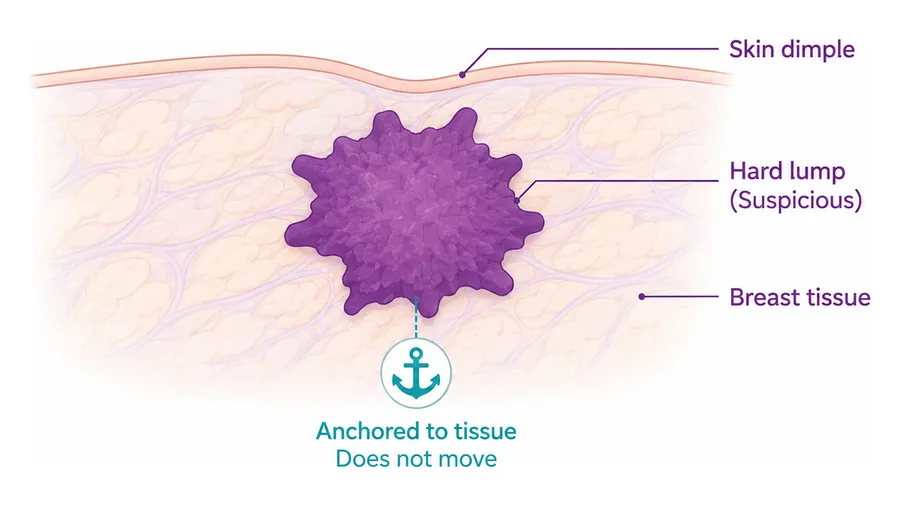
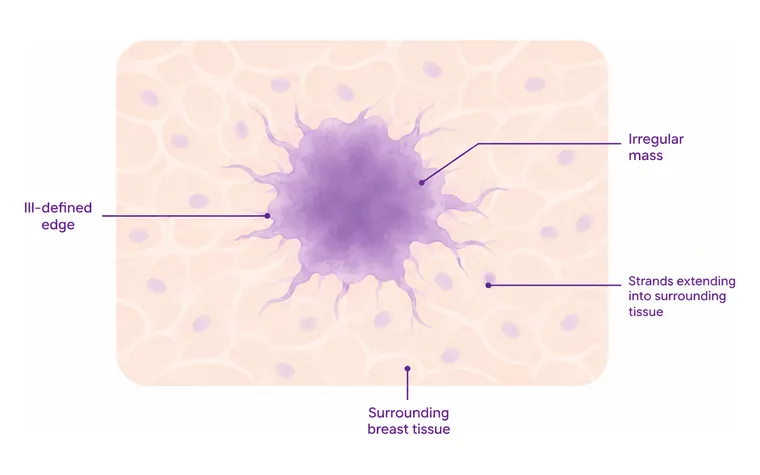
A smaller proportion of lumps are cancer — classically hard, fixed, irregular and painless, sometimes with skin or nipple change or an armpit lump. This is the group early evaluation is designed to find while it is most treatable.

When To Worry

Warning Features: When a Lump Needs Prompt Attention

No single feature confirms or rules out cancer — only a proper assessment can do that — but certain characteristics make a lump more concerning and mean you should not wait. If your lump has any of the features below, book a check promptly rather than watching it. Equally, even a "soft, mobile, came-and-went" lump is worth confirming if you are unsure.

Hard, fixed or irregularA lump that feels rock-hard, has an uneven or irregular edge, or seems tethered (fixed) to the skin or chest wall rather than moving freely is more concerning and should be checked promptly.
Painless and growingMany people expect cancer to hurt, but a cancerous lump is often painless. A lump that is steadily growing, or one that doesn't change with your cycle and doesn't go away, deserves evaluation — even without pain. (A new breast pain on its own is rarely cancer.)
Skin or nipple changes over itDimpling, puckering, redness or "orange-peel" skin, or a newly pulled-in nipple or nipple discharge near the lump, are red flags — see our overview of nipple changes for what these can mean.
A lump in the armpitA new lump or swelling in the armpit can be a swollen lymph node — sometimes from infection, sometimes breast-cancer-related. Read more on the armpit lump page and get it assessed.
Older age or strong family historyThe chance that a lump is cancer rises with age and is higher if you carry a BRCA mutation or have a strong family history. After menopause, treat any new lump as needing a check until proven otherwise.
It persists past one cycleA lump that is still there after your next period, or that you can feel does not soften and settle, should be assessed rather than watched indefinitely. Persistence is the simplest sign to act on.
Your Next Steps

Found a Lump? Here's Exactly What to Do

The single most helpful thing you can do is not ignore it and not panic — simply get it checked. Here is a calm, practical sequence that takes the guesswork out of the next few days.

Don't wait it out indefinitely

It's reasonable to re-check a soft, tender lump after your next period, since cyclical lumps often settle. But if a lump is still there after one cycle, or has any warning feature, book a check rather than watching it for months.

Note the details

Where it is, how long you've felt it, whether it changes with your cycle, and any skin, nipple or armpit changes. These details — and your age and family history — help your doctor decide which tests you need.

See a breast specialist

A clinical breast examination is the first step. Our breast specialists can examine the lump and arrange the right imaging the same day, so you aren't sent back and forth.

Have the right scan

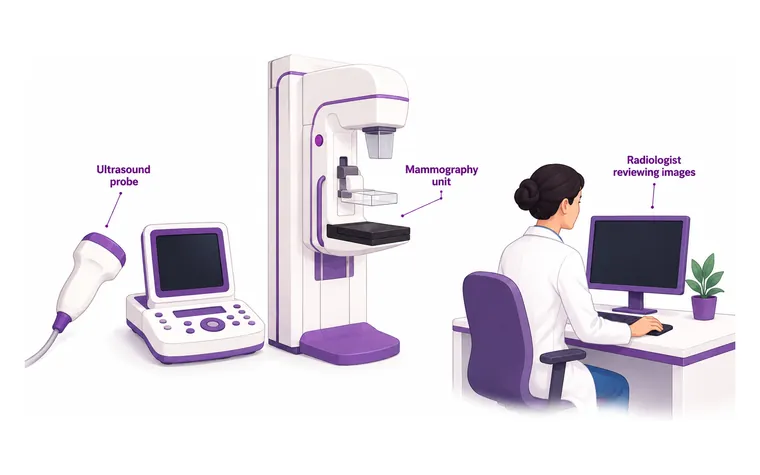
Under about 40, an ultrasound is usually first; from 40, a mammogram (with ultrasound) is typical. The scan often gives an answer in one visit.

A needle test if needed

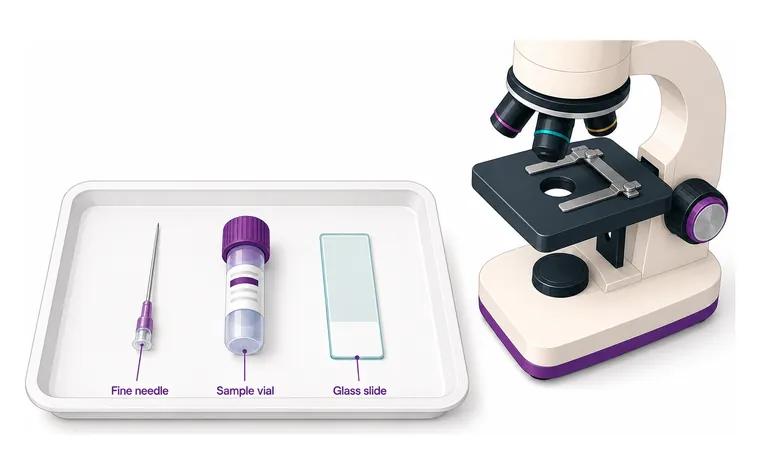
If imaging is unclear or suspicious, a quick FNAC or core needle biopsy takes a small sample to confirm exactly what the lump is — this is the only way to be certain.

Get reassurance — or a plan

For most women the result is "benign — nothing to worry about". For the few where it isn't, you leave with a clear, tumour-board-backed plan and the best possible head start.

Why Choose CION

Why Get a Breast Lump Checked at CION

A new lump deserves a clear, unhurried answer — not a rushed visit or a list of tests you don't need. CION is a woman-headed, tumour-board-led organisation built to evaluate breast lumps accurately and kindly, and to reassure the many while finding the few who need treatment early.

Triple assessment under one roofExamination, imaging and a needle test (if needed) are arranged together, so most lumps are sorted out in a single, calm visit rather than multiple appointments.
Woman-led, confidential careA woman-headed team and a 45-minute first consultation mean you are listened to, examined respectfully, and given honest answers — decisions for healing, not billing.
Tumour board if anything needs itIn the few cases where a lump is cancer, your case is reviewed by 3+ specialists together — so the plan is right from the start, with no rushed or unnecessary steps.
35+ centres, 15,000+ patients, 4.8/5A 4.8/5 Google rating across 35+ centres in Telangana and AP, with transparent costs and up to 50% discounts on diagnostics — accessible, honest evaluation close to home.

Found a breast lump? Get a clear answer — most are not cancer.

Don't sit with worry. A free 45-minute consultation with a CION specialist includes an examination and, if needed, same-day imaging — so you get reassurance or a clear plan quickly.

or
Call 18002028726

By submitting, you consent to be contacted by CION about your enquiry.

Meet the Specialists

17+ senior cancer specialists. One panel for your case.

Trained at AIIMS, Tata Memorial, and leading international centres. Combined 150+ years of experience. Every complex case is reviewed by 3+ of them — together.

Dr. Naresh Gundu
Medical Oncologist

Dr. Naresh Gundu

MBBS, DNB (Internal Medicine), DM (Medical Oncology)

View Profile
Dr. C. Raghavendra Reddy
Medical Oncologist

Dr. C. Raghavendra Reddy

MBBS(Gold Medal), DNB(General Medicine), DM(Medical Oncology)(Gold Medal)

View Profile
Dr. Bharati Devi Gorantla
Medical Oncologist

Dr. Bharati Devi Gorantla

MBBS, MD(General Medicine), DM(Medical Oncology)(Adyar,Chennai), ECMO, MRCP SCE(UK)

View Profile
Dr. Owais Mohammed
Medical Oncologist

Dr. Owais Mohammed

MBBS, MD (General Medicine), DrNB (Medical Oncology), ECMO, MRCP SCE (Medical Oncology) (UK)

View Profile
Dr. T. Raghavender Reddy
Medical Oncologist

Dr. T. Raghavender Reddy

MBBS, DM (Medical Oncology), MD (Radiation Oncology)

View Profile
Dr. N. Kiranmayee
Medical Oncologist

Dr. N. Kiranmayee

MBBS, DM (Medical Oncology), MD (Internal Medicine)

View Profile
Dr. Muralidhar Muddusetty
Surgical Oncologist

Dr. Muralidhar Muddusetty

MBBS (AIIMS), MS (Surgery) (AIIMS), DNB (Surgical Oncology), MRCS (Edinburgh)

View Profile
Dr. Raghavendra Naik
Surgical Oncologist

Dr. Raghavendra Naik

MBBS, MS (General Surgery), M.Ch (Surgical Oncology)

View Profile
Dr. Mohammed  Imaduddin
Surgical Oncologist

Dr. Mohammed Imaduddin

M.B.B.S, MS (General Surgery), M.Ch (Surgical Oncology)

View Profile
Dr. Vinay Mamidala
Surgical Oncologist

Dr. Vinay Mamidala

MBBS, MS(General Surgery), M.Ch(Surgical Oncology), FMAS, FARIS(Ongoing)

View Profile
Dr. Paila Gowri Naidu
Surgical Oncologist

Dr. Paila Gowri Naidu

MBBS, MS (General Surgery), M.Ch (Surgical Oncology), FMAS

View Profile
Dr. Venkata Sushma P
Radiation Oncologist

Dr. Venkata Sushma P

MBBS, MD (Radiation Oncology)

View Profile
Dr. Kirti Ranjan Mohanty
Radiation Oncologist

Dr. Kirti Ranjan Mohanty

MBBS, MD (Radiation Oncology)

View Profile
Dr. Gangadhar Vajrala
Radiation Oncologist

Dr. Gangadhar Vajrala

MBBS, MD (Radiation Oncology), MPH

View Profile
Dr. Basudev Pokhrel
Hematologist

Dr. Basudev Pokhrel

MBBS, M.D (Immunohematology & Blood Transfusion)

View Profile
Dr. Mohammed Imran
Interventional Radiologist

Dr. Mohammed Imran

View Profile
Dr. Vajja Sandeep Kumar
Surgical Oncologist

Dr. Vajja Sandeep Kumar

MBBS, MS (General Surgery), DrNB (Surgical Oncology), FALS Oncology

View Profile
Dr. Sridhar Kamani
Surgical Oncologist

Dr. Sridhar Kamani

MBBS, MS (General Surgery), DrNB (Surgical Oncology)

View Profile

Want a specific doctor for your case? Mention them when booking.

Book Free Consultation

Worried about a lump? Talk to a breast cancer specialist — your first consultation is free.

Woman-led, same-day triple assessment across 35+ centres in Telangana & AP. Most lumps are benign — let's confirm yours. Call 1800-202-8726.

Book Free Consultation Call 18002028726
How It's Evaluated

How a Breast Lump Is Evaluated: Triple Assessment

Breast lumps are evaluated using a well-established approach called triple assessment — clinical examination, imaging, and (when needed) a needle test, combined to give a confident answer. The strength of this approach is that the three parts cross-check each other: when all agree, the diagnosis is very reliable. You can read the full pathway on our breast cancer diagnosis page.

For most women, the first two steps alone — examination plus an ultrasound or mammogram — confirm a benign cause, and no needle test is needed. The biopsy is reserved for lumps that look solid or suspicious on imaging.

1. Clinical breast examinationA specialist feels the lump and the armpit, checks its size, texture, mobility and skin, and asks about your history. This guides which imaging you need and is itself part of the diagnosis.
2. Imaging — ultrasound and/or mammogramAn ultrasound instantly distinguishes a fluid cyst from a solid lump and is preferred in younger women; a mammogram is added from around 40. This is where most lumps are confirmed as benign.
3. Needle test if imaging is unclearFor a solid or suspicious lump, a small sample is taken — either FNAC (fine-needle aspiration) or a core needle biopsy. Only this can tell, under the microscope, exactly what the lump is.
Why all three togetherEach step alone can occasionally miss something; combined, triple assessment is highly accurate. When examination, imaging and (if done) biopsy all point the same way, you can trust the result.

Want your breast lump assessed quickly and confidentially?

A CION specialist can examine your lump, arrange ultrasound or mammogram, and explain the result in plain language — usually in one visit. Your first consultation is free.

or
Call 18002028726
It Depends on Your Age

Breast Lumps at Different Ages — What's Most Likely

The likely cause of a lump shifts with age, and so does the first imaging test of choice. None of this changes the basic rule — get a persistent or worrying lump checked — but it helps to know what is most common for you.

In your 20s and 30s

Fibroadenomas and fibrocystic change dominate, and cancer is uncommon. Ultrasound is usually the first scan. A lump is still worth confirming, especially if it is hard, growing or you have a family history.

In your 40s

Cysts become common, and this is the age routine mammographic screening often begins. A new lump is typically assessed with both ultrasound and a mammogram.

After menopause

Cysts and fibroadenomas are less common, so the chance that a new lump needs attention rises. Any new lump after menopause should be treated as needing a check until proven benign.

While breastfeeding

Blocked ducts, milk-filled cysts (galactoceles) and infections cause most lumps. These usually settle with treatment, but a lump that persists after the infection clears should still be imaged.

With a strong family history or BRCA

If you carry a BRCA mutation or have several close relatives with breast or ovarian cancer, any new lump warrants prompt, lower-threshold assessment — and you may already be under enhanced screening.

In men

Men can get breast lumps too. Most are benign breast-tissue enlargement (gynaecomastia), but a firm, off-centre lump under the nipple should be checked, as male breast cancer is rare but possible.

Myths & Facts

Common Myths About Breast Lumps

A lot of worry comes from myths that are simply not true. Clearing these up helps you respond sensibly to a lump — neither ignoring it nor panicking.

"A painful lump can't be cancer"Not true. While most cancerous lumps are painless and most painful lumps are benign, pain neither confirms nor rules out anything. A painful lump that persists still deserves a check.
"If it moves, it's safe"Mobile lumps are more often benign, but mobility alone is not proof. Some early cancers can still move. The reassurance comes from imaging, not from how a lump slides under the fingers.
"I'm too young for it to matter"Cancer is uncommon in young women, but not impossible — and younger women aren't covered by routine screening, so a self-found lump may be the first sign. Don't dismiss a persistent lump because of age.
"A normal mammogram last year means I'm fine"Screening reduces risk but doesn't make new lumps irrelevant. Some cancers appear between mammograms. A new lump should be evaluated on its own merits, regardless of a recent normal scan.
Your Next Step

From Worry to Answer: The CION Lump-Check Pathway

You don't have to carry this worry alone. CION offers a clear, woman-led pathway that turns "I found a lump" into a confident answer — usually reassurance — with your first consultation free.

1

Free 45-minute consultation

A specialist listens to your concerns, examines the lump and your armpit, and explains what is most likely — without rushing or alarming you.

2

Same-day imaging

An ultrasound and/or mammogram, arranged the same visit where possible, with up to 50% discounts on diagnostics — this confirms a benign cause for most lumps.

3

A needle test only if needed

If imaging is unclear or suspicious, a quick FNAC or core biopsy gives a definite answer — reserved for the lumps that genuinely require it.

4

Reassurance — or a clear plan

For most women, the answer is "benign". For the few it isn't, a tumour board sets the right plan immediately — giving you the best possible start.

REAL PATIENTS, REAL OUTCOMES

Women who got a lump checked — and got peace of mind

Hear from patients evaluated and treated at CION — from first worry to clear answer.

Book Free Consultation Call 18002028726
Real Stories. Real Voices.

15,000+ patients chose CION. Hear from them directly.

These aren't paid endorsements or written reviews. These are video testimonials from real patients and families — recorded on their own phones, in their own words. Pick any one. Watch it. Then decide.

4.8★800+ Google reviews
50+video testimonials
15,000+patients treated

Successful Chemotherapy Done by Dr. C Raghavendra Reddy

Watch video →

Surgery, Chemo & Radiation Done by Dr. Imaduddin, Dr. Vinay, Dr. Owais, Dr. Kirti

Watch video →

Successful Radical Thymectomy Done by Dr. Mohammed Imaduddin & Dr. Vinay Mamidala

Watch video →

Successful Surgery Done by Dr. Rajender Byshetty

Watch video →

Successful Chemo & Surgery Done by Dr. Imad, Dr. Vinay, Dr. Owais & Dr. Raghavendra

Watch video →

Successful Chemo & Surgery Done by Dr. Imad, Dr. Vinay, Dr. Owais & Dr. Raghavendra

Watch video →

Successful Chemo & Radiation Done by Dr. Owais Mohammed & Dr. Kirti Ranjan Mohanty

Watch video →

Successful Breast Cancer Surgery Done by Dr. Imaduddin Mohammed & Dr. Vinay Mamidala

Watch video →

Successful Chemotherapy Done by Dr. Bharati Devi Gorantla

Watch video →

Successful Chemo & Surgery Done by Dr. Owais Mohammed & Dr. Imaduddin Mohammed

Watch video →

Successful Chemotherapy Done by Dr. Gundu Naresh

Watch video →

Successful Bone Marrow Transplantation - Neuroblastoma

Watch video →

Successful Surgery & Chemo - Carcinoma of Caecum

Watch video →

Successful Oral chemotherapy & mastectomy surgery

Watch video →

Successful Oral chemotherapy & mastectomy surgery

Watch video →

Successful Chemotherapy

Watch video →

Successful Surgery by Dr. Mohammed Imaduddin

Watch video →

Successful Bone Marrow Transplantation

Watch video →

Successful Oral chemotherapy & mastectomy surgery

Watch video →

Successful Oral chemotherapy & mastectomy surgery

Watch video →

Successful Chemotherapy

Watch video →

Successful Buccal Mucosa Surgery

Watch video →

Successful Complex Surgery Mandibulectomy Reconstruction

Watch video →
Common questions

Breast lump — your questions answered

Are most breast lumps cancer?

No — the great majority of breast lumps are not cancer. Most turn out to be benign causes such as fibroadenomas (smooth, rubbery, mobile lumps), simple cysts (fluid-filled sacs) or normal fibrocystic tissue, especially in women under 40. That said, no one can reliably tell a benign lump from a cancerous one by feel alone, which is why any new or changing lump should be checked. The point of a proper evaluation is to reassure the many women whose lumps are harmless, and to find early the few that need treatment.

What does a cancerous breast lump feel like?

A cancerous lump is classically hard, has an irregular or uneven edge, feels fixed (tethered to the skin or chest wall rather than moving freely), and is often painless. It may be accompanied by skin dimpling, redness, an "orange-peel" texture, a newly pulled-in nipple, nipple discharge, or a lump in the armpit. However, these are only general tendencies — some cancers feel smooth or movable, and many benign lumps are hard. Feel cannot give you certainty, so a lump with any of these features should be assessed promptly with examination and imaging.

When should I worry about a breast lump?

See a doctor promptly if a lump is hard, fixed, irregular, painless or growing; if it persists after your next period; if there is skin dimpling, redness or orange-peel change over it; if there is a new nipple inversion or discharge; or if you also feel a lump in your armpit. Worry is also more justified after menopause, with increasing age, or if you carry a BRCA mutation or have a strong family history. Even without these features, any new lump that does not settle within one menstrual cycle is worth getting checked.

Can a breast lump go away on its own?

Some can. Lumps caused by hormonal (fibrocystic) changes or simple cysts often fluctuate with your menstrual cycle and may soften or disappear after your period. That is why it can be reasonable to re-check a soft, tender, cyclical lump after one cycle. However, fibroadenomas and solid lumps generally do not vanish, and a cancerous lump will not go away. If a lump is still present after one cycle, is hard or growing, or has any warning feature, do not keep waiting — have it evaluated.

How is a breast lump checked or diagnosed?

Breast lumps are evaluated using triple assessment: a clinical breast examination, imaging (ultrasound and/or mammogram), and, if needed, a needle test. Ultrasound is usually first in younger women and instantly tells a fluid cyst from a solid lump; a mammogram is added from around age 40. For most women, examination plus imaging confirms a benign cause and no further tests are needed. If imaging is unclear or suspicious, a quick FNAC or core needle biopsy takes a small sample so a pathologist can confirm exactly what the lump is. When all parts of triple assessment agree, the result is highly reliable.

Does a breast lump need a biopsy?

Not always. Many lumps — particularly simple cysts and typical fibroadenomas — are confidently diagnosed on examination and ultrasound alone, so no biopsy is needed. A biopsy is recommended when imaging shows a solid lump that looks suspicious or unclear, when the examination and imaging do not match, or when there are other warning features. The biopsy is a quick needle test, either FNAC (fine-needle aspiration) or a core needle biopsy, and it is the only way to know for certain what a lump is under the microscope. Your specialist will explain whether you need one and why.

Is a painful breast lump less likely to be cancer?

On average, painful lumps are more often benign and many cancers are painless — but pain is not a reliable way to rule cancer in or out. Some breast cancers do cause discomfort, and plenty of benign lumps hurt. Breast pain on its own, without a lump, is very rarely a sign of cancer and is usually hormonal. The safest approach is to judge a lump by whether it persists and by its other features, not by whether it hurts. A painful lump that does not settle within a cycle should still be checked.

Does CION offer a free consultation to check a breast lump?

Yes. CION offers a free first consultation for all cancer patients, including women who have found a breast lump and want it assessed. It is a full 45-minute consultation — a specialist examines the lump and your armpit, arranges ultrasound or mammogram (often the same visit), explains the result in plain language, and only recommends a needle test if it is genuinely needed. CION offers up to 50% discounts on diagnostics, and most women leave with reassurance. You can book on 1800-202-8726 or request a callback through the form on this page.

Explore more

Breast Cancer Topics

Browse our complete guide to breast cancer — types, symptoms, tests and treatments. Tap any topic to read more.

Call now Book free consultation