Immunotherapy · Nutrition & gut health
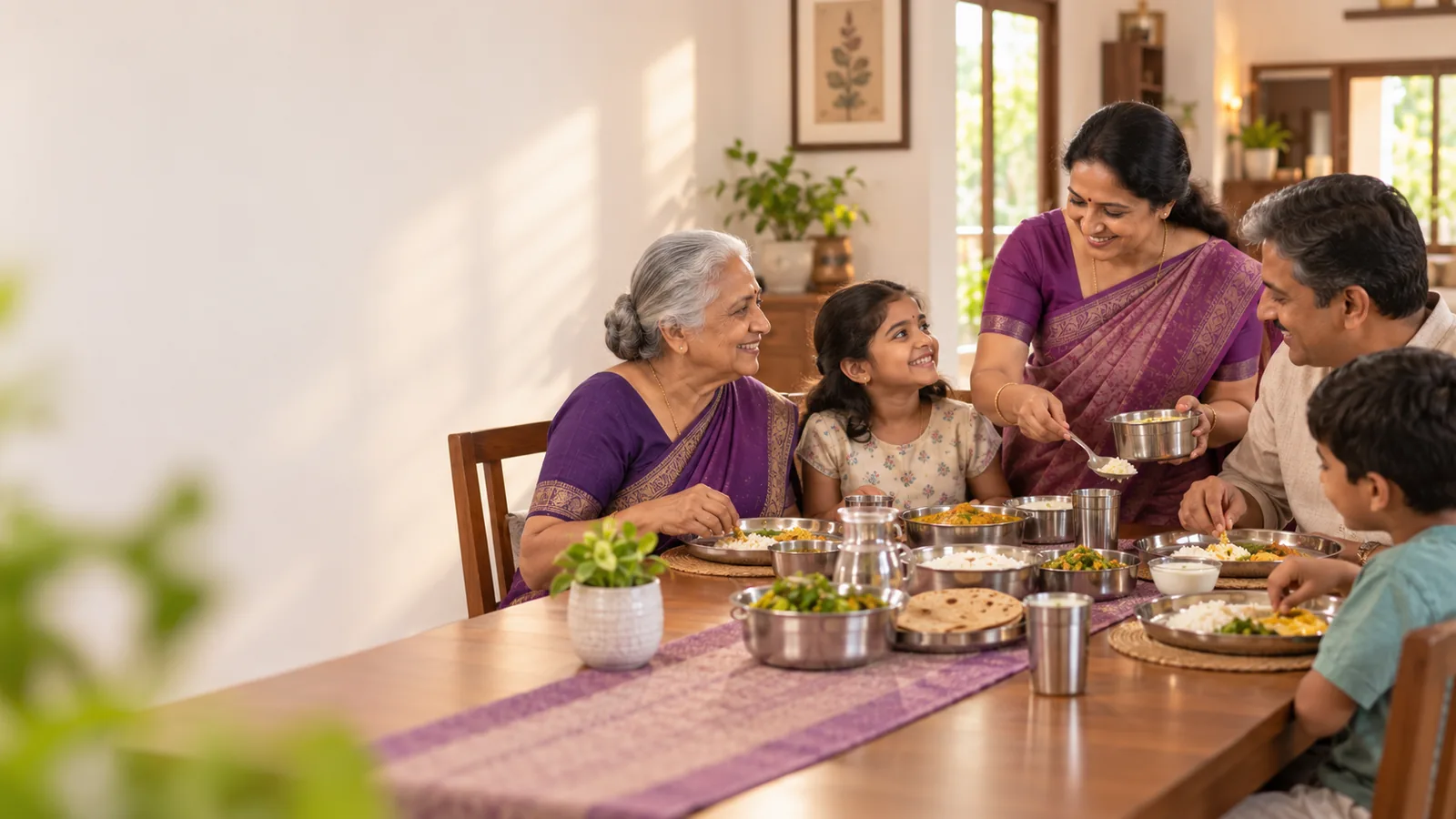
Most people on immunotherapy keep eating normal home food. There is no proven immunotherapy diet, and the restrictions are far fewer than with chemotherapy. This guide covers what is genuinely restricted, what helps you stay strong through treatment, and what to avoid — written for Indian kitchens, and for the family member usually doing the cooking.
Start here
Very few. Checkpoint inhibitors are antibodies, so no food is known to interfere with the drug itself. Most patients carry on with normal home cooking. The real restrictions are alcohol, raw or undercooked food while you are on steroids or your counts are low, and any supplement or herbal medicine your oncologist has not seen.
That is the biggest difference families notice moving from chemotherapy to immunotherapy. Chemotherapy often brings mouth ulcers, sharp taste changes and long lists of what not to eat. Immunotherapy usually does not. If you were braced for another set of rules, the reassurance is the point of this page.
Skip it around infusion days and keep it minimal otherwise. Liver enzymes are checked every cycle, and an unexplained rise can pause treatment.
On steroids, or with low blood counts, drop raw salads, street food, cut fruit sold in the open, runny eggs and unpasteurised milk.
Bring the actual packets to your next visit. Nothing will be dismissed — your team simply needs the ingredient list before the next cycle.
Those apply to some oral cancer tablets, not to a checkpoint-inhibitor infusion. If you take tablets too, ask about them separately.
Diabetes, kidney and heart-failure diets continue, and usually need review when steroids start, because steroids commonly push blood sugars up.
These five are the whole of the “raw and undercooked” rule, and they apply only in those higher-risk periods — not for the whole course.
Corticosteroids given for immune-related side effects commonly raise blood sugar, which is why a diabetic patient’s diet plan is often revised in the same week steroids start — before anything changes in the cancer treatment itself. (Source: ASCO and NCCN immune-related adverse event supportive-care guidance.)
What actually helps
Eat enough, eat protein, drink enough water. Those three things keep weight and strength steady, and weight loss is the practical problem that most often disrupts treatment. There is no special ingredient to hunt for. Ordinary Indian home food, eaten regularly, does the job.
| Goal | Everyday Indian choices | Why it matters during treatment |
|---|---|---|
| Protein at every meal | Dal, curd, paneer, eggs, fish, chicken, soya chunks, sprouted moong, peanut chikki | Helps hold on to muscle and body weight, which your team tracks at every review |
| Steady energy | Rice, roti, idli, dosa, upma, poha, potato, a little ghee or oil in cooking | Keeps intake up on low-appetite days, so you are not living on fluids alone |
| Fluids | Water through the day, buttermilk, thin dal, coconut water, clear soups, ORS if advised | Reduces fatigue and constipation, and makes cannulation on infusion day easier |
| Fruit and vegetables | Cooked seasonal vegetables, banana, papaya, guava, apple — peeled if counts are low | Supports normal bowel habit and general nutrition, as it would for anyone |
| Small, frequent meals | Five or six smaller plates instead of three large ones, timed to your best hours | Easier to finish on tired days, and less likely to trigger nausea |
General guidance for someone with no other dietary restriction — not a personal diet chart. Individual plans, especially with diabetes, kidney disease or difficulty swallowing, are made by a dietitian who has seen your reports.
Protein is the one thing worth counting, and it is the hardest to picture. This is an ordinary day’s worth across familiar dishes, not a special diet.
What to leave out
Beyond the alcohol and raw-food rules above, avoid undisclosed high-dose supplements, immunity drips given outside your treating centre, and any extreme diet. Extreme diets are the real risk here. Juice fasts, prolonged fasting and all-raw plans cause weight loss at exactly the point where weight loss matters most.
Doses far above food levels have not been studied properly alongside checkpoint inhibitors. Show your team the label rather than guessing.
They are not part of immunotherapy, are not monitored with it, and complicate the picture if a side effect appears.
Any plan whose main effect is weight loss works against you here. Discuss timing with your dietitian for later.
Banning rice or fruit because sugar is said to feed cancer is not supported by evidence, and the weight loss does real harm. Our page on anti-cancer superfoods and immune diets takes the common claims one at a time.
Many families here use Ayurvedic, Siddha, Unani or homeopathic preparations alongside hospital care, and that is understood. The request is disclosure, not abandonment: several preparations affect liver enzymes, and because those are checked before every cycle, an unexplained rise can pause treatment that did not need pausing. Bring the packets, and the two can be kept safe together.
Alongside your treatment
Our dietitians work alongside the oncology team, so food advice matches your treatment, your other conditions and what your family actually cooks.
The question underneath
No. Whether immunotherapy works depends on your cancer type, tumour biology and overall health — not on what was cooked at home. No diet has been shown to make a checkpoint inhibitor respond, and none has been shown to stop one working. Food supports you through treatment. It does not decide the outcome.
This is the fear we hear most often from spouses, usually phrased as a worry that one wrong meal ruined a cycle. It did not. Being released from that responsibility usually improves eating more than any recipe list does.
What the science says is narrower than the headlines. Early gut-microbiome research has linked fibre-rich eating with better responses in small studies, and observational data has linked broad-spectrum antibiotics around the start of treatment with poorer outcomes. None of it is strong enough for ASCO, ESMO or NCCN to recommend a diet as part of treatment. We set out what is known, and what is not, in does the gut microbiome affect immunotherapy response?
The practical takeaway on antibiotics is not to refuse one you need. It is to avoid leftover antibiotics from the medicine cupboard, and to tell your oncologist whenever another doctor prescribes one.
Through one cycle
Work with the rhythm of the cycle. Eat normally the day before, go in fed on infusion day, keep fluids up for the first 48 hours, and use the settled middle of the cycle to rebuild weight. Weigh yourself weekly and take the numbers to your review.
Eat as you normally would and drink water steadily. Nothing needs restricting, and arriving well hydrated makes cannulation easier.
Cycle length varies with the drug and the schedule your oncologist has chosen, so the shape of this plan is the useful part, not the exact dates.
Water is not the only one. Buttermilk, thin dal, coconut water and clear soups all count, and ORS goes in only if your team has advised it.
Oncology teams ask for a weekly home weight rather than a food diary, because unintentional weight loss is one of the practical reasons a treatment plan gets reviewed. A steady fall of two to three kilograms is worth reporting, even if you otherwise feel well. (Source: ESMO supportive and palliative care guidance on cancer-related nutrition.)
When eating is hard
Match the food to the symptom, and report the symptom the same day. Some of these are ordinary nuisances. Others, particularly loose motions, can be the first sign of an immune reaction that needs assessment rather than a change of menu.
| What you are noticing | What usually helps at home | When to call the team |
|---|---|---|
| Poor appetite | Smaller plates more often; eat at your best hour; add ghee or curd for calories without volume | Eating under half your usual amount for more than three days |
| Nausea | Dry, plain food early in the day, room-temperature meals, ginger in tea, no strong cooking smells | You cannot keep fluids down, or nausea starts newly late in treatment |
| Taste changes | Tamarind, lemon or curd for sharpness; cold food; wooden spoons if metal tastes odd | A dry or sore mouth makes swallowing painful |
| Loose motions | Sip water or ORS and keep food simple and low residue while you arrange a call | Same day, always. Urgently with six or more loose stools a day above normal, blood, fever or severe pain |
| Fatigue that stops you cooking | Batch-cook on a good day; keep curd rice, idli batter or khichdi ready; accept offered help | Fatigue is new or sudden, or comes with dizziness or breathlessness |
Smaller portions, more often, so the day's intake holds up even when your appetite does not. Time them to the hours when you eat best.
Loose motions are handled differently from an ordinary stomach upset, because they can be the first sign of immune colitis. Do not start an anti-diarrhoea tablet on your own. Call your team the same day on 1800 202 8726, and read low-residue Indian foods during immune colitis for what to eat while you wait.
Same-day answers
Bring the symptom, the packets and the week’s weights. A dietitian who has seen your reports can rework the plan in one sitting — and will tell you which symptoms need the oncology team the same day.
One helpline serves every CION centre, open 24/7. Immunotherapy at CION is given as day care in accredited partner centres.
Your questions
There is no long banned-food list for checkpoint-inhibitor immunotherapy. The drug is an antibody, so no food is known to block it. What is genuinely restricted is alcohol, raw or undercooked food while you are on steroids or your counts are low, and any supplement or herbal preparation your oncologist has not seen. Street food, cut fruit sold in the open, runny eggs and unpasteurised milk are the usual ones to drop in those periods. Everything else is normal home cooking.
Eat a normal, familiar breakfast before you leave home. Immunotherapy is given as day care, so you will usually be at the centre for a few hours, and going in on an empty stomach tends to make people feel worse. Carry water and something simple you already tolerate, such as idli, curd rice or a banana. Avoid a new dish or a heavy, oily meal that day, so any nausea afterwards is easier to interpret. There is no fasting requirement unless a scan is scheduled.
No diet has been shown to decide whether immunotherapy works. Response depends on your cancer type, tumour biology and overall health, not on what you cooked last week. Early gut-microbiome research has linked fibre-rich eating with better responses in small studies, but it is not strong enough for ASCO or ESMO to recommend a diet as treatment. That is good news for families: you can stop hunting for the right food and focus on holding weight and strength steady.
Most have not been formally studied alongside checkpoint inhibitors, so safety cannot be assumed either way. Some herbal preparations affect liver enzymes, and those enzymes are checked before every cycle, which means an unexplained rise can pause treatment unnecessarily. The request is disclosure, not abandonment. Bring the actual packets to your next visit so your oncologist can read the ingredients. Many families here use traditional systems alongside hospital care, and telling the team simply means the two can be kept safe together.
Ordinary protein supplementation is often reasonable if you cannot eat enough, but choose it with your dietitian rather than off a shelf, particularly if kidney function is being monitored. High-dose antioxidant vitamins and products sold for immunity are different: the doses are far above food levels and have not been studied properly with immunotherapy. The same applies to intravenous vitamin or immunity drips given outside your treating centre. Show your team the label, including doses, and let them decide what continues.
Loose motions during immunotherapy are not treated as an ordinary stomach upset. They can be the first sign of immune colitis, which needs same-day assessment rather than a home remedy. Call your oncology team the same day, and urgently if you have six or more loose stools a day above normal, blood in the stool, fever or severe abdominal pain. While you arrange that, sip water or oral rehydration solution and keep food simple. Do not start an anti-diarrhoea tablet on your own.
Still unsure
A 45-minute consultation covers diet, side effects and the questions family members are usually too polite to ask.
One helpline serves every CION centre, open 24/7 — 1800 202 8726.
Guidance on this page is general. A personal diet plan, especially alongside diabetes, kidney disease or difficulty swallowing, is made by a dietitian who has seen your reports.
Medical disclaimer: This page is for general information and awareness and does not replace a consultation with a qualified oncologist or dietitian. Nothing here is a personal diet chart, and no food or supplement described here treats cancer. Do not start, stop or change anything in your treatment or diet on the basis of this page — speak to your treating team about anything that worries you.