 Call Us

Nausea and Vomiting
What helps
What we do: medicine to prevent nausea and vomiting before each treatment, and more to take home. Tell us if you still feel sick.
First consultation free
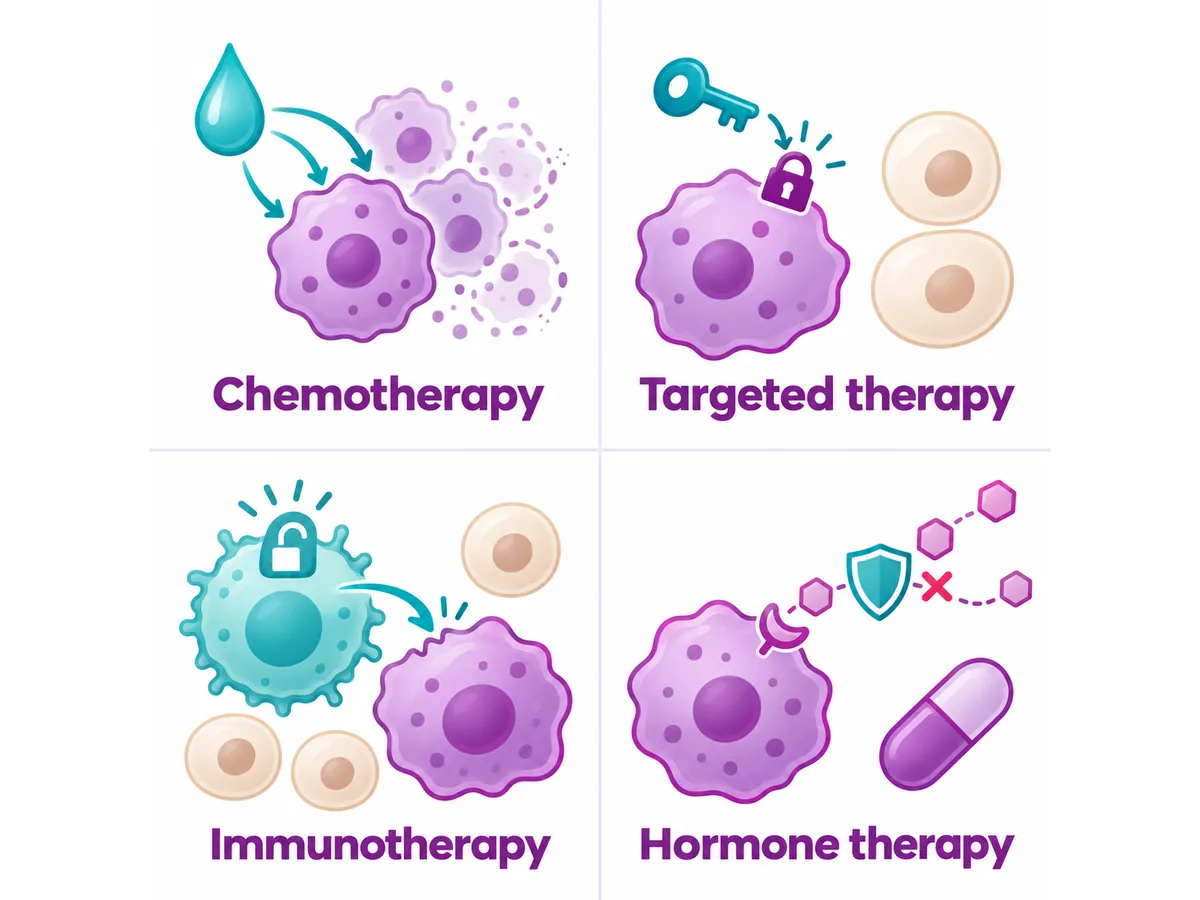
Medical oncology is cancer treatment with medicines: chemotherapy, targeted therapy, immunotherapy and hormone therapy. Your medical oncologist leads your care, from your first visit to follow-up.




 7 specialists
Your oncologist picks one or a mix, based on your cancer’s type and stage, tests on your biopsy and your general health. They’re often combined with surgery or radiation.
Tested before treated. Many targeted therapies and some immunotherapies work only if the cancer carries a particular marker, so your oncologist may first test your biopsy or blood for it (a biomarker test). The wait for results is part of choosing well. Source: US National Cancer Institute
| Medicine | What it does | How it’s given | Usually used for | Needed first |
|---|---|---|---|---|
 Chemotherapy | Kills or slows fast-growing cancer cells (and harms some healthy ones, which causes side effects) | Usually a drip; some are tablets |  Many cancers, before or after surgery, or to control spread | Blood tests before each cycle |
 Targeted Therapy | Blocks a specific target in cancer cells that helps them grow |  Tablets at home, or a drip |  Often cancers that test positive for a matching target | Usually a biomarker test on the biopsy or blood |
 Immunotherapy | Helps your immune system find and attack the cancer |  Usually a drip | Some cancers, often chosen by tests on the tumour | Often a biomarker test on the biopsy |
 Hormone TherapyHormone therapy in breast cancer | Lowers or blocks hormones that some cancers need to grow | Tablets or injections, often long-term | Hormone-sensitive cancers, such as many breast and prostate cancers | For breast cancer, a hormone-receptor test |
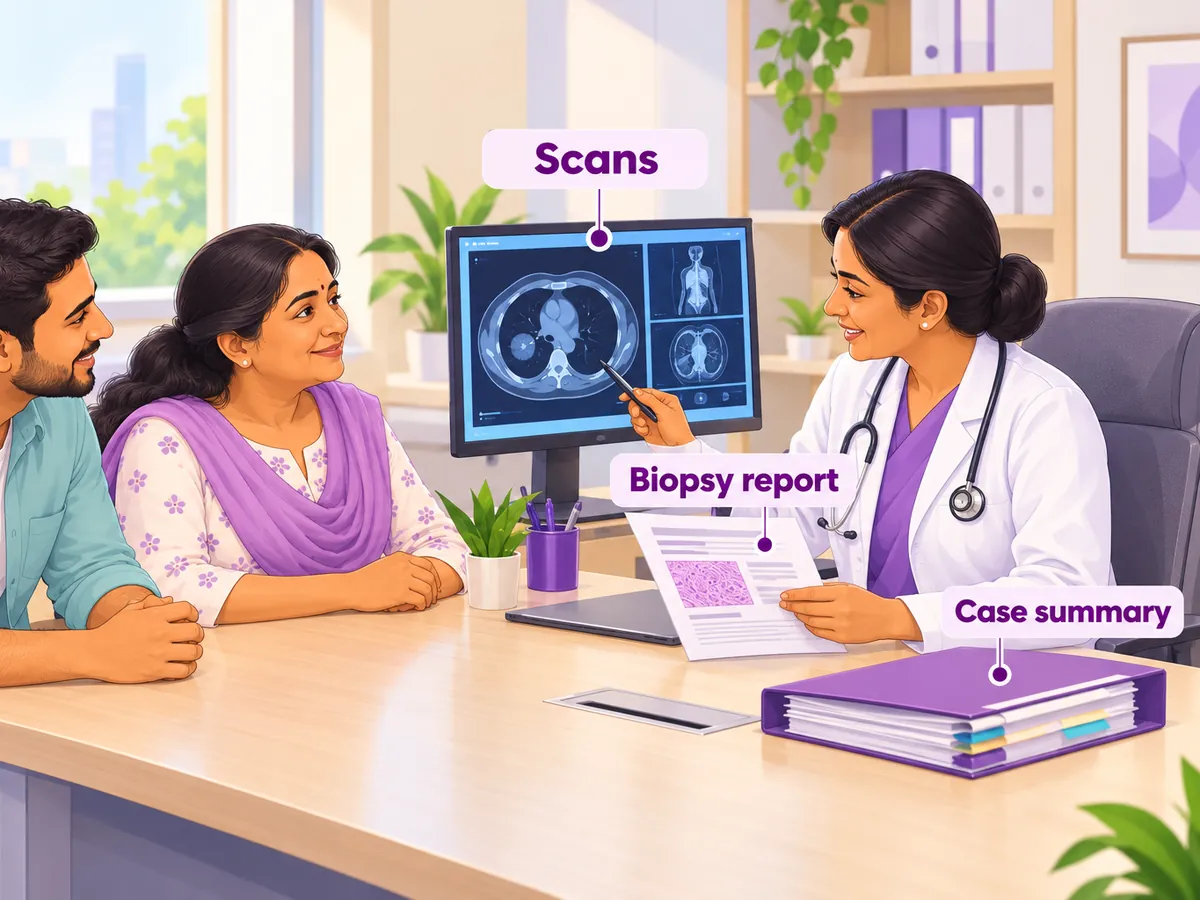
Bring all your reports. Your oncologist examines you and may order more tests, which are paid separately. Far away? Ask about a video consultation first.

Your oncologist presents your case to CION's medical, surgical and radiation oncologists and haematologist. You don't attend.

Which medicines, how many cycles and how often, with a written cost estimate before you start.
Treatment at your nearest CION centre. Regular check-ups follow, and your oncologist adjusts the plan if needed.
What Is a “Cycle”?
Chemotherapy is often given in cycles: treatment, then a rest period so healthy cells can recover.
An example of one cycle. Yours is in your written plan.Source: US National Cancer Institute
You arrive with your file; bring someone along if you can
Check-up and blood test to make sure you're ready
Medicine to prevent vomiting if your treatment needs it, before it starts
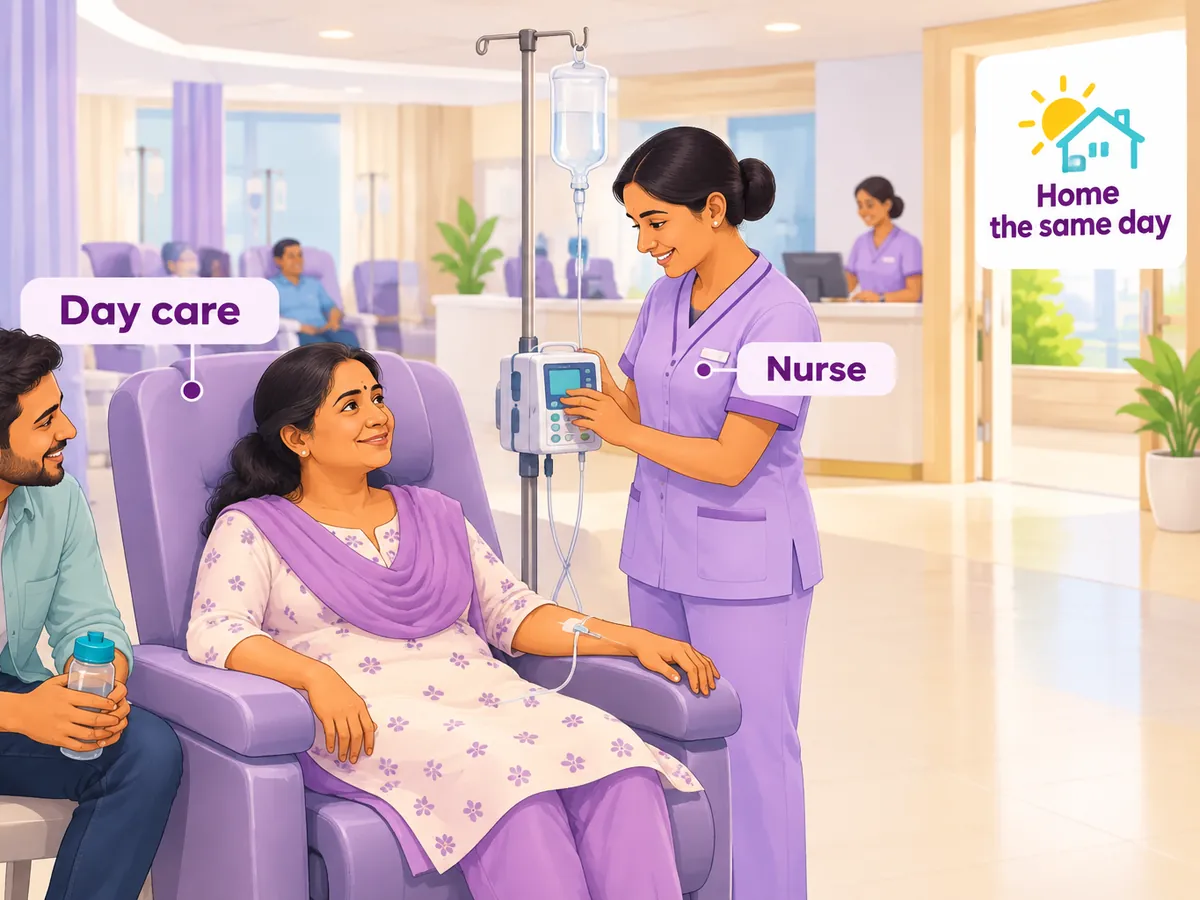
Your treatment through a drip, on a bed or chair, with a nurse watching
Home the same day with written instructions and your next date
They depend on your medicines, and they don't show whether treatment is working.
What we do: medicine to prevent nausea and vomiting before each treatment, and more to take home. Tell us if you still feel sick.

Common, and it often eases between cycles. Rest when you need to, stay gently active, and tell us if it gets worse.
What we do: a blood test before every cycle. Wash your hands often, avoid people who are unwell, and treat any fever as urgent.
Only with some medicines, and hair usually grows back after treatment. Your oncologist will tell you if yours cause it.

Use a soft toothbrush and plain-water rinses. Tell us early: sores and pain can be treated.

A rash, dry skin or sore nails. Use mild soap and moisturiser, avoid strong sun, and tell us early.
Inflammation of healthy organs, such as the gut, skin or lungs. Report new diarrhoea, a rash, a cough or breathlessness straight away.
Beyond medicines, ask us about diet advice, counselling, and genetic counselling if cancer runs in your family.
Why patients choose CION
Specialist care close to home, with every case at our tumour board.
Each holds a DM or DrNB in Medical Oncology: three years of super-specialty training after an MD or DNB.
Medical, surgical and radiation oncologists from all centres, and our haematologist, agree on your plan.
One doctor leads your care, with side-effect help, diet advice, counselling and family support.
Treatment near you, back home the same day, and video consultations if you live far away.
A written estimate before treatment, cashless insurance help and an EMI facility.
Treat cancer with medicines.
10+ years · MBBS, DNB (Internal Medicine), DM (Medical Oncology)
8+ years · MBBS (Gold Medal), DNB (General Medicine), DM (Medical Oncology) (Gold Medal)
8+ years · MBBS, MD (General Medicine), DM (Medical Oncology) (Adyar, Chennai), ECMO, MRCP SCE (UK)
8+ years · MBBS, MD (General Medicine), DrNB (Medical Oncology), ECMO, MRCP SCE (Medical Oncology) (UK)
10+ years · MBBS, DM (Medical Oncology), MD (Radiation Oncology)

7+ years · MBBS, DM (Medical Oncology), MD (Internal Medicine)
Treats leukaemia, lymphoma, myeloma and other blood disorders.

Dr. Basudev Pokhrel
10+ years · MBBS, MD (Immunohaematology & Blood Transfusion), Fellowship in Clinical Haematology (CMC Vellore)
Get Your Plan from One of These Specialists
Your first consultation at any CION centre is free.
Not sure? Call 1800 202 8726 and our care team will guide you.
Your checklist
Our care team will call you back to fix a time at your nearest CION centre.
35+ CION centres
Still unsure? Call 1800 202 8726.
Yes. Your first consultation with a medical oncologist is free at every CION centre. Tests, scans and medicines are paid for separately.
Mainly which medicines you need, how many cycles you have, and any tests or scans along the way. Your oncologist can work this out only after seeing your reports, so you get a written cost estimate before treatment starts.
Our team helps with the insurer or TPA paperwork for cashless treatment, so check your policy and bring your insurance card. If you'd like to spread the cost, CION has an EMI facility: ask the team for details.
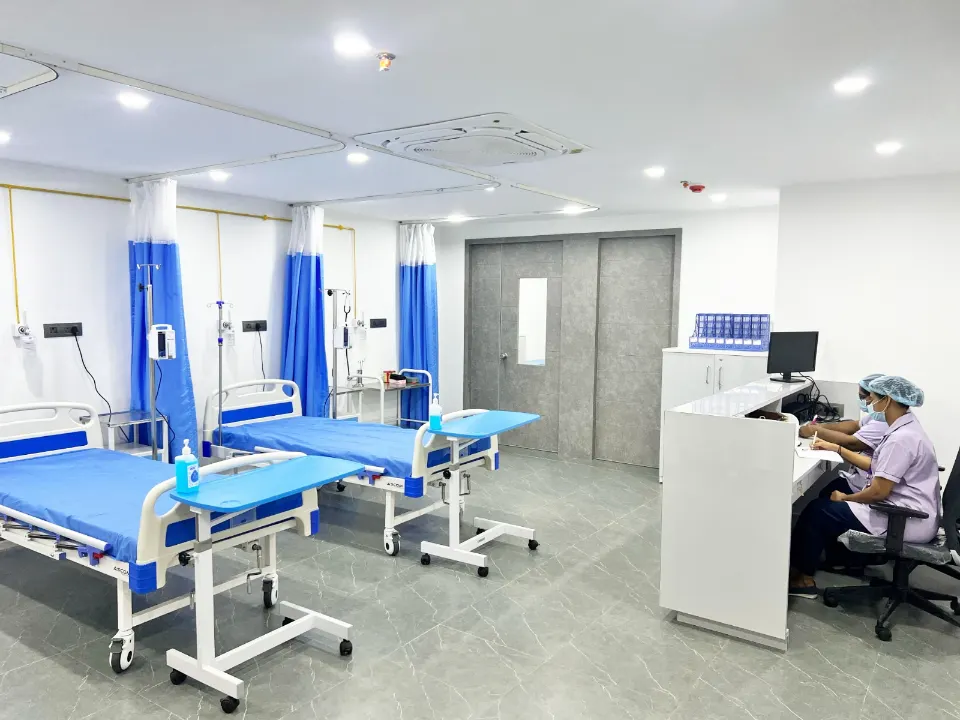
Usually not. Chemotherapy and other drips are given as day care at every CION centre, so you go home the same day. If a treatment ever needs a hospital stay, your oncologist will tell you before it starts.
It depends on the cancer, its stage and the medicines chosen. Some treatments are a set number of cycles; others, such as hormone tablets, continue for longer. Ask at your consultation: your written plan shows how long yours is expected to take.
A medical oncologist treats cancer with medicines. A surgical oncologist removes it with an operation, and a radiation oncologist treats it with carefully aimed radiation. Many people need more than one, which is why CION's tumour board brings them together.
Yes. Book a consultation and bring all your reports, scans and treatment details. Your CION oncologist reviews them and explains what they would advise. There's no commitment to start treatment at CION.
Lung, breast, head and neck, stomach and bowel, liver, prostate, kidney and gynaecological cancers, among others, and blood cancers with our haematologist. Our doctors speak Telugu, Hindi and English, and some also speak Tamil or Urdu.
Meet a CION medical oncologist and get a clear plan, with a written cost estimate, before treatment starts.
This page explains medical oncology at CION Cancer Clinics. It is general information, not medical advice. Your treatment plan is made only after a consultation and a review of your reports.
Follow Us:



 18002028726