 Call Us

Pain
What helps
Pain relief is planned for you. Take it as advised, and tell us if pain isn't controlled or gets worse.
First consultation free
Surgical oncology treats cancer with an operation: your surgeon removes the tumour and nearby tissue the cancer may have reached. It’s often combined with chemotherapy or radiation.




 7 surgical oncologists
| Type | What it aims to do | When it’s used | What to expect |
|---|---|---|---|
 Primary Surgery | Aims to remove all of the cancer, with a rim of healthy tissue around it | The cancer is in one place, not spread far |  Chemotherapy or radiation may follow, to lower the chance it comes back |
 Debulking Surgery | Removes as much of the tumour as is safe | Taking all of it out isn't possible or safe | Other treatment follows. Less tumour can also ease pain or a blockage |
 Palliative Surgery | Eases symptoms and helps you feel more comfortable |  A tumour causes pain, pressure or a blockage | Aims at comfort, not removing all the cancer |
 Reconstructive Surgery | Rebuilds shape and function after a tumour is removed | After a mastectomy (breast reconstruction) or mouth cancer surgery (jaw reconstruction) |  In the same operation or later. It can help you feel like yourself again |
 Open Surgery | 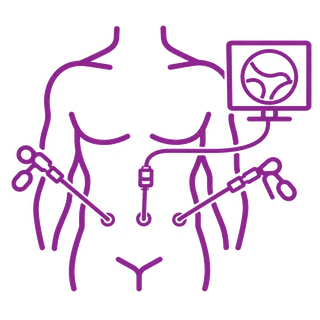 Keyhole (Laparoscopic) |  Robotic-Assisted | |
|---|---|---|---|
| How it’s done | One larger cut | A few small cuts and a camera | Keyhole, with robotic arms your surgeon controls |
 Recovery | Usually a longer stay | Usually quicker | Much like keyhole |
| Usually suits | Breast, head and neck, limbs; large tumours | Some belly and pelvis operations | Some of the same operations |
The right approach depends on the cancer, where it is and your health. Keyhole and robotic surgery may need to switch to open surgery if that’s safer. Robotic surgery is a kind of keyhole surgery, so it suits only some operations. Sources: US National Cancer Institute · American Cancer Society · Macmillan · NHS
Margins and lymph nodes. Your surgeon removes a rim of healthy tissue around the tumour and may take nearby lymph nodes. The lab report says if the edges are clear and if any nodes contain cancer, which guides further treatment. Source: US National Cancer Institute
69 cancer operations, grouped by the part of the body. Each one links to our plain-language guide: what happens, recovery and cost. Consultations and follow-up are at every CION centre; smaller procedures are done at selected centres and major surgery at a partner hospital.
With partner specialists, arranged by CION: Craniotomy · Skull base surgery · Spinal tumour surgery · Eye surgery · Ablation · TACE and TARE · Stents and drains. These are done by a neurosurgeon, an eye surgeon or an interventional radiologist; CION’s team plans and follows up your care.
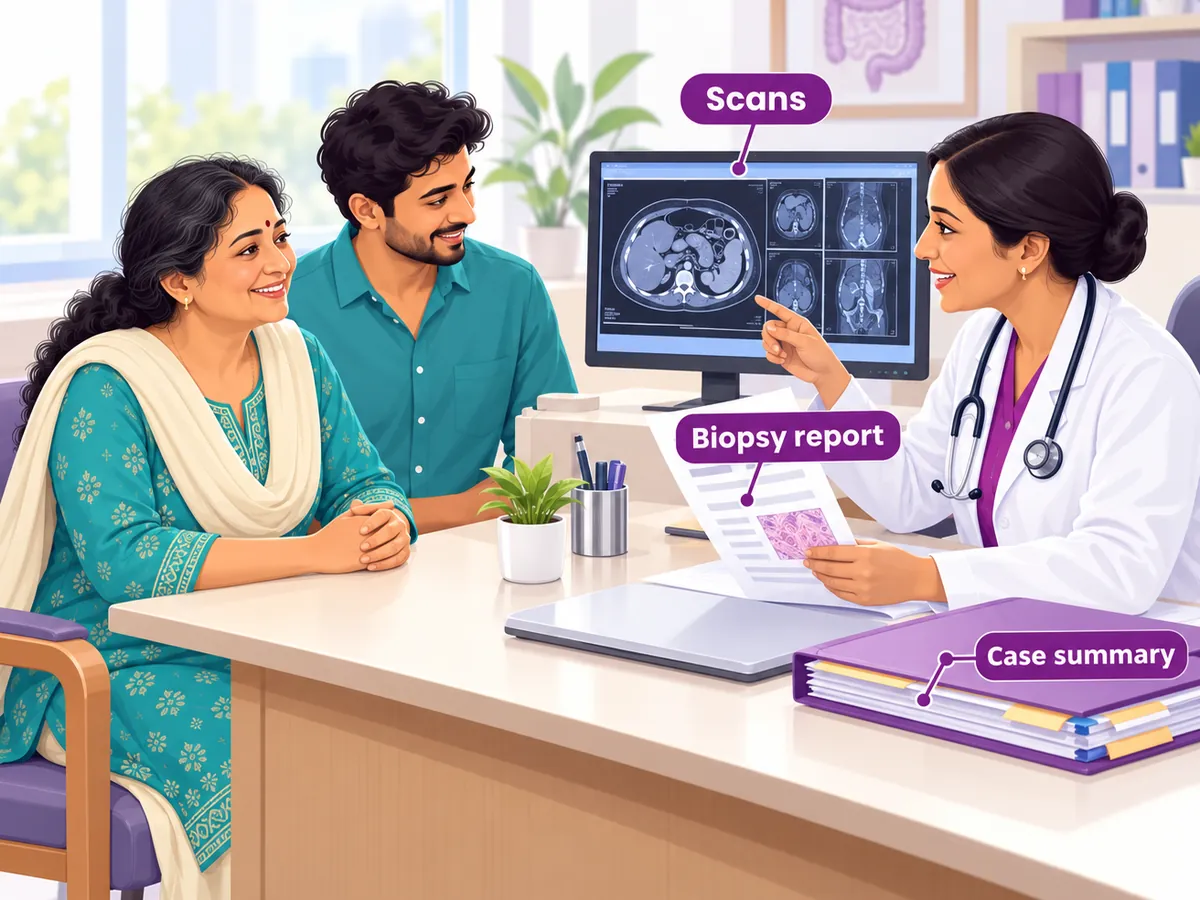
Bring your reports. Your surgeon may order more tests, including fitness checks for surgery, which are paid separately.

Your surgeon presents your case to CION's oncologists and haematologist. You don't attend.

Which operation, where, your expected hospital stay, and a written cost estimate.

Follow-up after your operation is at a CION centre near you.
Where Surgery Fits in Your Plan
Some people need surgery only. The tumour board agrees the order for you.
Book a free consultation to plan your surgerySource: Macmillan
Before: follow your surgeon's advice on fasting and on your usual medicines
On the day: check in and meet the anaesthetist, who looks after you during the operation
In hospital: you're helped to walk early, and you eat again step by step
Going home: once your team is happy with your recovery
Follow-up near home: your check‑up and your lab report, at a CION centre near you
Before you go home, make sure you know how to care for your wound and any drain, your medicines, what to eat, how active to be, your follow-up date, and when to go to hospital.
Pain relief is planned for you. Take it as advised, and tell us if pain isn't controlled or gets worse.

Common while you heal. Rest when you need to, take short walks every day, and build up slowly.

Keep the wound clean and dry as you're shown. If you go home with a drain, you or a family member are shown how to look after it.

Food comes back step by step, from sips to normal meals. Protein such as dal, eggs, paneer and curd helps healing. Tell us about constipation.

If nodes were removed, the arm or leg on that side can swell (lymphoedema). Gentle exercise and skin care help. Tell us early.

Gentle exercises, with a physiotherapist if you need one, bring back movement, for example in the shoulder after breast surgery.
Changes after surgery can be hard to live with. Ask about reconstruction, and about counselling and support.
Recovery differs for every operation; your surgeon tells you what to expect. Ask us about diet advice and counselling.
Why patients choose CION
Cancer surgery planned with our tumour board, and follow-up near home.
Each holds an M.Ch, DNB or DrNB in Surgical Oncology: three extra years of cancer-surgery training after an MS.
Surgical, medical and radiation oncologists from all centres, and our haematologist, agree on your plan.
Offered where they suit your cancer, alongside open surgery.
Consultations and follow-up near home, plus video consultations if you live far away.
A written estimate before surgery, cashless insurance help and an EMI facility.
Head of Surgical Oncology (HOD)
12+ years · MBBS, MS (General Surgery), M.Ch (Surgical Oncology)
20+ years · MBBS (AIIMS), MS (Surgery) (AIIMS), DNB (Surgical Oncology), MRCS (Edinburgh)
10+ years · MBBS, MS (General Surgery), M.Ch (Surgical Oncology)
8+ years · MBBS, MS (General Surgery), M.Ch (Surgical Oncology), FMAS, FARIS (ongoing)
7+ years · MBBS, MS (General Surgery), M.Ch (Surgical Oncology), FMAS

5+ years · MBBS, MS (General Surgery), DrNB (Surgical Oncology), FALS Oncology

10+ years · MBBS, MS (General Surgery), DrNB (Surgical Oncology)
Get Your Surgical Plan from One of These Surgeons
Your first consultation at any CION centre is free.
Not sure? Call 1800 202 8726 and our care team will guide you.
Your checklist
35+ CION centres
Still unsure? Call 1800 202 8726.
Yes. Your first consultation with a surgical oncologist is free at every CION centre. Tests, scans, the operation and the hospital stay are paid for separately.
Our team helps with the insurer or TPA paperwork for cashless treatment, so check your policy and bring your insurance card. If you'd like to spread the cost, CION has an EMI facility: ask the team for details.
It depends on the operation, the approach and how you recover. After keyhole surgery the stay is often shorter than after open surgery. Recovering fully at home takes longer: even after keyhole surgery, the NHS says it can take several weeks. Your written plan gives the expected stay for your operation.
It depends on the type of cancer, where it is, its size and your general health, so your surgeon decides after seeing your scans. If keyhole or robotic surgery suits you, they'll tell you which, and where it's done.
A surgical oncologist is a surgeon with extra years of training only in cancer surgery: removing a tumour with a rim of healthy tissue, checking nearby lymph nodes, and planning the operation alongside chemotherapy and radiation. Medical and radiation oncologists treat cancer with medicines and radiation, and a general surgeon operates on many conditions.
Mainly which operation you need, whether it's open, keyhole or robotic, where it's done and how long you stay in hospital, plus tests and the lab report. Your surgeon can work this out only after seeing your reports, so you get a written cost estimate before surgery.
Yes, including if you've been advised surgery at another hospital. Book a consultation and bring all your reports, scans and treatment details. Your CION surgeon reviews them and explains what they would advise. There's no commitment to start treatment at CION.
It depends on the operation. Smaller procedures are done at selected CION centres; major surgery is done at a partner hospital with the theatre, anaesthesia team and recovery beds it needs. Your surgeon tells you where before you decide, and your consultations and follow-up stay at a CION centre.
Meet a CION surgical oncologist and get a clear plan for your operation.
This page explains surgical oncology at CION Cancer Clinics. It is general information, not medical advice. Your treatment plan is made only after a consultation and a review of your reports.
Follow Us:



 18002028726