Call Us

Nutrition Support for Cancer Patients

CION’s oncology dietitian helps you eat well enough to keep your strength and weight through treatment, and to manage the side effects that make eating hard.

Talk to Our Care Team

Leave your number and our care team will call you back.

Do You Need a Dietitian Now?

Eating well matters all through treatment. Which of these apply to you now?

Quick check

Tick any that apply

Eating and Weight
Your Treatment and Health

If any of these apply, CION’s oncology dietitian can help you plan meals around them.

Book a diet consultation

Your answers stay on this page.

Why Act Early

  • It keeps you stronger. Eating well helps you keep your strength and cope with side effects.
  • Small problems are easier to fix. Weight loss and eating less are easier to put right when they’re spotted early.
  • Your plan changes with you. Your food plan can change as your treatment changes.

Keep a Simple Log at Home

  • Your weight, once a week
  • What you ate in one day
  • How much you drank

Bring it to your diet consultation. See what to bring

Sources: ESPEN · NCI Eating Hints · NCI · ACS

CION guide: What an oncology dietitian does, and when to ask for one

How Nutrition Counselling Works

  1. 1

    Your Nutrition Assessment

    CION’s oncology dietitian checks your weight, what you eat, your symptoms and your blood reports.

  2. 2

    Your Personal Food Plan

    A plan built on home-style Indian foods you like, fitted to your treatment with your oncologist.

  3. 3

    During Treatment

    Help with side effects as they come up, with follow-ups in person, by video or by phone.

  4. 4

    After Treatment

    Rebuilding your strength and getting back to your usual meals, at your own pace.

Sources: NCI · ESPEN

Eating Problems, and What Helps

Small changes at home often help. Open a problem to see what helps.

Nausea and Vomiting

What helps

Eat small, dry, plain foods every few hours, such as idli, plain dosa or rusk, and sip water, jeera water or ginger water between meals. Cool food smells less. Sit up after eating, and take your anti-nausea medicine on time.

Tell your team if vomiting is severe or lasts more than a day or two, or you can’t keep fluids down.

Sore Mouth

What helps

Choose soft, moist, lukewarm foods: idli soaked in dal, khichdi, upma, ragi java, mashed banana. Avoid spicy, sour, salty and crunchy foods, and rinse your mouth often with a mild rinse of salt and baking soda in water.

Tell your team if your mouth or gums are sore, or you see white patches or new sores.

Taste and Smell Changes

What helps

If food tastes of metal, try a plastic spoon. Lift bland food with lemon or mild spices if your mouth isn’t sore, and eat food cool if smells bother you. Try foods again after a few weeks, as tastes often come back.

Tell your team if you can’t eat for 2 days.

Poor Appetite

What helps

Eat by the clock, not by hunger: a small meal or snack every few hours. Make small portions count with ghee, peanut powder or paneer, choose milk over tea, and drink after meals rather than before. Worry and low mood can dull appetite too, so tell your team.

Tell your team if you can’t eat for 2 days.

Diarrhoea

What helps

Sip plenty of fluids: water, rice kanji, dal water, thin soups, coconut water. Eat small, soft meals such as rice with dal, khichdi, idli or banana, and go easy on fried, oily, very spicy and sugary food, and on milk if it makes things worse.

Tell your team if it lasts more than 24 hours, or comes with pain or cramps.

Constipation

What helps

Drink more, and warm drinks can help. Add fibre if your team allows, such as fruit you can peel, cooked vegetables, ragi or whole-wheat roti, and move a little each day, even a short walk.

Tell your team if you haven’t had a bowel movement for 2–3 days.

Dry Mouth or Trouble Swallowing

What helps

Moisten food with dal or a mild gravy that isn’t spicy or sour, and choose soft or mashed foods such as khichdi, upma or soft idli. Sit upright, take small bites and sip water often. If swallowing stays hard, your team can change the texture of your food.

Tell your team if you cough or choke when you eat or drink, or you can’t eat for 2 days.

Tiredness

What helps

Keep easy food ready: fruit, roasted chana and peanuts, boiled eggs, milk. Eat your biggest meal when you have most energy, and let family shop and cook. A ready snack beats skipping a meal.

Tell your team if you can’t eat for 2 days.

More than one of these? CION’s oncology dietitian can plan your meals around all of them.

Book a diet consultation

Sources: NCI Eating Hints · NCI

Eating Well with Indian Foods

During chemotherapy or radiation you may need more protein and energy than usual. Your home food is a good place to start.

  • Protein

    Dal, chana and rajma, eggs, paneer, milk, chicken or fish, soya, roasted nuts

    Have some at every meal, to keep your muscles strong.

  • Energy

    Rice, roti, idli and dosa, potatoes, bananas, a little ghee or oil

    Rice and roti are fine: you may need more energy than usual.

  • Fluids

    Water, coconut water, soups and dal water, milk

    Sip through the day. With kidney or heart problems, ask your team how much, and about coconut water.

Ask your team whether curd and buttermilk are okay while your blood counts are low.

Small meals, often. Five or six small meals or snacks a day are easier to manage than three big ones.

See an example dayAn example, not a prescription
Breakfast
Idli with sambar, or upma with a boiled egg
Mid-morning
A banana, or a glass of milk
Lunch
Rice, dal and a vegetable curry, with egg, fish, chicken or paneer
Evening
Roasted chana, or a besan chilla
Dinner
Roti or khichdi with dal and vegetables
Bedtime
A cup of warm milk

Your dietitian adjusts this to your treatment, your side effects, your blood sugar and any kidney problems.

Sources: NCI · NCI Eating Hints

CION guide: What to eat during chemotherapy: an Indian diet guide

Food Safety When Your Blood Counts Are Low

Treatment can lower the white cells that fight germs. CION’s approach is safe food handling, not a strict diet: follow any extra rules your team gives you.

Usually Fine

  • Hot, freshly cooked home food
  • Eggs, meat and fish cooked right through
  • Boiled or pasteurised milk
  • Boiled or filtered drinking water
  • Fruit you wash and peel yourself, such as banana or orange
  • Clean hands: wash before cooking and before eating

Ask Your Team First, or Avoid

  • Street food, chaat, and cut fruit or juice from stalls
  • Raw sprouts
  • Food left out for hours, and leftover rice
  • Runny eggs, or undercooked meat or fish
  • Unboiled or unpasteurised milk
  • Ask your team whether curd and buttermilk are okay while your blood counts are low.

Sources: ACS · NCI Eating Hints

Supplements, Kadhas and Myths

Show every supplement to your oncologist first. Vitamins, kadhas, herbal powders and Ayurvedic products can change how chemotherapy or radiation works, and some protein powders contain them. Spices in everyday cooking amounts are fine. And please don’t delay treatment to try an alternative first. Sources: MSK · MSK FAQ · ACS

Myth or Fact?

Sugar, fasting and other common food myths, answered

Myth“Sugar feeds cancer, so cut out all sweets.”

FactEvery cell in your body uses glucose (sugar), and your body makes its own. Cutting sugar out doesn’t starve cancer. Source: Cancer Research UK

Myth“Immunity boosters protect you during treatment.”

FactNo food or product boosts immunity against cancer. Some herbal products and high-dose vitamins can even make treatment work less well. Source: NCI Eating Hints · ACS · MSK

Myth“Fasting starves the tumour.”

FactGoing without food doesn’t starve cancer. It weakens you, and makes treatment harder to get through. Source: ESPEN · NCI

Myth“An alkaline diet clears cancer from the body.”

FactYour body keeps its acid balance steady whatever you eat. There’s no evidence this diet prevents or treats cancer. Source: Cancer Research UK · NCI Eating Hints

CION guides: Herbal and Ayurvedic products with chemotherapy · Diet claims: what the evidence shows

Why patients choose CION

Why Choose CION for Nutrition Support?

Food advice joined up with your cancer care.

  • Videoor phone
  • 24/7helpline
  • 35+centres
Book a diet consultation
  1. An Oncology Dietitian with Your Oncologist

    CION’s oncology dietitian works alongside your oncologist, so food advice fits your treatment.

  2. A Plan That Fits Your Treatment

    Your food plan follows the treatment plan your specialists agree together at CION’s tumour board.

  3. Home-Style Indian Food Plans

    Built on the dal, rice, roti and idli you already eat, not a printed diet chart.

  4. Help with Side Effects as They Happen

    Follow-ups in person, by video or by phone when eating gets hard.

  5. Support Before, During and After Treatment

    From the start of treatment to rebuilding your strength afterwards.

The Cancer Specialists You’ll Work With

CION’s oncology dietitian works with these 18 specialists.

Medical Oncologists 6

Treat cancer with medicines such as chemotherapy.

  • Dr. Naresh Gundu, Medical Oncologist

    Dr. Naresh Gundu

    Reviews CION’s guides on eating during chemotherapy

    10+ years · MBBS, DNB (Internal Medicine), DM (Medical Oncology)

    Centres: Ameerpet, Kompally
  • Dr. C. Raghavendra Reddy, Medical Oncologist

    Dr. C. Raghavendra Reddy

    8+ years · MBBS (Gold Medal), DNB (General Medicine), DM (Medical Oncology) (Gold Medal)

    Centres: Kukatpally
  • Dr. Bharati Devi Gorantla, Medical Oncologist

    Dr. Bharati Devi Gorantla

    8+ years · MBBS, MD (General Medicine), DM (Medical Oncology) (Adyar, Chennai), ECMO, MRCP SCE (UK)

    Centres: Vizag region
  • Dr. Owais Mohammed, Medical Oncologist

    Dr. Owais Mohammed

    8+ years · MBBS, MD (General Medicine), DrNB (Medical Oncology), ECMO, MRCP SCE (Medical Oncology) (UK)

    Centres: Masab Tank, Tolichowki, Banjara Hills
  • Dr. T. Raghavender Reddy, Medical Oncologist

    Dr. T. Raghavender Reddy

    10+ years · MBBS, DM (Medical Oncology), MD (Radiation Oncology)

    Centres: L.B. Nagar
  • Dr. N. Kiranmayee, Medical Oncologist

    Dr. N. Kiranmayee

    7+ years · MBBS, DM (Medical Oncology), MD (Internal Medicine)

    Centres: Ameerpet, Kompally

Radiation Oncologists 4

Treat cancer with carefully aimed radiation.

Surgical Oncologists 7

Decide whether an operation can remove the cancer, and when.

  • Dr. Mohammed Imaduddin, Head of Surgical Oncology

    Dr. Mohammed Imaduddin

    Head of Surgical Oncology

    12+ years · MBBS, MS (General Surgery), M.Ch (Surgical Oncology)

    Centres: Masab Tank, Tolichowki, Banjara Hills
  • Dr. Muralidhar Muddusetty, Surgical Oncologist

    Dr. Muralidhar Muddusetty

    20+ years · MBBS (AIIMS), MS (Surgery) (AIIMS), DNB (Surgical Oncology), MRCS (Edinburgh)

    Centres: All Hyderabad centres
  • Dr. Raghavendra Naik, Surgical Oncologist

    Dr. Raghavendra Naik

    10+ years · MBBS, MS (General Surgery), M.Ch (Surgical Oncology)

    Centres: Vizag region
  • Dr. Vinay Mamidala, Surgical Oncologist

    Dr. Vinay Mamidala

    8+ years · MBBS, MS (General Surgery), M.Ch (Surgical Oncology), FMAS, FARIS (ongoing)

    Centres: L.B. Nagar
  • Dr. Paila Gowri Naidu, Surgical Oncologist

    Dr. Paila Gowri Naidu

    7+ years · MBBS, MS (General Surgery), M.Ch (Surgical Oncology), FMAS

    Centres: Vizag region
  • Dr. Vajja Sandeep Kumar, Surgical Oncologist

    Dr. Vajja Sandeep Kumar

    5+ years · MBBS, MS (General Surgery), DrNB (Surgical Oncology), FALS Oncology

    Centres: Ameerpet, Kompally
  • Dr. Sridhar Kamani, Surgical Oncologist

    Dr. Sridhar Kamani

    10+ years · MBBS, MS (General Surgery), DrNB (Surgical Oncology)

    Centres: Kukatpally

Haematologist 1

Specialist in blood cancers and blood disorders.

  • Dr. Basudev Pokhrel, Haematologist

    Dr. Basudev Pokhrel

    Reviews CION’s guides on diet in blood cancers

    10+ years · MBBS, MD (Immunohaematology & Blood Transfusion), Fellowship in Clinical Haematology (CMC Vellore)

    Centres: All Hyderabad centres

Start with a Diet Consultation

Your dietitian and oncologist plan your food around your treatment.

Book consultation

Before Your Visit

When to See the Dietitian

  • When treatment starts, even if you’re eating well
  • Before an operation on the mouth, throat, food pipe, stomach or bowel
  • Whenever a side effect makes eating hard
  • After treatment, to rebuild your strength

Ask your oncologist, or call us to book.

Your checklist

What to Bring

  • A one-day food log: what you ate and drank yesterday
  • Your recent weight, if you know it
  • All your supplements and kadhas, or photos of their labels
  • Your medicine list
  • Recent reports, including blood tests

If someone cooks for you, bring them along.

Questions to Ask

  • How much protein do I need, and from which foods?
  • Which foods should I avoid during my treatment?
  • Are curd and buttermilk okay for me right now?
  • Can I keep taking my supplements or kadha?
  • What should I do on days I can’t eat?

Book Your Diet Consultation

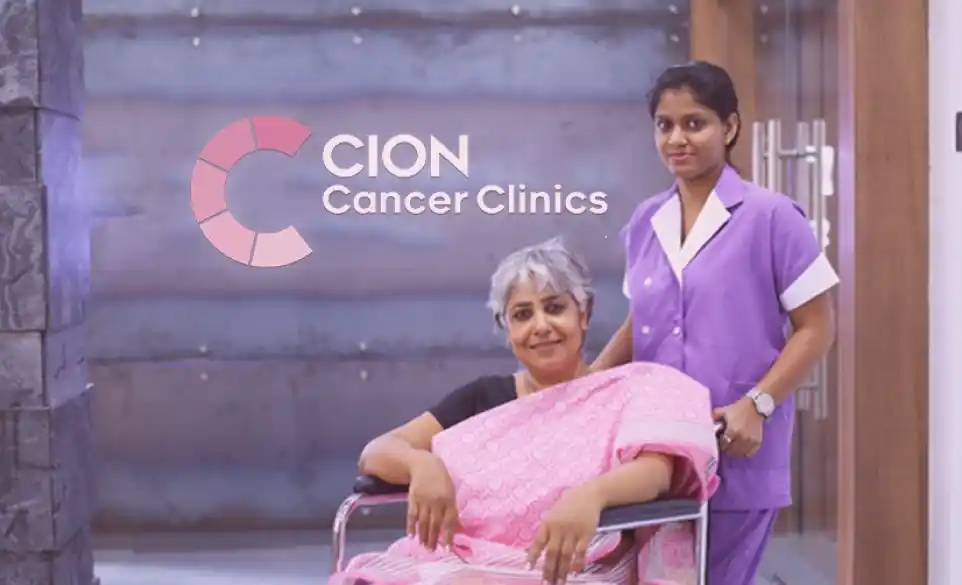
A CION nurse in a lavender uniform beside a smiling patient in a wheelchair, in front of the CION Cancer Clinics logo
A CION nurse with a patient

Prefer to talk now? Call 1800 202 8726. Privacy policy

Visiting CION

Timings
Monday to Saturday, 10:00 AM – 6:00 PM
Helpline
1800 202 8726, answered any time, day or night
Video or phone
For follow-up diet sessions, or if you live far from a centre. Ask when you call.

35+ CION centres

Telangana districts
  • Karimnagar
  • Kamareddy
  • Mahabubnagar
  • Medak
  • Nalgonda
  • Miryalaguda
  • Nizamabad
  • Rajanna Sircilla
  • Ranga Reddy
  • Shadnagar
  • Husnabad
  • Siddipet
  • Gajwel
  • Zaheerabad
  • Sadashivpet
  • Sangareddy
  • Suryapet
  • Tandur
  • Vikarabad
  • Pargi
Andhra Pradesh
  • Srikakulam
  • Razam
  • Vizianagaram
  • Bobbili
  • S Kota
  • Chodavaram
  • Ram Nagar
  • Madhurwada
  • Maharani Peta

Common Questions

Still unsure? Call 1800 202 8726.

1What should I eat during chemotherapy?

Small, frequent meals of home food you enjoy, with some protein at every meal, such as dal, eggs, paneer, milk, chicken or fish. Rice and roti are fine. Drink plenty through the day unless your team limits fluids, and follow the food-safety tips while your blood counts are low. Your dietitian fits this to your treatment.

2Can I take protein powder or nutrition drinks?

Often yes, if your dietitian suggests one: a nutrition drink can help on days you can’t eat enough. Check with your team before you buy any powder or drink, and show them the label, because some contain herbs or high-dose vitamins that can affect treatment.

3Is outside or restaurant food okay?

While your blood counts are low, hot, freshly cooked home food is safest; skip street food, chaat and cut fruit from stalls. At other times, choose food that is cooked fresh and served hot, and ask your team if you’re not sure.

4What if I can’t eat at all?

Keep sipping fluids, and tell your team if you can’t eat for 2 days, or as soon as you can’t keep fluids down. Anti-nausea medicine, softer foods and nutrition drinks often help. If eating stays too low, a feeding tube can give liquid food for a while, through the nose or into the stomach, and some people still eat a little by mouth alongside it if their doctor agrees.

5I have diabetes. What should I eat during treatment?

Don’t skip meals to control your sugar. Some treatments, such as steroids given with chemotherapy, can raise it, so your dietitian plans regular meals that keep it steady and your doctors may adjust your diabetes medicines. Keep checking your sugar as advised, and if you can’t eat, ask your team what to do about your diabetes medicines.

6How can my family help?

Offer small portions often, without pressure, and keep easy foods ready. If cooking smells make you feel sick, cook in another room with the windows open. Bring the person who cooks to the dietitian visit, and remember that some days will be better than others.

7Can I consult the dietitian by video or phone?

Yes. Diet sessions can be by video or phone, especially follow-ups, which helps if you live outside Hyderabad or find travel hard. Ask when you book.

8I’m being treated at another hospital. Can I still see CION’s dietitian?

Yes. Bring your treatment plan, recent reports and medicine list. CION’s oncology dietitian and oncologist go through them with you, and there’s no commitment to move your treatment to CION.

Eating Well Starts with a Conversation

Tell CION’s oncology dietitian what makes eating hard, and get a plan that fits your treatment.

This page explains nutrition support at CION Cancer Clinics. It is general information, not medical advice: your dietitian and doctors fit food advice to your treatment and your blood counts.

CallBook consultation