NCCN-protocol care · 96.9% 1-yr breast cancer survival · ArogyaSri, CGHS & cashless insurance accepted · Free second opinion
1800 202 8726
Diagnosis & Tests — A CION Patient Guide

FNAC for a thyroid nodule — procedure & what to expect

Told you need an FNAC for a thyroid nodule and unsure what it involves? Here is the calm, plain version. FNAC — fine-needle aspiration cytology — is a quick thyroid biopsy procedure that uses a very thin needle to sample a nodule, so a pathologist can tell whether it is benign or cancerous. This guide explains the needle test step by step, whether it is painful, how long it takes, and exactly what your result means.

  • A few minutes, walk-in walk-out — outpatient, no admission, no anaesthesia needed
  • Less painful than expected — the needle is finer than a blood-test needle
  • The definitive test — most often avoids surgery just to reach a diagnosis
  • Most results are benign — the test brings certainty, not bad news by default
4.8 · 800+ Google reviews · 15,000+ patients treated
Limited Slots Today

Book Your Thyroid Biopsy & Review

₹950   Today: FREE  ·  Free written second opinion

Free 45-minute oncology consultation
Ultrasound-guided FNAC under one roof
Confidential. No commitment to start treatment.
or
Call us
17+
Cancer Specialists
on Panel
96.9%
Breast Cancer
Survival Rate*
15,000+
Patients
Treated
4.8★
Google Rating
(800+ reviews)

What Is an FNAC, and Why Has It Been Advised?

If you have been told a thyroid nodule needs an FNAC, it is natural to feel uneasy about a needle near your neck. So let's start with the most reassuring fact: an FNAC is a quick, simple test — and the most common result by far is benign.

FNAC stands for fine-needle aspiration cytology. It is a needle test for the thyroid in which a very thin needle takes a tiny sample of cells from a nodule. A pathologist then examines those cells under a microscope to tell whether the nodule is benign, suspicious, or cancerous. It is the definitive way to find out what a thyroid nodule actually is — and it usually means you do not need surgery simply to get an answer.

An FNAC is advised when a nodule has features on ultrasound that make sampling worthwhile — its size, shape, or appearance. It is a precaution to gain certainty, not a diagnosis in itself. Thyroid nodules are extremely common, the great majority are not cancer, and an FNAC is simply the careful, evidence-based way to confirm that.

Did You Know? The needle used for a thyroid FNAC is finer than the needle used for a routine blood test. That is why most people find the procedure far less uncomfortable than they expect, and why no stitch, scar, or recovery period is needed. (Source: NCCN thyroid guidance.)

The FNAC Thyroid Biopsy Procedure — Step by Step

Knowing exactly what happens removes most of the worry. Here is the whole thyroid biopsy procedure, from sitting down to walking out.

1

You lie back with your neck gently extended

You rest comfortably on a couch with a small pillow under your shoulders so your neck is slightly tilted back. This brings the thyroid forward and makes the nodule easy to reach. No gown change or fasting is needed for most people.

2

The skin is cleaned and the nodule is located on ultrasound

The skin over your neck is wiped with antiseptic. In most cases the doctor uses live ultrasound to see the nodule on screen and guide the needle to exactly the right spot — this is what makes the sample reliable, especially for small or deep nodules.

3

A very thin needle takes the sample

A fine needle — thinner than a blood-test needle — is passed briefly into the nodule to draw up a small sample of cells. You may feel a short sting or pressure. Two to four quick passes are usually taken to make sure there are enough cells for a clear answer.

4

Light pressure is applied, and you are done

The needle is removed and gentle pressure is held over the site for a minute or two to prevent bruising. There is no stitch and no dressing beyond a small plaster. The sampling itself takes only a few minutes; the whole visit is usually 15 to 30 minutes.

5

The cells go to the pathologist

The sample is smeared on slides and examined under a microscope by a pathologist. The result is reported using the standard Bethesda system, usually within a few days, and your specialist explains exactly what it means and what — if anything — happens next.

Is the Needle Test Painful? What to Expect on the Day

The question almost everyone asks is the same: is FNAC painful? The honest answer is that most people find it far gentler than they feared. Because the needle is so fine, the sensation is usually a brief sting or a feeling of pressure as each sample is taken — each pass lasting only a few seconds.

A local anaesthetic is sometimes used, though many patients do not need it because the needle is finer than the one used to give the injection itself. You stay awake throughout and can talk to the doctor; you will simply be asked not to swallow or cough at the moment the needle is in.

Afterwards, mild soreness or a small bruise at the site is normal and settles within a day or two. You can eat, drive, and return to your usual day straight away — there is no recovery ward and no time off needed. Many patients say the anticipation was worse than the test.

One thing to mention beforehand: tell your doctor if you take any blood-thinning medication, such as aspirin, clopidogrel, or warfarin, as this may need a quick review before the test.

Need an FNAC for a Thyroid Nodule? Talk to a Specialist

Same-week ultrasound-guided biopsy and review across CION's Hyderabad locations. Free first consultation, free written second opinion.

or
Call us

By submitting, you consent to be contacted by CION about your enquiry.

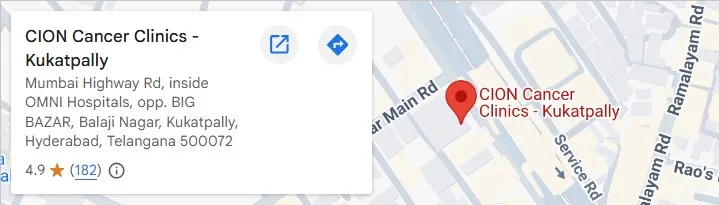
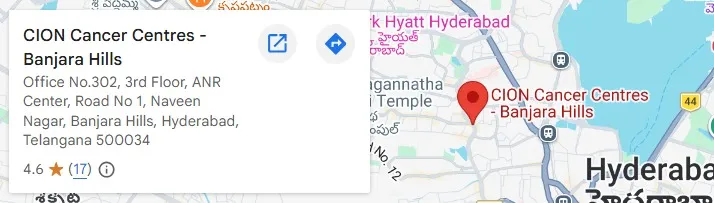
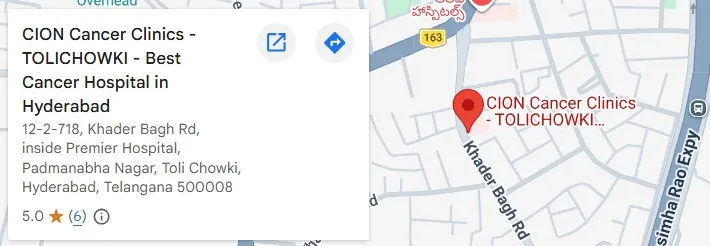
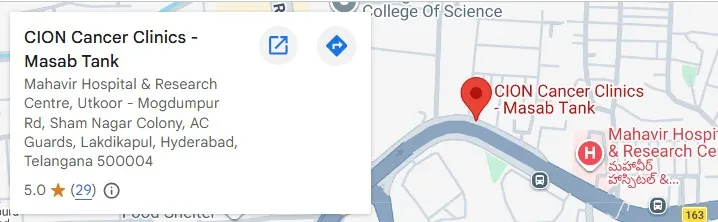
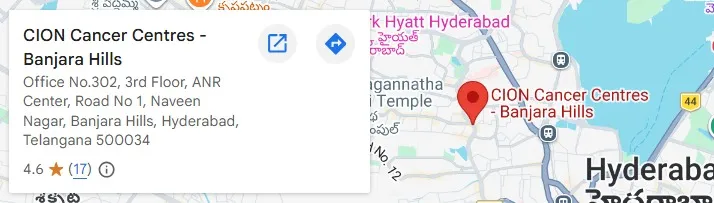
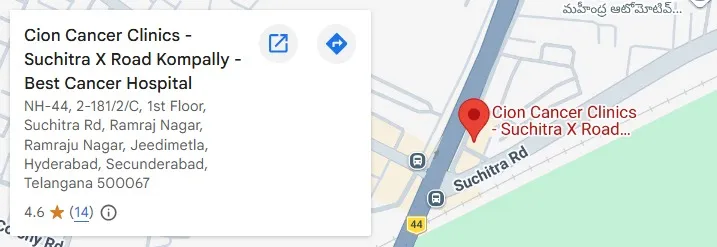
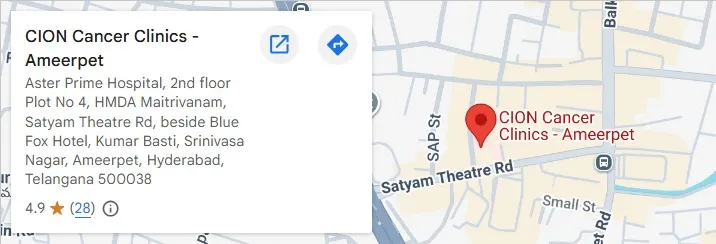
12+ Centres in Hyderabad · Pick yours

CION cancer care is closer than you think.

We're never more than 30 minutes away. Same panel of specialists at every centre. Same tumour board reviews. Same NCCN protocols. Pick the closest one and call directly — or let us pick for you.

Not sure which centre fits best? Tell us where you are — we'll suggest the closest one with the right specialists.

Help me pick the right centre
Meet the Specialists

17+ senior cancer specialists. One panel for your case.

Trained at AIIMS, Tata Memorial, and leading international centres. Combined 150+ years of experience. Every complex case is reviewed by 3+ of them — together.


Dr. Naresh Gundu
Medical Oncologist

Dr. Naresh Gundu

MBBS, DNB (Internal Medicine), DM (Medical Oncology)

View Profile
Dr. C. Raghavendra Reddy
Medical Oncologist

Dr. C. Raghavendra Reddy

MBBS(Gold Medal), DNB(General Medicine), DM(Medical Oncology)(Gold Medal)

View Profile
Dr. Bharati Devi Gorantla
Medical Oncologist

Dr. Bharati Devi Gorantla

MBBS, MD(General Medicine), DM(Medical Oncology)(Adyar,Chennai), ECMO, MRCP SCE(UK)

View Profile
Dr. Owais Mohammed
Medical Oncologist

Dr. Owais Mohammed

MBBS, MD (General Medicine), DrNB (Medical Oncology), ECMO, MRCP SCE (Medical Oncology) (UK)

View Profile
Dr. T. Raghavender Reddy
Medical Oncologist

Dr. T. Raghavender Reddy

MBBS, DM (Medical Oncology), MD (Radiation Oncology)

View Profile
Dr. N. Kiranmayee
Medical Oncologist

Dr. N. Kiranmayee

MBBS, DM (Medical Oncology), MD (Internal Medicine)

View Profile
Dr. Muralidhar Muddusetty
Surgical Oncologist

Dr. Muralidhar Muddusetty

MBBS (AIIMS), MS (Surgery) (AIIMS), DNB (Surgical Oncology), MRCS (Edinburgh)

View Profile
Dr. Raghavendra Naik
Surgical Oncologist

Dr. Raghavendra Naik

MBBS, MS (General Surgery), M.Ch (Surgical Oncology)

View Profile
Dr. Mohammed  Imaduddin
Surgical Oncologist

Dr. Mohammed Imaduddin

M.B.B.S, MS (General Surgery), M.Ch (Surgical Oncology)

View Profile
Dr. Vinay Mamidala
Surgical Oncologist

Dr. Vinay Mamidala

MBBS, MS(General Surgery), M.Ch(Surgical Oncology), FMAS, FARIS(Ongoing)

View Profile
Dr. Paila Gowri Naidu
Surgical Oncologist

Dr. Paila Gowri Naidu

MBBS, MS (General Surgery), M.Ch (Surgical Oncology), FMAS

View Profile
Dr. Venkata Sushma P
Radiation Oncologist

Dr. Venkata Sushma P

MBBS, MD (Radiation Oncology)

View Profile
Dr. Kirti Ranjan Mohanty
Radiation Oncologist

Dr. Kirti Ranjan Mohanty

MBBS, MD (Radiation Oncology)

View Profile
Dr. Gangadhar Vajrala
Radiation Oncologist

Dr. Gangadhar Vajrala

MBBS, MD (Radiation Oncology), MPH

View Profile
Dr. Basudev Pokhrel
Hematologist

Dr. Basudev Pokhrel

MBBS, M.D (Immunohematology & Blood Transfusion)

View Profile
Dr. Mohammed Imran
Interventional Radiologist

Dr. Mohammed Imran

View Profile
Dr. Vajja Sandeep Kumar
Surgical Oncologist

Dr. Vajja Sandeep Kumar

MBBS, MS (General Surgery), DrNB (Surgical Oncology), FALS Oncology

View Profile
Dr. Sridhar Kamani
Surgical Oncologist

Dr. Sridhar Kamani

MBBS, MS (General Surgery), DrNB (Surgical Oncology)

View Profile

Want a specific doctor for your case? Mention them when booking.

Book Free Consultation

A Thyroid Nodule Deserves a Clear Answer — Not Months of Worry

CION's surgical and medical oncologists perform ultrasound-guided FNAC so you get certainty quickly — whether the news is reassuring or needs action.

Understanding Your FNAC Result — The Bethesda Categories

Thyroid FNAC results are reported using a worldwide standard called the Bethesda system, which sorts the findings into six categories. It sounds technical, but it simply describes how clear-cut the cells are — from clearly benign to clearly cancerous. Your specialist will tell you which category your result falls into and what it means for you.

Bethesda Category What It Means Typical Next Step
I — Non-diagnostic Not enough cells for a clear answer, often with a cystic nodule Usually a repeat FNAC, often under ultrasound guidance
II — Benign The most common and most reassuring result — not cancer Routine monitoring; no treatment usually needed
III — Indeterminate (AUS/FLUS) Cells are not clearly benign or cancerous Repeat FNAC, molecular testing, or close follow-up
IV — Follicular neoplasm Cells suggest a follicular pattern needing closer study Molecular testing or a diagnostic surgery may be discussed
V — Suspicious for malignancy Features point towards cancer but are not fully confirmed Specialist review and surgical planning
VI — Malignant Cancer is confirmed on the sample Multidisciplinary tumour board and a tailored treatment plan

By far the most common result is Bethesda II — benign. An indeterminate or non-diagnostic result does not mean cancer; it simply means more information is needed, and your doctor will choose the safest next step rather than rushing to surgery.

Did You Know? When thyroid cancer is confirmed, the outlook is genuinely reassuring — papillary thyroid cancer, the most common type, has a five-year survival rate of over 99% at early stages, making it one of the most treatable cancers in all of oncology. (Source: NCCN guidance; ICMR–NCRP.)

Get Your Ultrasound-Guided FNAC & Specialist Review

Book your thyroid biopsy at the CION centre nearest you — scan, sample, and review under one roof. Free consultation, no commitment to treatment.

or
Call us

After the Test — Recovery, Risks, and Getting Your Result

Afterwards, you can return to normal life the same day. Most people drive themselves home and go straight back to work or errands. Mild tenderness, a small bruise, or slight soreness at the site is normal and eases within a day or two — a simple paracetamol is more than enough if you need anything at all.

Risks are few. FNAC is a very safe procedure because only a fine needle is used — there is no cut, no stitch, and no scar. Serious complications are rare. Occasionally a little bleeding can cause temporary swelling, which is why gentle pressure is held over the site afterwards. Let the clinic know if you notice increasing swelling, significant pain, or any difficulty breathing, but these are uncommon.

Your result is usually ready within a few days and is reported using the Bethesda system above. Your specialist will talk you through it in plain language — what category it falls into, what it means, and whether anything needs to happen next. For most people that conversation is a reassuring one.

Whichever way the result goes, the value of the FNAC is the same: certainty. You replace not-knowing with a clear answer and, if anything is needed, a clear plan.

Why Have Your Thyroid FNAC at CION

A nodule deserves an unrushed, expert answer — with everything you need in one place.

Ultrasound-guided FNAC under one roof

Scan, sample, and review in one visit — no running between centres

45-minute detailed consultation

No rushed decisions — time to explain what your result means

Multidisciplinary tumour board

Every cancer case reviewed by a team, not one doctor

No unnecessary tests, ever

A stepwise pathway — a biopsy only when the ultrasound warrants it

Free first consultation

For all cancer patients, plus a free written second opinion

35+ centres across Telangana & AP

Care close to home — never more than 30 minutes away

From our patients

Hear From People Who Have Walked This Path

Real stories from patients treated at CION — from the first nodule to peace of mind.

Real Stories. Real Voices.

15,000+ patients chose CION. Hear from them directly.

These aren't paid endorsements or written reviews. These are video testimonials from real patients and families — recorded on their own phones, in their own words. Pick any one. Watch it. Then decide.


4.8★800+ Google reviews
50+video testimonials
15,000+patients treated
Successful Chemotherapy Done by Dr. C Raghavendra Reddy

Successful Chemotherapy Done by Dr. C Raghavendra Reddy

Watch video →
Surgery, Chemo & Radiation Done by  Dr. Imaduddin, Dr. Vinay, Dr. Owais, Dr. Kirti

Surgery, Chemo & Radiation Done by Dr. Imaduddin, Dr. Vinay, Dr. Owais, Dr. Kirti

Watch video →
 Successful Radical Thymectomy Done by  Dr. Mohammed Imaduddin & Dr. Vinay Mamidala

Successful Radical Thymectomy Done by Dr. Mohammed Imaduddin & Dr. Vinay Mamidala

Watch video →
Successful Surgery Done  by Dr. Rajender Byshetty

Successful Surgery Done by Dr. Rajender Byshetty

Watch video →
Successful Chemo & Surgery Done by  Dr. Imad, Dr. Vinay, Dr. Owais & Dr. Raghavendra

Successful Chemo & Surgery Done by Dr. Imad, Dr. Vinay, Dr. Owais & Dr. Raghavendra

Watch video →
Successful Chemo & Surgery Done by  Dr. Imad, Dr. Vinay, Dr. Owais & Dr. Raghavendra

Successful Chemo & Surgery Done by Dr. Imad, Dr. Vinay, Dr. Owais & Dr. Raghavendra

Watch video →
Successful Chemo & Radiation Done by Dr. Owais Mohammed & Dr. Kirti Ranjan Mohanty

Successful Chemo & Radiation Done by Dr. Owais Mohammed & Dr. Kirti Ranjan Mohanty

Watch video →
Successful Breast Cancer Surgery Done by Dr. Imaduddin Mohammed & Dr. Vinay Mamidala

Successful Breast Cancer Surgery Done by Dr. Imaduddin Mohammed & Dr. Vinay Mamidala

Watch video →
Successful Chemotherapy Done by Dr. Bharati Devi Gorantla

Successful Chemotherapy Done by Dr. Bharati Devi Gorantla

Watch video →
Successful Chemo & Surgery Done by Dr. Owais Mohammed & Dr. Imaduddin Mohammed

Successful Chemo & Surgery Done by Dr. Owais Mohammed & Dr. Imaduddin Mohammed

Watch video →
Successful Chemotherapy Done by Dr. Gundu Naresh

Successful Chemotherapy Done by Dr. Gundu Naresh

Watch video →
Successful Bone Marrow Transplantation - Neuroblastoma

Successful Bone Marrow Transplantation - Neuroblastoma

Watch video →
Successful Surgery & Chemo - Carcinoma of Caecum

Successful Surgery & Chemo - Carcinoma of Caecum

Watch video →
Successful Oral chemotherapy & mastectomy surgery

Successful Oral chemotherapy & mastectomy surgery

Watch video →
Successful Oral chemotherapy & mastectomy surgery

Successful Oral chemotherapy & mastectomy surgery

Watch video →
Successful Chemotherapy

Successful Chemotherapy

Watch video →
Successful Surgery by Dr. Mohammed Imaduddin

Successful Surgery by Dr. Mohammed Imaduddin

Watch video →
Successful Bone Marrow Transplantation

Successful Bone Marrow Transplantation

Watch video →
Successful Oral chemotherapy & mastectomy surgery

Successful Oral chemotherapy & mastectomy surgery

Watch video →
Successful Oral chemotherapy & mastectomy surgery

Successful Oral chemotherapy & mastectomy surgery

Watch video →
Successful Chemotherapy

Successful Chemotherapy

Watch video →
Successful Buccal Mucosa Surgery

Successful Buccal Mucosa Surgery

Watch video →
Successful Complex Surgery Mandibulectomy Reconstruction

Successful Complex Surgery Mandibulectomy Reconstruction

Watch video →

Frequently Asked Questions

Common questions about the FNAC thyroid biopsy procedure — answered by CION's oncology team.

What is an FNAC of a thyroid nodule?
FNAC stands for fine-needle aspiration cytology. It is a quick test in which a very thin needle takes a small sample of cells from a thyroid nodule, usually under live ultrasound guidance. The cells are examined under a microscope by a pathologist to find out whether the nodule is benign, suspicious, or cancerous. FNAC is the definitive way to tell what a thyroid nodule actually is, and it most often avoids the need for surgery just to reach a diagnosis. It is an outpatient procedure that takes only a few minutes and does not require admission or anaesthesia.
Is an FNAC thyroid biopsy painful?
Most people find an FNAC much less painful than they expect. The needle used is very thin — finer than the needle used for a routine blood test — so the discomfort is usually a brief sting or pressure as the sample is taken. You may feel two to four short passes, each lasting only a few seconds. A local anaesthetic is sometimes used, though many patients do not need it because the needle is so fine. Some mild soreness or a small bruise at the site afterwards is normal and settles within a day or two. The needle test is not the ordeal many people imagine before they have it.
How long does a thyroid FNAC take?
The needle sampling itself usually takes only a few minutes. Allowing for positioning, the ultrasound check, cleaning the skin, taking two to four passes, and applying pressure afterwards, the whole appointment is typically completed in around 15 to 30 minutes. There is no admission and no recovery ward — it is a walk-in, walk-out outpatient procedure. You can usually return to your normal day straight afterwards, and most people drive themselves home.
Do I need to fast or prepare for a thyroid FNAC?
For most patients no fasting or special preparation is needed, and you can eat and drink normally before and after the test. The one important thing to tell your doctor in advance is whether you take any blood-thinning medication, such as aspirin, clopidogrel, or warfarin, as this may need to be reviewed before the procedure. Wear comfortable clothing that gives easy access to your neck. There is no need to arrange a companion or time off, although you are welcome to bring someone for reassurance.
Why is the FNAC done under ultrasound guidance?
Ultrasound guidance lets the doctor see the needle and the nodule in real time on the screen, so the sample is taken from exactly the right part of the nodule. This is especially important for small nodules, deep nodules, or nodules with both solid and fluid areas, where sampling the correct part makes the result far more reliable. Ultrasound-guided FNAC reduces the chance of an inadequate sample and the need to repeat the test. At CION the scan and the biopsy are done together in one visit, so there is no running between departments.
What does the Bethesda system mean in my FNAC result?
The Bethesda system is the standard way pathologists report a thyroid FNAC, using six categories. In simple terms: Bethesda I means the sample was non-diagnostic and may need repeating; Bethesda II means benign — the most common and most reassuring result; Bethesda III and IV are indeterminate, meaning the cells are not clearly benign or cancerous and may need further assessment; Bethesda V means suspicious for cancer; and Bethesda VI means malignant. Your doctor will explain which category your result falls into and exactly what it means for your next step. Most results are Bethesda II — benign.
How accurate is an FNAC for thyroid cancer?
FNAC is a highly reliable test and is the recommended first step for sampling a thyroid nodule worldwide. When an adequate sample is obtained, a benign (Bethesda II) result is reassuring in the large majority of cases. No single test is perfect, which is why an inadequate or indeterminate result is followed up with a repeat FNAC or further assessment rather than assumed. Ultrasound guidance and an experienced pathologist both improve accuracy. The combination of ultrasound features and the FNAC result together gives a very dependable picture of whether a nodule is benign or needs treatment.
What happens if my FNAC result is non-diagnostic or indeterminate?
A non-diagnostic result (Bethesda I) simply means there were not enough cells to give a clear answer, often because the nodule is cystic or hard to sample. It does not mean anything is wrong — the usual next step is to repeat the FNAC, often with ultrasound guidance for a better sample. An indeterminate result (Bethesda III or IV) means the cells are not clearly benign or cancerous; depending on the situation, your doctor may recommend a repeat FNAC, molecular testing, close monitoring, or a diagnostic surgery. Your specialist will talk you through the safest option for your specific result rather than rushing to surgery.
Are there any risks or side effects after a thyroid FNAC?
FNAC is a very safe procedure with few risks. The most common after-effects are minor — mild soreness, a small bruise, or slight tenderness at the site that settles within a day or two. Serious complications are rare. Occasionally a small amount of bleeding can cause temporary swelling, which is why light pressure is applied afterwards. You should let the clinic know if you notice increasing swelling, significant pain, or difficulty breathing, but these are uncommon. Because only a fine needle is used, there is no stitch, no scar, and no recovery period.
Does a thyroid FNAC mean I have cancer?
No — having an FNAC does not mean you have cancer. The test is done to find out what a nodule is, and the most common result by far is benign. Thyroid nodules are extremely common and the great majority are not cancer. An FNAC is recommended when a nodule has features on ultrasound that make sampling worthwhile, but it is a precaution to get certainty, not a diagnosis in itself. Most people who have a thyroid FNAC are reassured by a benign result and need nothing more than routine monitoring.
Where can I get a thyroid FNAC done in Hyderabad?
CION Cancer Clinics offers ultrasound-guided FNAC for thyroid nodules across its Hyderabad locations, with the scan, the biopsy, and specialist review available under one roof. If your result is benign, you will be reassured and advised on monitoring; if it needs further assessment or treatment, you will be guided through every step by a multidisciplinary team of surgical and medical oncologists. CION provides a free first consultation for all cancer patients and a free written second opinion. You can book online or call 1800 202 8726 to arrange a thyroid biopsy at the centre nearest to you.

Disclaimer: This content is intended for informational purposes only and does not constitute medical advice, diagnosis, or treatment. Always consult a qualified oncologist for guidance specific to your medical condition. The information on this page is periodically reviewed and updated by CION's medical team in accordance with current clinical guidelines.

Call now Book free consultation