Prostate cancer develops in the prostate gland and is one of the most common cancers in men, usually after age 60. Many prostate cancers grow slowly; treatment is matched to risk level and may range from active surveillance to surgery, radiation, and hormonal therapy.
Diagnosed at another hospital? You’re welcome too, with no commitment to start treatment at CION.
About prostate cancer
Prostate cancer develops in the prostate gland and is one of the most common cancers in men, usually after age 60. Many prostate cancers grow slowly; treatment is matched to risk level and may range from active surveillance to surgery, radiation, and hormonal therapy.
Signs to watch for
Difficulty starting or stopping urination
Weak or interrupted urine stream
Frequent urination, especially at night
Blood in urine or semen
Bone pain in advanced disease
Most of these have other causes too. If one lasts, see a doctor.
Who is at higher risk
Age above 60
Family history of prostate cancer
Inherited gene changes such as BRCA2
Obesity
Diet high in processed food
Having a risk factor doesn’t mean you will get cancer.
How it’s diagnosed
Work-up includes a PSA blood test and digital rectal examination, followed by multiparametric MRI and prostate biopsy. PSMA PET-CT is used for accurate staging where indicated.
Many of these tests can be arranged by your CION team in Vizag.
Treatment options
Your plan depends on the type and stage of the cancer and on your overall health. CION’s tumour board agrees on it with you.
Your CION care team arranges network services and tells you where to go.
Who treats prostate cancer at CION
Medical, surgical and radiation oncologists plan your care, and CION’s tumour board of 17 specialists reviews every case. Doctors you can see in the Vizag region are marked.
Medical oncologists 6
Treat cancer with medicines, such as chemotherapy, immunotherapy and targeted therapy.
No. PSA also rises with benign prostate enlargement and infection. The pattern of PSA over time, MRI findings, and biopsy together establish the diagnosis.
2Is treatment always necessary?
Not always. Low-risk prostate cancer can often be monitored closely with PSA and periodic imaging, starting treatment only if it shows signs of progressing.
3What is a PSMA PET-CT?
A PSMA PET-CT uses a tracer that binds to prostate cancer cells, making it one of the most accurate scans for finding the extent of disease before choosing treatment.
4Where is prostate cancer treated near Vizag?
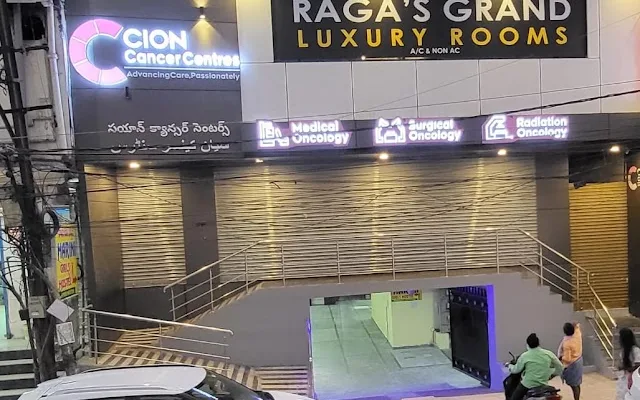
CION’s doctors see patients in Vizag. Consultations, chemotherapy and many tests can be arranged locally; surgery and radiation are done at partner centres, and your team tells you where to go. Call 1800 202 8726 to check where and when.
5Is the tumour board review free?
Yes. Every case is discussed by CION’s tumour board of specialists from all its centres, at no charge. Tests and treatment are paid for separately, and you get a written estimate first.
6How do I book a prostate cancer consultation in Vizag?
Call 1800 202 8726 or use the form on this page. Our care team fixes a time and helps you organise the reports you already have.
Get one clear plan for your prostate cancer
It starts with a consultation in Vizag. The tumour board review is free.
This page explains prostate cancer care at CION Cancer Clinics, Vizag. It is general information, not medical advice. Your treatment plan is made only after a consultation and a review of your reports.
 Call Us
































 1800 120 2676