NCCN-protocol care · 96.9% 1-yr breast cancer survival · ArogyaSri, CGHS & cashless insurance accepted · Free second opinion
1800 202 8726
Childhood Cancer Care · 7 Hyderabad Locations

Paediatric Cancer Treatment in Hyderabad — Expert Childhood Cancer Care Across 7 Locations

A childhood cancer diagnosis is one of the most devastating things a family can face. With modern treatment protocols, over 80% of children diagnosed with cancer in specialist oncology settings survive long-term — and our haematology, medical oncology, and surgical oncology team treats children across 7 Hyderabad locations using NCCN protocol-driven, risk-stratified care.

  • Over 80% Long-Term Survival — across childhood cancer with specialist NCCN-protocol treatment
  • Risk-Stratified Chemotherapy — paediatric dosing by weight & body surface area, not adult standard doses
  • Limb-Sparing Surgery — expandable implants that grow with the child for bone sarcomas
  • Multidisciplinary Tumour Board — every case reviewed before treatment begins · NABH accredited
4.8 · 1,000+ Google reviews · 15,000+ patients treated
Limited Slots Today

Discuss Your Child's Treatment Plan

₹950   Today: FREE  ·  Free written second opinion

Reports reviewed by paediatric oncology team
Free written second opinion
Confidential. No commitment to start treatment.
or
Call 18002028726
17+
Cancer Specialists
on Panel
96.9%
Breast Cancer
Survival Rate*
15,000+
Patients
Treated
4.8★
Google Rating
(800+ reviews)

Paediatric Cancer in Hyderabad — What Every Parent Needs to Know

A childhood cancer diagnosis is one of the most devastating things a family can face. In those first days after the news, parents need two things above everything else: honest information about what is ahead, and a team they can trust to put their child first at every step. The good news — and it is real, not just comforting words — is that childhood cancer as a whole is far more curable than most adult cancers.

With modern treatment protocols, over 80% of children diagnosed with cancer in specialist oncology settings survive long-term. At CION Cancer Clinics, our haematology, medical oncology, and surgical oncology team treats children and adolescents with cancer across 7 Hyderabad locations — bringing evidence-based childhood cancer care closer to families, backed by NABH accreditation and NCCN protocol-driven treatment planning.

Did You Know? Overall, more than 80% of children diagnosed with cancer in specialist settings survive 5 years or more — a figure that has improved dramatically over the past 50 years. For acute lymphoblastic leukaemia (ALL), the most common childhood cancer, the 5-year survival rate now exceeds 90% in specialist paediatric oncology centres.

Why Childhood Cancer Is Different from Adult Cancer — and Why That Matters

When a parent hears their child has cancer, they often imagine adult cancer — the difficult, slow battles they've seen in relatives. Childhood cancer is genuinely different, and understanding why gives families a more accurate picture of what treatment involves.

Not Caused by Lifestyle

Unlike most adult cancers — which are linked to smoking, diet, alcohol, or environmental exposure — childhood cancers arise from early genetic changes in rapidly dividing cells. They are not caused by anything a parent or child did.

Better Chemotherapy Response

Childhood cancer cells are generally more sensitive to chemotherapy drugs than adult cancer cells. This is why cure rates for many childhood cancers are dramatically higher than for the same cancer type in adults.

Different Cancer Types

The most common childhood cancers — leukaemia, brain tumours, Wilms tumour, neuroblastoma, Ewing sarcoma — rarely occur in adults. Each has its own specialist treatment protocol.

Paediatric Dose Calculations

Chemotherapy in children is dosed by body weight and surface area, not by adult standard doses. Getting this calculation right requires oncologists experienced in paediatric protocols.

Protecting a Developing Body

A child's brain, bones, spine, and reproductive organs are still growing. Radiation therapy for children must be planned with tighter protective limits than for adults, to preserve development and reduce long-term effects.

Most Common Childhood Cancers We Treat

The childhood cancers we manage most often, with current 5-year survival figures from specialist oncology centres.

Cancer Type Who Is Affected Where It Develops 5-Year Survival Primary Treatment
Acute Lymphoblastic Leukaemia (ALL)Most common; peaks at age 2–5Blood and bone marrow85–95%2–3 years of chemotherapy in phases
Brain TumoursSecond most common; any ageBrain and spinal cord50–85% by type and gradeSurgery + radiation + chemotherapy
Lymphoma (Hodgkin & Non-Hodgkin)Older children and teenagersLymph nodes; can spread to organs75–95%Chemotherapy ± radiation
NeuroblastomaUsually under age 5Adrenal glands / nerve tissue40–90% by risk groupSurgery + chemotherapy ± radiation
Wilms Tumour (Nephroblastoma)Usually age 2–5Kidney85–95%Chemotherapy before surgery + surgery
Bone Cancers (Osteosarcoma, Ewing Sarcoma)Teenagers and young adultsLong bones, pelvis60–75%Chemotherapy + limb-sparing surgery

Note: Survival figures are for children treated at specialist oncology centres following current international protocols. Individual outcomes depend on cancer type, risk group, age at diagnosis, and response to initial treatment.

Warning Signs of Cancer in Children

Childhood cancer symptoms are often vague and overlap with common childhood illnesses — which is why diagnosis is sometimes delayed. Symptoms that are persistent, worsening, or unexplained should be assessed by a paediatrician and, if needed, an oncologist.

  • Persistent tiredness, paleness, or weakness — paleness of the skin or lips may indicate anaemia from leukaemia
  • Unexplained fever lasting more than 2 weeks — recurrent or prolonged fevers without a clear infectious cause
  • Easy bruising or unexpected bleeding — bruising from minimal contact, frequent nosebleeds, or gum bleeding without dental cause
  • Frequent infections — a child who gets one infection after another may have a weakened immune system from leukaemia or lymphoma
  • Swollen lymph nodes — lumps in the neck, armpit, or groin lasting more than 2 to 4 weeks without a clear infection
  • Bone or joint pain not linked to injury — particularly pain present at night, that wakes the child, or in an unusual location
  • A lump or swelling anywhere in the body — a painless lump in the abdomen, neck, or elsewhere that appears and grows
  • Morning headaches with vomiting — particularly those that worsen with lying down; may suggest a brain tumour causing raised pressure
  • Changes in vision, walking, coordination, or behaviour — sudden change in how a child moves, speaks, or acts
  • Unexplained weight loss — significant weight loss without a change in diet or activity

Any symptom from this list that persists for more than 2 to 4 weeks, or that is worsening, should be evaluated by a specialist. Speak to a CION paediatric oncologist — early diagnosis gives children the best chance of successful treatment.

What Causes Childhood Cancer?

In the majority of children, there is no identifiable external cause. This can be deeply frustrating for parents who search for an explanation. The most important message is this: childhood cancer is not caused by anything a parent did or did not do, and it is not caused by the child's diet, activity, screen time, or environment in the vast majority of cases.

Known factors that can increase risk include:

  • Certain inherited genetic conditions — Down syndrome, Li-Fraumeni syndrome, neurofibromatosis, and a handful of other rare inherited conditions carry a meaningfully higher risk of specific childhood cancers
  • Previous radiation treatment — high-dose radiation to the body during treatment for another condition can, in rare cases, increase the risk of a subsequent cancer
  • Inherited cancer syndromes — some gene faults that run in families increase the risk of certain childhood cancers; genetic testing and counselling can identify these
  • For most children, no cause is found — and none needs to be. The focus should be on treatment, not on finding something or someone to blame

Why Families Choose CION for Childhood Cancer Treatment in Hyderabad

Twelve reasons families pick CION — across volume, paediatric oncology expertise, current protocols, and supportive care.

1,000+ Cancer Cases Every Year

Treated across the CION network

7 locations across Hyderabad

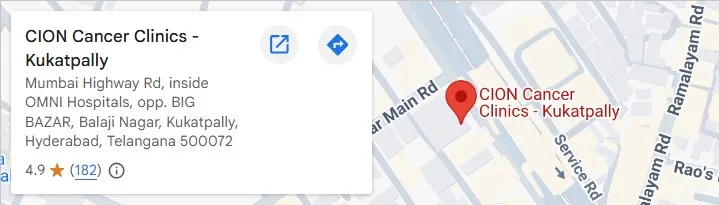
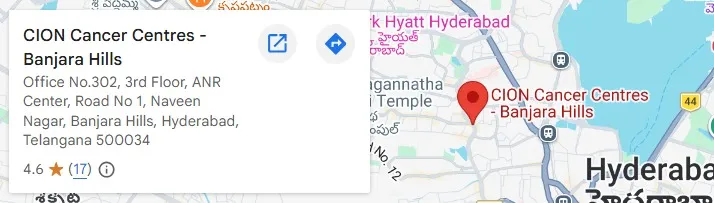
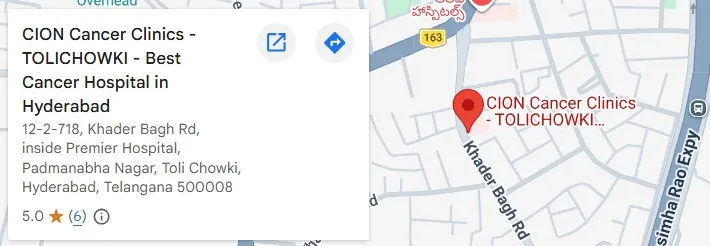
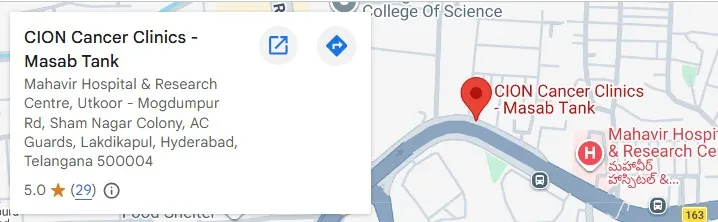
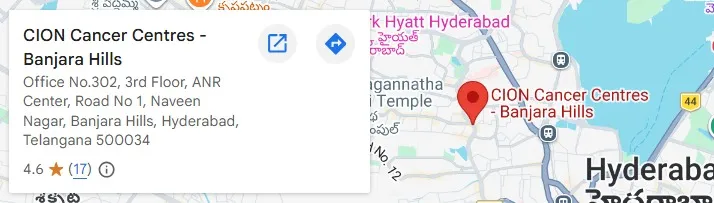
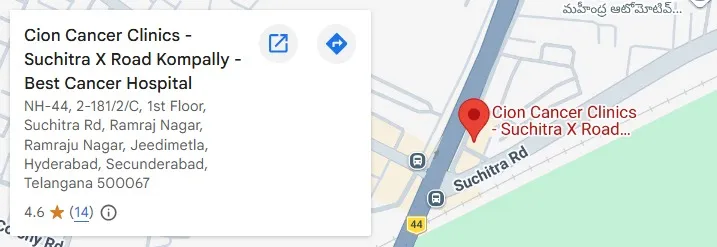
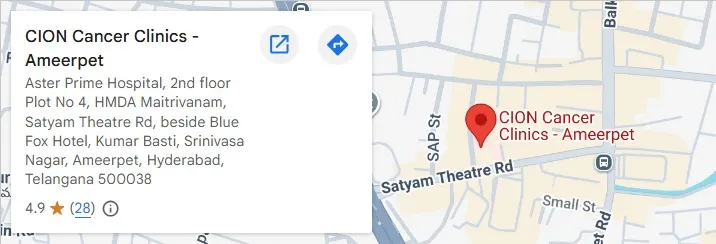
Kukatpally, Kompally, Ameerpet, Tolichowki, MasabTank, L.B. Nagar, Banjara Hills — reducing travel during a long treatment journey

5-Star NABH Accredited

Cancer Care Institutes

NCCN Protocol Adherence

International paediatric oncology protocols followed for every blood cancer and solid tumour type

Risk-Stratified Chemotherapy

Paediatric dosing by weight & body surface area for leukaemia, lymphoma, and solid tumours

Limb-Sparing Surgery

Expandable implants that grow with the child for bone sarcomas — preserving the limb

Multidisciplinary tumour board

For every paediatric case — before any treatment decision

Bone marrow transplant referral

Coordinated through specialist centres for children who require it

Long-term follow-up planning

Late effects monitoring discussed with every family from the time of diagnosis

Psychological & nutritional support

Integrated through treatment for the child and family

Dedicated Second Opinion service

Free written review of imaging, pathology, and existing plan

EMI facility

Flexible payment options for all families

Speak to a Paediatric Cancer Specialist Today

Same-week appointments across 7 Hyderabad locations. Free written second opinion included.

or
Call 18002028726

By submitting, you consent to be contacted by CION about your enquiry.

12+ Centres in Hyderabad · Pick yours

CION cancer care is closer than you think.

We're never more than 30 minutes away. Same panel of specialists at every centre. Same tumour board reviews. Same NCCN protocols. Pick the closest one and call directly — or let us pick for you.

Not sure which centre fits best? Tell us where you are — we'll suggest the closest one with the right specialists.

Help me pick the right centre
Meet the Specialists

17+ senior cancer specialists. One panel for your case.

Trained at AIIMS, Tata Memorial, and leading international centres. Combined 150+ years of experience. Every complex case is reviewed by 3+ of them — together.


Dr. Naresh Gundu
Medical Oncologist

Dr. Naresh Gundu

MBBS, DNB (Internal Medicine), DM (Medical Oncology)

View Profile
Dr. C. Raghavendra Reddy
Medical Oncologist

Dr. C. Raghavendra Reddy

MBBS(Gold Medal), DNB(General Medicine), DM(Medical Oncology)(Gold Medal)

View Profile
Dr. Bharati Devi Gorantla
Medical Oncologist

Dr. Bharati Devi Gorantla

MBBS, MD(General Medicine), DM(Medical Oncology)(Adyar,Chennai), ECMO, MRCP SCE(UK)

View Profile
Dr. Owais Mohammed
Medical Oncologist

Dr. Owais Mohammed

MBBS, MD (General Medicine), DrNB (Medical Oncology), ECMO, MRCP SCE (Medical Oncology) (UK)

View Profile
Dr. T. Raghavender Reddy
Medical Oncologist

Dr. T. Raghavender Reddy

MBBS, DM (Medical Oncology), MD (Radiation Oncology)

View Profile
Dr. N. Kiranmayee
Medical Oncologist

Dr. N. Kiranmayee

MBBS, DM (Medical Oncology), MD (Internal Medicine)

View Profile
Dr. Muralidhar Muddusetty
Surgical Oncologist

Dr. Muralidhar Muddusetty

MBBS (AIIMS), MS (Surgery) (AIIMS), DNB (Surgical Oncology), MRCS (Edinburgh)

View Profile
Dr. Raghavendra Naik
Surgical Oncologist

Dr. Raghavendra Naik

MBBS, MS (General Surgery), M.Ch (Surgical Oncology)

View Profile
Dr. Mohammed  Imaduddin
Surgical Oncologist

Dr. Mohammed Imaduddin

M.B.B.S, MS (General Surgery), M.Ch (Surgical Oncology)

View Profile
Dr. Vinay Mamidala
Surgical Oncologist

Dr. Vinay Mamidala

MBBS, MS(General Surgery), M.Ch(Surgical Oncology), FMAS, FARIS(Ongoing)

View Profile
Dr. Paila Gowri Naidu
Surgical Oncologist

Dr. Paila Gowri Naidu

MBBS, MS (General Surgery), M.Ch (Surgical Oncology), FMAS

View Profile
Dr. Venkata Sushma P
Radiation Oncologist

Dr. Venkata Sushma P

MBBS, MD (Radiation Oncology)

View Profile
Dr. Kirti Ranjan Mohanty
Radiation Oncologist

Dr. Kirti Ranjan Mohanty

MBBS, MD (Radiation Oncology)

View Profile
Dr. Gangadhar Vajrala
Radiation Oncologist

Dr. Gangadhar Vajrala

MBBS, MD (Radiation Oncology), MPH

View Profile
Dr. Basudev Pokhrel
Hematologist

Dr. Basudev Pokhrel

MBBS, M.D (Immunohematology & Blood Transfusion)

View Profile
Dr. Mohammed Imran
Interventional Radiologist

Dr. Mohammed Imran

View Profile
Dr. Vajja Sandeep Kumar
Surgical Oncologist

Dr. Vajja Sandeep Kumar

MBBS, MS (General Surgery), DrNB (Surgical Oncology), FALS Oncology

View Profile
Dr. Sridhar Kamani
Surgical Oncologist

Dr. Sridhar Kamani

MBBS, MS (General Surgery), DrNB (Surgical Oncology)

View Profile

Want a specific doctor for your case? Mention them when booking.

Book Free Consultation

Ready to Speak with a Paediatric Oncologist?

Whether your child has just been diagnosed or you're seeking a second opinion — our team is available across 7 Hyderabad locations with same-week appointments.

How Is Childhood Cancer Diagnosed?

CION's diagnostic pathway integrates blood markers, imaging, bone marrow examination, and biopsy where required to confirm the cancer type and risk group before any treatment decision is made.

Blood Tests

A full blood count is usually the first investigation for a child with persistent fatigue, pallor, or frequent infections. Abnormalities in the blood — low red cells, very high or very low white cells, low platelets — can indicate leukaemia or lymphoma. Elevated markers in the blood may suggest other solid tumour types.

Imaging

  • Ultrasound — a painless, radiation-free scan; the first imaging for abdominal lumps (to check for Wilms tumour or neuroblastoma), swollen lymph nodes, and other lumps
  • MRI — the most detailed imaging for brain tumours, spinal cord tumours, and soft tissue masses; no radiation; ideal for children
  • CT Scan — for staging and checking spread; used when speed and detail about the chest, abdomen, or pelvis is needed; involves radiation so used selectively in children
  • Bone scan or PET-CT — to check for spread of certain solid tumours to bones or other organs

Bone Marrow Examination

For suspected leukaemia or lymphoma, a small sample of bone marrow is taken — usually from the back of the hip — under sedation or anaesthesia. The sample is examined under a microscope to confirm the type of leukaemia or lymphoma and determine the risk group, which directly determines the treatment intensity.

Biopsy

For solid tumours — a lymph node, a mass in the abdomen, or a bone lesion — a small tissue sample is taken and examined under a microscope to confirm the cancer type. For most solid tumours, chemotherapy begins before surgery to shrink the tumour; the biopsy is often performed at the start of chemotherapy rather than requiring open surgery first.

Risk Groups — How Childhood Cancer Treatment Is Personalised

Parents of children newly diagnosed with cancer are sometimes confused when doctors talk about risk groups rather than stages. For most childhood cancers — particularly leukaemia and lymphoma — treatment is not based purely on a TNM stage number as in many adult cancers. Instead, each child is assigned to a risk group based on a combination of factors that predict how likely the cancer is to respond to treatment.

For acute lymphoblastic leukaemia (ALL) — the most common childhood cancer — the risk group is determined by:

  • The child's age at diagnosis
  • The white blood cell count at the time of diagnosis
  • Whether the leukaemia has spread to the brain or spinal fluid
  • Specific chromosomal changes in the leukaemia cells — some predict a better response to chemotherapy; others indicate the need for more intensive treatment
  • How quickly and completely the leukaemia responds to the first weeks of chemotherapy

Children in a standard or low-risk group receive effective but less intensive chemotherapy — reducing side effects and long-term effects. Those in a high-risk group receive more intensive treatment. This personalised approach is why cure rates for childhood leukaemia have improved so dramatically over the past 40 years. CION's haematology and medical oncology team applies current international risk-stratification guidelines to every childhood leukaemia and lymphoma diagnosis.

What Does Childhood Cancer Treatment Actually Involve? — The ALL Example

For many parents, the most important practical question is: what is ahead of us? Using ALL — the most common childhood cancer — as an example, here is what the treatment journey typically looks like.

Induction (Weeks 1 to 4)

The most intensive phase of treatment. The goal is to put the leukaemia into remission — to make it disappear from the blood and bone marrow. Multiple chemotherapy medicines are given together during this phase. Most children are admitted to hospital during at least part of this phase, with close monitoring of blood counts and management of any infection. By the end of induction (a repeat bone marrow test), most children achieve remission.

Consolidation (Months 2 to 6)

The leukaemia is in remission but microscopic cells may still be present. A second, intensive block of chemotherapy destroys remaining cells and reduces the risk of relapse. Some children receive chemotherapy given directly into the spinal fluid (via a lumbar puncture, done under sedation) to protect against leukaemia cells spreading to the brain.

Maintenance (Months 6 to 24–36)

The longest phase — and the most reassuring. Maintenance chemotherapy is much less intensive than the earlier phases: daily oral tablets at home plus monthly clinic visits for a short intravenous infusion. Children in maintenance can attend school, play with friends, and live relatively normally. The total duration of ALL treatment is typically 2 to 3 years depending on the child's risk group and sex. For most families, this phase — though long — is manageable.

Discuss Your Child's Treatment Plan with a CION Oncologist

Bring your child's reports, scans and bone marrow results — we'll review and recommend the right next step. Free written second opinion.

or
Call 18002028726

Life After Treatment — Understanding Long-Term Effects

For children who are cured of cancer — and the majority are — the focus shifts to a question that is on every parent's mind from the beginning: will the treatment affect my child's long-term health, growth, and development?

The honest answer is that some childhood cancer treatments can have long-term effects — and knowing what to monitor for allows early intervention.

  • Growth — some chemotherapy medicines and radiation to the spine or pituitary area can affect growth hormone production; regular measurement and, where needed, growth hormone supplementation manages this
  • Heart function — certain chemotherapy medicines can, at high cumulative doses, affect heart muscle function; regular cardiac monitoring (echocardiograms) is recommended for children who received these medicines
  • Cognitive development and learning — brain radiation, particularly to young children, can affect concentration, memory, and learning; modern radiation planning minimises this, and educational support helps children reach their potential
  • Fertility — some chemotherapy medicines and radiation to the pelvic area can affect future fertility; fertility preservation measures (such as freezing sperm in older boys) can be discussed before treatment begins where appropriate
  • Second cancers — a small proportion of childhood cancer survivors have a slightly higher lifetime risk of a second cancer; this is why long-term follow-up care (survivorship clinics) matters

CION's oncology team discusses late effects monitoring with every family during treatment planning. Long-term follow-up after treatment completion includes regular reviews designed to catch any late-emerging effects early.

Childhood Cancer Treatment at CION Cancer Clinics

CION follows NCCN and international paediatric oncology treatment protocols for every cancer subtype. Every child's treatment plan is reviewed and approved by our multidisciplinary tumour board before initiation.

Haematology — Blood Cancers (Leukaemia and Lymphoma)

Leukaemia and lymphoma together account for approximately 50% of all childhood cancers. CION's haematology team manages the full range of childhood blood cancers using current international treatment protocols — risk-stratified chemotherapy regimens, spinal fluid protection, and close monitoring through each treatment phase. Day-care chemotherapy delivery means children can receive treatment close to home, across any of CION's 7 Hyderabad locations, reducing travel burden on families.

Medical Oncology — Chemotherapy for Solid Tumours

For children with solid tumours — neuroblastoma, Wilms tumour, hepatoblastoma, and bone sarcomas — the medical oncology team manages chemotherapy before and after surgery, applying paediatric dosing calculations and monitoring for side effects throughout. The chemotherapy protocols used are aligned with international guidelines (NCCN, COG), adapted for each child's age, weight, and risk group.

Surgical Oncology — Childhood Solid Tumour Surgery

CION's surgical oncology team performs tumour removal for childhood solid tumours — kidney tumours (Wilms tumour), adrenal and abdominal neuroblastoma, liver tumours, and bone sarcomas — following pre-surgical chemotherapy where indicated. For bone sarcomas in the limbs (osteosarcoma, Ewing sarcoma), limb-sparing surgery with expandable metallic implants that grow with the child is the standard approach, avoiding amputation in the vast majority of cases.

Radiation Therapy for Childhood Cancers

When radiation is indicated — for brain tumours, Ewing sarcoma, selected leukaemias, or lymphomas — CION's radiation oncology team delivers treatment using IMRT, with paediatric-specific dose constraints to protect developing organs. Radiation in children requires detailed planning to minimise dose to the brain, spine, growth plates, and reproductive organs. Where possible, chemotherapy is used to reduce the need for radiation or to lower the dose required.

When Bone Marrow Transplant Is Needed

Some children — particularly those with high-risk or relapsed leukaemia — require a bone marrow transplant (stem cell transplant) as part of their treatment. This is a highly specialised procedure available at dedicated transplant centres. CION coordinates referrals to appropriate bone marrow transplant centres for children who require this step, ensuring continuity of care and clear communication between teams.

Did You Know? Childhood leukaemia treatment takes 2 to 3 years in total — but most of that time is the maintenance phase, where children take daily tablets at home and visit the clinic once a month for a short infusion. During maintenance, most children return to school and resume normal activities. Knowing the full timeline from the beginning helps families plan and prepare.

Every Child's Case Reviewed by a Specialist Team

Childhood cancer management requires haematology, medical oncology, surgical oncology, radiation oncology, and supportive care to work together from the start. At CION, every paediatric cancer case is reviewed by our multidisciplinary tumour board before any treatment plan is finalised:

  • Cancer type confirmed and risk group assigned — personalised treatment intensity determined
  • Blood cancer protocol selected based on current NCCN and international paediatric oncology guidelines
  • Pre-surgical chemotherapy planned for solid tumours (Wilms, neuroblastoma, osteosarcoma, Ewing sarcoma)
  • Radiation therapy planned with paediatric dose constraints where needed
  • Bone marrow transplant referral coordinated where indicated
  • Nutritional support — oncology dietitian involvement to maintain the child's strength throughout treatment
  • Pain and symptom management — paediatric-appropriate supportive care throughout
  • Psychological support for the child and family — CION's team ensures families are supported at every step
  • Long-term follow-up planning for late effects monitoring from the time of diagnosis
  • Digital coordination across all 7 Hyderabad locations — families can receive treatment at the nearest centre

Childhood Cancer Treatment Cost in Hyderabad

Treatment costs vary significantly by cancer type, risk group, and duration. Blood cancers (leukaemia) involve long treatment courses; solid tumours involve surgery combined with chemotherapy.

TreatmentApprox. Cost (INR)Notes
ALL Chemotherapy — Induction Phase (4 weeks)₹50,000 – ₹2,00,000Intensive; may include hospitalisation
ALL Chemotherapy — Full Course (2–3 years)₹3,00,000 – ₹8,00,000Includes all phases; most cost is day-care
Lymphoma Chemotherapy (full course)₹2,00,000 – ₹6,00,000Duration: 4–8 months depending on type
Neuroblastoma / Wilms Tumour Surgery₹1,50,000 – ₹4,00,000After pre-surgical chemotherapy
Bone Sarcoma Surgery (limb-sparing + expandable implant)₹5,00,000 – ₹12,00,000Implant grows with child; additional adjustments over time
IMRT Radiation Therapy (paediatric)₹1,20,000 – ₹2,50,000For brain tumours, Ewing sarcoma, selected leukaemias
Full Multi-modal Treatment (solid tumour)₹3,00,000 – ₹15,00,000+Surgery + chemotherapy + radiation where needed

Costs are indicative. A personalised treatment cost estimate is provided after initial oncology consultation at CION.

Financial Support Options

  • EMI Facility — flexible instalment-based payment options available for all patients.
  • Private Health Insurance — CION works with all major TPAs for cashless hospitalisation.

Paediatric Cancer Care Near You — In Hyderabad & Beyond

CION operates 35+ centres across Telangana and Andhra Pradesh. Find your nearest paediatric cancer specialist or explore care options in your city.

Paediatric Cancer Care in Hyderabad — by Location

Paediatric Cancer Care Beyond Hyderabad

Travelling for treatment? We may have a centre right where you are — across Telangana and Andhra Pradesh.

Not seeing your city? Call 18002028726 — we'll connect you to the nearest CION centre or arrange a teleconsultation.

Second Opinion Available

Get a Free Written Second Opinion from CION's Tumour Board

Our multidisciplinary team reviews your child's imaging, bone marrow reports, and pathology — before any chemotherapy, surgery, or radiation begins.

Real Stories. Real Voices.

15,000+ patients chose CION. Hear from them directly.

These aren't paid endorsements or written reviews. These are video testimonials from real patients and families — recorded on their own phones, in their own words. Pick any one. Watch it. Then decide.


4.8★800+ Google reviews
50+video testimonials
15,000+patients treated
Successful Chemotherapy Done by Dr. C Raghavendra Reddy

Successful Chemotherapy Done by Dr. C Raghavendra Reddy

Watch video →
Surgery, Chemo & Radiation Done by  Dr. Imaduddin, Dr. Vinay, Dr. Owais, Dr. Kirti

Surgery, Chemo & Radiation Done by Dr. Imaduddin, Dr. Vinay, Dr. Owais, Dr. Kirti

Watch video →
 Successful Radical Thymectomy Done by  Dr. Mohammed Imaduddin & Dr. Vinay Mamidala

Successful Radical Thymectomy Done by Dr. Mohammed Imaduddin & Dr. Vinay Mamidala

Watch video →
Successful Surgery Done  by Dr. Rajender Byshetty

Successful Surgery Done by Dr. Rajender Byshetty

Watch video →
Successful Chemo & Surgery Done by  Dr. Imad, Dr. Vinay, Dr. Owais & Dr. Raghavendra

Successful Chemo & Surgery Done by Dr. Imad, Dr. Vinay, Dr. Owais & Dr. Raghavendra

Watch video →
Successful Chemo & Surgery Done by  Dr. Imad, Dr. Vinay, Dr. Owais & Dr. Raghavendra

Successful Chemo & Surgery Done by Dr. Imad, Dr. Vinay, Dr. Owais & Dr. Raghavendra

Watch video →
Successful Chemo & Radiation Done by Dr. Owais Mohammed & Dr. Kirti Ranjan Mohanty

Successful Chemo & Radiation Done by Dr. Owais Mohammed & Dr. Kirti Ranjan Mohanty

Watch video →
Successful Breast Cancer Surgery Done by Dr. Imaduddin Mohammed & Dr. Vinay Mamidala

Successful Breast Cancer Surgery Done by Dr. Imaduddin Mohammed & Dr. Vinay Mamidala

Watch video →
Successful Chemotherapy Done by Dr. Bharati Devi Gorantla

Successful Chemotherapy Done by Dr. Bharati Devi Gorantla

Watch video →
Successful Chemo & Surgery Done by Dr. Owais Mohammed & Dr. Imaduddin Mohammed

Successful Chemo & Surgery Done by Dr. Owais Mohammed & Dr. Imaduddin Mohammed

Watch video →
Successful Chemotherapy Done by Dr. Gundu Naresh

Successful Chemotherapy Done by Dr. Gundu Naresh

Watch video →
Successful Bone Marrow Transplantation - Neuroblastoma

Successful Bone Marrow Transplantation - Neuroblastoma

Watch video →
Successful Surgery & Chemo - Carcinoma of Caecum

Successful Surgery & Chemo - Carcinoma of Caecum

Watch video →
Successful Oral chemotherapy & mastectomy surgery

Successful Oral chemotherapy & mastectomy surgery

Watch video →
Successful Oral chemotherapy & mastectomy surgery

Successful Oral chemotherapy & mastectomy surgery

Watch video →
Successful Chemotherapy

Successful Chemotherapy

Watch video →
Successful Surgery by Dr. Mohammed Imaduddin

Successful Surgery by Dr. Mohammed Imaduddin

Watch video →
Successful Bone Marrow Transplantation

Successful Bone Marrow Transplantation

Watch video →
Successful Oral chemotherapy & mastectomy surgery

Successful Oral chemotherapy & mastectomy surgery

Watch video →
Successful Oral chemotherapy & mastectomy surgery

Successful Oral chemotherapy & mastectomy surgery

Watch video →
Successful Chemotherapy

Successful Chemotherapy

Watch video →
Successful Buccal Mucosa Surgery

Successful Buccal Mucosa Surgery

Watch video →
Successful Complex Surgery Mandibulectomy Reconstruction

Successful Complex Surgery Mandibulectomy Reconstruction

Watch video →

Frequently Asked Questions

Common questions about paediatric cancer treatment in Hyderabad — answered by CION's oncology team.

What is the most common cancer in children?
Acute lymphoblastic leukaemia (ALL) — a cancer of the blood and bone marrow — is the most common childhood cancer, accounting for about 25 to 30% of all paediatric cancers. It predominantly affects children aged 2 to 5 but can occur at any age. Brain and spinal cord tumours are the second most common group. Lymphoma, neuroblastoma, Wilms tumour, and bone sarcomas (osteosarcoma and Ewing sarcoma, mainly in teenagers) make up most of the remaining cases.
Is childhood cancer curable?
Yes — the majority of childhood cancers are curable with modern treatment. Overall, more than 80% of children diagnosed with cancer in specialist settings survive 5 years or more. Acute lymphoblastic leukaemia, the most common type, has a 5-year survival rate exceeding 90% in specialist paediatric oncology centres. Wilms tumour achieves 85 to 95% cure rates. Lymphoma has 75 to 95% survival. Even harder-to-treat childhood cancers are seeing improving outcomes with new approaches. Early diagnosis and specialist care are the two most important factors.
What are the symptoms of cancer in children?
Childhood cancer symptoms overlap with many common childhood illnesses, which is why they can be easy to overlook. Key warning signs include: persistent unexplained tiredness or paleness; fever lasting more than 2 weeks without a clear cause; easy bruising or unusual bleeding; swollen lymph nodes in the neck, armpit, or groin lasting more than 2 to 4 weeks; bone or joint pain at night not linked to injury; a lump anywhere in the body; morning headaches with vomiting; and changes in vision, walking, or behaviour. Any symptom that is persistent, worsening, or unexplained deserves specialist evaluation.
How is cancer in children different from cancer in adults?
Childhood cancers are not caused by lifestyle factors — unlike most adult cancers. They arise from early genetic changes in rapidly dividing developing cells, not from smoking, diet, or environmental exposure. Childhood cancer cells are generally much more sensitive to chemotherapy than adult cancer cells, which is why cure rates are so much higher. The cancer types are different — leukaemia, Wilms tumour, and neuroblastoma rarely occur in adults. Dosing is calculated by the child's weight and body surface area. And treatment must account for the developing body — protecting the growing brain, bones, and reproductive organs from unnecessary treatment exposure.
What causes cancer in children?
In the great majority of cases, the cause is unknown — and is not related to anything a parent or child did. Childhood cancer arises from early genetic changes in cells that divide rapidly during growth and development. Known risk factors include certain rare inherited genetic conditions (Down syndrome, Li-Fraumeni syndrome, neurofibromatosis), previous high-dose radiation, and inherited cancer syndromes. For most families, no cause is ever identified. This is not for want of looking — it is simply that most childhood cancers arise from chance errors in cell division during development.
How long does childhood cancer treatment last?
Duration varies by cancer type and risk group. Acute lymphoblastic leukaemia (ALL) treatment is the longest — typically 2 to 3 years in total, in three phases: a 4-week intensive induction, a 2 to 4 month consolidation, and a long maintenance phase where children take daily tablets at home. Lymphoma treatment is shorter — 4 to 8 months of chemotherapy. Solid tumour treatment (Wilms tumour, neuroblastoma) typically takes 5 to 9 months of chemotherapy combined with surgery. Bone sarcoma treatment runs 9 to 12 months including pre-surgery and post-surgery chemotherapy.
What are the long-term effects of childhood cancer treatment?
Some childhood cancer treatments can have long-term effects that emerge years after treatment ends. These include effects on growth (if radiation or certain chemotherapy medicines affected hormone production), heart function (from certain chemotherapy medicines at high doses), cognitive development (from brain radiation, particularly in young children), and fertility (from pelvic radiation or certain chemotherapy medicines). The risk and severity depend on the cancer type, treatment used, and the child's age. Long-term follow-up care — planned from the time of diagnosis — monitors for these effects and allows early intervention. Most childhood cancer survivors lead full, healthy lives.
What is the survival rate for childhood cancer in India?
Survival rates in India vary depending on access to specialist paediatric oncology care. At specialist centres, outcomes for common childhood cancers approach those seen internationally — ALL exceeding 80 to 90%, Wilms tumour 80 to 90%, lymphoma 70 to 85%. The main challenges in India are delayed diagnosis (due to symptom overlap with common illnesses) and incomplete treatment due to financial or access barriers. Early referral to a specialist oncology centre significantly improves outcomes.
What is the cost of childhood cancer treatment in Hyderabad?
Costs depend on cancer type and duration. ALL chemotherapy over the full 2 to 3 year course costs approximately ₹3,00,000 to ₹8,00,000 at CION. Lymphoma chemotherapy costs ₹2,00,000 to ₹6,00,000. Solid tumour surgery costs ₹1,50,000 to ₹4,00,000. Limb-sparing surgery with expandable implants for bone sarcomas costs ₹5,00,000 to ₹12,00,000. Radiation therapy costs ₹1,20,000 to ₹2,50,000. A personalised cost estimate is provided after your initial consultation at CION. EMI payment options are available for all families.
Can I get a second opinion for my child's cancer?
Absolutely — and for childhood cancer, a second opinion is valuable in three situations: if the treatment plan has not been discussed with a specialist haematologist (for leukaemia and lymphoma) or a multidisciplinary oncology team (for solid tumours); if bone marrow transplant has been recommended and you want to understand whether it is necessary at this stage or whether chemotherapy alone is appropriate; and if your child has been told they have a rare or unusual cancer type and you want confirmation that the pathological diagnosis and treatment plan are correct. CION offers a dedicated Second Opinion service.

Disclaimer: This content is intended for informational purposes only and does not constitute medical advice, diagnosis, or treatment. Always consult a qualified oncologist or paediatric oncology specialist for guidance specific to your child's medical condition. The information on this page is periodically reviewed and updated by CION's medical team in accordance with current clinical guidelines.

Call now Book free consultation